Hahoe
Hahoe
Some 24 km from Andong, the village of Hahoe (UNESCO 2010) preserves hanok, traditional masks and shamanist rituals inherited from the Joseon dynasty.
About twenty kilometers west of Andong, in Gyeongsangbuk-do province, the village of Hahoe preserves an architectural ensemble and intangible heritage passed down from the Joseon dynasty. Inscribed on the UNESCO World Heritage List in 2010, it is home to just over 200 residents across approximately 500 hectares, descendants of the Ryu clan of Pungsan.
Why visit Hahoe
Hahoe is one of the rare historic Korean villages still inhabited where spatial organization, vernacular architecture and village rituals have been continuously transmitted since the 14th century. Three elements make it a singular stop from Andong:
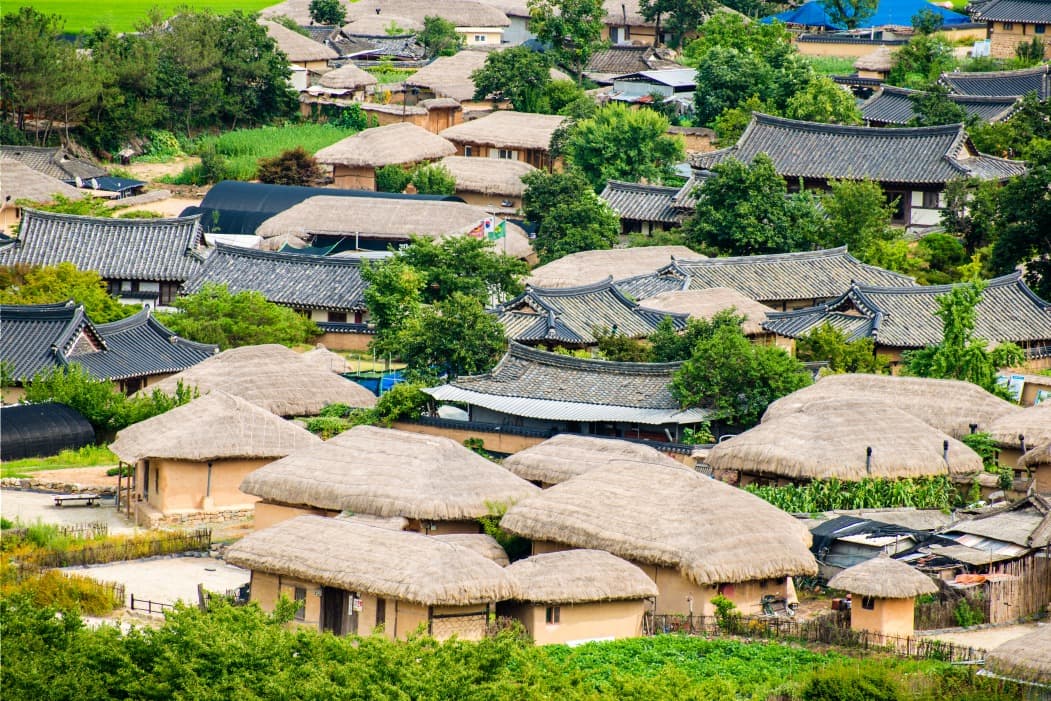
- A collection of hanok (traditional houses) with clay tile or thatched roofs, preserved in situ.
- Living shamanist and Confucianist rituals, notably the Byeolsingut mask dance, listed as Korean intangible cultural heritage since 1980.
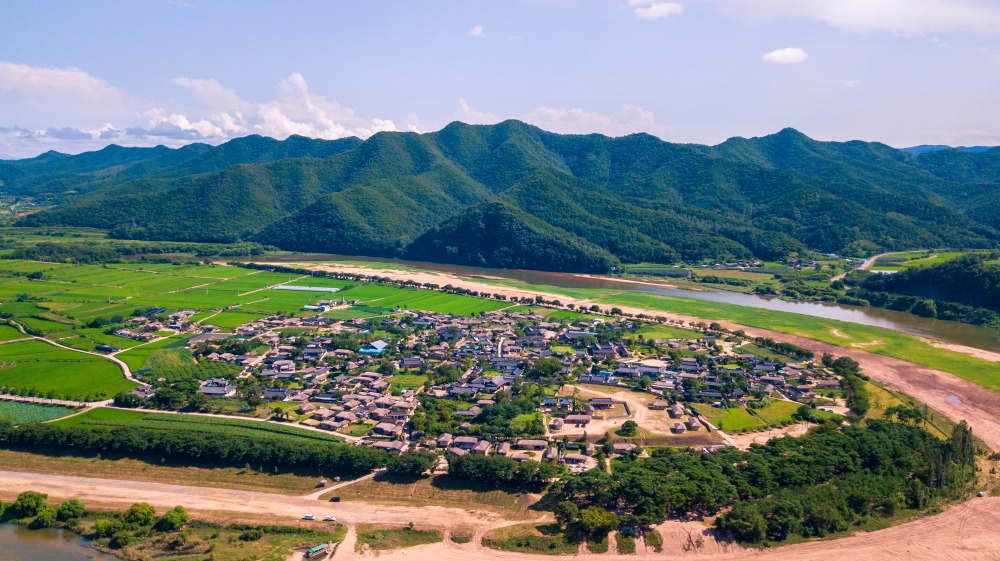
- A remarkable geographic location: the village is enclosed by a meander of the Nakdong River, which gave it its name ("village surrounded by water").
History and village layout
Founded in the 14th century, Hahoe is home to descendants of the Ryu clan of Pungsan. The site was the birthplace of several Joseon scholars, including Ryu Un-Ryong and Seoae Ryu Seong-Ryong, the latter serving as Prime Minister under King Seonjo.
The village layout follows the geomantic principles of pungsu (the Korean equivalent of feng shui). Seen from above, its plan traces a lotus flower resting on water. Hahoe is divided into two sectors: Namchon, the southern village, and Pukchon, the northern village. To the north, the Buyongdae cliff overlooks the river; to the south, Mount Namsan closes the perspective.
In 2010, Hahoe was inscribed on the UNESCO World Heritage List under "Historic Villages of Corée du Sud," alongside Yangdong village.
What to see and do in Hahoe
Hanok and village lanes
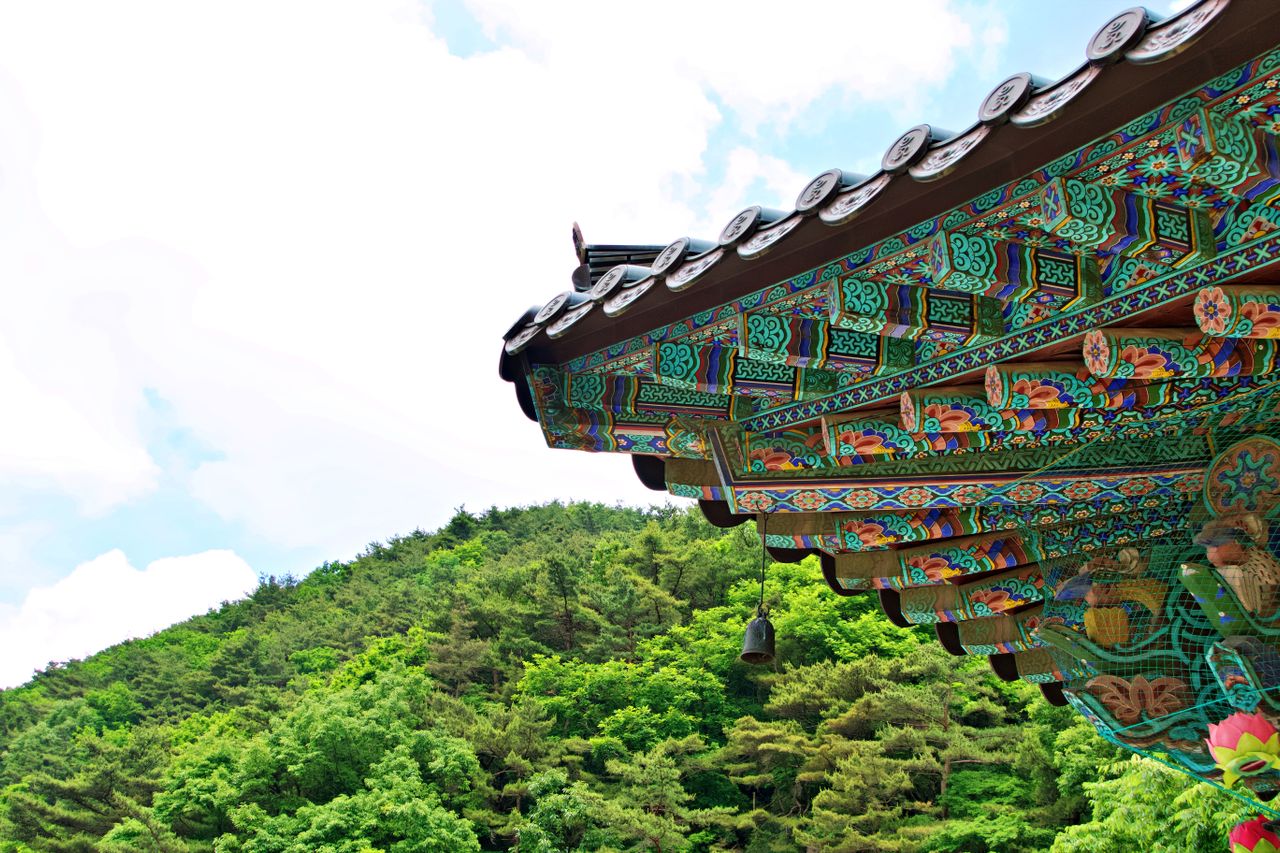
Hahoe's traditional houses combine wooden pillars, curved roofs of clay tile or thatch, and windows covered with mulberry bark paper. Aristocratic mansions stand alongside more modest farmhouse dwellings, which is rare in Korean heritage villages. Several hanok offer homestay accommodations, a formula that allows you to extend your visit with an overnight stay.
The Byeolsingut mask dance
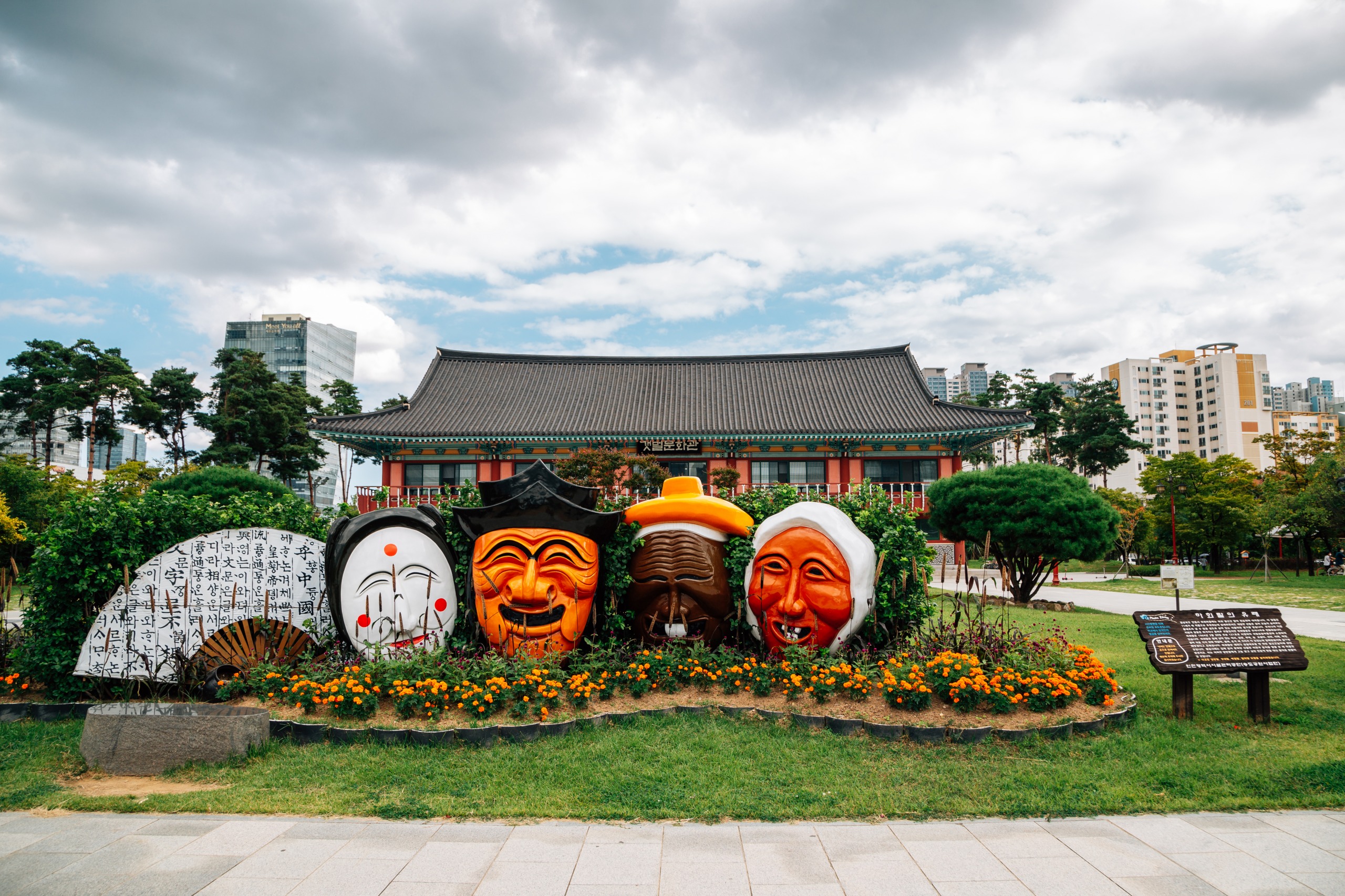
The Hahoe Byeolsingut Talnori is a local variant of the Korean mask dance. These shamanist rituals are performed in honor of the god Seonangsin, after the lunar new year, and festivities traditionally extend over some fifteen days. Listed as intangible cultural heritage no. 69 since 1980, they have brought international renown to the village. Performances are scheduled on Wednesdays and weekends, in an open-air theater near the village.
The Hahoetal mask museum
Situated at the entrance to the site, the museum displays the collection of wooden masks used in Byeolsingut. Recognized as "National Treasure no. 121," the Hahoetal masks originally comprised fourteen pieces, of which eleven are now on display; three have disappeared over the centuries. The adjoining gift shop offers reproductions and related items.
The Seonyujulbulnori fire spectacle
Specific to Hahoe, the Seonyujulbulnori is a fire spectacle held at dusk on the Nakdong River, at the level of the Buyongdae cliff. Ropes laden with charcoal embers are suspended between the banks, creating a rain of sparks while boats carry candles on the water. The spectacle is scheduled for only a few dates each year, mainly in autumn.
The Buyongdae viewpoint
The Buyongdae cliff, on the opposite bank of the village, offers the best overview of the meander and the lotus flower shape traced by Hahoe. Access is via a short but steep path from the ferry landing, after crossing the river by boat. Plan for approximately half an hour of walking to reach the summit.
Byeongsan Seowon academy
A few kilometers upstream, the Confucianist academy of Byeongsan Seowon was founded by Confucianist scholars in tribute to Ryu Seong-Ryong. Built on the banks of the Nakdong and backed by Mount Byeongsan, it is among the nine Korean seowon inscribed on the UNESCO World Heritage List in 2019. Its wooden pavilions and study courtyard offer a natural complement to a visit to Hahoe.
Practical information
- Visit duration: allow two to three hours for the village alone, half a day if you include the Buyongdae viewpoint and mask museum, a full day with Byeongsan Seowon.
- Accommodation: overnight stay in a hanok possible with resident families, booking in advance recommended.
- On-site: the village is explored on foot only; parking and visitor center are located at the entrance.
When to visit
Andong's continental climate is marked: around 4°C in January and up to 30°C in July-August, with dry but harsh winters and humid summers. The best times to visit Hahoe are April-May, when the orchards blossom, and September-October, when the surrounding forests take on their autumn colors. Mask dance performances and Seonyujulbulnori are more frequent during the high autumn season.
How to get there
From Seoul, the simplest route is to reach Andong by express bus from Gangnam Terminal or Dong Seoul Bus Terminal; plan for approximately three hours of travel, with regular departures throughout the day. Train travel (KTX then connection) is an alternative, generally slightly faster but with a change.
From Andong terminal, a local bus connects to Hahoe village in about fifty minutes (inquire on-site for the current line number and schedule). Taxi and car rental are also available for the 24 kilometers separating the two sites.
Nearby attractions
- Bongjeongsa Temple: Korea's oldest wooden Buddhist temple, approximately 30 km north of Andong.
- Mount Waryongsan: a wooded peak suitable for hiking, accessible from Andong.
- Gosan Seowon Academy: another Confucianist seowon in the region.
- Gyemyeongsan and Hakgasan recreational forests: marked trails and picnic areas.
Frequently asked questions
Frequently asked questions
Yes. The village was inscribed in 2010 on the World Heritage List in the "Historic Villages of Corée du Sud" category. Byeongsan Seowon academy, located nearby, was inscribed in 2019.
Several village families offer overnight stays in their hanok, with futon bedding and traditional ondol heating. Advance booking is recommended, as availability is limited.
Performances of Hahoe Byeolsingut Talnori are organized on Wednesdays and weekends during tourist season. Full traditional rituals take place after the lunar new year and last approximately two weeks.
Two to three hours are sufficient to explore the village. Half a day allows you to add the mask museum and the Buyongdae viewpoint. Allow a full day if you extend to Byeongsan Seowon.
Swimming is not an organized activity at Hahoe. The river is best experienced from the sandbars, by ferry to Buyongdae, or during the Seonyujulbulnori fire spectacle.
Extend your discovery
Hahoe fits naturally into an itinerary in Gyeongsangbuk-do, in the heart of traditional Corée du Sud. To plan your stay, consult our travel suggestions for Corée du Sud.
Interested in this visit?
We can include it in your personalised itinerary.