Gwangjang Market
Gwangjang Market
Founded in 1905 in the Jongno district, Gwangjang Market is Seoul's oldest covered market. Traditional textiles, hanbok, and authentic street food — bindaetteok, yukhoe, mayak gimbap — set in the lively atmosphere of a working neighborhood market.
Gwangjang Market, located in Seoul's Jongno district, is one of Corée du Sud's oldest covered markets, founded in 1905. Spread across multiple levels and interior alleys, it blends traditional textiles and hanbok during the day with a bustling food corridor active from morning to evening. It's an authentic living space, frequented by locals and visitors alike.
Quick Reference Guide
- Access: Subway Line 1, Jongno 5-ga Station (종로5가), exits 7 or 8 — the market is just steps away.
- Entry: free, no ticket required.
- Recommended duration: 1 to 2 hours depending on interest in gastronomy and textiles.
- Dress code: no restrictions.
What to See
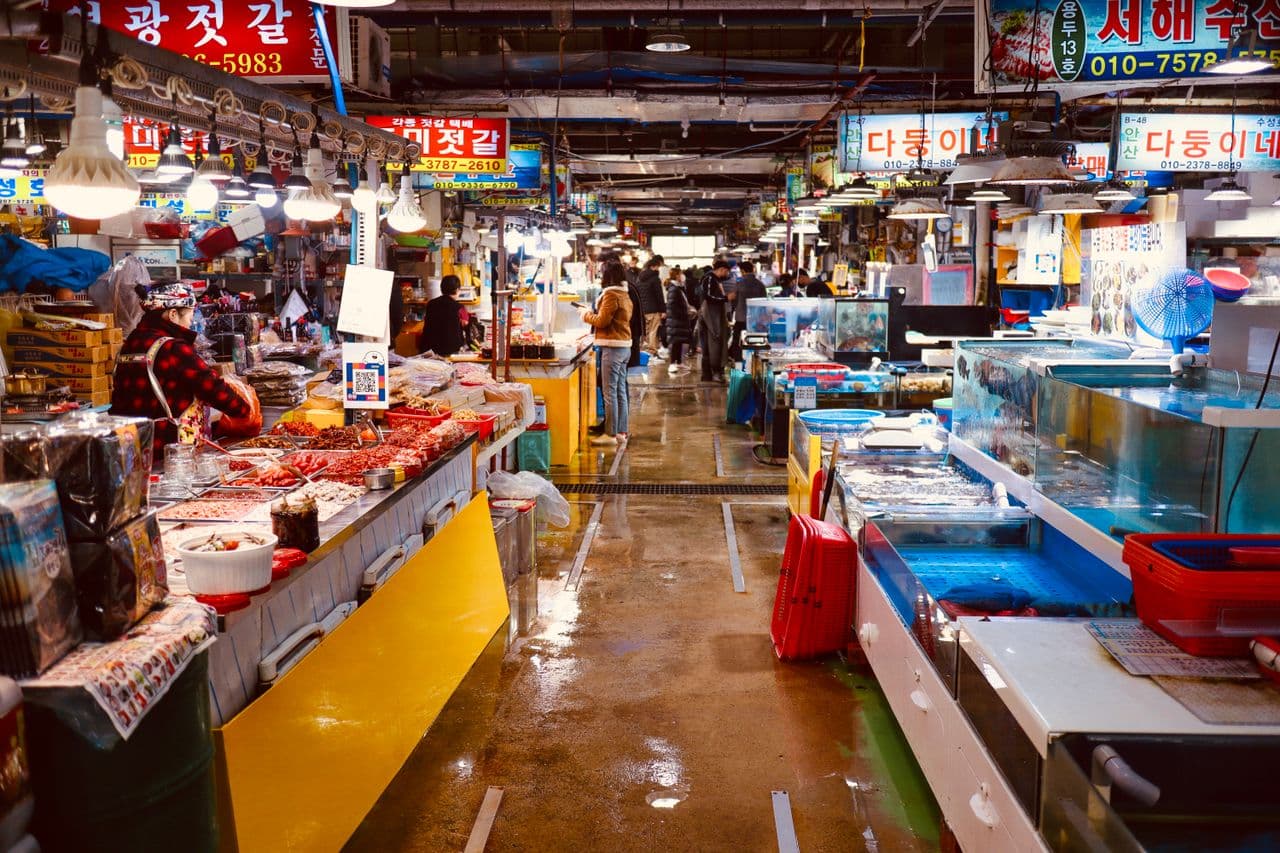
The market divides into two distinct zones. The ground floor and upper levels house hundreds of fabric stalls, hanbok (traditional Korean dress), embroideries, and sewing accessories. The central alley on the ground floor is occupied by street food vendors: bindaetteok (mung bean pancakes), mayak gimbap (small rice rolls), yukhoe (beef tartare), and nokdu jeon are among the market's signature specialties.
History and Context
Gwangjang was founded in 1905 during the late Joseon period, at the initiative of Korean merchants seeking to counterbalance Japanese commercial influence. Its name literally means "spacious and open." After the Korean War, it rebuilt and gradually specialized in textiles and popular food service. Today it remains an active market, not repurposed as an artificial tourist attraction.
Highlights of Your Visit
The Street Food Alley
Low tables lined up beneath neon lights, run by halmeoni (grandmothers) cooking in front of you, constitute the market's most iconic image. Bindaetteok, crispy and served hot, is the most popular order. The atmosphere is loud, convivial, and unpretentious.
The Textile and Hanbok District
Hundreds of shops offer silks, linens, printed cottons, and hanbok available ready-made or custom-tailored. Prices are negotiable for bulk purchases. This sector is most active during weekday daytime hours.
Yukhoe and Rare Specialties
Gwangjang is one of the few places in Seoul where yukhoe — beef tartare seasoned with pear and sesame — is eaten on-site, prepared to order. A few stalls also serve sannakji (live octopus) for the more adventurous.
Photography Tips
The artificial neon lighting creates a warm, contrasting tone favorable for atmospheric shots at day's end. Close-ups of cooking pancakes or the vendors' hands are most expressive. Always ask permission before photographing vendors up close — most readily agree if you've made a purchase.
Location and Access
The market is located in Jongno-gu district, east of Seoul's historic center. Jongno 5-ga Station on Line 1 serves the main entrance directly. The Insadong district and the Dongdaemun Gate are accessible on foot or by metro. Wheelchair access is possible on main corridors, though some interior alleys remain narrow.
Nearby Attractions
- Dongdaemun Gate (Heunginjimun) — one of Seoul's original eight city gates, a short walk east.
- Insadong — pedestrian street specializing in art galleries, antiques, and traditional teas, west of the market.
- Changdeokgung Palace — royal palace and UNESCO World Heritage site, accessible by metro from Jongno 5-ga.
- Bukchon Hanok Village — traditional Korean houses quarter, roughly 20 minutes' walk to the northwest.
Frequently asked questions
The market is active year-round. The street food alley bustles from morning through evening. The textile sector is especially busy on weekday afternoons.
No. Entry is completely free. No reservation is needed to browse or eat on-site.
Bindaetteok (fried mung bean pancake), mayak gimbap (small rice rolls), and yukhoe (beef tartare) are the market's most iconic dishes.
Yes. Gwangjang pairs easily with Insadong, Dongdaemun Gate, and Changdeokgung Palace, all accessible on foot or by metro from Jongno 5-ga Station.
Main aisles are wheelchair-friendly. Some secondary alleys and the textile section on upper levels may be challenging depending on stall layout.
Yes. The market is one of Seoul's primary hanbok shopping destinations, offering both ready-made and custom-tailored options. Prices vary by fabric quality and craftsmanship.
Interested in this visit?
We can include it in your personalised itinerary.