Jusangjeoli (Daepo Jusangjeolli)
Jusangjeoli (Daepo Jusangjeolli)
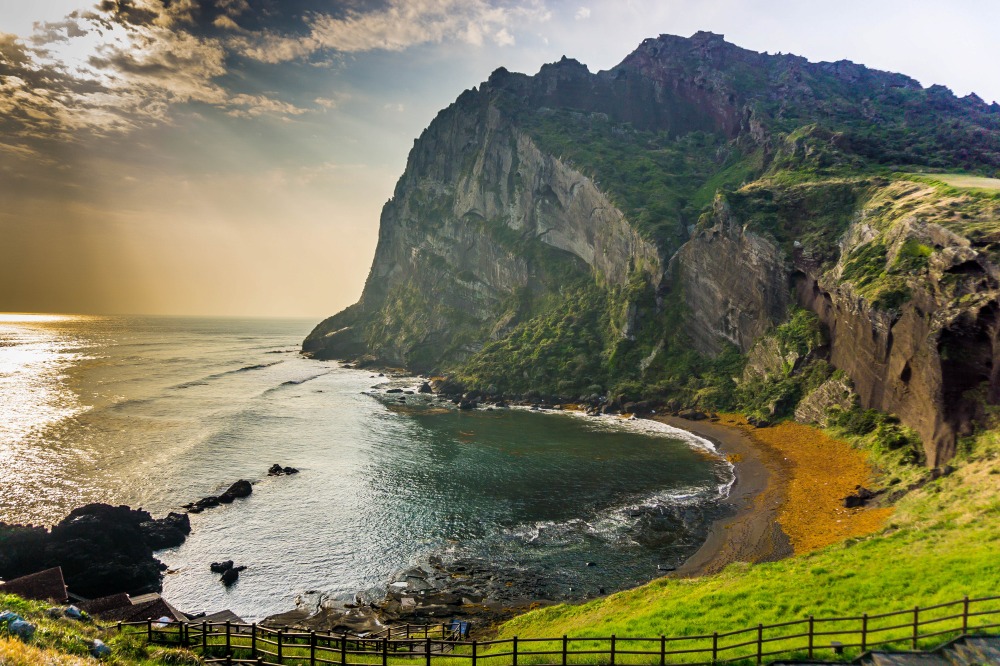
On the south coast of Jeju, the Jusangjeoli cliffs line up hexagonal basalt columns formed by the cooling of volcanic lava. A UNESCO-classified geological site, spectacular in rough seas and calm weather alike.
The Jusangjeoli cliffs rise along the south coast of Jeju, near Jungmun. Formed by the sudden cooling of volcanic lava meeting the ocean, they form a colonnade of hexagonal basalt that plunges directly into the sea. This geological phenomenon, inscribed as a UNESCO World Heritage site as part of Jeju Volcanic Island and Lava Tubes, is one of Asia's most spectacular examples of basalt columnade.
Quick reference guide
- Admission : paid entry (reduced rates for children and seniors)
- Recommended duration : 45 minutes to 1.5 hours
- Access : intercity buses from Seogwipo terminal or from Jeju City; on-site parking available
- Footwear : non-slip sole shoes recommended (wet rocks)
- Rules : climbing on rocks prohibited; stay on marked walkways
- Wheelchair accessibility : main walkway partially accessible; some viewpoints remain difficult to reach
What you'll see
Continuous columns of basalt, several meters high, form a natural wall facing the sea. Their polygonal section — predominantly hexagonal — results from the regular contraction of lava as it cools. Waves crash against them, gradually carving into the rock. A walkway hugs the cliff edge and offers several viewpoints across the entire formation.
History and context
Jusangjeoli literally means "stacked stone columns." The formation developed during volcanic eruptions that shaped Jeju hundreds of thousands of years ago. In 2007, the site was incorporated into the UNESCO property "Jeju Volcanic Island and Lava Tubes," alongside Hallasan mountain and Manjanggul caves. It is also designated as a natural monument of South Korea.
Highlights of the visit
The colonnade from the lower walkway
The path runs along the cliff at its closest. At high tide or in rough seas, spray reaches the walkway. Here the geometry of the columns is most clearly visible, at eye level.
The upper viewpoint
A vantage point at height allows you to grasp the extent of the formation along its entire length and understand how the lava flowed to the sea before solidifying.
The sea below
In clear weather, the water's color contrasts sharply with the black basalt. In rough seas, the spectacle of waves against the columns is particularly striking.
Photography tips
Morning light is softer and avoids backlighting. Late afternoon sunlight warms the basalt's tone. Favor a low angle from the walkway to emphasize the columns' verticality. In rough seas, water spray adds movement — protect your camera. Drones are regulated in UNESCO-listed zones: check regulations beforehand.
Location and access
Jusangjeoli is located on Jeju's south coast, in the Jungmun area, near the Jungmun Saekdal tourism complex. From Seogwipo, intercity buses regularly serve the area. By car, the site is accessible via the coastal road with on-site parking. The Jungmun complex and Cheonjiyeon waterfall are within short distance.
Nearby attractions
- Cheonjiyeon waterfall — waterfall framed by subtropical vegetation, in Seogwipo.
- Cheonjeondeon waterfall — another iconic waterfall in the Jungmun area.
- Manjanggul caves — lava tunnel among the world's longest, UNESCO-listed.
- Hallasan mountain — Jeju's central volcano and South Korea's highest peak.
- Seongsan Ilchulbong — volcanic crater emerging from the sea, UNESCO-listed.
Frequently asked questions
The site is accessible year-round. Spring and autumn offer pleasant weather conditions. In summer, typhoons can cause temporary closures. In winter, the sea is often rougher, making the wave spectacle more intense.
No. Climbing down onto the basalt columns is prohibited for safety and site preservation reasons. Visits are exclusively conducted on the arranged walkways and viewpoints.
Between 45 minutes and 1.5 hours is sufficient to walk the walkway, enjoy the viewpoints, and take photographs. Allow more time if you wish to wait for particular light or observe the sea in rough conditions.
Yes. Cheonjiyeon waterfall and the Jungmun complex are nearby. By car, it is possible to visit all three in half a day. Plan Jusangjeoli for early morning to avoid crowds.
Photography is allowed for personal use. Drone use is subject to South Korean regulations in listed zones; check with local authorities before your visit.
The main walkway is partially wheelchair-accessible, but some viewpoints and sections of the path remain difficult to access due to elevation changes and uneven surfaces.
Interested in this visit?
We can include it in your personalised itinerary.