National Museum of Korea
National Museum of Korea
The National Museum of Korea in Yongsan houses 220,000 objects spanning six millennia of Korean history. Free admission, direct metro access, and essential for understanding Korean civilization.
The National Museum of Korea, located in Yongsan Park since 2005, is the largest museum in Northeast Asia by floor space. Its collections span six millennia of Korean history, from prehistory through the Joseon period. With more than 220,000 objects in reserve and a permanent selection of roughly 15,000 pieces on display, it stands as the most comprehensive starting point for understanding Korean civilization.
Quick facts at a glance
- Admission: free for permanent collections; temporary exhibitions charge varying fees.
- Closed: Mondays and January 1st.
- Recommended duration: 2 to 3 hours for the main permanent galleries.
- Access: Metro Line 4 or Jungang Line, Ichon Station (Exit 2), covered passageway leads directly to the museum.
- Accessibility: fully wheelchair-accessible building with elevators and wheelchairs available on-site.
What to see
The main building arranges its collections across three thematic levels. The ground floor houses archaeology and history galleries, spanning the Paleolithic era through ancient kingdoms. The first floor features decorative arts, calligraphy, and painting. The second floor is dedicated to donations and comparative Asian art collections, including Chinese and Japanese works.
History and context
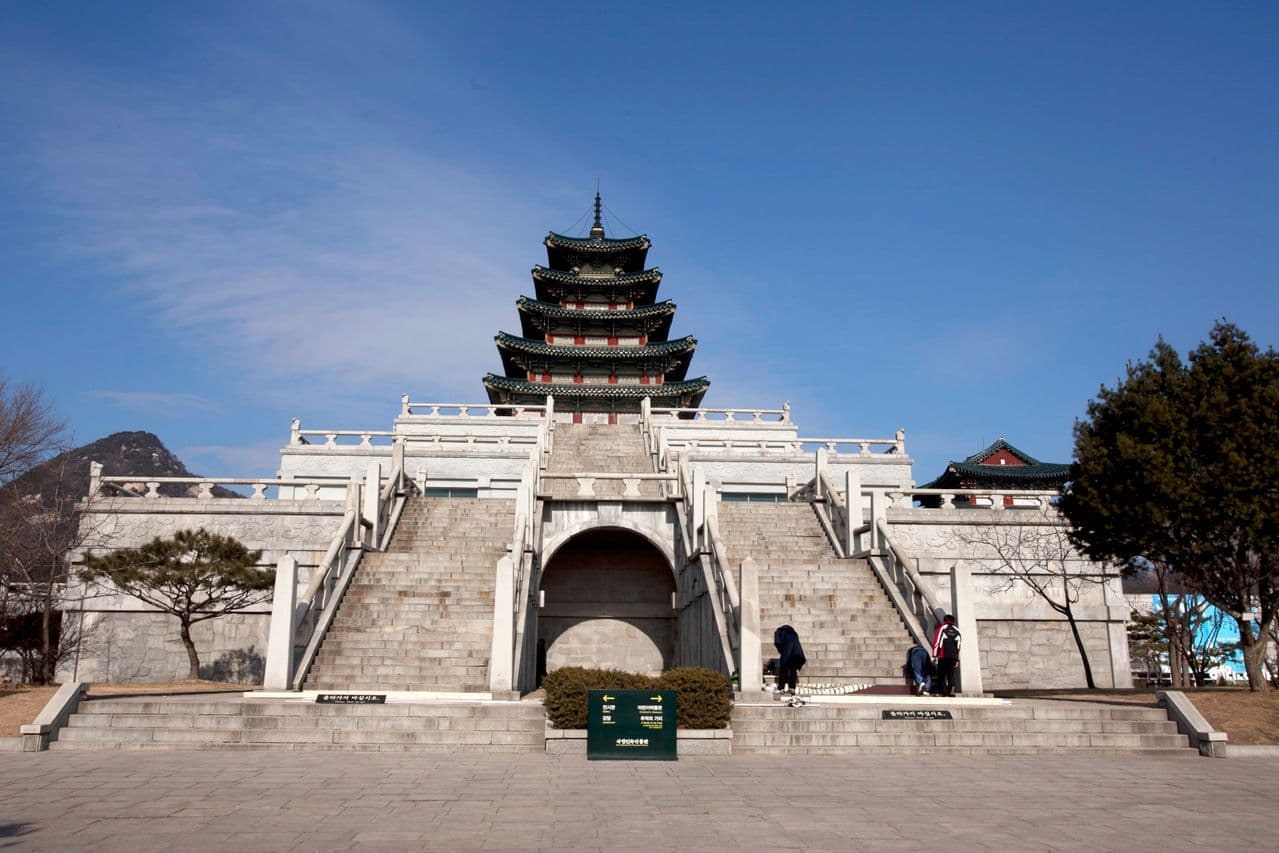
The museum traces its origins to a Japanese colonial museum founded in 1915 within Gyeongbokgung Palace. Following independence, it relocated several times before settling permanently in Yongsan. The current building, designed by architect Choi Wonsik, opened in October 2005. Its granite facade and grand central corridor—the museum's "street"—have become architectural landmarks of the capital.
Highlights of your visit
The Gyeongcheonsa Pagoda
This ten-tiered marble pagoda, dating from 1348, stands at the center of the main hall. Rising thirteen meters high, it is designated a national treasure. Its finely sculpted Buddhist relief carvings illustrate the pinnacle of Goryeo art.
The Goryeo celadon collection
Korean celadons from the 11th to 14th centuries rank among the world's finest. The gallery showcases vases, ewers, and inkstone boxes whose characteristic gray-green glaze remains unmatched. Several pieces are designated national treasures.
The calligraphy and painting gallery
Scholar paintings, ink scrolls, and works from the Joseon period are displayed in rotating exhibitions. Official royal portraits (eojin) and ink landscape paintings (sansuhwa) offer insight into Korean Confucian aesthetics.
The outdoor garden and pond
Behind the building, a landscaped garden features stone steles, lanterns, and sculptures recovered from historical sites. The pond reflects the museum's silhouette and provides a pleasant pause between galleries.
Photography tips
Flash-free photography is permitted in the permanent galleries. The Gyeongcheonsa Pagoda, lit from above, photographs well late in the morning. From the exterior plaza, the building's reflection in the water basin is striking—golden light in late afternoon provides ideal conditions. Some temporary exhibitions prohibit photography: check signage at each gallery entrance.
Location and access
The museum sits in the Yongsan district, south of Yongsan Park. Ichon Station (Lines 4 and Jungang) connects to the museum via a heated covered passageway. By bus, several lines serve the Guknip Jungang Bakmulgwan stop. The surrounding park is accessible on foot from Yongsan Park. Gyeongbokgung Palace is reachable by metro in under twenty minutes.
In the area
- Korean War Museum — a short walk away, it chronicles the conflicts that shaped the peninsula in the 20th century.
- Yongsan Park — a vast green space undergoing redevelopment, ideal for a stroll between visits.
- Gyeongbokgung Palace — the principal royal palace of the Joseon dynasty, quickly accessible by metro.
- Itaewon — a cosmopolitan neighboring district, lively in the evening, with a wide range of international dining.
Frequently asked questions
Yes, the permanent galleries are entirely free. Only temporary exhibitions charge admission, with fees varying by event.
The museum closes on Mondays and January 1st. For the rest of the year, it remains open daily, with evening hours on select nights depending on the season—check the official website before your visit.
Plan for two to three hours to explore the main permanent galleries. A full day is needed if you wish to see everything, including the garden and a temporary exhibition.
Yes, both sites complement each other well. Dedicate a full day: the museum in the morning, the palace in the afternoon. Travel between the two by metro takes less than twenty minutes.
Audioguides are available in multiple languages, including English, at the museum reception. Guided tours in Korean and English are also offered; inquire on-site for schedules.
Yes. The museum has a children's area with interactive workshops, and wide corridors accommodate strollers easily. The archaeology collections and ceramic objects often capture younger visitors' interest.
Interested in this visit?
We can include it in your personalised itinerary.