Yongdusan Park
Yongdusan Park
Perched on a hillside in Jung-gu, Yongdusan Park brings together Busan Tower, historic statues and sweeping views over the harbor. Easy access from Nampo metro station.
Yongdusan Park occupies a wooded hillside at the heart of old Busan, in the Jung-gu district. Standing at roughly 49 meters elevation, it commands unobstructed views over the harbor and sea. The park is best known for the Busan Tower, the city's landmark, and its historic statues. It serves as a genuine pocket of urban calm, frequented equally by locals and visitors alike.
Key information at a glance
- Access: free entry to the park; Busan Tower is paid
- Transport: subway line 1, Nampo station (exit 3), then covered escalators to the summit
- Recommended time: 1 to 2 hours for the park alone; longer if you ascend the tower
- Accessibility: covered escalators from Gwangbok Street facilitate access for those with mobility challenges
What you'll see
The park brings together several noteworthy elements within a compact space. The Busan Tower (120 meters) dominates the landscape and offers an observation platform. Statues line the pathways, including one of Admiral Yi Sun-sin, hero of the resistance against Japanese invasions in the 16th century. Floral clocks, fountains and shaded areas complete the site.
History and context
The name "Yongdusan" means "dragon's head mountain": the hill, when viewed from the sea, resembles a dragon's head emerging from the water. The site long served as a landmark for sailors entering Busan harbor. Busan Tower, inaugurated in 1973, replaced an earlier structure and became the city's visual emblem.
Highlights of your visit
Busan Tower
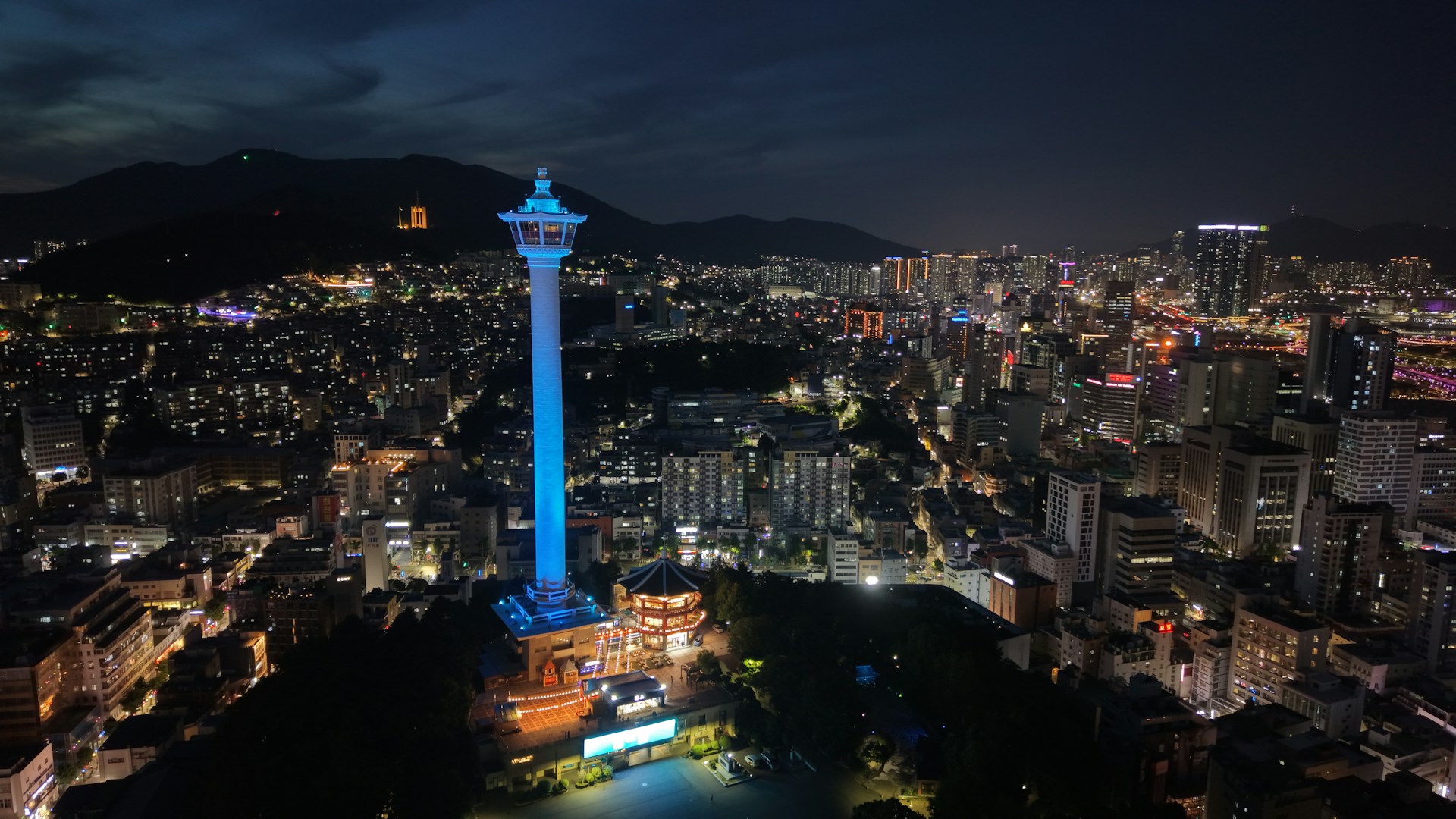
This octagonal tower in traditional Korean style rises to 120 meters. Its glazed observation deck offers panoramic views over Busan harbor, Yeongdo Island and, on clear days, the contours of the Sea of Japan. The structure is illuminated at night, making it a visible landmark from the waterfront.
The Admiral Yi Sun-sin statue
This bronze statue honors the naval commander who repelled Japanese fleets during the Imjin invasions (1592–1598). It serves as a powerful historical reference point in a park otherwise oriented toward leisurely exploration.
The pathways and vegetation
Centenarian pines and deciduous trees blanket the hillside. In spring, flowering cherry trees draw many local visitors. Autumn offers warm hues that contrast beautifully with the gray tones of the harbor below.
Photography tips
Morning light is favorable for photographing the tower without backlighting. From the observation deck, the harbor and Yeongdo Bridge frame well in late afternoon. At night, the tower's illumination and harbor lights create an striking contrast from the park's lower pathways.
Location and access
The park sits in the Jung-gu district, a short walk from the Gukje International Market and the Gwangbok-ro shopping street. Nampo station (line 1) is the nearest subway stop. Covered escalators link the street to the park's summit, making access easier for people with reduced mobility. The Jagalchi fish market lies less than ten minutes' walk to the southwest.
In the area
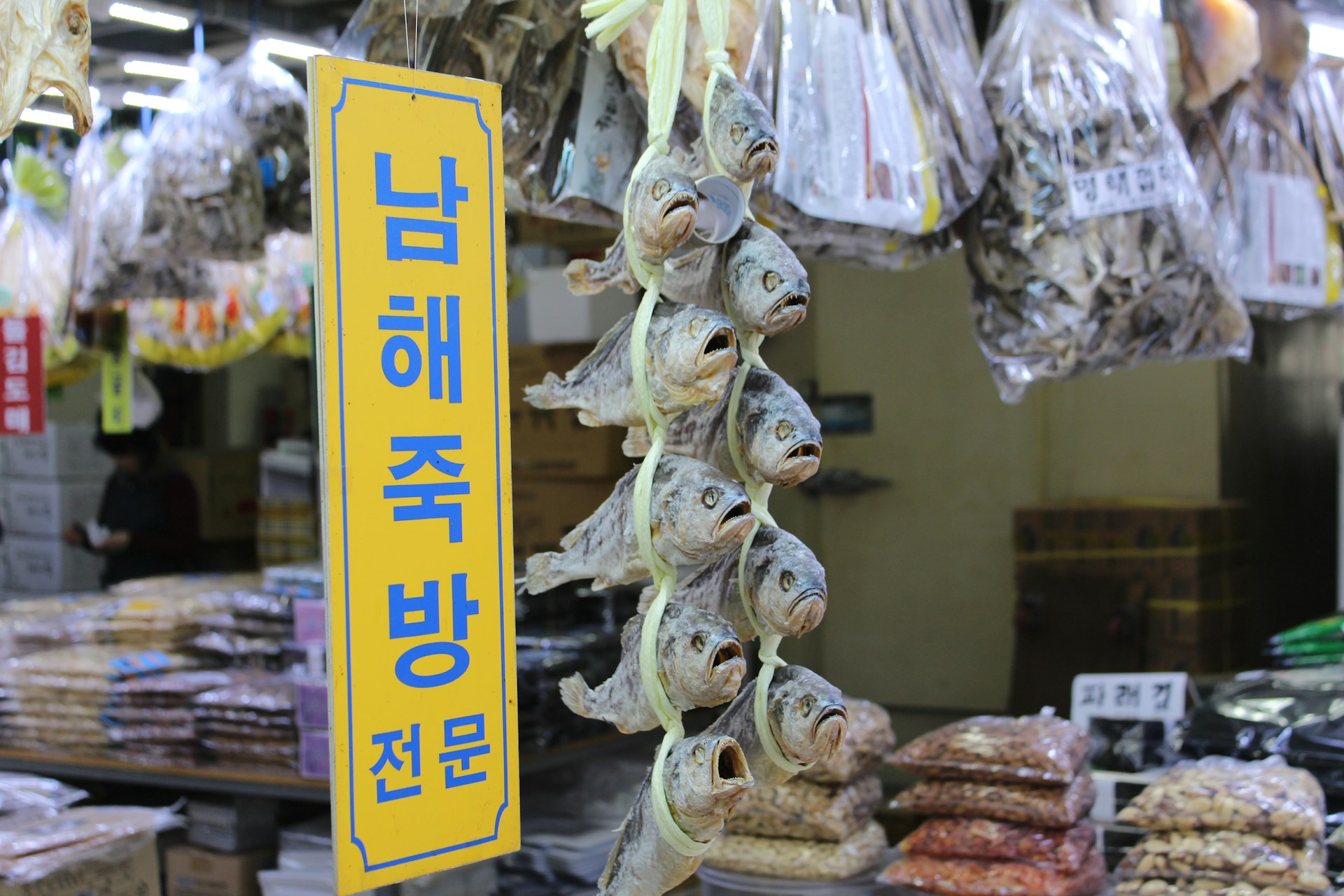
- Jagalchi Market — South Korea's largest fish market, bustling from dawn onwards.
- Gukje International Market — a sprawling popular market born after the Korean War, ideal for local goods and souvenirs.
- Gwangbok-ro Street — a pedestrianized shopping thoroughfare linking the park to the waterfront.
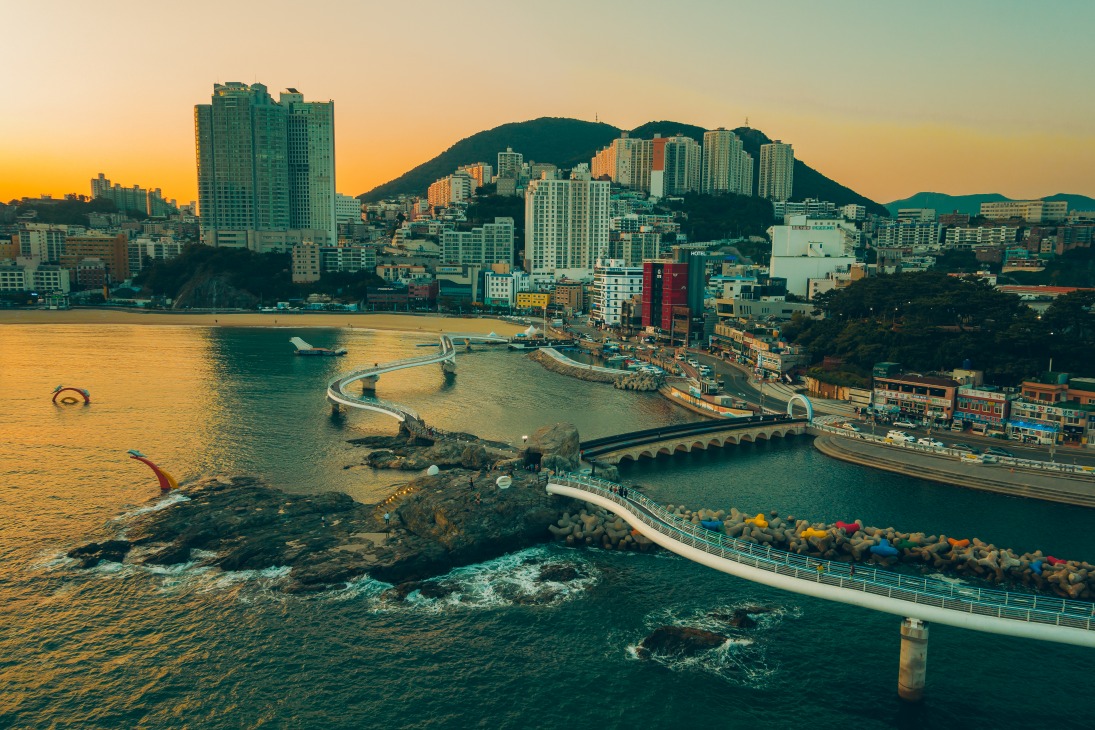
- Yeongdo Bridge — a historic bascule bridge over the harbor, visible from the tower.
Frequently asked questions
Access to the park itself is free. Entry to the Busan Tower observation deck is paid.
Take subway line 1 to Nampo station (exit 3). Covered escalators climb directly to the park from Gwangbok Street.
Spring (late March to April) is prized for cherry blossoms. Autumn delivers beautiful foliage. Summer's dense vegetation provides shade, though crowds are higher.
Yes, both sites are within ten minutes' walk of each other. A half-day is ample to visit the park and browse the fish market.
No known restrictions within the park itself. Inside Busan Tower, check signage on site regarding photography at the observation deck.
Covered escalators from Gwangbok Street facilitate access to the summit. Main pathways are navigable, though some secondary trails have slopes.
Nearby
Interested in this visit?
We can include it in your personalised itinerary.