Seongsan Ilchulbong
Seongsan Ilchulbong
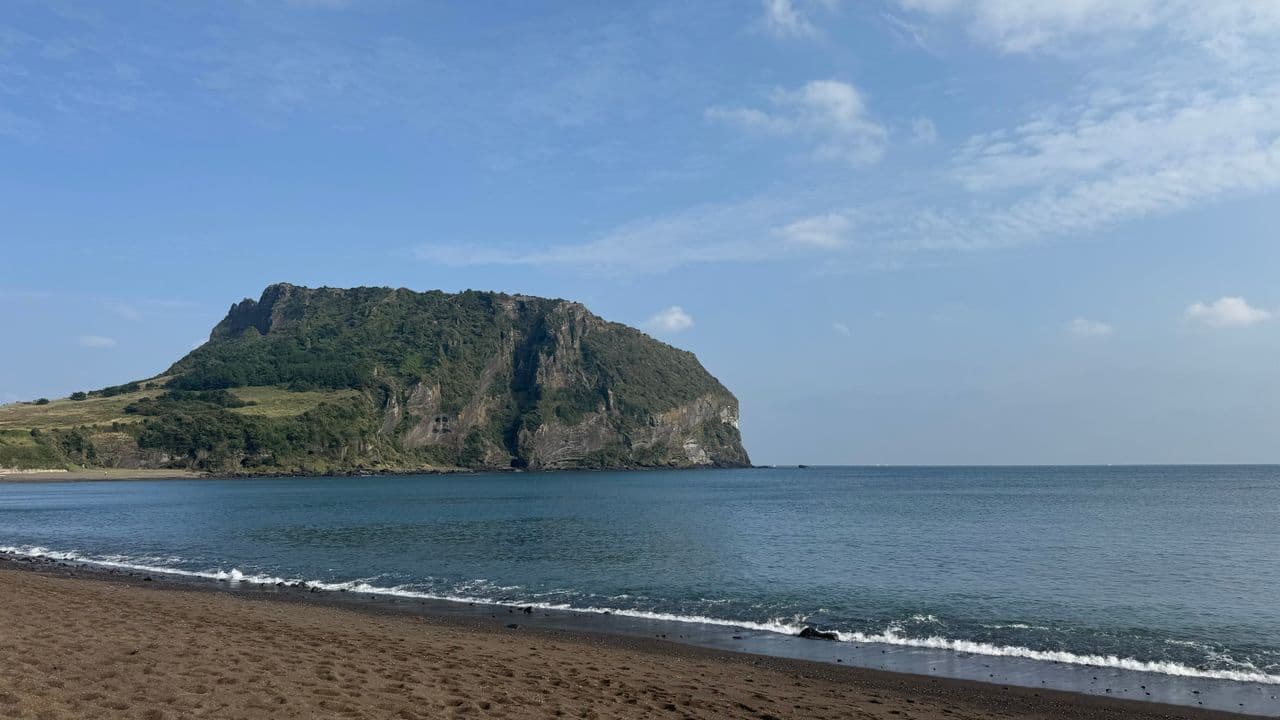
Seongsan Ilchulbong is a 182-meter volcanic crater rising at the eastern tip of Jeju Island, UNESCO-listed since 2007. Famous for its spectacular sunrises and traditional haenyeo divers, it offers breathtaking views over the Korean coastline.
Seongsan Ilchulbong — literally "peak of the sunrise of the eastern fortress" — is a volcanic crater that rises at the far eastern tip of Jeju Island. Formed roughly 100,000 years ago by an underwater eruption, it reaches 182 meters in height and offers panoramic views over the sea and surrounding basalt cliffs. UNESCO World Heritage-listed since 2007, it ranks among South Korea's most visited natural sites.
Quick facts
- Admission: paid entry (discounts for children and seniors); free before sunrise for early risers
- Recommended duration: 1.5 to 2 hours for the climb, crater exploration, and descent
- Footwear: hiking shoes recommended — the path features stone steps that can be slippery
- Accessibility: the main trail to the crater is not wheelchair accessible
- Important rule: descending into the crater is strictly prohibited
What to see
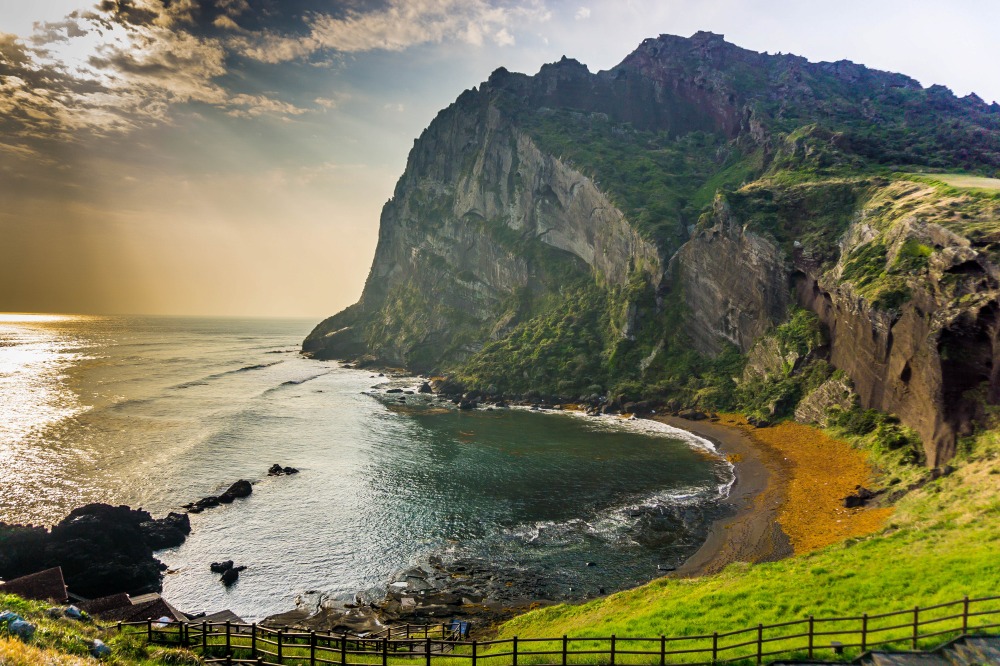
The crater spans roughly 600 meters in diameter and remains open toward the sea, giving it a distinctive silhouette visible from far offshore. Its inner walls are clothed in dense vegetation. From the crater's rim, the panorama encompasses Jeju's eastern coast, nearby islets, and on clear days, the nearby island of Udo.
Below, the village of Seongsan and its sun-drying seaweed fields paint a quintessential picture of Jeju's coastal life. Haenyeo (traditional female divers) continue their trade in the waters at the site's base.
History and context
Seongsan Ilchulbong is a tuff cone — a volcanic cone formed by the explosive contact between magma and seawater. Its well-preserved form makes it a geologically rare example worldwide. The site is part of the "Jeju Volcanic Island and Lava Tubes" UNESCO inscription, which also encompasses Mount Hallasan and the Geomunoreum lava tubes.
Historically, the region's inhabitants used the summit as a watchtower. The name "eastern fortress" (Seongsan) reflects this ancient defensive function.
Highlights of your visit
The sunrise
The site owes its fame to the spectacular dawns witnessed from the crater's rim. Visitors often climb before daybreak to watch the sun rise over the East China Sea. In winter, the raking light across the basalt cliffs is particularly striking.
The climbing trail
The main path traces the cone's southern ridge for roughly 600 meters. Steps carved from volcanic rock offer successive vantage points over the coast and village below. The ascent takes approximately 20 to 30 minutes at a leisurely pace.
Haenyeo at work
At the site's base, haenyeo divers regularly work the coastal waters. Some local associations organize demonstrations. This practice, inscribed on UNESCO's Intangible Heritage list, is inseparable from Jeju's cultural identity.
Photography tips
Morning light is ideal: the rising sun illuminates the crater from the east and creates strong contrast with the dark sea. To photograph the cone's silhouette from outside, position yourself on the coastal road west of the site, approximately 1 km before the entrance. Drones face strict regulations in the UNESCO zone — verify permits before any flight.
Location and access
Seongsan Ilchulbong sits at Jeju Island's eastern edge, within Seongsan-eup township. From Jeju City (Jeju-si), allow roughly one hour's drive. Regular intercity buses connect Jeju-si and Seogwipo to Seongsan. Parking is available at the site's entrance. Udo Island, reachable by ferry from Seongsan port, makes for a natural excursion from this point.
In the surrounding area
- Udo Island — small island accessible by ferry from Seongsan, renowned for its coral sand beaches and rapeseed fields.
- Mount Hallasan — South Korea's highest peak, at Jeju's center, with several marked hiking trails.
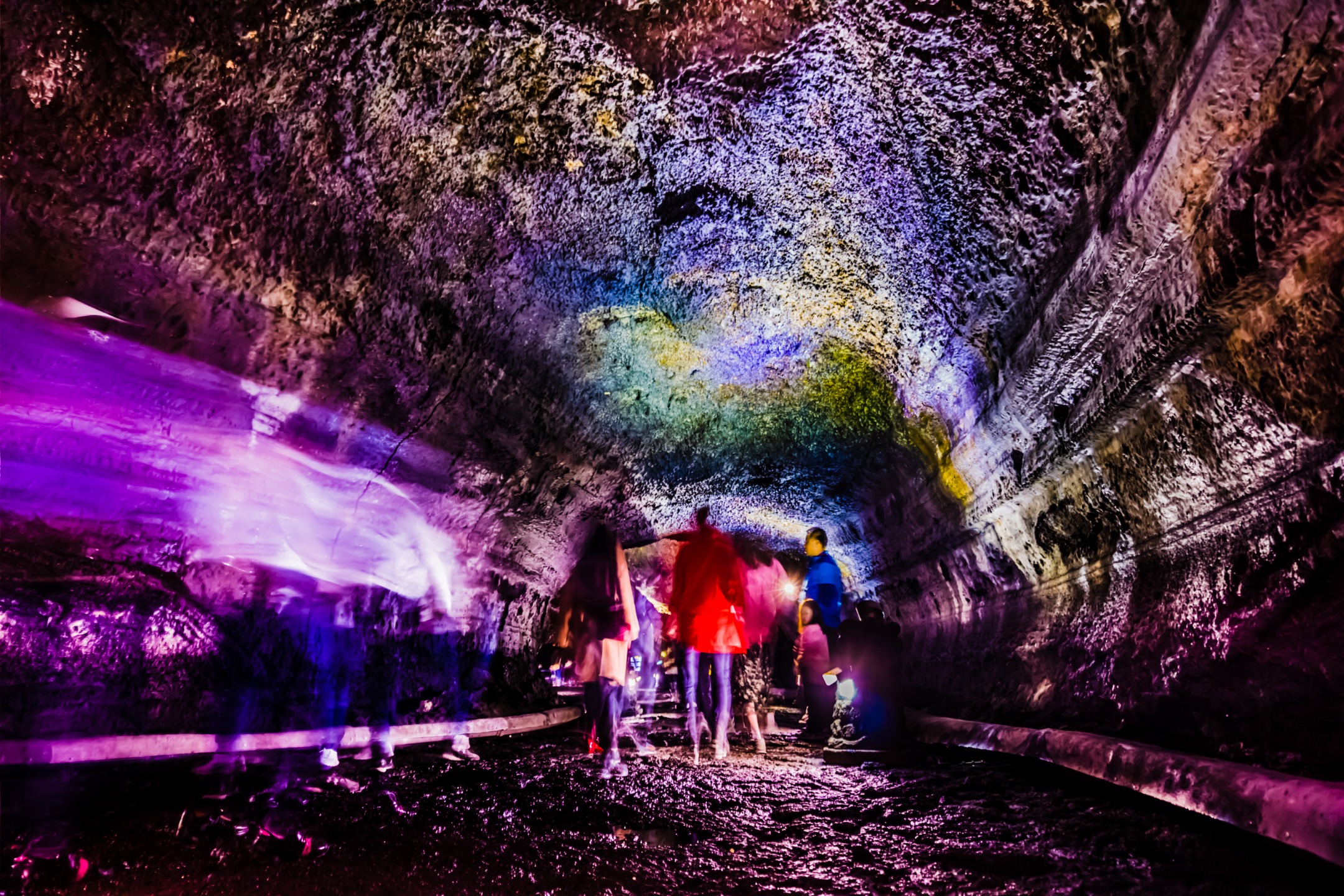
- Geomunoreum lava tubes — UNESCO-listed network of volcanic caves, located inland.
- Seopjikoji — rocky cape south of Seongsan, featuring basalt cliffs and wildflower meadows.
Frequently asked questions
Hiking shoes with non-slip soles are strongly recommended. The trail features stone steps that can be damp and slippery. Bring an extra layer if climbing early morning — wind at the summit can be brisk regardless of season.
Yes, this is a classic pairing. The ferry to Udo departs from Seongsan port, minutes' walk from the site's entrance. Starting early for the sunrise at Ilchulbong, you can reach Udo mid-morning and spend the afternoon there.
Personal photography is permitted. Drone use, however, is subject to strict regulations in UNESCO zones on Jeju. Consult local authorities before any flight.
Allow 1.5 to 2 hours for a complete visit: ascent, circuit of the crater rim, and descent. To linger watching haenyeo divers or stroll through Seongsan village, plan for half a day.
The trail to the crater features numerous steps and is not wheelchair-friendly. The site's surroundings and Seongsan village remain accessible, but the climb to the summit is not suitable for people with reduced mobility.
Interested in this visit?
We can include it in your personalised itinerary.