Songgwangsa Temple
Songgwangsa Temple
Founded in the 9th century within Jogyesan National Park, Songgwangsa is one of the three pillars of Korean Buddhism. An active monastic community, classical wooden architecture, and a renowned templestay program make it an essential spiritual destination.
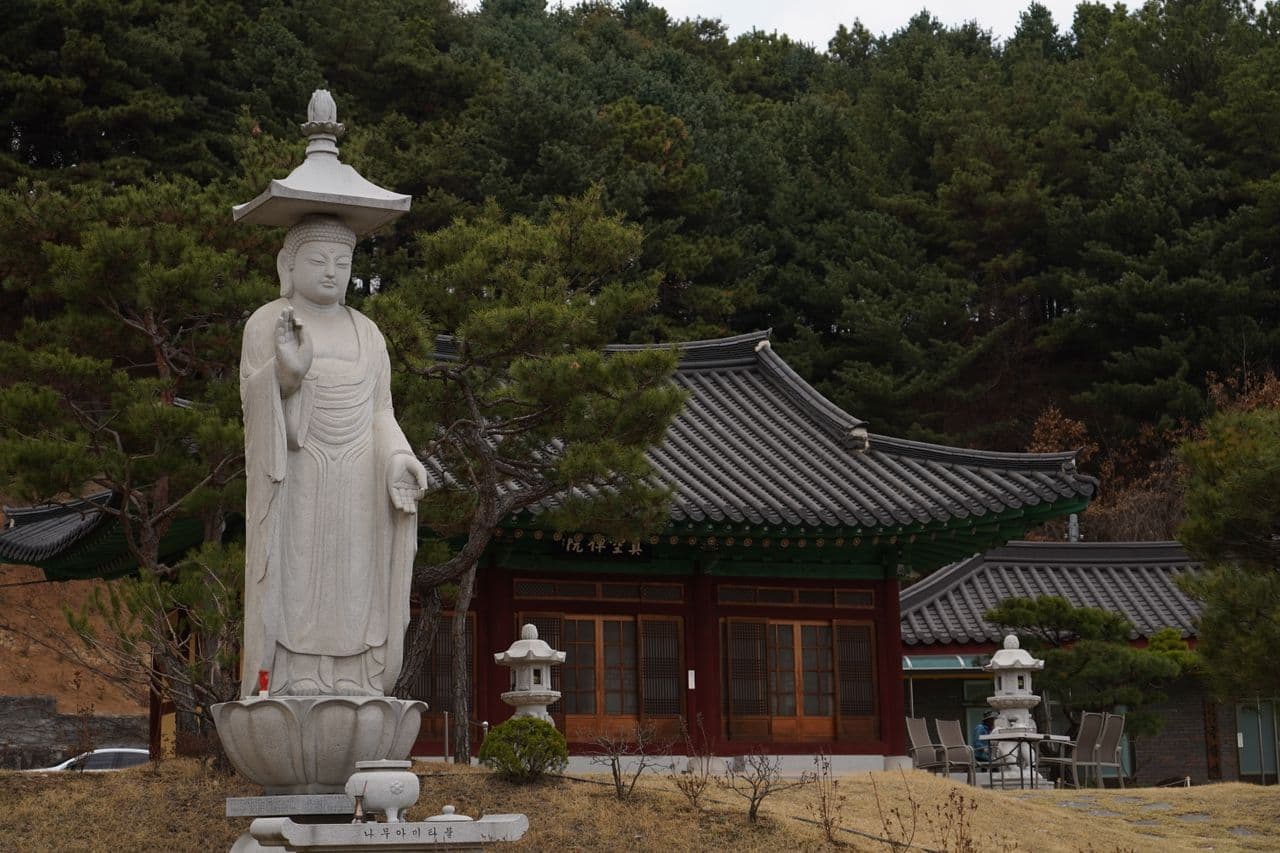
Songgwangsa Temple rises in the mountains of Jogyesan National Park, roughly twenty kilometers north of Suncheon. Founded in the 9th century, it stands as one of the three "jewels" of Korean Buddhism—representing the monastic community (Sangha). Still active today, it houses a thriving monastic community and welcomes retreat seekers from around the world through its templestay program.
Practical Information at a Glance
- Admission: Fee required (Jogyesan National Park entrance)
- Dress code: Shoulders and knees covered recommended; quiet demeanor in prayer halls
- Suggested duration: 1.5 to 2 hours for a self-guided visit; half a day if combined with hiking on Jogyesan
- Access: Bus from Suncheon Station, then short walk from the terminal stop; no direct train service
- Templestay: One or more nights available by reservation through the national program's official website
What to See
The complex comprises around twenty traditional wooden buildings arranged around paved courtyards. The Daeungjeon (main hall) houses a statue of Shakyamuni Buddha flanked by bodhisattvas. The Guksajeon, dedicated to the temple's great masters, preserves rare painted portraits. A stone bridge spans the stream at the site's entrance—a symbolic passage between the ordinary world and sacred space.
History and Context
Songgwangsa was founded under the name Gilsangsa in the 9th century, then enlarged and renamed in the 12th century by the monk Jinul, a major reformer of Korean Buddhism. Jinul developed the Seon (Korean Zen) movement here and established it as a center of study and practice. Sixteen national masters—the state's highest spiritual title—have resided here, granting it unparalleled authority within the Jogye tradition.
Highlights of Your Visit
The Daeungjeon and Its Murals
The outer walls of the main hall bear narrative paintings illustrating the life of the Buddha. The colors, restored multiple times, remain vivid. The interior is accessible during services; silence is essential.
The Guksajeon
This pavilion houses painted portraits of the sixteen national masters who emerged from the temple. It is a rare iconographic ensemble with no equivalent in other Korean temples.
The Entrance Bridge and Pine Forest
The path leading to the temple winds through a pine forest and follows a stream. The stone bridge marks the ritual boundary of the site. This gradual approach is an integral part of the experience.
The Templestay
Songgwangsa is among Korea's most respected temples for its monastic retreat program. Dawn wake-ups, seated meditation, silent vegetarian meals (barugongyang): the program offers genuine access to the monks' daily life.
Etiquette and Visiting Rules
- Remove your shoes before entering prayer halls.
- Do not photograph monks without their explicit consent.
- Speak softly throughout the complex.
- Avoid short or sheer clothing.
- Do not touch statues or ritual objects.
Photography Tips
Morning light, before tour groups arrive, is ideal for capturing the gray-tiled roofs against the forest backdrop. Autumn offers striking contrast between red maples and ochre buildings. Photography is prohibited inside halls during ceremonies.
Location and Access
Songgwangsa sits within Jogyesan National Park, approximately 25 km north of central Suncheon. Local buses connect Suncheon Station to the temple. By car, parking is available at the park entrance. The main hiking trail of Jogyesan departs from the temple, allowing a walk to the summit. Accessibility for people with reduced mobility is limited due to the mountainous terrain and steps between courtyards.
Nearby Attractions
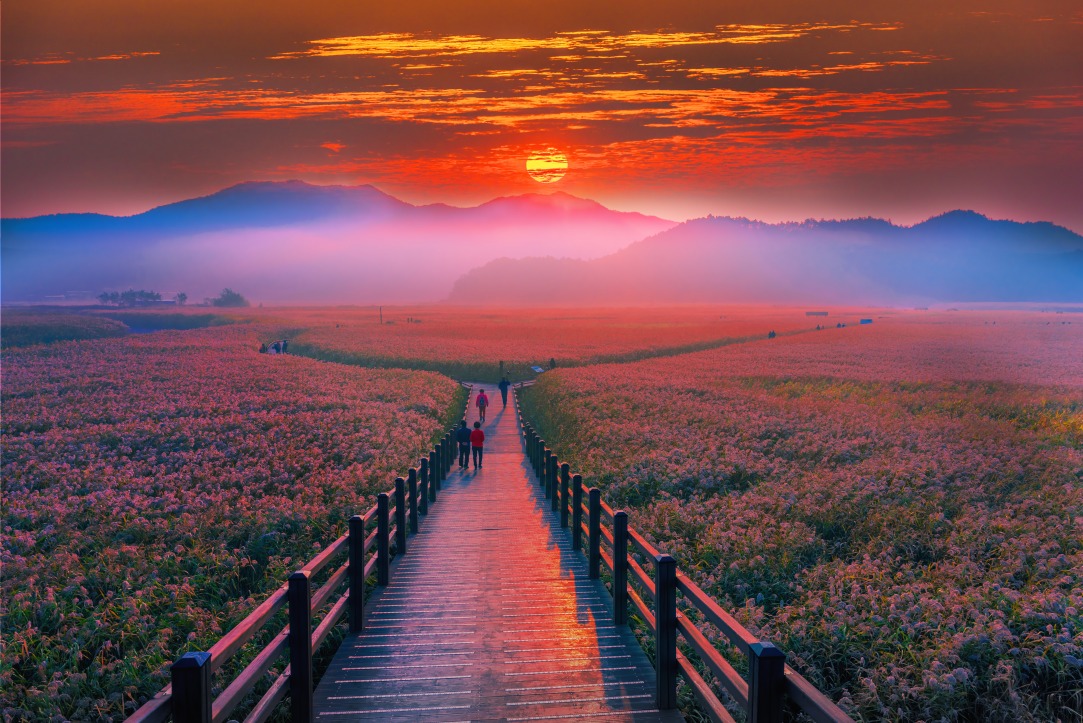
- Suncheon Bay — a vast protected wetland roughly 30 km south, renowned for its reeds and migratory birds.
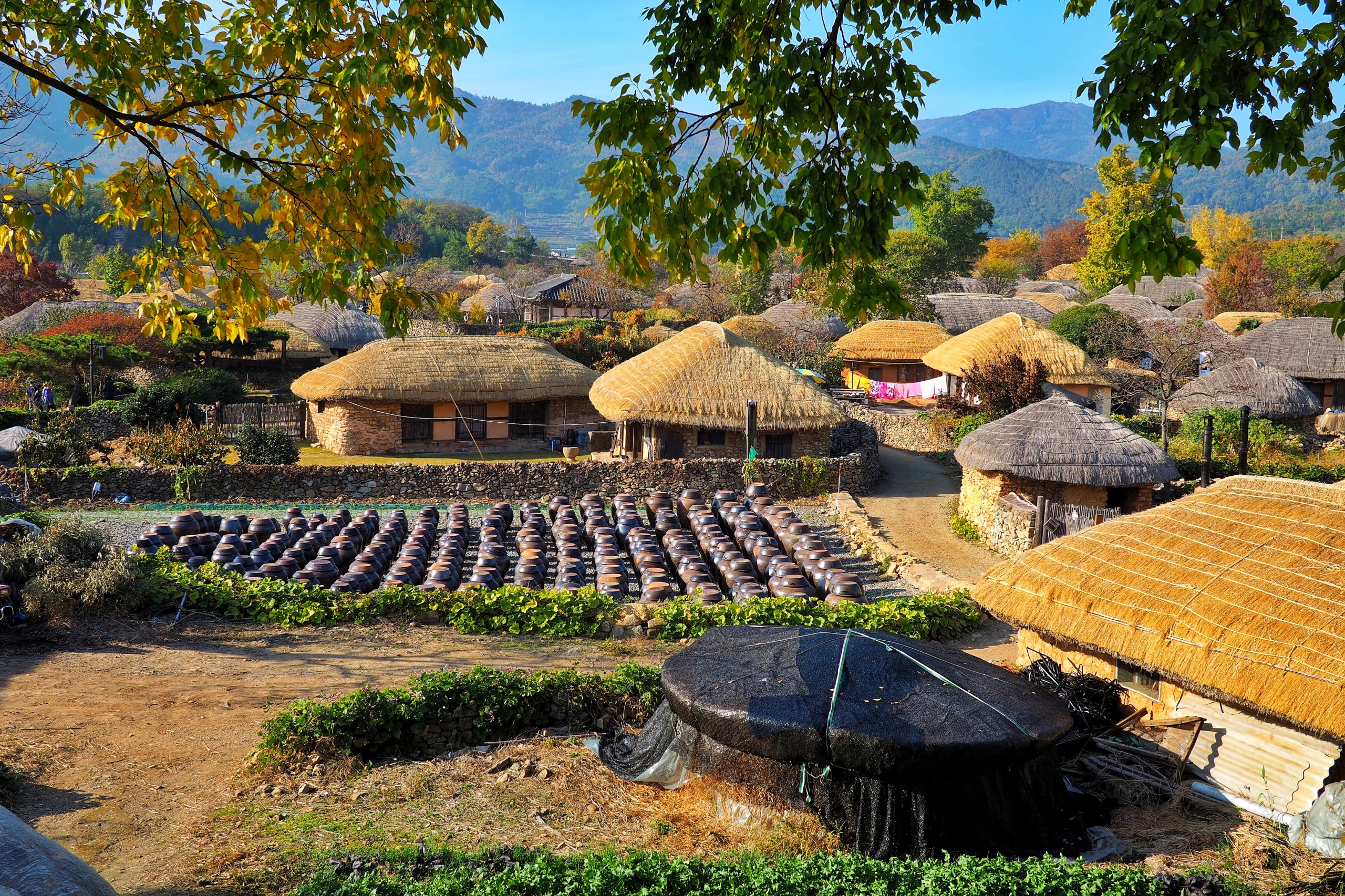
- Naganeupseong Fortified Village — a preserved historic village with stone ramparts and thatched-roof houses, about thirty kilometers away.
- Seonamsa Temple — another major temple in Jogyesan Park, accessible via a hiking trail from Songgwangsa.
Frequently asked questions
Spring (April–May) and autumn (October–November) are most pleasant: mild temperatures and colorful vegetation around the temple. Summer is hot and humid; winter is cold but quiet, with few visitors.
Stays are reserved through the national Templestay program's official website (templestay.com), available in English-speaking formats. It is advisable to book several weeks in advance, especially during peak season.
Yes, a hiking trail connects the two temples through Jogyesan Park. The walk takes approximately two to three hours depending on pace. Plan for a full day and wear sturdy shoes.
Yes, provided you explain the rules of silence and respect. The forest setting and colorful buildings hold their attention. Stairs between courtyards may be tiring for very young children.
Photography is permitted in courtyards and outdoor spaces. It is prohibited inside halls during ceremonies. Never photograph monks without their consent.
Nearby
Interested in this visit?
We can include it in your personalised itinerary.