Taejongdae Park
Taejongdae Park
At the southern tip of Yeongdo Island, Taejongdae Park combines granite cliffs, dense forest and a historic lighthouse overlooking the Korea Strait. A 4 km coastal loop, also accessible by small train, showcasing Busan's most striking natural vistas.
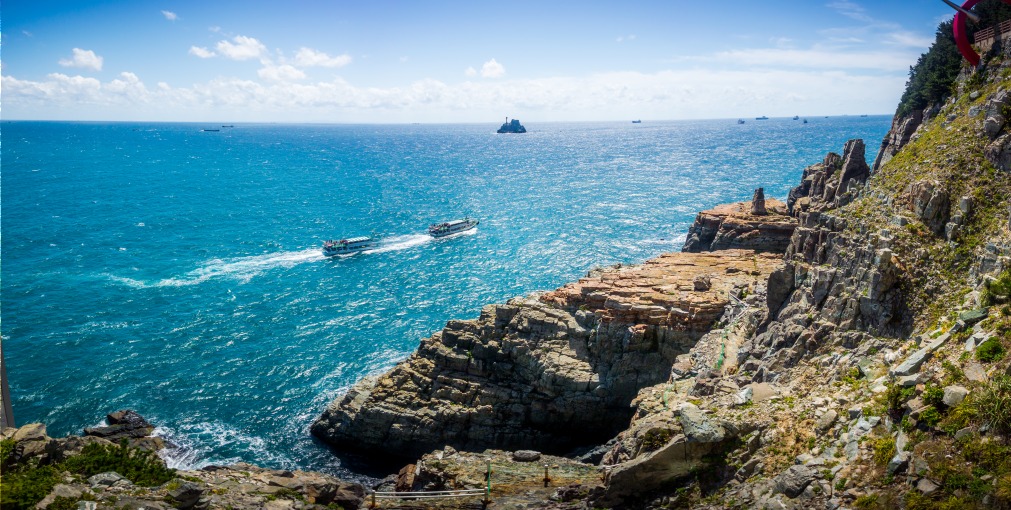
Taejongdae is a natural park located at the southern tip of Yeongdo Island in Busan. Its granite cliffs plunge directly into the Korea Strait, offering raw panoramas across the ocean and, on clear days, views toward Japan's coastline. The site merges dense forest, coastal trails and a historic lighthouse, making it one of the city's most cherished natural retreats.
Practical Information at a Glance
- Admission: Paid entry (adult rate, discounts for children and seniors)
- Access: Bus from central Busan to Taejongdae stop; the park features a small tourist train (Danubi) that loops around the site
- Recommended duration: 2 to 3 hours for the complete circuit
- Attire: Walking shoes recommended on coastal trails
- Accessibility: The Danubi train allows visitors to see major highlights without hiking
What to See
The park revolves around a coastal loop of approximately 4 kilometers. Black granite cliffs dominate the sea and form the visual core of the site. Taejongdae Lighthouse, built during the Japanese colonial period, stands on the most prominent headland. A small pebble beach, Sinseondae, stretches at the foot of the rocks. Pine and oak forest blankets the interior of the peninsula.
History and Context
The name "Taejongdae" references King Taejong of the Silla dynasty, who allegedly practiced archery on this promontory. The site is designated a natural monument of South Korea. The current lighthouse dates to the early 20th century and guided ships entering Busan Harbor, one of Asia's busiest ports.
Highlights of Your Visit
The Cliffs and Main Viewpoint
The vista over the cliffs is the centerpiece of any visit. Jagged rocks battered by waves create a striking contrast with the forest above. On clear days, the horizon occasionally reveals Japan's Tsushima Island.
Taejongdae Lighthouse
The lighthouse is accessible on foot from the main viewpoint. Its integrated museum traces Busan's maritime history. Views from its immediate surroundings across open water extend unobstructed in all directions.
Sinseondae Beach
This pebble beach, nestled between the cliffs, is reached by stairs from the main trail. The spot remains quiet, away from the busier viewpoint crowds. Local legend holds that fairies once descended here to bathe.
The Danubi Train
This small electric train circles the park with several stops. It serves visitors wishing to see the entire site without hiking the full loop, particularly families with young children or those with reduced mobility.
Photography Tips
Morning light is gentler on the cliffs, which face generally south and west. Golden hour in late afternoon tints the granite rocks with warm tones. Avoid days of marine haze, frequent in summer, when visibility across the horizon vanishes. No photography restrictions are known within the park.
Location and Access
Taejongdae sits at the tip of Yeongdo Island, connected to central Busan by a bridge. From the Nampo-dong neighborhood, several bus lines serve the park directly. The journey by bus from downtown takes roughly 30 to 40 minutes depending on traffic. The park is not served by subway; bus remains the most direct option. The internal Danubi train compensates for the lack of metro access within the site.
In the Surrounding Area
- Yeongdo Bridge — historic Busan bridge and essential passage to reach the island from downtown.
- Jagalchi Market — South Korea's largest fish market, situated on Nampo-dong's waterfront.
- Gamcheon Cultural Village — neighborhood of colorful terraced houses, nicknamed the "Machu Picchu of Busan."
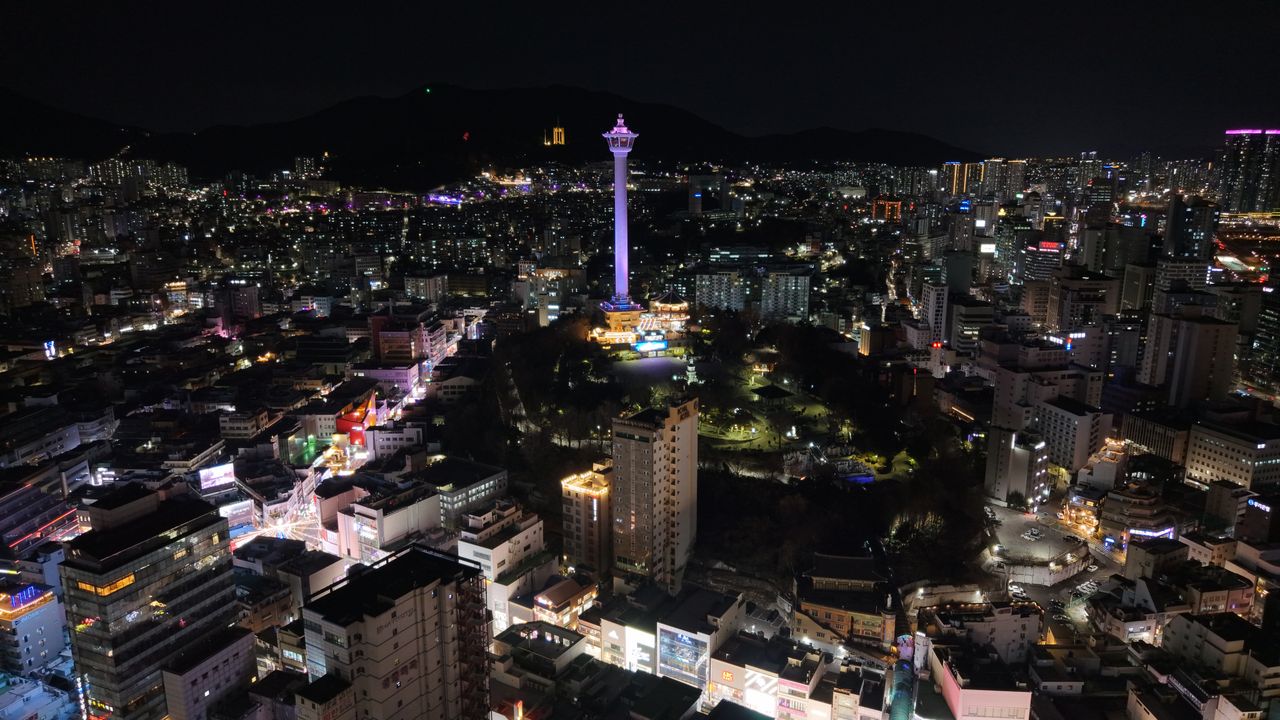
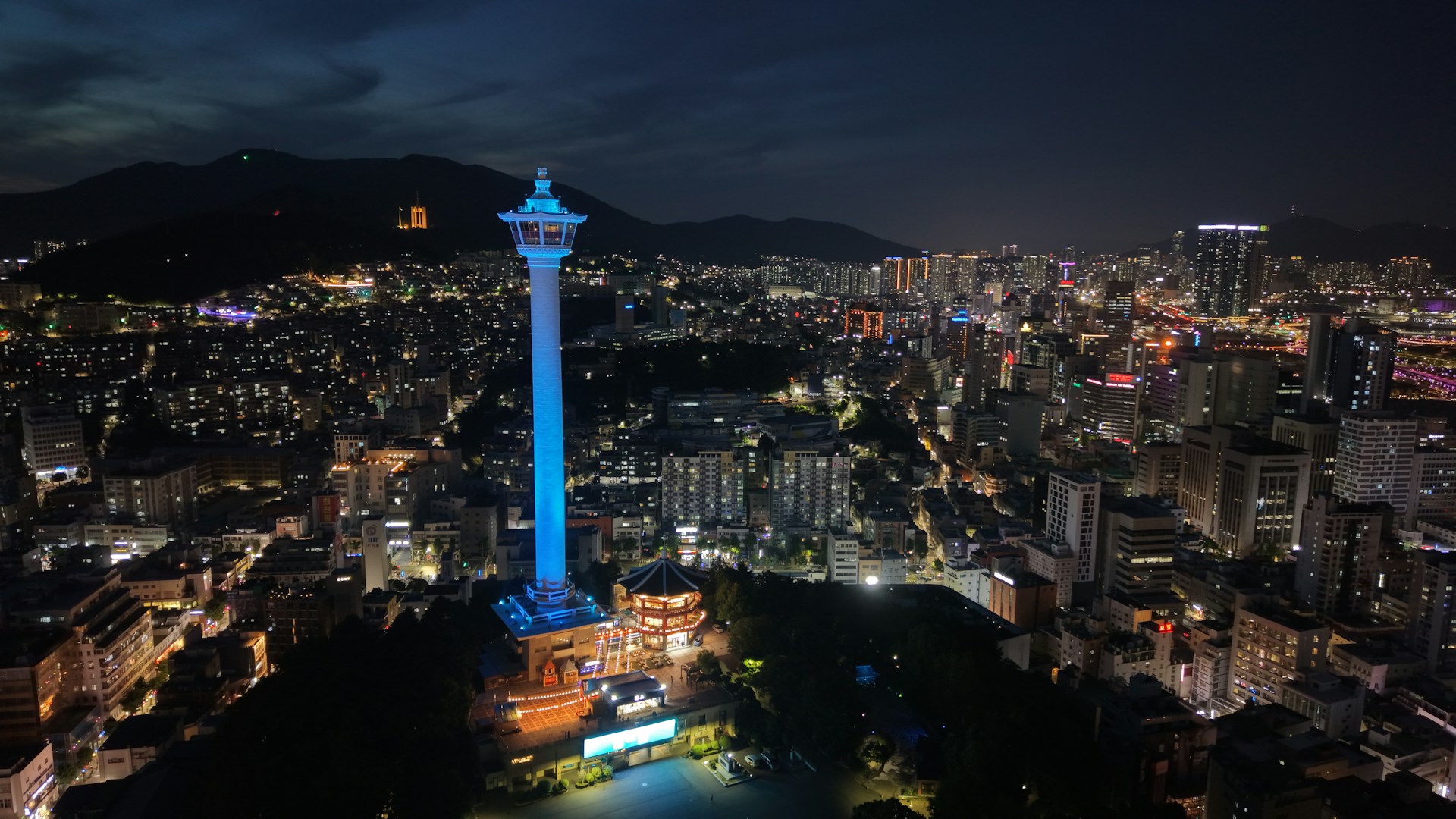
- Busan Tower — panoramic tower in Yongdusan Park, at the heart of the historic center.
Frequently asked questions
Spring (April–May) and autumn (October–November) offer the finest conditions: clear skies, pleasant temperatures and colorful vegetation. Summer is hot and often hazy, reducing visibility across the sea.
The Danubi train serves all main points with multiple stops. You can combine: take the train one way and return on foot along the coastal trail, which takes about 1.5 hours.
On exceptionally clear days, Japan's Tsushima Island becomes visible on the horizon from the main viewpoint. This phenomenon remains rare and depends on atmospheric conditions.
From Yeongdo, reach Nampo-dong by bus to visit Jagalchi Market and Busan Tower the same day. Gamcheon Village is accessible by bus from Nampo-dong.
Yes. The Danubi train eliminates long hikes. Coastal trails feature guardrails at exposed areas. Wear closed shoes for children on rocky sections.
Food stalls and a restaurant operate inside the park, notably near the main viewpoint. The selection remains modest; for a full meal, Nampo-dong is better suited.

Nearby
Interested in this visit?
We can include it in your personalised itinerary.