Sinheungsa Temple
Sinheungsa Temple
Founded in the 7th century, Sinheungsa Temple stands at the heart of Seoraksan National Park. Traditional architecture, a monumental bronze Buddha statue, and mountain trails make it a major stop near Sokcho.
Sinheungsa Temple rises at the heart of Seoraksan National Park in Gangwon Province, just a few kilometers from Sokcho. Founded in the 7th century, it is one of Korea's oldest active Buddhist temples. It combines traditional architecture, a spectacular mountain setting, and living monastic practice — a rare combination that makes it a central destination on any visit to Seoraksan.
Practical Information at a Glance
- Access: entrance via the main gate of Seoraksan National Park (Sogongwon); the temple is accessible on foot from the park entrance, approximately 1 km on a marked path.
- Entry fee: a national park entrance fee is required; access to the temple itself is included.
- Recommended duration: 1 to 2 hours for the temple alone; allow half a day if combining with nearby trails.
- Dress code: respectful attire required; shoulders and knees should be covered.
- Footwear: shoes must be removed before entering prayer halls.
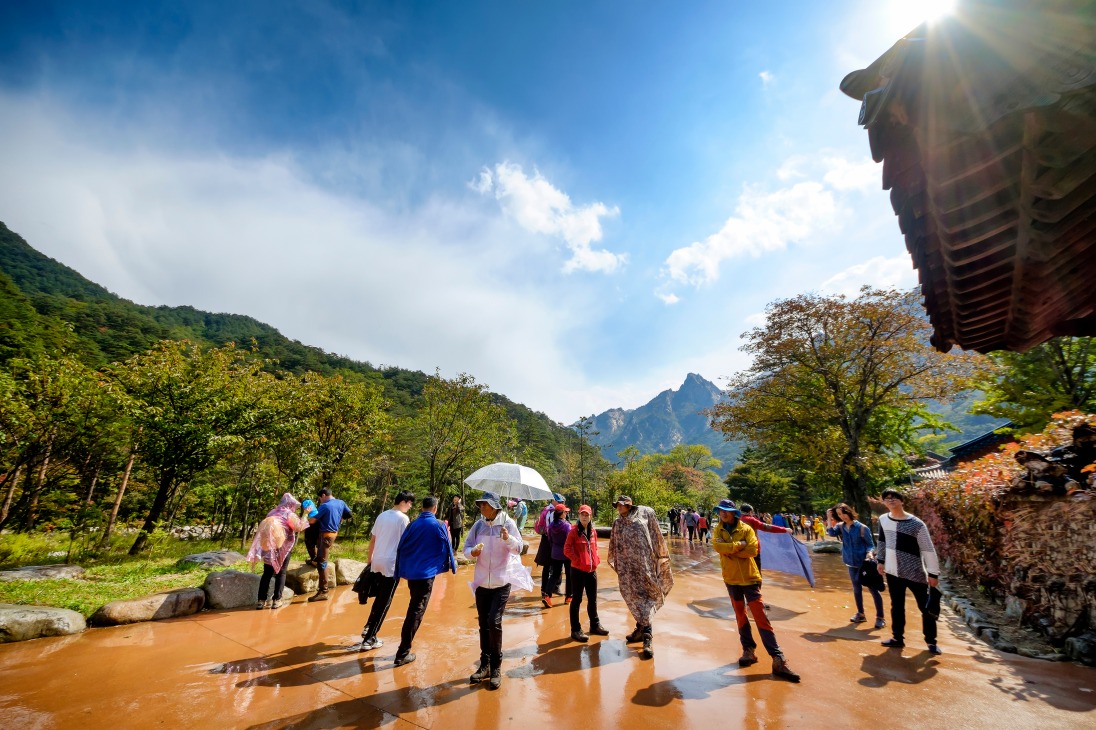
- Accessibility: the main path is largely accessible, though the mountainous terrain limits access to remote areas.
What to See
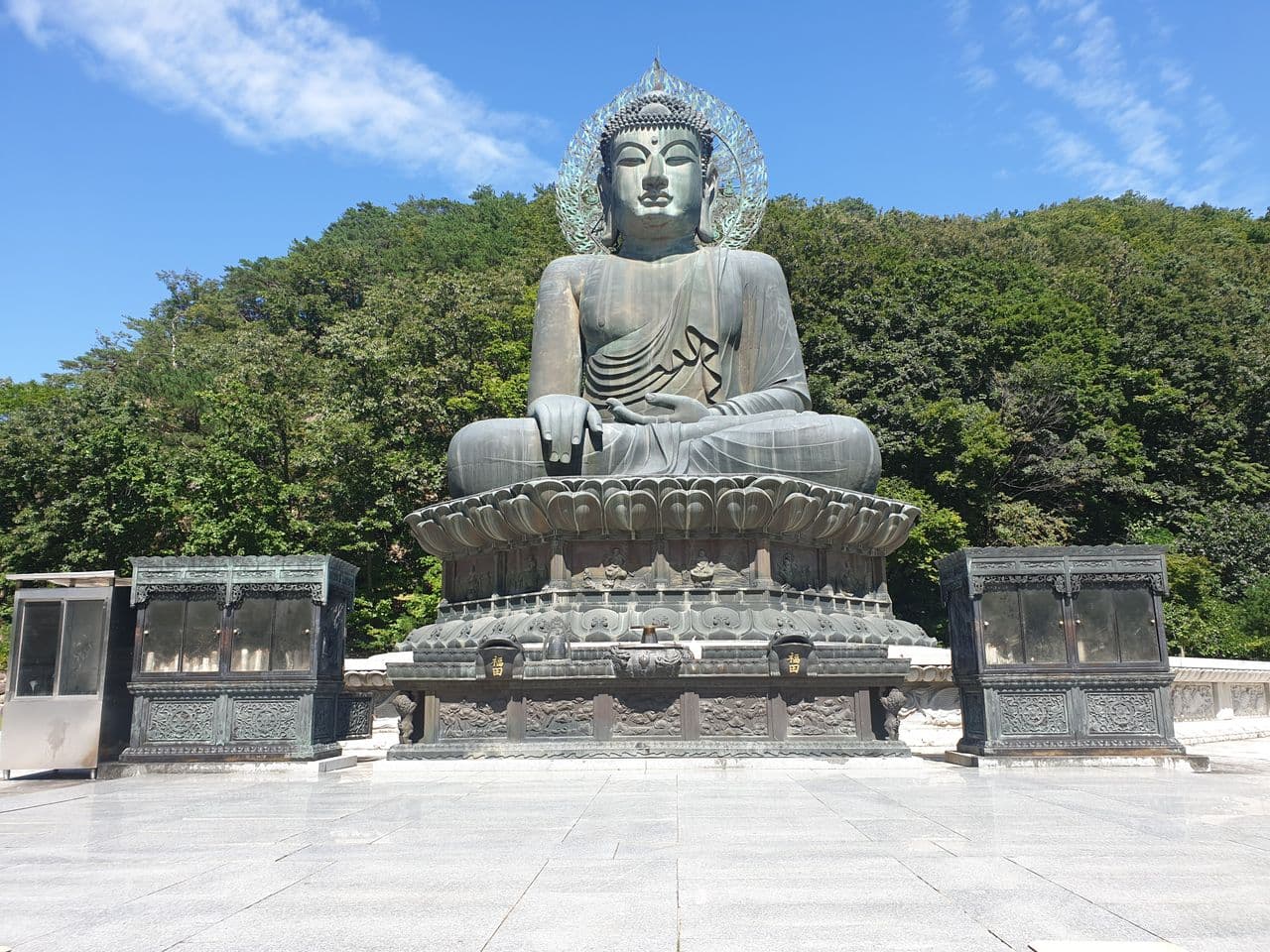
The complex comprises several pavilions with grey tile roofs, including the main Daeungjeon hall dedicated to Shakyamuni Buddha. A monumental bronze Buddha statue — one of Korea's largest — dominates the esplanade facing the granite ridges of Seoraksan. Colorful paper lanterns adorn the eaves during Buddhist festivals. The buildings blend into a forest of pines and deciduous trees, particularly striking in autumn.
History and Context
Tradition attributes the founding of Sinheungsa to 652, under the monk Jajang, who reportedly brought relics of the Buddha from China. The temple was destroyed and reconstructed several times over the centuries, notably after fires. The current structure dates mainly from the 17th century. Sinheungsa belongs to the Jogye order, the principal school of Korean Buddhism, and remains an active center of monastic practice.
Highlights of Your Visit
The Great Bronze Buddha Statue
Erected in 1997, this statue stands dozens of meters high and is visible from the main esplanade. It represents the Buddha of Reunification, symbolizing the desired unification of North and South Korea. Its scale contrasts with the restraint of the ancient pavilions.
The Daeungjeon Pavilion
The spiritual heart of the temple, this hall houses three gilded Buddha statues. The interior is adorned with vivid murals depicting the life of Buddha. Monks conduct services regularly; it is possible to attend ceremonies if you arrive during prayer hours.
The Path to Biryong Falls
From the temple, a marked trail leads to Biryong Falls (Biryongpokpo). This section follows a mountain stream through dense forest — a natural extension of your visit for those wishing to venture deeper into the park.
Etiquette and Visiting Rules
- Remove your shoes before entering prayer halls.
- Speak quietly inside the pavilions; ceremonies may be in progress.
- Do not touch statues or ritual objects.
- Dress modestly; avoid overly casual sportswear in sacred spaces.
- Photography is generally permitted outdoors; check for restrictions inside pavilions.
Photography Tips
Morning light is ideal: it illuminates the pavilion facades without backlighting and gives the roofs a golden hue. In autumn (mid-October to early November), red maples frame the buildings — the most photographed season. For the large Buddha statue, stepping back sufficiently on the esplanade allows you to frame it with the ridges in the background. Check photography restrictions inside prayer halls before bringing out your camera.
Location and Access
Sinheungsa is located in the Sogongwon zone of Seoraksan National Park, about 5 km southwest of Sokcho. From Sokcho, local buses regularly serve the park entrance. By car, paid parking is available at the park entrance. From the entrance, the temple is accessible on foot via a flat, well-maintained path. Guided tours in Korean are offered by the temple; English-speaking private guides can be arranged through a local agency.
Nearby Attractions
- Biryong Falls (Biryongpokpo) — accessible on foot from the temple, these granite-enclosed waterfalls offer one of the park's most popular short hikes.
- Seoraksan Cable Car — near the park entrance, it ascends to Gwongeumseong Peak and offers sweeping views of the granite ridges.
- Ulsanbawi Rock — an iconic rock formation in the park, accessible by hiking trail from the Sogongwon zone.
- Sokcho — a nearby coastal town, the logistical hub featuring a fish market and beaches.
Frequently asked questions
Autumn (mid-October to early November) is the most popular season for fall foliage colors. Spring offers a quieter atmosphere with cherry blossoms and azaleas in bloom. Summer is busy but lush; winter provides a striking snow-covered landscape with fewer visitors.
Access to the temple is included in the entrance fee for Seoraksan National Park, payable at the main gate. There is no separate ticket required for the temple itself.
Yes. Several trails depart directly from Sinheungsa: toward Biryong Falls, toward Ulsanbawi Rock, or into more remote areas of the park. Wear good hiking shoes and bring water.
Photography is generally permitted in outdoor spaces and on the esplanade. Inside prayer pavilions, check signage on site, as rules may vary depending on the hall and any ceremonies underway.
Local buses regularly connect central Sokcho to the Seoraksan National Park entrance. By taxi or car, the journey is short. From the park entrance, the temple is approximately 1 km away on foot via a flat path.
The main path between the park entrance and the temple is largely flat and accessible. Hiking trails toward waterfalls or peaks, however, are steep and less suitable for people with reduced mobility.
Interested in this visit?
We can include it in your personalised itinerary.