Yakcheonsa Temple
Yakcheonsa Temple
Yakcheonsa temple, located in Seogwipo on Jeju Island in South Korea, is one of the largest Buddhist temples in the country. Spectacular murals, a pagoda and a pine forest make it a truly distinctive site.
Perched above Seogwipo, the Buddhist temple Yakcheonsa stands as one of the largest temples in South Korea. Founded in 1990, it impresses with its monumental proportions and the richness of its murals. Nestled within a pine forest, it creates a striking contrast between the serenity of nature and the grandeur of its multi-level architecture. A living place of worship, frequented by both pilgrims and passing visitors alike.
Practical information at a glance
- Admission: free for temple visits
- Dress code: modest clothing required, shoulders and knees covered
- Suggested duration: 1 to 2 hours
- Access: by car or taxi from Seogwipo; parking available on site
What to see
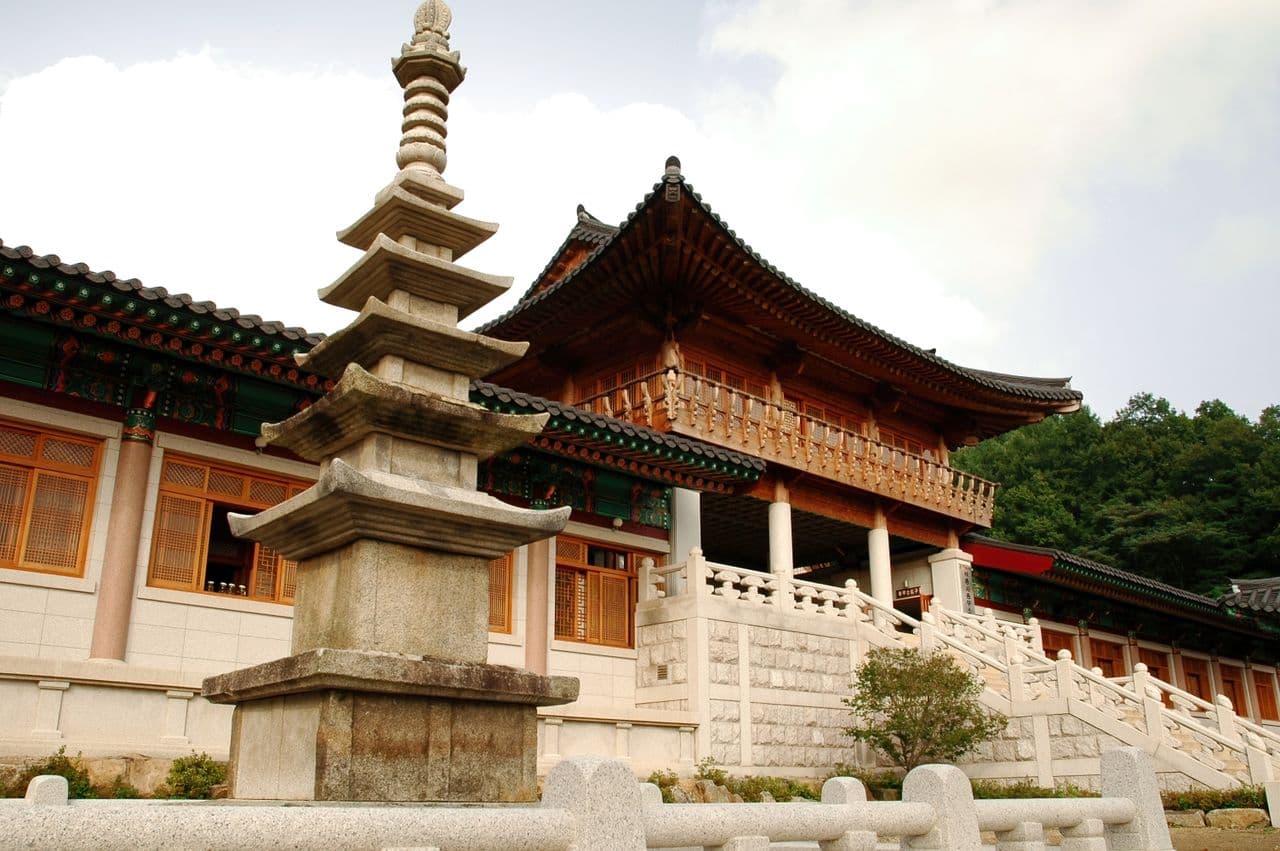
The main building, the Daeungjeon, rises across multiple levels and houses a massive Buddha statue. The interior walls are entirely covered with vibrant murals depicting scenes from Buddha's life and Buddhist deities. The multi-tiered pagoda adjoining the main building is visible from a considerable distance. The gardens and wooded paths surrounding the temple invite contemplative walks.
History and context
Yakcheonsa was founded in 1990 by the monk Hye-in. Despite its recent creation, it fully embodies the traditions of Korean Buddhism within the Jogye school. Its name literally means "temple of the medicinal spring," referring to a pure water spring that once existed on the site. Within just a few decades, it has become one of the most visited temples on Jeju Island.
Highlights of your visit
The Daeungjeon and its murals
The main hall houses one of Korea's largest Buddha statues. The murals covering the entirety of the interior walls form a rare iconographic ensemble in terms of scale and scope. Take time to explore each level to grasp the narrative coherence.
The pagoda and gardens
The stone pagoda standing within the temple grounds is a landmark visible from the surrounding roads. The pine-lined paths and small ponds create an atmosphere conducive to contemplation, even outside prayer hours.
Buddhist ceremonies
If your visit coincides with a ceremony, you may observe collective prayer rituals. The sounds of bells and drums resonate through the forest and form an integral part of the site's experience.
Etiquette and visiting rules
- Remove your shoes before entering prayer halls.
- Speak in hushed tones and avoid loud behavior.
- Do not disrupt ongoing ceremonies.
- Dress modestly: shoulders and knees must be covered.
- Ask permission before photographing monks or people in prayer.
Photography tips
Morning light is ideal for photographing the main façade, which faces east. Interior murals require a high ISO setting, as natural light is limited indoors. The pagoda stands out well against a clear sky in late morning. Avoid using flash inside worship halls.
Location and access
Yakcheonsa sits in the heights above Seogwipo, on the southern coast of Jeju Island. Access by car or taxi from central Seogwipo is the most practical option. The temple is near several other natural and cultural sites in southern Jeju. Parking is available at the entrance.
Nearby attractions
- Cheonjiyeon Falls — iconic waterfalls of Seogwipo, accessible on foot from the city center.
- Jeongbang Falls — one of Asia's rare waterfalls flowing directly into the sea.
- Jeju Olle Trail — network of coastal paths running along the island's south shore.
- Sangumburi Crater — volcanic crater designated as a nature reserve, in the island's center.
Frequently asked questions
Temple visits are free of charge. Specific programs such as retreats or temple stays may incur fees.
Clothing covering shoulders and knees is required. Also bring shoes that are easy to remove, as they must be taken off before entering prayer halls.
Photography is generally permitted in outdoor areas. Inside worship halls, avoid using flash and do not photograph people in prayer without their consent.
A taxi is the simplest solution from central Seogwipo. A rental car remains the most flexible option for exploring southern Jeju.
The temple is accessible year-round. Spring (April–May) and autumn (October–November) offer the most pleasant conditions, with mild temperatures and colorful vegetation around the site.
Yes. Cheonjiyeon and Jeongbang Falls are both located in Seogwipo and can easily be visited on the same day. Plan for half a day to see everything.
Interested in this visit?
We can include it in your personalised itinerary.