Chungju
Chungju
Just 2 hours from Seoul, Chungju blends a shimmering lake, the peaks of Woraksan, and the heritage of the Three Kingdoms. Your complete guide to planning your visit.
Once the provincial capital of North Chungcheong, Chungju is a city brimming with surprising historical depth. A destination in its own right, this city has everything to offer visitors. Home to numerous historical and cultural monuments and boasting a wealth of activities, coupled with its proximity to the capital and many tourist sites, Chungju is a place not to miss during your stay in South Korea.
History
During the period of the Three Kingdoms, Chungju was part of the Mahan confederation, a federation comprising 54 small states that existed from the 1st to the 3rd century in southwestern Korea. Later, in 350, it fell under the rule of the Baekje kingdom.
Throughout its history, Chungju underwent several name changes. Between 457 and 550, it was known as Gukwonseong. In 557, it took the name Gukwonsogyeong. In 685, Jungwonsogyeong. In 757, Jungwongyeong. But it was between 940 and 1018 that it was first called Chungju.
In 1896, following administrative reform and the creation of North Chungcheong Province, Chungju became the provincial capital until 1906, when this role was transferred to the city of Cheongju. In 1956, it achieved city status, and the rural communes within its territory were administered separately as part of Jungwon District until 1995.
Chungju is renowned for its martial arts festival held each October. It is also the place where former UN Secretary-General Ban Ki Moon grew up.
Chungju Today
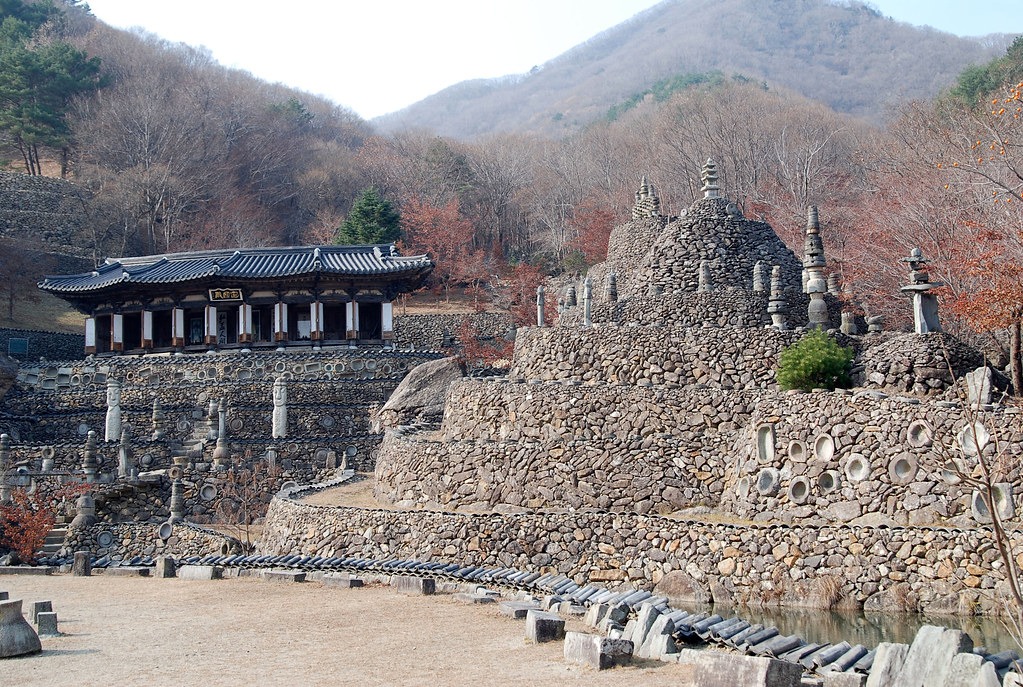
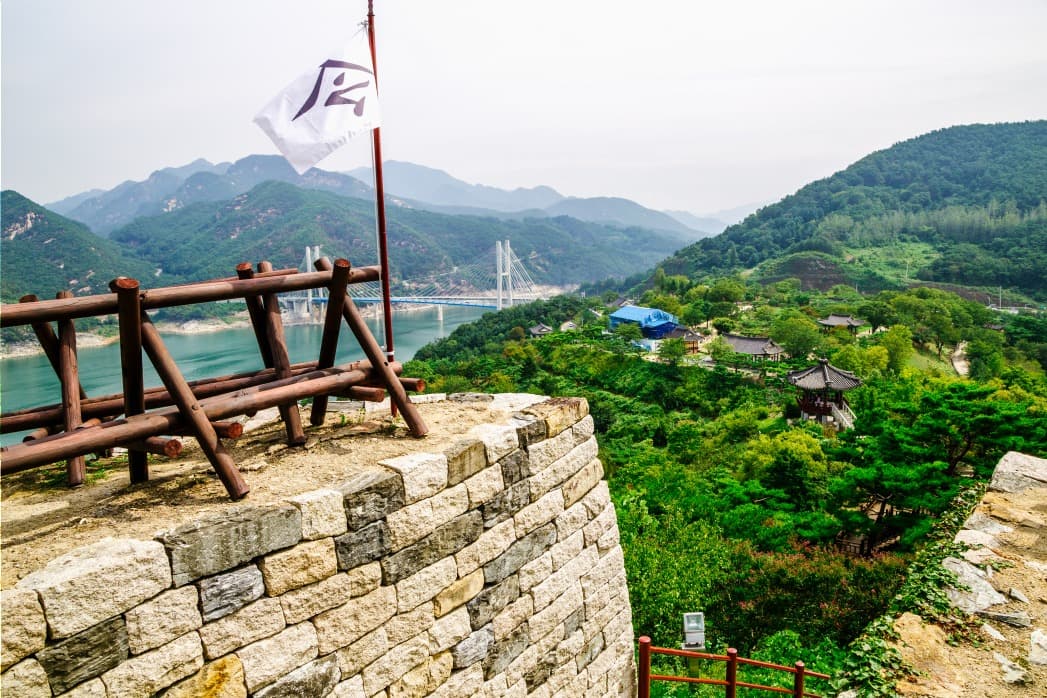
Today, Chungju is a city boasting numerous assets from a tourism, cultural, and historical perspective. You need only visit its various historical and cultural monuments to be convinced: Jeongtosa Temple Tower, the Cheongpung Cultural Heritage Complex, the Sotdae Cultural Space, or Woraksan National Park. Chungju is also renowned for the beauty of its landscapes, as evidenced by the stunning lake that shares the city's name.
Among other things that have earned the city its reputation is undoubtedly the martial arts festival that takes place there every year. Originally, this festival aimed to introduce taekkyon, a Korean martial art. However, it has since grown into a national-scale event that captures the curiosity not only of martial arts enthusiasts but also of casual tourists passing through the city.
Geography
Chungju is located in the center of Korea in a gently mountainous region. Its territory is marked by the presence of Chungju Lake. This artificial lake was created between 1978 and 1985 to protect against flooding and to generate electricity to supply the city.
In terms of landscape, it is characterized by numerous peaks, including Poamsan (962 m), Cheondeungsan (807 m), Bukbawisan (776 m), and Gyemyeongsan (774 m).
Climate
Chungju enjoys a continental climate with hot, humid summers and cold, dry winters. Its inland position allows it to benefit from greater sunshine and wider temperature fluctuations compared to the rest of the peninsula.
How to Get to Chungju?
By Bus:
From Dong-Seoul Bus Terminal to Chungju.
By Train:
You can also take the train from Seoul Station to Chungju.
What to See and Do?
Attend the martial arts festival
Discover Chungju Lake
Explore Woraksan National Park, and more
Want to discover this destination?
Our local advisors design your tailor-made trip.