Bukhansan National Park
Bukhansan offers granite ridges, an 18th-century fortress and Buddhist temples less than an hour by subway from central Seoul. An urban national park of remarkable density.
Bukhansan National Park spreads across the northern foothills of Seoul, straddling the capital and Gyeonggi Province. Its granite ridges — with the summit Baegundae reaching 836 metres — dominate a metropolis of ten million inhabitants. Pine forests, Buddhist temples and fortification remnants coexist on terrain that Seoulites reach by subway in less than an hour.
Practical Info at a Glance
- Access: multiple entrances served by subway lines 3 (Gupabal or Donggureung stations) and line 4 (Suyu or Mia stations). Local buses supplement the network.
- Entry: free park access; some temples inside charge modest entrance fees.
- Recommended duration: half-day for a short hike; full day to reach Baegundae.
- Clothing: hiking boots strongly recommended — rocky trails are slippery in wet conditions.
- Rules: camping prohibited outside designated zones; plant collection forbidden; dogs allowed on leash.
- Partial closures: some trails close during fire-risk periods (dry spring) or after heavy snowfall.
What to See
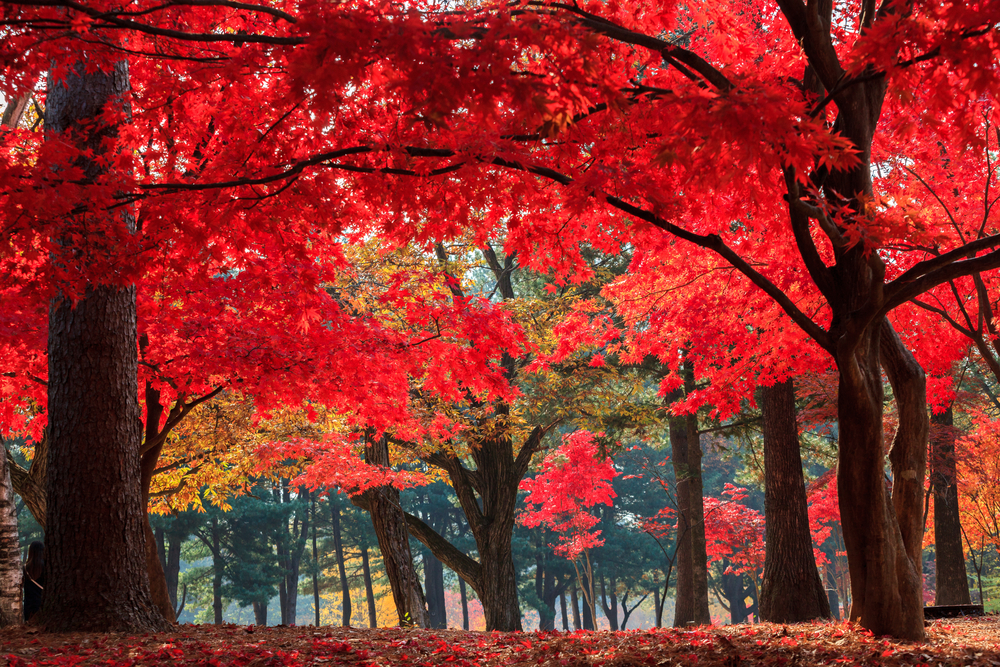
The park divides into three main zones: Bukhansan in the southwest (Baegundae sector), Dobongsan in the northeast and Obongsan between them. Polished granite rock formations dominate the ridgelines. Valleys shelter streams, modest waterfalls and mixed vegetation that turns red and orange in autumn.
- Baegundae summit (836 m): highest point, panoramic views over Seoul and, on clear days, to the northern mountains.
- Bukhansanseong fortress: stone rampart from the 18th century running along the ridges for several kilometres.
- Doseonsa temple: Buddhist complex nestled in the valley, accessible from the Ui-dong entrance.
- Jingwansa temple: another active monastery, starting point for trails to the western ridges.
- Dobongsan sector: vertical rock peaks favoured by climbers, wilder atmosphere than the Baegundae sector.
History and Context
Bukhansan has been designated a national park since 1983. Bukhansanseong fortress was built under King Sukjong (Joseon dynasty) in the early 18th century to protect the capital from potential invasions. Its walls, roughly 8 km long, incorporate natural rocky terrain as additional defence. The park is often cited among the world's most-visited national parks relative to its area.
Highlights of Your Visit
The Baegundae Ascent
The classic route departs from the Bukhansan-seong or Dobong entrance. The final section, across bare rock equipped with metal cables, demands real physical effort. The panorama at the summit — Seoul on one side, forested hills on the other — fully justifies the exertion.
Bukhansanseong Fortress
Restored wall sections can be walked along the ridges. Ancient gates (including Daeseo-mun and Bungmun) are well preserved. Hiking the ramparts offers open views without requiring you to reach the summit.
Autumn in the Valleys
From mid-October to early November, maples and ginkgos colour the Jingwansa and Ui-dong valleys. This is the busiest period: arriving early in the morning is advised to avoid crowds on main trails.
Climbing at Dobongsan
Granite walls in the Dobongsan sector have attracted Korean climbers for decades. Routes of all levels are equipped. Non-climbers can walk along the cliffs via hiking trails and watch the ascents.
Photography Tips
Morning light is ideal on Baegundae: the pale granite reflects well before pollution haze rises. In autumn, the Jingwansa and Ui-dong valleys offer colourful foregrounds with rocky ridges as backdrop. No photography restrictions exist in the park; inside temples, check local signs before photographing worship spaces.
Location and Access
The park borders northern Seoul districts (Dobong-gu, Gangbuk-gu, Eunpyeong-gu) and extends into Goyang and Yangju in Gyeonggi Province. From central Seoul, allow 30 to 50 minutes by subway depending on which entrance you choose. The Seoul metro network directly serves several park entrances, making a car unnecessary. Hiking signs in Korean and English mark the main trails.
Nearby Attractions
- Gyeongbokgung Palace — principal palace of the Joseon dynasty, accessible from central Seoul by subway.
- Bukchon Hanok Village — quarter of traditional Korean houses between Gyeongbokgung and Changdeokgung.
- Changdeokgung Palace — Joseon palace Unesco-listed, with its secret garden Huwon.
- Dobongsan sector — northeast part of the park, wilder, with its climbing walls and valley temples.