Han River (Han-gang)
The Han River flows through Seoul for over 40 km, lined with free parks, cycling paths and lively terraces. An essential living space to understand the city's daily rhythm.
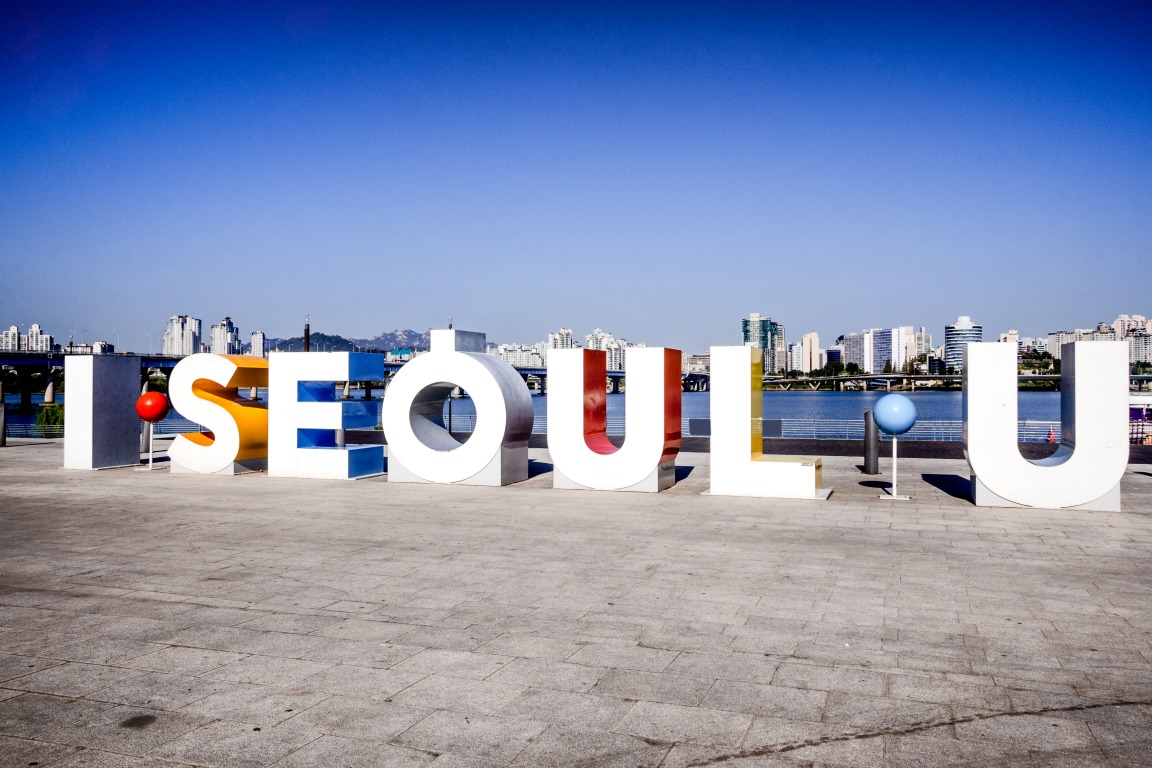
The Han River winds through Seoul for more than 40 kilometres, separating the city's northern and southern districts. Far more than just a waterway, it constitutes a complete living space: landscaped parks, cycling paths, sandy beaches, waterfront terraces and seasonal fireworks. Seoulites gather there at all hours to picnic, exercise or simply watch the water flow by.
Key information at a glance
- Access: several metro stations serve the riverside parks (lines 2, 5, 9 notably — Yeouinaru, Ttukseom, Banpo, Mangwon stations).
- Admission: free access to all Han River parks.
- Recommended duration: 2 to 4 hours depending on the park you choose.
- Bicycles: rentals available at several riverside parks.
- Dress code: no restrictions.
What you'll find there
The river is lined with twelve official parks, each with its own character. Yeouido is the most central and lively, with vast lawns and ramyeon kiosks dotted throughout. Ttukseom, on the east side, attracts families and sports enthusiasts. Banpo is known for its illuminated fountain bridge, the Banpo Bridge Rainbow Fountain, visible in the evening from the riverbanks.
In summer, artificial sandy beaches open in certain parks. Sports facilities, open-air pools and concert stages round out the seasonal offerings.
History and context
The Han River has played a central role in Korean history: a commercial waterway, strategic frontier, and later symbol of South Korea's "economic miracle" of the 1960s–1980s. The phrase "Miracle on the Han" refers to the country's meteoric industrial growth, with Seoul as its driving force. The riverbanks, once industrial or militarised, were transformed into public spaces beginning in the 1980s.
Highlights of a visit
Korean picnic on the lawns
The culture of picnicking beside the Han is a cherished Seoul ritual. Instant ramyeon prepared on the spot, chimaek (fried chicken and beer), tteokbokki: the park kiosks provide everything you need. Bringing a mat (available for rent) and settling down facing the river is an authentically local experience.
Banpo Bridge fountains
Banpo Bridge is home to one of the world's longest bridge fountains. In the evening, coloured water jets burst from both sides of the deck, synchronised with music. Shows run several times each evening in warm season — check the official schedule on-site.
Cycling path and urban panoramas
A cycling path runs along both banks for considerable distances. The route between Yeouido and Mapo Bridge offers expansive views of Seoul's northern skyline, with Namsan and its tower as backdrop.
River cruises
Tour boats depart from several docks (Yeouido, Ttukseom, Jamsil) for daytime or evening cruises. The nighttime view of illuminated bridges and riverside high-rises is particularly striking.
Photography tips
Golden-hour light in late afternoon is ideal from Yeouido's banks, with Mapo Bridge in the foreground. For Banpo's fountains, position yourself on the south bank after sunset. A telephoto lens allows you to frame N Seoul Tower from the park lawns with the river in the foreground.
Location and access
The Han River flows through Seoul from east to west. The most accessible parks by public transport are:
- Yeouido Han River Park — Yeouinaru station (line 5).
- Ttukseom Han River Park — Ttukseom Resort station (line 7).
- Banpo Han River Park — Express Bus Terminal station (lines 3, 7, 9), then a short walk.
- Mangwon Han River Park — Mangwon station (line 6).
Parks are accessible by bike from many neighbourhoods thanks to dedicated cycling lanes. Accessibility for visitors with reduced mobility varies by park; Yeouido features adapted pathways.
Nearby attractions
- N Seoul Tower (Namsan) — visible from the riverbanks, accessible by cable car from Myeongdong district.
- Yeouido district — Seoul's financial and political centre, famous for its cherry blossoms in spring.
- Noryangjin Fish Market — major seafood market open day and night, just steps from the river.
- Lotte World Tower — soaring skyscraper dominating the river's east bank, with panoramic observation deck.
- Seoul Olympic Park — legacy of the 1988 Olympics, outdoor sculptures and sports museum, on the river's east side.
Frequently asked questions
Spring (April–May) and autumn (September–October) offer the most pleasant temperatures. In April, cherry blossoms bloom near Yeouido. Summer is lively but hot and humid; in winter, parks remain open but the atmosphere is quieter.
Swimming in the river is prohibited. However, several riverside parks have open-air pools open in summer, particularly at Yeouido and Ttukseom.
Position yourself on the south bank (Banpo Han River Park) after sunset. Illuminated fountain shows run several times each evening in warm season (typically spring through autumn). Consult Seoul city's official schedule before your visit.
Yes, bike rental stations are available at most major riverside parks. Seoul's bike-sharing service Ttareungyi (Seoul public bikes) also has docking stations near several parks.
Evening cruises offer an original perspective on illuminated bridges and the skyline. They depart from several docks including Yeouido and Jamsil. Duration is typically around one hour.
Easily. From Yeouido, Noryangjin Market is just a few metro stops away. The Olympic Park and Lotte World Tower sit on the river's east side. One day is enough to combine a riverside park with one or two nearby attractions.