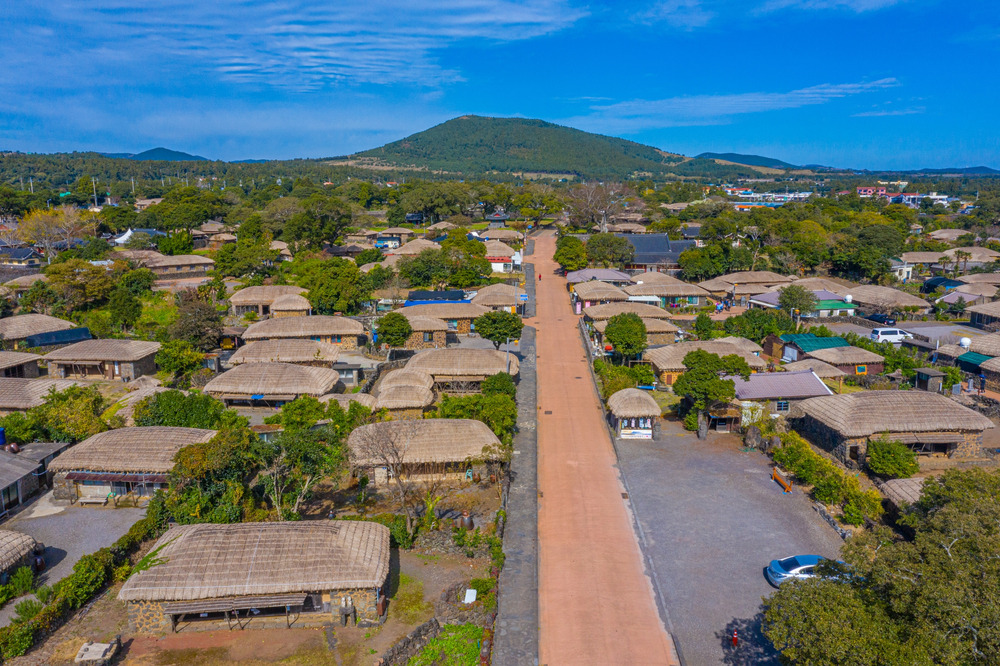
Ssanggyesa Temple
Founded in the 8th century on the slopes of Mount Jiri, Ssanggyesa Temple is one of Korea's oldest. Its cherry blossom-lined avenue in spring and its pagoda—designated a national treasure—make it a major stop in South Korea.
Ssanggyesa Temple stands at the heart of Jirisan National Park, in Hadong County, South Gyeongsang Province. Founded in the 8th century, it is one of Korea's oldest active Buddhist temples. Nestled between the wooded slopes of Mount Jiri and the Ssanggyecheon stream, it attracts both pilgrims and hikers. In spring, the cherry blossom-lined avenue leading to the entrance is among the most photographed in the country.
Quick Reference
- Admission: Paid entry (reduced rates for children and seniors)
- Dress code: Respectful attire required; shoulders and knees should be covered
- Suggested duration: 1.5 to 2 hours for the temple alone; plan a half-day if including hiking
- Access: Bus from Hadong or Gurye station; parking available at park entrance
- Templestay program: Immersion stays available by reservation
What to See
The complex comprises several pavilions arranged in terraces along the stream. The main hall, Daeungjeon, houses a statue of Shakyamuni Buddha. The nine-tiered stone pagoda (a national treasure) stands in the central courtyard. Colorful paper lanterns adorn the eaves during Buddhist festivals. The Ssanggyecheon stream, visible from several points throughout the site, adds a constant auditory dimension to your visit.
History and Context
The temple was founded in 723 during the Silla dynasty by the monk Sambeop. Legend has it that tea seeds brought from China by Ambassador Kim Daeryeom were planted here in the 9th century—making Hadong one of the birthplaces of Korean tea. The temple was destroyed and reconstructed multiple times, notably during the Japanese invasions of the 16th century. Most of the current buildings date from reconstructions in the 17th–18th centuries.
Highlights of Your Visit
The Cherry Blossom Avenue
The nearly one-kilometer access path is lined with centuries-old cherry trees. In April, the blossoms form a pink tunnel above the trail. This is one of the most sought-after hanami spectacles outside Korea's major cities.
The Stone Pagoda
Designated a national treasure, this nine-tiered pagoda is one of the rare examples of its kind still standing in Korea. Its understated style, typical of the Unified Silla period, contrasts beautifully with the dense vegetation surrounding it.
The Stream and Jirisan Hiking Trails
From the temple, several trails climb toward Mount Jiri's ridges. The path alongside the Ssanggyecheon stream is accessible to all levels and offers views of wooded gorges. In autumn, the maples make the trek particularly colorful.
The Templestay
Ssanggyesa offers an immersive stay program: meditation, tea ceremony, vegetarian meals, and participation in monastic services. A concrete way to experience Korean monastic life firsthand.
Etiquette and Visiting Rules
- Speak quietly in the pavilions and during services.
- Do not photograph monks without their permission.
- Remove your shoes before entering prayer halls.
- Avoid overly short or transparent clothing.
- Do not touch statues or ritual objects.
Photography Tips
Morning light, before the crowds arrive, is ideal for photographing the pavilions. In April, arrive early to capture the cherry blossom avenue in morning mist. Autumn offers striking contrasts between green roofs and red foliage. Avoid using flash inside the pavilions.
Location and Access
Ssanggyesa sits in Hadong County, at the southwestern edge of Jirisan National Park. The nearest town with a railway station is Gurye, in South Jeolla Province, accessible from Seoul or Busan. Local buses connect Gurye and Hadong to the park entrance. By car, the temple is reachable via the Namhae Highway. The site is partially accessible to people with reduced mobility on the main pathways, though upper terraces require climbing stairs.
Nearby Attractions
- Jirisan National Park — the largest national park on the Korean mainland, with multi-day hiking routes.
- Hadong Tea Plantations — the Hwagae and Agyang tea gardens, among Korea's oldest, just a few kilometers from the temple.
- Hwagae Market — a traditional market renowned for local products, including green tea and mountain herbs.
Frequently asked questions
Spring (early April) for flowering cherry blossoms and autumn (October–November) for colorful foliage are the two most spectacular seasons. Summer is verdant but can be rainy during monsoon season.
Yes. Several trails depart directly from the temple toward Mount Jiri's ridges. The path alongside the Ssanggyecheon stream is accessible to hikers of all levels. Ascents to the summits require good fitness and a full day.
Reservations are made through the official Korean Templestay program website (templestay.com). It is advisable to book several weeks in advance, especially during spring and autumn.
Photography is generally permitted in outdoor courtyards. Inside the pavilions, avoid flash and check for prohibition signs. Never photograph monks without explicit consent.
A few small shops offer snacks and local green tea at the site entrance. For a full meal, the nearby village of Hwagae has several restaurants specializing in Korean mountain cuisine.
Interested in this visit?
We can include it in your personalised itinerary.