Gyeongsang and Busan
Southeast Korea brings together Gyeongju, the thousand-year-old capital of the Silla kingdom, the Confucian villages of Andong, and the bustling port energy of Busan, the country's second city.
Southeast of the peninsula, which Koreans call Gyeongsang, encompasses two provinces (Gyeongsangbuk-do to the north, Gyeongsangnam-do to the south) and the port metropolis of Busan, home to 3.4 million people. It is a region of low forested mountains, rice-paddy valleys, and a highly jagged coastline opening onto the Sea of Japan (which Koreans call the East Sea) and the Korea Strait. From Seoul, the KTX reaches Busan in 2 hours 15 minutes and Gyeongju in 2 hours, making it the simplest combination for leaving the capital without losing a day to travel.
Gyeongju, inland, served as the capital of the Silla kingdom for nearly a thousand years, from the 1st to the 10th century. The present-day city, modest with 260,000 inhabitants, retains a low urban fabric and royal tumuli in the city center, within Tumuli Park. Bulguksa Temple and Seokguram Grotto, both UNESCO-listed, date from the 8th century and bear witness to Silla Buddhism. A full day allows you to cover the historic center by bicycle, and a second day is worthwhile for Bulguksa, Seokguram, and Cheomseongdae Observatory at sunrise, before the domestic tour buses arrive.
Further north, around Andong, you enter Confucian Korea. The village of Hahoe, also UNESCO-inscribed, is a clan village of the Ryu family still inhabited today, with houses featuring thatched or tiled roofs arranged in a loop of the Nakdong River. Andong is also known for its wooden masks (tal) and jjimdak, a dish of braised chicken with glass noodles and soy sauce. If time permits, the Dosseowon Academy, a 16th-century neo-Confucian school, rounds out the visit nicely in a half day.
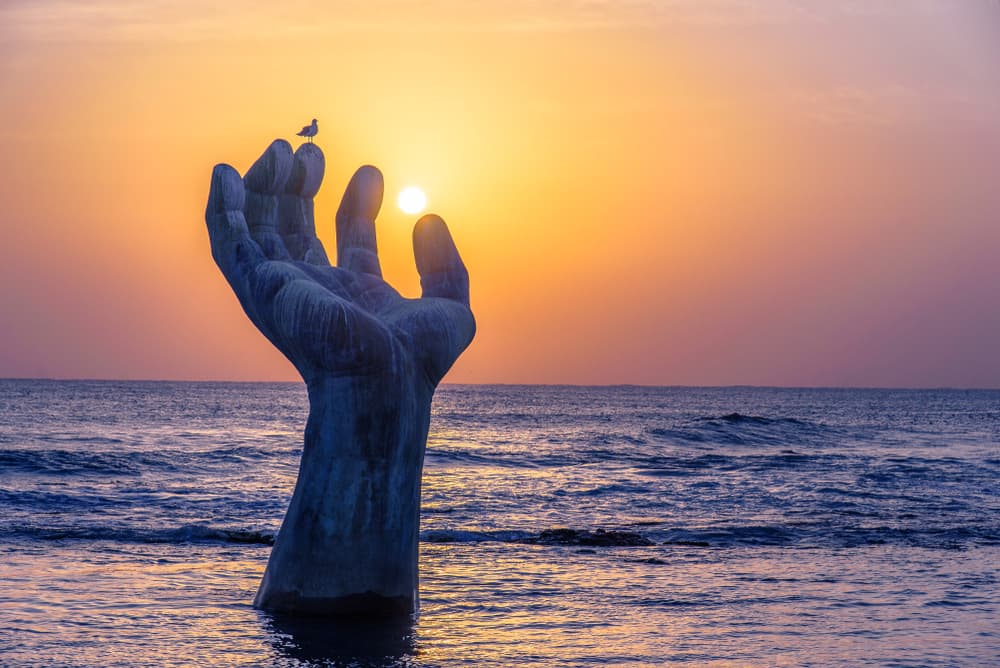
Busan has an entirely different energy. The country's second city and leading container port, it stretches along a narrow band between sea and hills. Haeundae and Gwangalli concentrate urban beaches and residential towers, Jagalchi houses Korea's largest fish market (where ajummas still sell freshly sliced raw fish on the spot), and Gamcheon, a former Korean War refugee neighborhood turned artist village, its stepped alleyways painted in bright colors. West of the city, Beomeosa Temple, nestled against Mount Geumjeongsan, offers a quieter counterpoint just 30 minutes from downtown. The Busan International Film Festival in October animates the city for ten days.
Gyeongsang cuisine has its own signatures. Milmyeon, wheat noodles chilled in an iced broth, was born in Busan in the post-war years when buckwheat from the north (used for naengmyeon) was scarce. Dwaeji gukbap, a rice and pork soup, is eaten at any hour in gukbap-jip around the station. In Tongyeong, a fishing port 1 hour 30 minutes west of Busan, you can taste grilled eel and oysters in winter. The climate is milder than the north: Busan hovers around 5 to 7°C in January, and summer (July-August) is hot and very humid, with typhoon season in August-September.
Must-see
Royal Tumuli of Gyeongju. About twenty grass-covered mounds 10 to 20 meters high, scattered throughout Gyeongju's city center. The Cheonmachong tumulus, open to the public, displays the burial chamber and a 5th-century gold crown.
Hahoe Clan Village. Inhabited since the 14th century by the Ryu family, nestled in a loop of the Nakdong River. You can still witness the Byeolsingut mask performance, a peasant satire of Confucian nobility, performed outdoors on weekends.
Jagalchi Market in Busan. Early in the morning, boats unload live octopus, eels, and pufferfish. Upstairs, restaurants prepare whatever you've just bought downstairs, from raw amberjack to steamed crab, to order.
Gamcheon, the color village. A neighborhood built on a hillside by Korean War displaced persons in the 1950s. Cubic houses painted blue, yellow, and pink cascade in tiers facing the port. You can explore it on foot in 2 hours.
Bulguksa Temple in spring. Founded in 528, rebuilt in the 8th century. The stone bridges Cheongun-gyo and Baegun-gyo and the pagodas Dabotap and Seokgatap are original. Mid-April brings cherry blossoms framing the pavilions.
When to visit
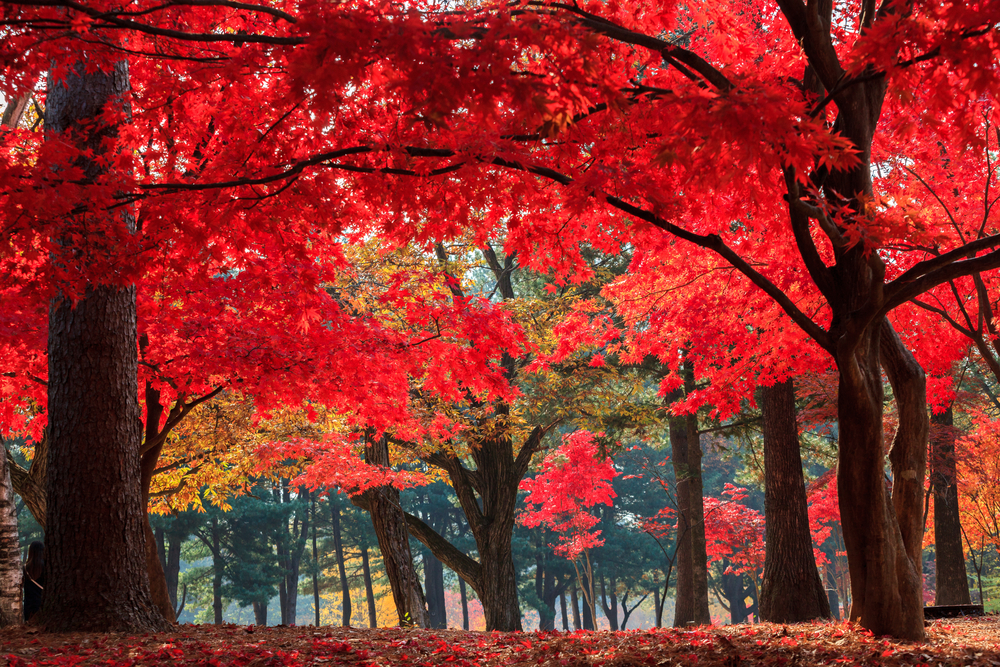
The best period runs from April to June and September to early November. April brings cherry blossoms to Gyeongju and Jinhae (festival in early April), with temperatures between 10 and 18°C. October offers clear skies and red maples around Bulguksa and Mount Palgongsan, around 15 to 20°C. These two windows are also preferred by Korean travelers: we book Gyeongju hanok 2 to 3 months in advance.
July and August are hot (28 to 32°C) and very humid, with the monsoon (jangma) from late June to mid-July and typhoon risk in August-September, especially on the Busan and Tongyeong coast. Winter remains manageable: Busan averages 5 to 8°C during the day in January, compared to -3°C in Seoul, and beaches are empty but photogenic. Andong, more continental, dips below zero in January-February, making outdoor village visits more challenging.
Practical advice
We recommend 4 full days for this region: 2 nights in Gyeongju (historic center + Bulguksa/Seokguram) and 2 nights in Busan (Gamcheon, Jagalchi, Haeundae, or Beomeosa). Adding Andong and Hahoe requires 1 to 2 extra days, taking a northerly detour before reaching Gyeongju. The logical entry point is the KTX from Seoul (Singyeongju Station for Gyeongju, Busan Station terminus). Gimhae International Airport near Busan also offers direct flights from several Asian cities, useful if combining with Jeju (50 minutes by air).
The most natural combination is Seoul and surroundings, then descent through Gyeongsang-Busan, then a flight to Jeju from Gimhae. Travelers with two weeks can insert Jeolla (Jeonju, Suncheon) between Busan and return, by train or car along the south coast. Comfort is high throughout: 4-star hotels in Busan, renovated hanok in Gyeongju, ryokan-style accommodations in Andong. The region suits travelers interested in history (Silla, Joseon Confucianism) and urban cuisine quite well, rather less so for hikers who may prefer Gangwon and Seoraksan.