Seoul and Surroundings
Capital of 9.7 million inhabitants between Joseon palaces, hanok neighborhoods and the granite massifs of Bukhansan, extended by the DMZ and the fortress of Suwon.
Seoul stretches across 605 km² on either side of the Han River, between the granite massifs of Bukhansan to the north and Gwanaksan to the south. The city is home to 9.7 million inhabitants within its boundaries, 26 million in the wider metropolitan area. This density, among the highest in the world, coexists with a rare mountainous presence for a capital: from Gwanghwamun Square, we can see the granite ridges of Bukhansan 15 km to the north, whose summit Baegundae rises to 836 m.
The urban fabric bears the successive imprints of the Joseon dynasty (1392-1897), Japanese colonization (1910-1945), and postwar reconstruction. The five Joseon royal palaces still structure the historic center: Gyeongbokgung and its Gyeonghoeru pavilion set over a basin, Changdeokgung and its secret garden Huwon listed by UNESCO, along with the more discreet ensembles of Changgyeonggung, Deoksugung and Gyeonghuigung. Around them, the hanok neighborhoods of Bukchon and Ikseon-dong preserve traditional houses with curved tile roofs, now occupied by ceramic workshops, tea salons and private residences.
Seoul's geography reads through its neighborhoods. Insadong concentrates art galleries and calligraphy, Myeongdong cosmetics and intensive shopping, Hongdae the student scene and independent concerts around Hongik University. Gangnam, south of the Han River, groups corporate headquarters, aesthetic clinics and luxury commerce. Seongsu, a former industrial district to the east, has reinvented itself as a hub of specialty coffee roasteries, rehabilitated industrial spaces and emerging Korean fashion brands. Itaewon and Yongsan, around the former American military base, retain a culinary diversity that the rest of the city does not replicate.
Covered markets remain the best entry point into daily cuisine. Gwangjang, opened in 1905, is known for its bindaetteok (fried mung bean pancakes ground on a stone) and yukhoe (beef tartare with Asian pear). Namdaemun and Tongin offer banchan (fermented side dishes) by the ladle, and Mangwon, more local, serves inhabitants of the Mapo district. Korean barbecue culture thrives in the alleys of Mapo or Majang-dong, where restaurants specializing in samgyeopsal (pork belly) or galbi (beef short ribs) stay open until 2 a.m.
The continental climate strongly shapes the rhythm of visits. January regularly drops to -5°C, sometimes -10°C with Siberian winds; snow falls but remains rare. Summers are hot and humid: 30°C on average in August, with peaks at 35°C and humidity exceeding 80%. The rainy season, the jangma, concentrates nearly 400 mm of precipitation between late June and late July. The shoulder seasons, April-May and September-October, remain the most comfortable windows, with the bonus of cherry blossoms in early April around Yeouido Park and red maples in late October on the slopes of Bukhansan.
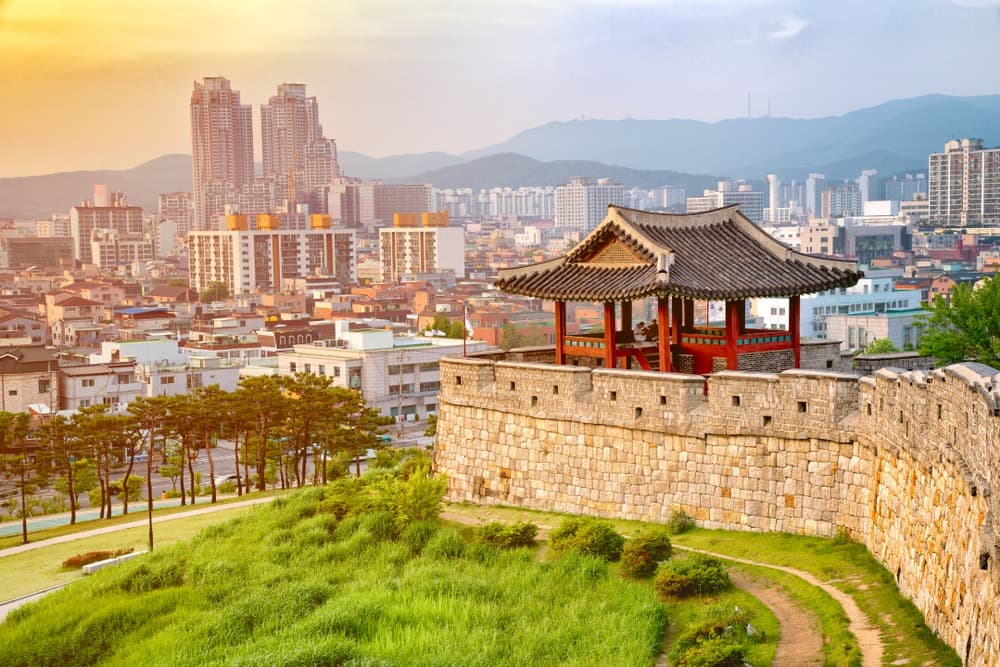
The surrounding areas greatly expand the scope of action from the center. Hwaseong Fortress in Suwon (UNESCO, 5.7 km of ramparts built between 1794 and 1796) can be reached in 1 hour by metro. The DMZ, demilitarized zone 50 km to the north, can only be visited on guided excursions to Imjingak, the third North Korean infiltration tunnel, and Dora Observatory. Bukhansan National Park, accessible in 40 minutes by metro from Jongno, offers about fifty marked trails, from family-friendly 2-hour circuits to technical climbs of Insubong. For pottery enthusiasts, the village of Icheon, 1 hour's drive to the southeast, groups together about a hundred pottery workshops active since the Joseon era.
To Discover
Changdeokgung Palace and Huwon Garden. Guided tour of the secret garden reserved for the Joseon royal family, with pavilions over ponds and centuries-old oak forests spanning 32 hectares. Access by reservation at scheduled times only.
Bukchon Hanok Alleys. Half-day walk between Anguk and Samcheong-dong, through 900 traditional houses still inhabited. The sloped alleys offer direct perspectives on the roofs of Gyeongbokgung.
DMZ and Dora Observatory. Full-day excursion 50 km north to the demilitarized zone, descent into the third tunnel dug by North Korea, and views of the propaganda village of Kijong-dong.
Gwangjang Night Market. Tasting of bindaetteok ground on stone, mayak gimbap and rice soju while standing in the alleys of Seoul's oldest covered market, open since 1905.
Bukhansan Hiking. 4 to 5-hour round-trip ascent to the summit of Baegundae (836 m), with cable-assisted passages over granite slabs and panoramic views over the metropolitan area to Incheon on clear days.
When to Go
We recommend two windows for visiting Seoul: April-May and September-October. In spring, temperatures hover between 12 and 22°C, cherry blossoms bloom around April 5 along Yunjungno at Yeouido, and the air remains dry. Fall is even more stable, with days at 18-23°C well into mid-October, with Bukhansan's red maples and Naejangsan peaking in late October.
We avoid two periods. The jangma, rainy season, concentrates nearly 400 mm of precipitation between late June and late July, often in violent storms that occasionally flood the Han River banks. August remains heavy: 30°C average, peaks at 35°C, humidity above 80%, air conditioning essential and mountain hiking inadvisable before sunrise. Winter, from December to February, regularly drops to -5°C and sometimes -10°C with continental winds; the city remains functional, but palace visits outdoors become exhausting beyond an hour.
Practical Advice
We generally allocate 3 to 4 full days to Seoul proper, plus 1 day for the DMZ and possibly 1 day for Suwon or a hike in Bukhansan. Below 3 days, the city is merely skimmed: the density of neighborhoods with distinct characters (historic Jongno, youthful Hongdae, business-oriented Gangnam, creative Seongsu) demands walking time and multiple meals. Incheon International Airport, 55 km to the west, can be reached in 50 minutes by the AREX express to Seoul's main station.
Seoul functions as a natural gateway to the whole country. The KTX (high-speed train) connects Busan in 2h30, Gyeongju in 2 hours, and Mokpo in Jeolla in 2h20. We frequently combine Seoul with Gyeongsang and Busan for a first trip of 10 to 12 days, or with Jeolla for travelers interested in gastronomy and contemporary art in Gwangju. Mountain enthusiasts extend toward Gangwon (Seoraksan National Park) in 2h30 by bus from Dong Seoul. Jeju, reachable in 1 hour by flight from Gimpo, rounds out a 15-day itinerary well. Comfort levels are high: standardized 4 and 5-star hotels, punctual public transport, English uneven but sufficient in tourism. Seoul suits both contemplatives (palaces, temples, gardens) and urbanites (gastronomy, design, nightlife), with room for families thanks to interactive museums and accessible metro.