Hanbok: The Traditional Korean Costume
Literally translated from Korean as 'Korean clothing', hanbok is the traditional Korean costume. Characterized by simple lines
Literally translated from Korean as : « Korean clothing », hanbok is the traditional Korean costume. Characterized by simple lines and colors varying according to the social class of the person wearing it, it has existed for thousands of years. Influenced by China and Mongolia, it remains today a powerful national symbol. Here's more about hanbok…
A Brief History…
The earliest traces of hanbok are murals from tombs dating back to the Koguryo Kingdom era (37 B.C.–668 A.D.). Men and women wore this traditional costume throughout the Korean peninsula. Colors and patterns varied according to the social status of the person wearing it.
Over the centuries, the hanbok evolved in line with the influences that Korea encountered throughout its history. New variants emerged during the Tang influence and later during the Mongol invasion. It was not until the Goryeo Kingdom, when Buddhism was replaced by Neo-Confucianism, that the traditional costume became more widely worn, though it remained an expensive garment. Indeed, aristocrats wore hanbok made of silk or ramie cloth while common people had to settle for models made of hemp or cotton.
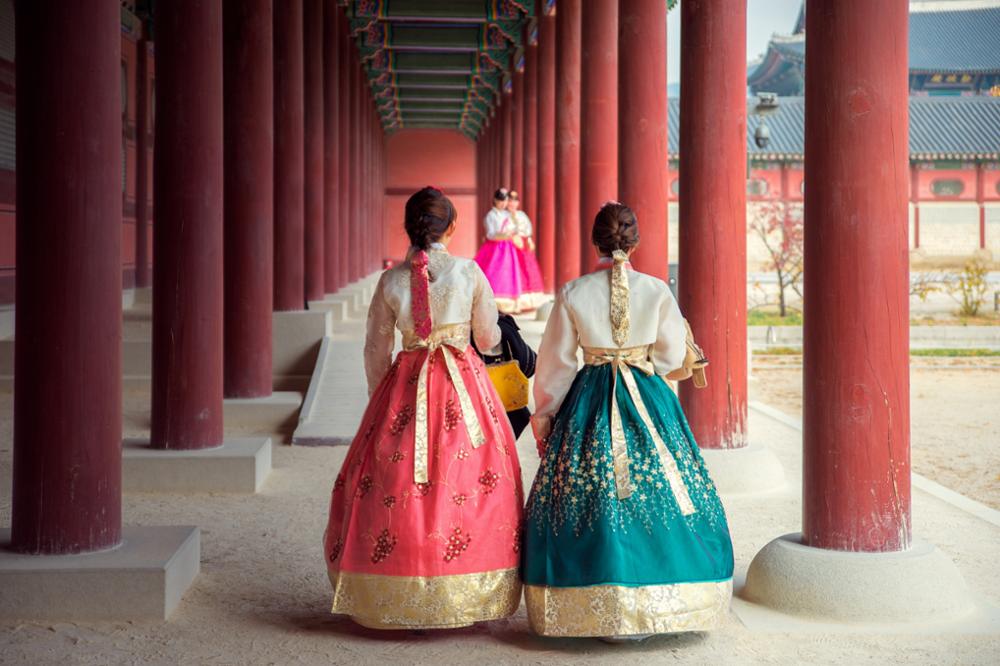
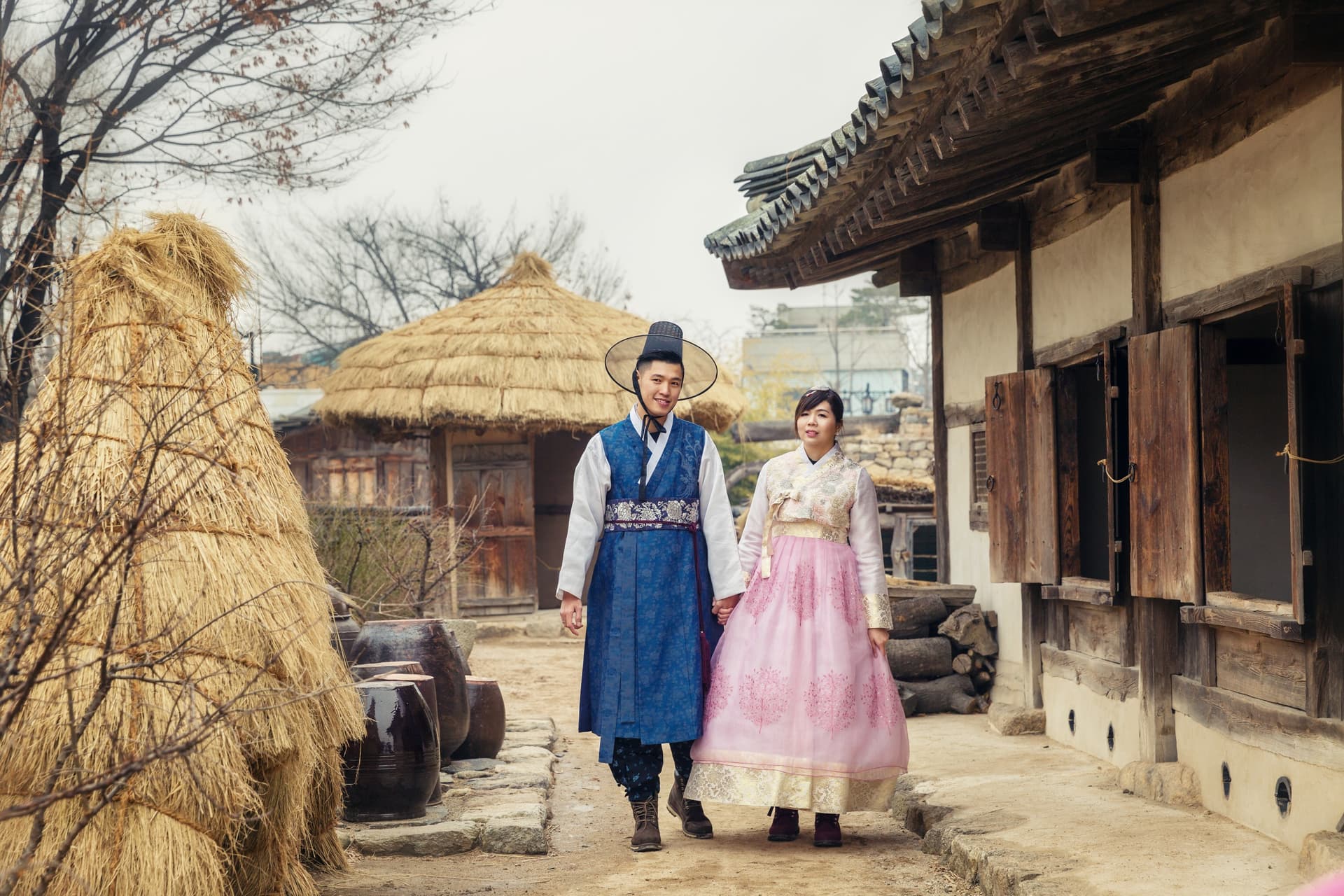
Today, women wear hanbok with a jacket called jeogori, a skirt called chima and a white collar called Dongjeong. As for men, they wear hanbok with a longer jacket and wide trousers called baji.
How Is Hanbok Worn Today ?
Nowadays, Koreans no longer wear traditional hanbok on a daily basis. It is a costume worn only on important occasions. It even has dedicated names depending on the event. This shows just how integral hanbok is to Korean culture. Among them, we can mention :
Myeongjeol hanbok: on New Year's Day, this tradition calls for Koreans to dress in hanbok and bow to their elders as a sign of respect.
Dol hanbok: this is a ceremony held on a child's first birthday during which the child wears a dol hanbok.
Hoegabyeon hanbok : in Korea, it is common for children to organize a celebration on their parents' 61st birthday to wish them longevity. Everyone wears the Hoegabyeon hanbok for the occasion.
Hollyebok: this is the hanbok dedicated to weddings. Unlike traditional hanbok, this one features extensive embroidery.
Saenghwal hanbok: it is a simplified version of hanbok that blends tradition and modernity, worn by Koreans to stand out with elegance.
Frequently asked questions
Hanbok is the traditional Korean costume, whose name literally means 'Korean clothing'. It has existed for millennia and is characterized by clean lines and symbolic colors that varied according to the social class of the wearer.
Nowadays, hanbok is no longer worn daily. It is reserved for major occasions: New Year's Day (Myeongjeol hanbok), a child's first birthday (Dol hanbok), parents' 61st birthday (Hoegabyeon hanbok), and weddings (Hollyebok).
Women's hanbok consists of a short jacket called jeogori, a full skirt named chima, and a white collar (Dongjeong). Men's hanbok also includes a jeogori, but longer, paired with wide trousers called baji.
Yes, it is entirely possible to rent hanbok as a tourist, particularly around Seoul's royal palaces such as Gyeongbokgung or in the traditional Bukchon Hanok Village. Many shops offer day rentals at very affordable prices.
In Korean tradition, hanbok colors reflected the social status of the wearer. Aristocrats displayed vibrant and luxurious hues on silk, while common people wore hanbok in hemp or cotton with more subdued colors. Colors also held symbolic significance linked to the five elements of Korean philosophy.