Yeongdo-gu: explore Busan's most authentic island district!
Yeongdo is an island just off the Korean coast. This island district of Busan, known for its maritime activities, is also prized for its authenticity and modernity. Both picturesque and forward-looking, Yeongdo-gu is home to traditional neighborhoods, but also the Arte Museum of Busan – one of the world's largest immersive art centers! Discover what to see and do in Yeongdo over the course of a day…
Yeongdo is an island just off the Korean coast. This island district of Busan, known for its maritime activities, is also prized for its authenticity and modernity. Both picturesque and forward-looking, Yeongdo-gu is home to traditional neighborhoods, but also the Arte Museum of Busan - one of the world's largest immersive art centers! Discover what to see and do in Yeongdo during a day trip…
Yeongdo-gu: an overview of this must-see Busan district
Located at the southern tip of central Busan, Yeongdo Island is separated from the mainland by an arm of the sea. In 1957, it was designated as an autonomous administrative district due to Busan's rapid growth following the Korean War.
Its geographical isolation, combined with its strategic importance for port and naval activities, also justified the creation of its own administrative entity, capable of managing its economic development efficiently. The island notably hosts several important maritime sites and excellent seafood restaurants. This island district is also a charming seaside resort, valued for its climate (warmer than the mainland), beaches, and authenticity. Indeed, the island is known for its well-preserved traditional neighborhoods and its "open-air museum" called Huinnyeoul Culture Village.
The island is connected to the mainland by three bridges: Namhang Bridge (on the island's west side), Yeongdo Bridge (to the north), and Busan Bridge (to the east). It is accessible by bus (line 88, 17-minute journey) and subway (line 1) It is also possible to reach it by cruise ferry, like the Haeundae ferry - but this is more of a tourist activity than a transportation mode, allowing you to admire the city of Busan from the open sea. |
What to see and do in Yeongdo?
Admire Yeongdo Bridge
Yeongdo Bridge connects Jung-gu (the mainland), from Busan's historic center, to the island district of Yeongdo (located on the island of the same name).
Built in 1934 during Japanese occupation, the bridge is an iconic structure of the city: not only was it the first bridge to connect the mainland to a neighboring island, but it was also, during the Korean War, a rallying point for refugees.
Deemed too decrepit and dangerous, the bridge ceased operations in 1966, but after major renovations, it resumed service in 2013. Once raised up to seven times a day, it now opens only once, at 2 p.m., to allow ships to pass.
Although other bridges exist today, Yeongdodaegyo remains THE iconic bridge of the Busan region. Every year in September, a festival is dedicated to it. Its history is then highlighted through performances, maritime parades, and the bridge's opening.
Visit the National Maritime Museum of Korea
Opened in 2012, the National Maritime Museum of Korea is located in the Bongnae-dong neighborhood, north of Yeongdo. This modern museum helps visitors better understand Korea's relationship with the sea. You can view exhibitions on maritime history, naval culture, marine life, and underwater archaeology.
The National Maritime Museum features over 12,000 artifacts, an aquarium, a 4D projection theater, a library, and a replica of the "Joseon missionary ship." Activities are offered for children, making it a popular family visit. Its other advantage? Admission is free!
Discover the Arte Museum of Busan
Inaugurated in July 2024, the Arte Museum of Busan is today the world's largest immersive media art center, with an area of over 60,000 square feet!
Born from a 20 billion won investment, financed by the D'Strict group (a Korean studio specializing in creating immersive experiences that blend art and digital technologies), this unique museum is the 4th to open in South Korea (after Jeju, Yeosu, and Gangneung) and the 8th to open worldwide (after Las Vegas and Dubai). By 2027, the group plans to open 20 immersive museums around the world.
The opening of this center in the Busan area is a strategy to develop tourism in the region. At the inauguration, the mayor (Park Hyung-joon) emphasized the importance of evolving the local cultural offering to position the city as a major international destination.
The Busan museum offers 19 immersive experiences blending art and digital technologies. Among them is an artwork created through collaboration with the Musée d'Orsay, presented here for the first time. The majority of the installations are original: 16 works were designed specifically for this venue, around two major themes - nature and Busan's culture.
The immersive creations engage multiple senses. Indeed, visitors are invited to interact with the artworks through image, sound, smell, and touch!
Practical information● Address: ARTE MUSEUM BUSAN, 29 Haeyang-ro 247beon-gil, Yeongdo-gu, Busan (accessible by City Bus 186). ● Opening hours: open Monday to Sunday, 10 a.m. to 8 p.m. (last entry accepted 7 p.m.). ● Admission price: adult €12; young adult €9.50; child €8 |
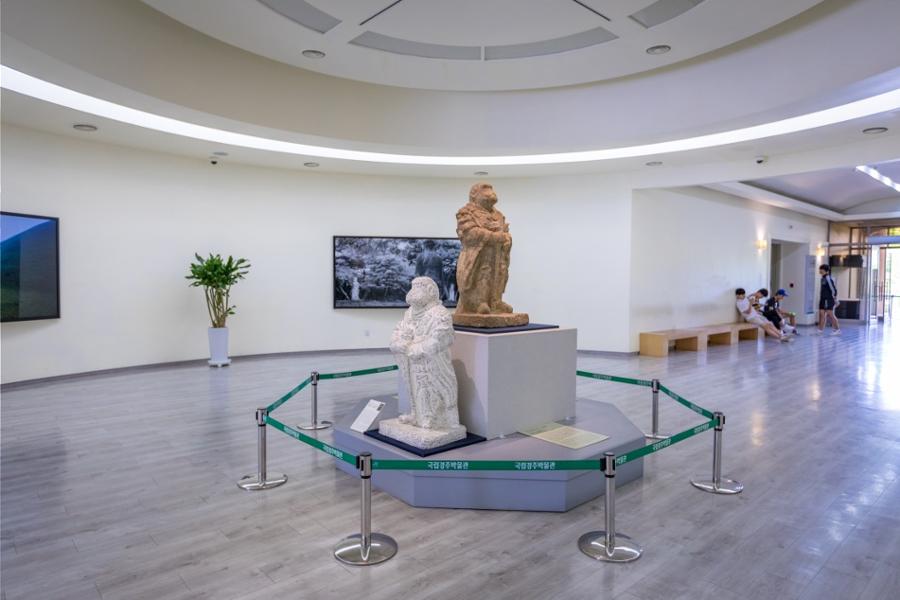
Huinnyeoul Culture Village
Located on a cliff face, Huinnyeoul Culture Village is a former Korean War refugee village. It is a less touristy alternative to the Gamcheon Cultural Village, but equally interesting!
Renovated in the 2010s (after a long period of abandonment), this traditional village has become a must-visit destination for art lovers, with its colorful alleys, numerous street art works that have breathed new life into this forgotten site.
Huinnyeoul Culture Village is also dotted with small artisanal shops, art galleries, and cafés with sea views. It has also served as a filming location several times for K-pop series or Korean films (notably The Attorney).
Stroll along the coast (Jeoryeong Coastal Walk)
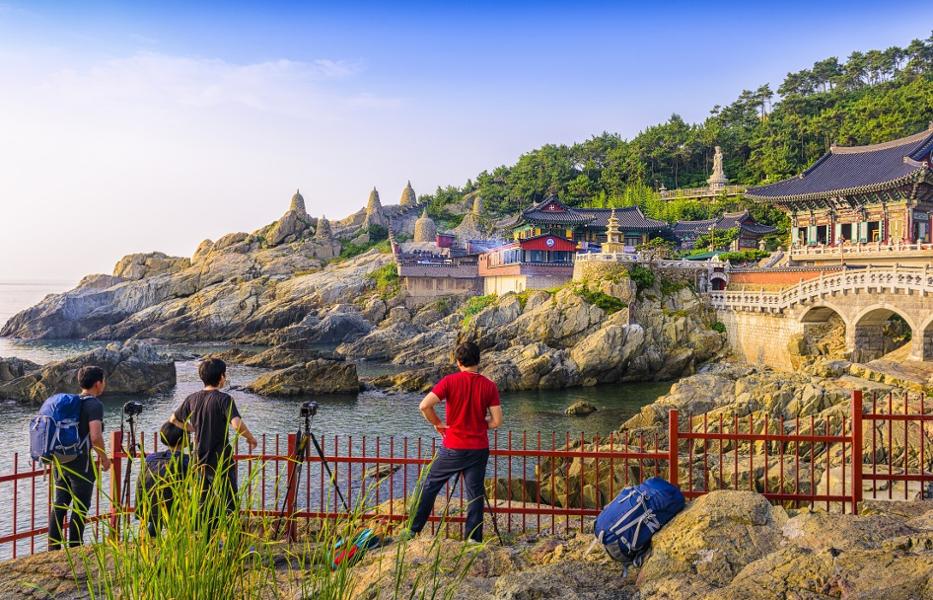
The Jeoryeong Coastal Walk is a 22-mile trail developed along the coastline, below Mount Bongnaesan. Once a military zone, this part of the island opened to the public in 2001. The route is fairly easy and offers stunning panoramic views of the open sea and surrounding islands.
Along the way, you can admire traditional houses with tiled walls, as well as charming small shops and cafés. Throughout the route, you will also find several staircases (built in steep areas).
On a hot day? Don't hesitate to cool off with a bingsu, a Korean dessert made with shaved ice and red beans!
The Haenyeo Women Divers Museum
The Yeongdo Haenyeo Culture Museum (Exhibition Hall) celebrates the culture of Haenyeo: women who dive for seafood using only breath-hold techniques - with no equipment whatsoever. This ancestral practice (which has existed since 1887) has been inscribed on the UNESCO World Heritage list since 2017.
The first floor of the building is dedicated to these extraordinary women, while the ground floor is a seafood shop selling products harvested by the Haenyeo!
Practical information ● Address: 2-36 Jungninam-ro, Yeongdo-gu, Busan, South Korea ● Opening hours: 9 a.m. to 6 p.m. |
Taejongdae Natural Park
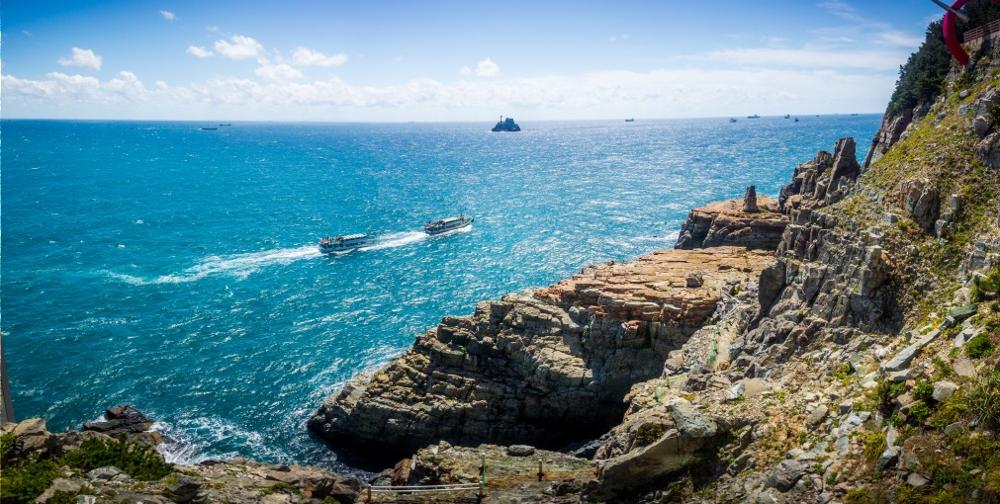
Located at the southern tip of Yeongdo, Taejongdae Natural Park is a must-see site on the island. Featuring stunning cliffs and numerous trees (over 120 species), it is a very popular destination, equally cherished by tourists and locals.
During Japanese occupation, the park served as a military base. For a long time, its access was closed to the public before reopening in 1967 - and being designated as a recreation zone, named Taejongdae Resort Park.
Yeongdo Sunrise Observatory: inside the park, don't miss the observation point and its breathtaking views over the Busan area. If the sky is clear, you can even spot the Japanese island of Tsushima!
The lighthouse: the Yeongdo lighthouse is an iconic site of Taejongdae. Put into service in 1906, it has since illuminated Busan Bay. Renovated in 2004, this 115-foot-tall lighthouse houses the Natural History Museum (where you can see dinosaur footprints discovered in the area!), as well as a small art museum. It is also possible to have a drink at the Blue Ocean café.
Sinseon Rock: from the lighthouse you can see this legendary rock, where legend has it that gods and goddesses once came to rest. Just nearby, you can also spot the Mangbuseok sculpture (which symbolizes the faithfulness of a woman awaiting her husband taken to Japan).
Taejongsa Temple: at the summit of a Yeongdo mountain, don't miss the Taejongsa Buddhist temple. By visiting this building, adorned with many hydrangeas (in June), you may have the chance to witness a traditional religious ceremony. Behind the building, you can see a Korean War memorial monument. Located away from crowds, this place is a peaceful spot, conducive to reflection.
The Taejongdae Danubi Train: this colorful little train is an easy way to explore the park from the main entrance. An opportunity to discover the park in a fast tour (approximately 25 minutes) if you're only spending a few hours on Yeongdo Island. Budget €2 per person. Train available daily from 9 a.m. to 9 p.m. in summer and until 8 p.m. in winter.
Taejongdae Coastal Trail: the park also allows for hiking. The most famous route is the Taejongdae coastal walk, which extends nearly 2.5 miles long - and represents approximately 2 hours of round-trip hiking. This circuit can also be done by bike, as can the Resort Park Loop, which allows you to make a circuit and see the iconic sites of the park, such as the lighthouse or the observation point.
Note that Taejongdae Park is located within Busan National Geopark, a territory presenting geological heritage of international significance. The geopark features 20 geological sites, including the Taejongdae cliffs, the Songdo and Dusong peninsulas, the Nakdong estuary, and the Oryukdo islands.
Practical information ● Park address: 24 Jeonmang-ro, Yeongdo-gu, Busan, South Korea ● Temple address: 119 Jeonmang-ro, Yeongdo-gu, Busan, South Korea ● Taejongdae opening hours: daily from 4 a.m. to midnight. ● Admission price: free |
Try zip-lining
Not far from the park entrance, you will find the Taejongdae Ocean Flying Theme Park where you can zip-line over the sea! This 2,140-foot zip-line is sure to create an unforgettable memory… Don't hesitate to book a ticket on the official website.
Practical information ● Address: Dongsam-dong, Yeongdo-gu, Busan, South Korea ● How to get there: from the Yeongdodaegyo stop (accessible by subway or bus) ● Opening hours: daily from 9 a.m. to 6 p.m. ● Admission price: €19/adult; €17/child |
Visit the Dongsam-dong Shell Midden Archaeological Museum
The Dongsam-dong Shell Midden is located not far from Yeongdo Maritime University and about ten minutes' walk from the National Maritime Museum.
Inaugurated in 2002, this small museum displays natural wonders discovered during the numerous excavations carried out since 1929, near the Neolithic site of Dongsam-dong. You can see patterned pottery, stone and bone tools, ceramic objects, ornaments, remains of marine and terrestrial fauna, etc.
The presence of Jōmon pottery (a prehistoric period of Japan) is also proof of exchanges made between Korea and Japan as early as the Neolithic. The museum, located at 729 Taejong-ro, Yeongdo-gu, Busan, is open from 9 a.m. to 6 p.m., except Mondays and New Year's Day. Free admission.
Yeongdo Sky Observatory
At the mouth of the Nakdong River, you will find the Yeongdo-gu observatory. The building, constructed in an "L" shape, offers a 360-degree view and allows you to admire the beauty of the sunset where, depending on the season, many migratory birds pass through. Address: 149-7, Dongsam-dong, Yeongdo-gu, Busan, South Korea
Enjoy fresh seafood
Through its maritime activity, Yeongdo-gu is renowned for the quality of its seafood products. Many restaurants in this island district offer dishes made with fresh fish. An opportunity to taste local specialties, such as Jjambbong (a noodle dish based on seafood).
Explore Achisan (Jodo Island)
If you're stopping by for a day, don't hesitate to take the boat from Mijo Port toward Jodo Island (also called "Achisan"). Also renowned for its abundance of fish and fishing activity, the island is home to Korea Maritime University. As you walk nearby, you can spot students dressed in university uniforms. The island is also popular for its Arch Trail hiking circuit.
Discover Yeongdo-gu and Busan with an English-speaking knowledgeable guide Would you like to discover Busan's must-sees and its surroundings? Don't hesitate to contact our local agency, based in Seoul. Our team and English-speaking guides will be delighted to help you discover local life through authentic sites off the beaten path. |
Frequently asked questions?
How many days does it take to visit Yeongdo?
In the context of a stopover in Busan, plan at least a half day to explore Yeongdo-gu and a full day if you want to visit several tourist sites (museums, Taejongdae Park, Jodo Island).
What does Yeongdo mean?
The island was formerly named Jeolyeong, which roughly means "the island of horses that run faster than their shadow" (linked to a local myth). The name was later shortened to yeong, giving the current name Yeongdo, which literally means "island of shadow." This name was given to it during the reorganization of administrative units after Korea's liberation.
Frequently asked questions
Yeongdo is accessible from central Busan by subway (line 1, Nampo-dong station), by bus (line 88, approximately 17 minutes), or on foot via Yeongdo Bridge. Tourist ferries also connect certain Busan neighborhoods to the island.
From Seoul, take the KTX to Busan Station (approximately 2.5 hours). From Busan Central Station, reach Yeongdo by subway (line 1) or bus (line 88) in less than 20 minutes.
Yes, absolutely. Yeongdo offers an authentic Busan experience, far from typical tourist circuits. Between Taejongdae Park, the immersive Arte Museum, Huinnyeoul Culture Village, and its seafood restaurants, the island deserves at least a half day of exploration.
No, entry to Taejongdae Natural Park is free. However, the little Danubi train, which allows you to explore the park with ease, is paid (approximately €2 per person). The park is open daily from 4 a.m. to midnight.
The Arte Museum of Busan, inaugurated in July 2024 at Yeongdo, is the world's largest immersive media art center with over 60,000 square feet of space. It offers 19 immersive experiences blending image, sound, smell, and touch, including an exclusive collaboration with the Musée d'Orsay. Entry is approximately €12 for an adult.
Yes, Yeongdo is an ideal family destination. The National Maritime Museum (free entry, aquarium, 4D theater) and the Danubi train at Taejongdae Park are particularly popular with children. The Arte Museum and the Haenyeo Museum are suitable for all ages.