Suwon
Suwon
Just 30 km from Seoul, Suwon is home to the UNESCO-listed Hwaseong Fortress, the royal Hwaseong Haenggung Palace, and renowned cuisine. Our guide to visiting this Joseon-era city.
Suwon, located roughly thirty kilometers from Seoul, is the largest city and capital of Gyeonggi Province in Corée du Sud. Home to numerous tourist attractions, it is especially renowned for the beauty of its fortress, which is moreover designated as a UNESCO World Heritage Site.
History
In 1776, King Jeongjo, the 22nd ruler of the Joseon Dynasty, completely rebuilt Suwon. He wished to relocate the capital to this city. To protect and honor the tomb of his father, Prince Sado, King Jeongjo constructed the Hwaseong Fortress at Suwon. This rampart was built following the instructions of philosopher Jeong Yak-yong, from the Silhak school of thought—an establishment that applied a philosophy centered on practical learning and science.
Today
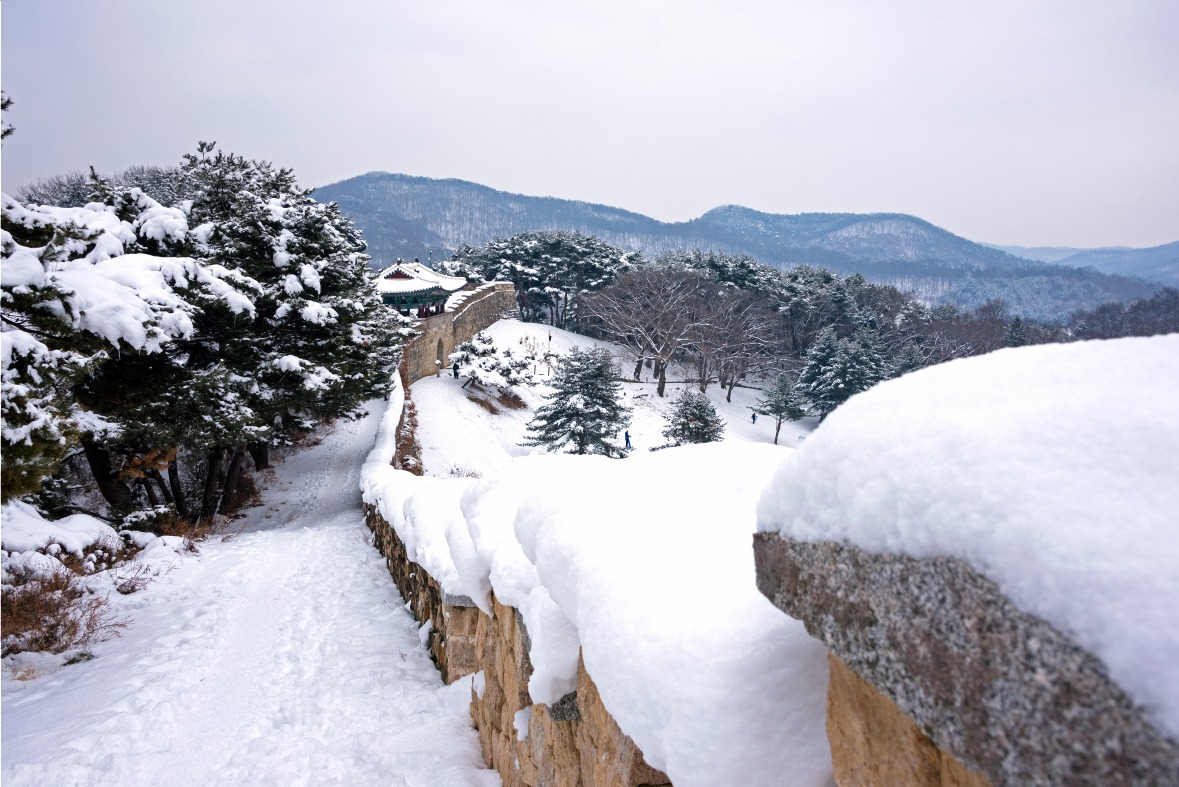
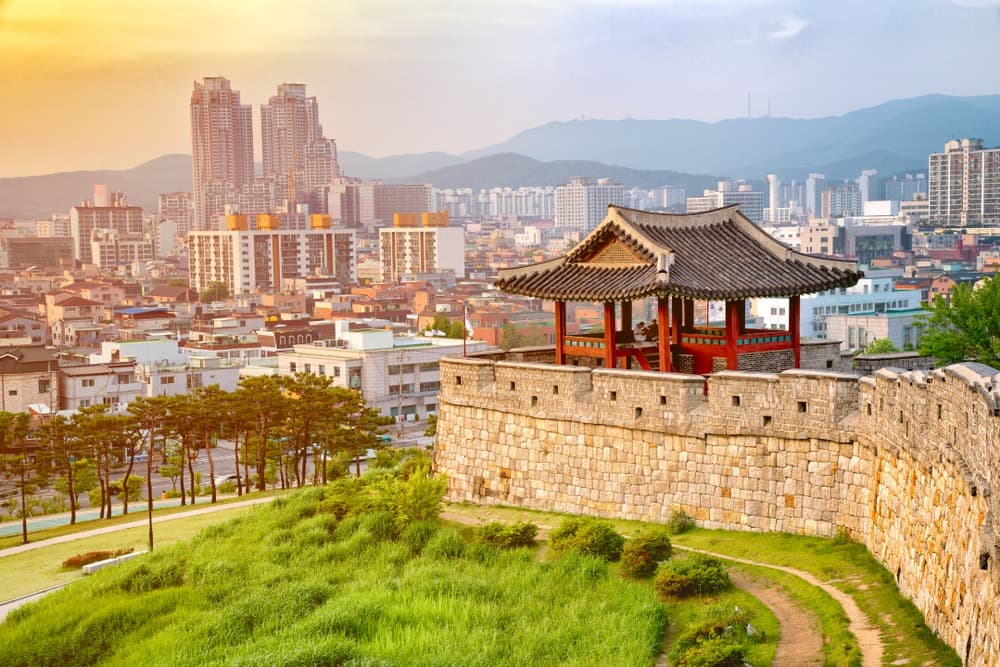
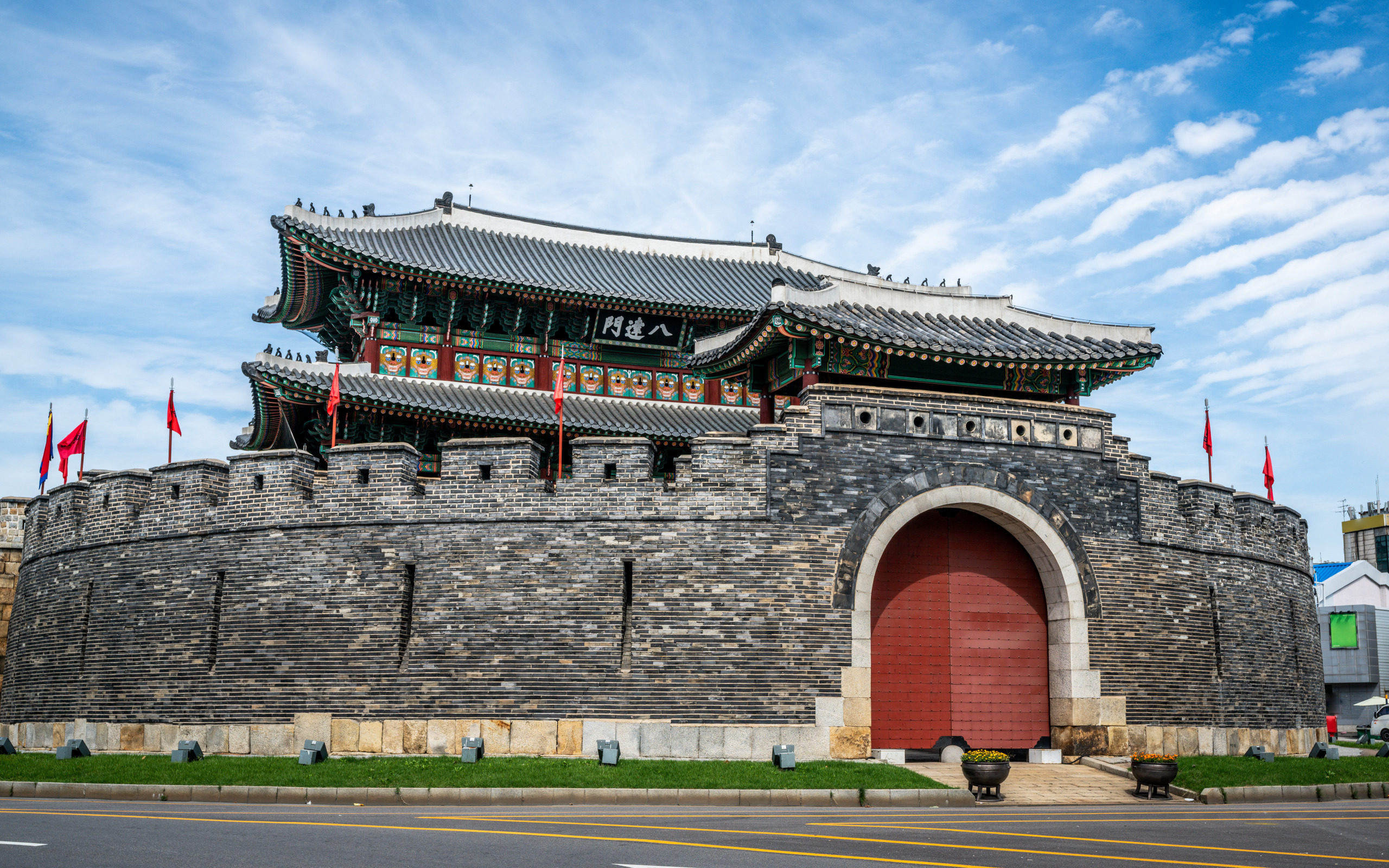
Suwon is a city where structures of the past exist in perfect harmony with those of the present. It is regarded as the southern gateway to Seoul. This is a city brimming with numerous sites and monuments that trace its history and that of Corée du Sud. Much of Suwon is surrounded by the Hwaseong Fortress, a highly cherished destination among visitors for its remarkably distinctive architecture. Blending Western and Eastern styles with elegance, this fortress differs significantly from other Korean fortifications. Adorned with beautiful gardens, it is an ideal place for leisurely walks. These ramparts stretch across 5.7 kilometers. Its southern gate, called Paldamun, sits right in the city center. Shaped like a crescent moon and beautifully illuminated at night, it offers a breathtaking spectacle.
To learn more about the city's history and that of King Jeongjo, head to the Hwaseong Haenggung Palace, located a short distance beyond the Hwaseong Fortress. This palace was once a secondary royal residence in times of war. At the entrance, you'll discover two rows of beautifully colored flags. If you visit on a Saturday, you may catch the famous Jangyongyeong Guard Ceremony. After exploring the entire palace, you can enjoy various activities such as pottery or attend cultural performances including martial arts demonstrations and magic shows.
After discovering these notable tourist sites within Suwon's fortress, a pleasant stroll to Yeonmudae is a must. This lovely spot nestled on a hilltop between the North and East gates offers panoramic views over the interior of the fortification. Once a training ground for ancient soldiers, Yeonmudae is today a prime destination for visitors and residents wishing to practice archery.
The Yungneung Royal Tomb, resting place of Prince Sado (also known as Prince Jangheon), remembered for his tragic fate, is equally worth visiting. This history-laden monument stands east of Hwaseong on a verdant hillside. It distinguishes itself through the beauty of the Byeongpungseok, a stone engraved with lotus and peony flowers, that surrounds it. The Geolleung tomb, belonging to King Jeongjo and his wife, lies nearby. Of great simplicity, this burial site features no Byeongpungseok. Just 5 minutes from Prince Jangheon's tomb stands the Yongjusa Temple, built in 1790. Here King Jeongjo honored his father, Prince Sado, following his tragic death. It houses the celebrated sacred bell Beomjong, a stone pagoda called Stupa, the royal scriptures Bumeounjunggyeong, and the Cheonboru pavilion.
If you wish to learn more about Suwon's history and its magnificent walls, visit the Hwaseong Museum. This gallery was designed to showcase the richness of Korean cultural heritage. Its exhibition hall traces the history of the fortress's construction and Suwon's growth. In its cultural center, you can follow the fortress's history across the centuries. For younger visitors, the Hwaseong Museum offers engaging activities, including trying on royal costumes in its experience center.
After exploring the Suwon museum, shift gears entirely and embrace modernity by visiting the Samsung Museum of Technological Innovation. Established roughly fifty years ago in Digital City, it is entirely dedicated to South Korean technological advances. This is an incredible opportunity for tech enthusiasts to discover chronologically the technological progress achieved over the years.
And the spectacle continues at Haewoojae. This time, you'll be even more surprised as it is the world's first museum dedicated to toilets. This house, resembling a gigantic toilet bowl, impresses with its unconventional architecture. It is the work of architect Ko Kiwoong. It was built to reveal the different toilet cultures of countries around the world.
In Suwon, nature lovers must not miss the Manseok Park, in the Jangan-gu district, for a leisurely picnic. With skyscrapers as its backdrop, it features a large lake where you can spot herons and ducks. The park is equipped with numerous recreational facilities including a climbing wall, tennis courts, and paths dedicated to walking, cycling, and rollerblading.
After this escape into greenery, head to Suwon's football stadium, approximately 4 kilometers from the city center. Boasting singular architecture, this stadium nicknamed the "big bird" is worth a visit. It stands out primarily for its wing-shaped roof covering the western section of its stands.
To conclude your stay in Corée du Sud beautifully, enjoy a panoramic view of Suwon and its surroundings from the various peaks of Mount Gwanggyo, located in the northern part of the city. The landscape is even more magnificent at dusk. On this mountain, hiking enthusiasts will find different trails to explore and admire the beautiful and highly varied landscapes of Suwon. The more gastronomically inclined will find restaurants at the foot of Mount Gwanggyo where they can embark on another culinary journey through the Land of the Morning Calm.
Practical Information
Climate
Suwon enjoys a cold temperate climate, classified as Dwa on the Köppen climate map. Its average annual temperature is 11.9°C. Annual precipitation stands at 1,311 mm. May proves to be the best month for a pleasant vacation in Suwon.
From Seoul, Suwon is mainly served by two bus lines. Bus 7770 awaits you at Sadang Station. Bus 3000's stop is at Gangnam Station. This bus takes you to Hwaseong Fortress.
Suwon is also accessible by metro from Seoul via Line No. 1. You'll arrive in Suwon within an hour and a half. If you choose this option, be careful not to board the wrong train, as this line also connects the capital to Cheonan and Incheon.
To reach Suwon more quickly, you can either rent a car or take a taxi. By road, the journey from Seoul to Suwon takes only about thirty minutes.
By Bus
In Suwon, green buses take you everywhere around the city. You can find details about their routes at bus stops.
By Metro
To get around Suwon, you can also use the metro. Part of Suwon's districts is served by Seoul's Line No. 1. At Suwon Station, the city's most important station, trains from the railway station serve the entire country. The other line, which will pass through other areas of Suwon, is currently under construction.
By Taxi
As another means of transportation in Suwon, you have taxis. Though more expensive than buses, they can be useful if you're in a hurry.
By Bike
You can certainly travel by bike during your stay in Suwon. This city features wide sidewalks and bike paths that will make you very comfortable once on the road.
On Foot
In the city center, walking is a very good option for reaching certain places such as the fortress or markets.
Want to discover this destination?
Our local advisors design your tailor-made trip.