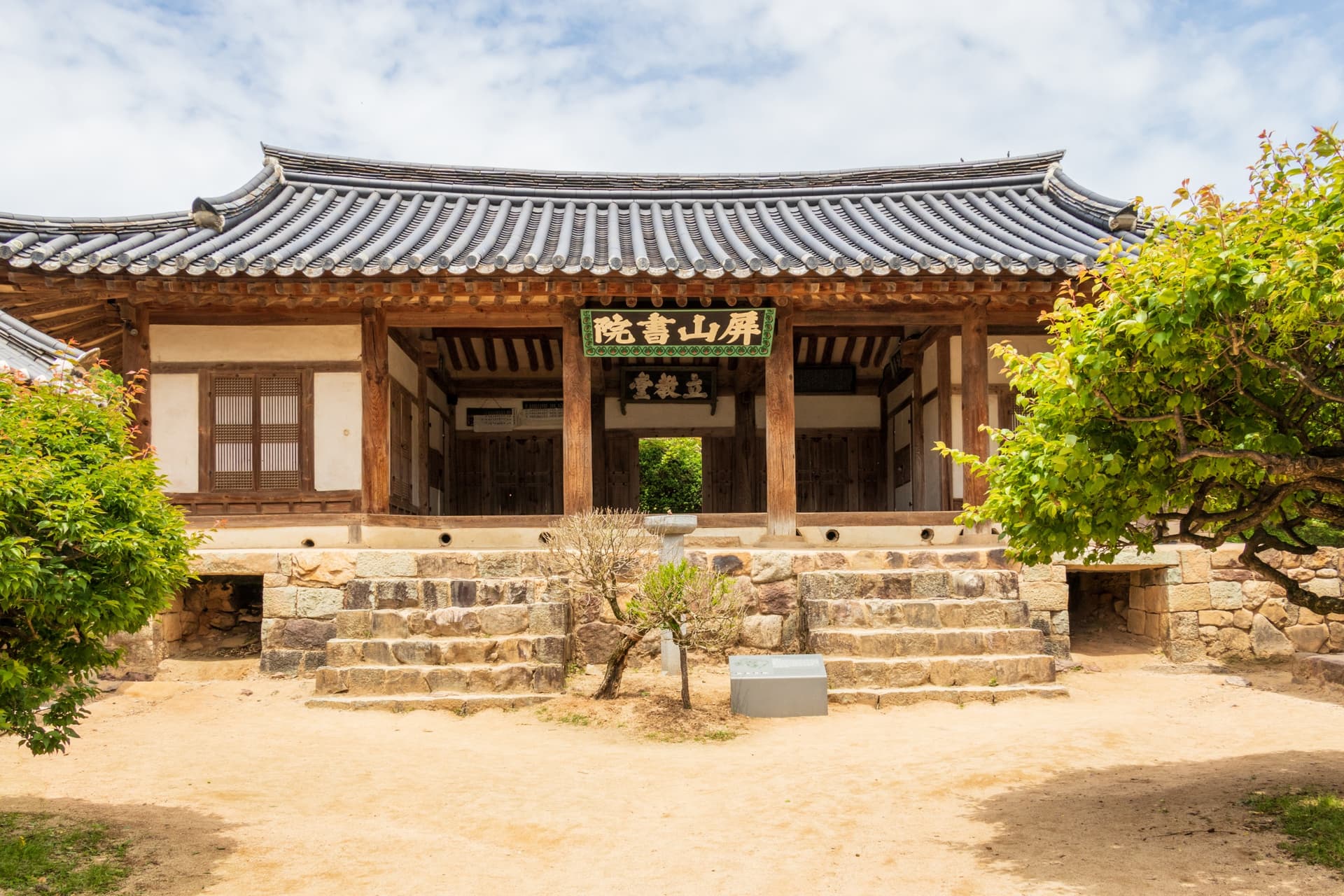
Byeongsan Seowon Confucian Academy
Byeongsan Seowon Confucian Academy
A 16th-century neo-Confucian academy inscribed on UNESCO's World Heritage List, Byeongsan Seowon overlooks the Nakdong River 25 km from Andong. History, visiting and access.
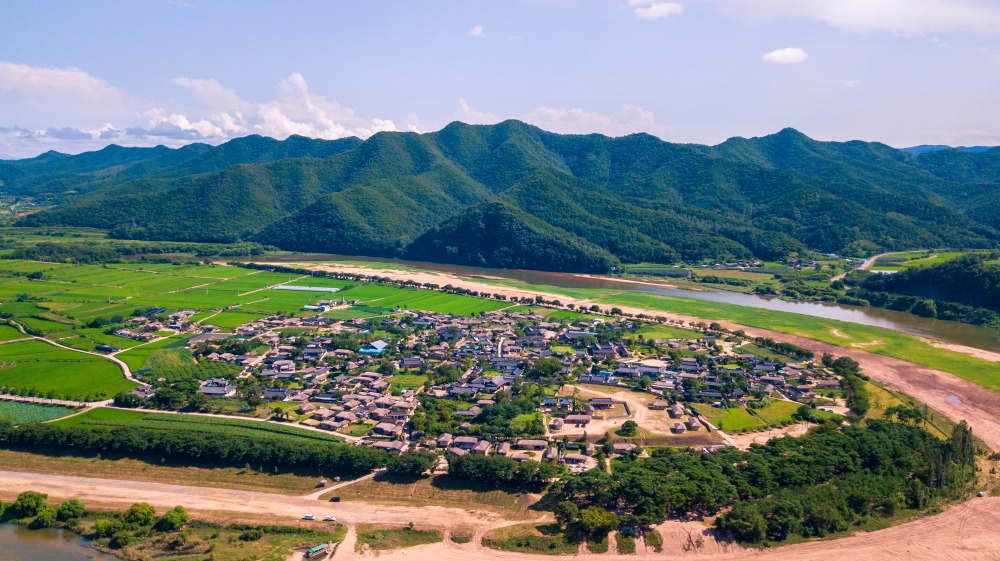
Nestled along the Nakdong River at the foot of Byeongsan Mountain, Byeongsan Seowon is a neo-Confucian academy located in Pungcheon-myeon district, near Andong, in North Gyeongsang Province. Inscribed on UNESCO's World Heritage List in 2019 as part of a collection of nine Korean seowon academies, it remains one of the most well-preserved Confucian institutions on the peninsula.
Why visit Byeongsan Seowon
The site holds multiple layers of interest for those drawn to pre-modern Korea. First, it stands as an intact architectural testament to a Joseon-era seowon, with its characteristic hierarchical layout: study areas below, sanctuary above. Second, it represents a center of neo-Confucian teaching (the school of Zhu Xi) that educated generations of scholars from the 16th century onward. Third, it commands a striking landscape setting, with the main pavilion opening directly onto the Nakdong River and the cliffs of the opposite bank. Byeongsan Seowon is designated as the 260th Historic Site of Korea.
The academy's history
The site's origins trace back to 1572, when the scholar-official Ryu Seong-ryong settled in Andong and founded a Confucian school during the Joseon dynasty. Ryu Seong-ryong, who would become Prime Minister under King Seonjo, played a pivotal role during the Japanese invasions of 1592–1598 (the Imjin War).
Upon his death in 1607, the school was transformed into Jondeok Temple, and an ancestral tablet was dedicated to him. The sanctuary took its current name in 1614. A second tablet was later added to honor his third son, Ryu Jin. Twice yearly, in March and September, the commemorative ceremony Hyangsarye is held on the grounds.
During the Joseon dynasty, the academy received a royal plaque, books, land, and servants (nobi) attached to the institution, elevating it to the prestigious status of sa-aek seowon—a seowon officially recognized by the royal court. In 1868, regent Heungseon Daewongun ordered the closure of most Confucian academies in the country; Byeongsan Seowon was among the 47 that survived, preserving its architectural and institutional integrity.
What to see on site
The complex follows the classical seowon layout, progressing from lower areas (study spaces) to upper areas (sacred space).
- Mandaeru: a grand entrance pavilion on stilts, open to the Nakdong River and the Byeongsan cliffs—the site's iconic viewpoint.
- Reading hall (Ipgyodang): a spacious central chamber that served as a lecture and philosophical discussion room.
- Student dormitories: east and west pavilions that housed resident scholars.
- Sanctuary (Jondeoksa): located on the upper terrace, it houses the ancestral tablets of Ryu Seong-ryong and Ryu Jin. The neo-Confucian doctrine taught here descends from Confucius through Zhu Xi.
- Library: preserves approximately 3,000 ancient texts.
- Historic stone latrines, still visible today—a rare surviving example of this structure type in a seowon.
Practical information
- Visit duration: allow 1 to 1.5 hours on-site.
- Admission fee: nominal entrance fee, sometimes free depending on the season.
- Dress code: the upper sanctuary is a ceremonial space; dress respectfully and maintain quiet, reverent behavior.
- Accessibility: the site features stone steps and uneven surfaces, not suitable for wheelchairs.
- Photography: permitted outdoors; check signage before entering buildings.
When to visit
The site is open year-round, though two seasons stand out. Autumn (mid-October to mid-November) displays the most vivid colors on the Byeongsan cliffs and along the Nakdong. Spring (April–May) brings mild, luminous weather. To attend the Hyangsarye ceremony, plan for the March and September celebrations; exact dates are announced annually by the academy. Summer is hot and humid; winter is dry and cold but photogenic under snow.
How to get there
Byeongsan Seowon lies approximately 25 km west of central Andong. Several options are available:
- Local bus from Andong terminal or railway station: services run to Pungcheon-myeon and Hahoe village, with connections or walking required depending on schedules. Obtain an English-language timetable from the Andong tourist office, as frequencies are limited.
- Taxi from Andong: journey of approximately 30–40 minutes; the most straightforward option for a day trip.
- Car: parking available on-site. Andong is connected to Seoul by KTX-Eum train (approximately 2 hours).
Combine with nearby attractions
The Andong region concentrates several Confucian and traditional sites best explored over two to three days:
- The historic village of Hahoe, also UNESCO-inscribed, just ten kilometers away.
- Haeinsa Temple, which houses the Tripitaka Koreana, accessible further south in the same province.
- Hwaseong Fortress in Suwon, to extend your Joseon heritage itinerary on the return to Seoul.
Frequently asked questions
Interested in this visit?
We can include it in your personalised itinerary.