Guinsa Temple
Guinsa Temple
At the foot of Mount Sobaeksan near Danyang, Guinsa Temple is the headquarters of the Cheontae order of Korean Buddhism and one of the country's largest monastic complexes.
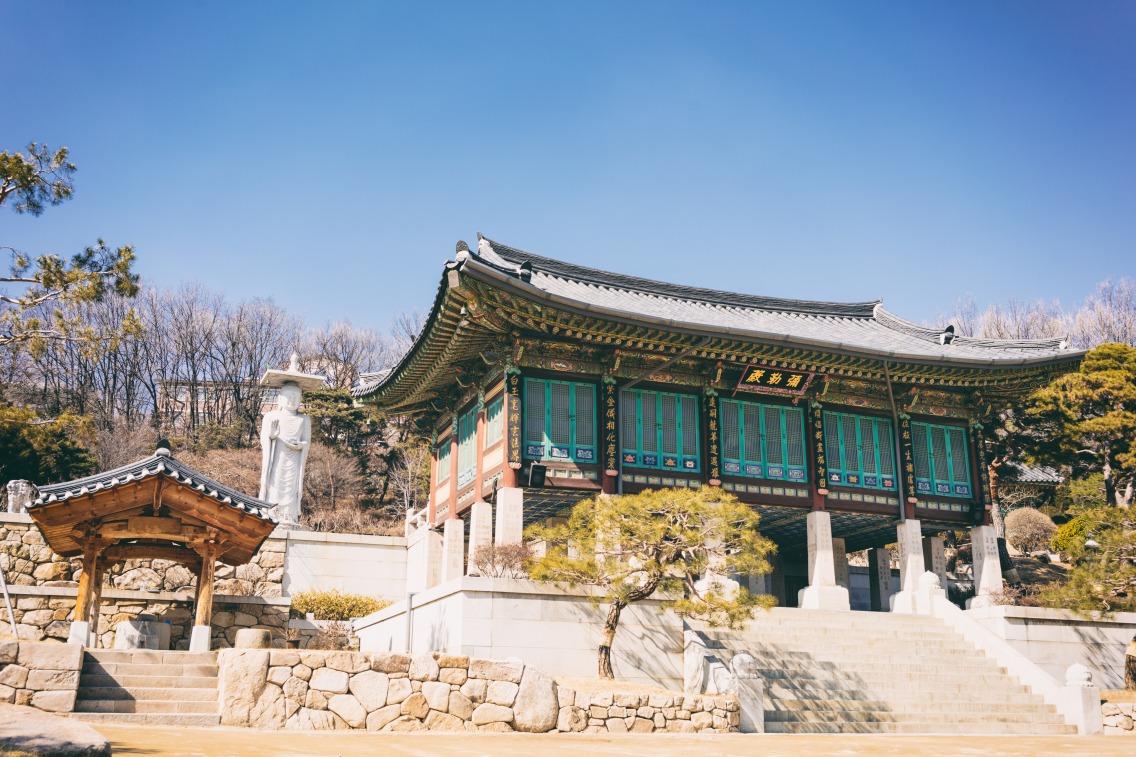
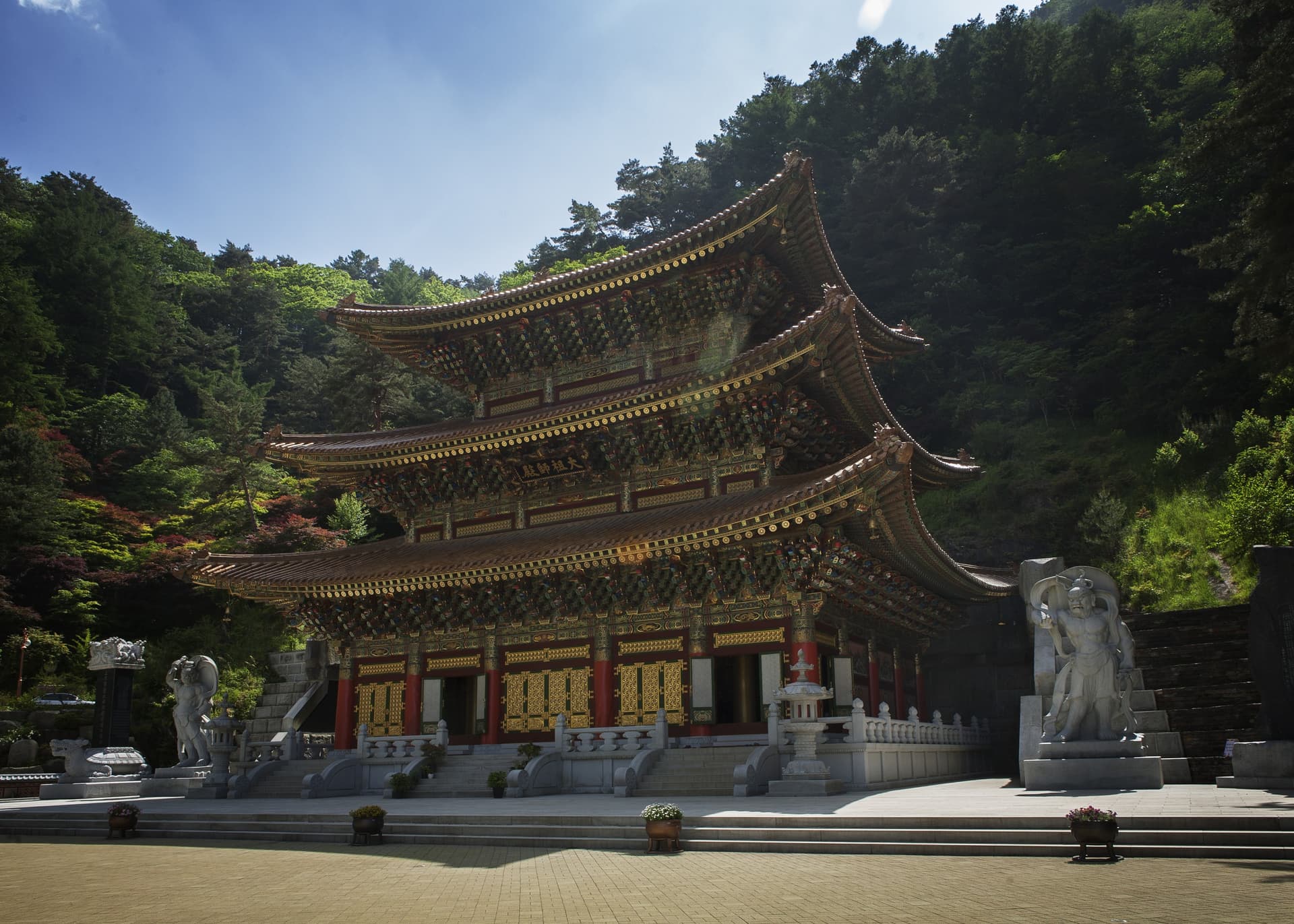
Guinsa Temple rises at the foot of Yeonhwabong Peak, on the slopes of Mount Sobaeksan, some thirty minutes from Danyang. Headquarters of the Cheontae Order (Cheontae-jong) of Korean Buddhism, this vast complex brings together more than fifty buildings with decidedly modern architecture, which sets it distinctly apart from traditional Korean temples.
Nicknamed the "Temple of Salvation and Goodness," Guinsa is today one of the country's leading monastic centers and participates in the Templestay program, which opens the temple doors to an immersive stay.
Why visit Guinsa Temple
Three main reasons motivate a detour to Guinsa:
- A major religious headquarters: Guinsa directs more than 140 sub-temples spread across the country and houses a significant monastic community.
- Atypical architecture: unlike traditional Korean temples often laid out horizontally, Guinsa stretches vertically, with multi-story buildings nestled in a narrow valley.
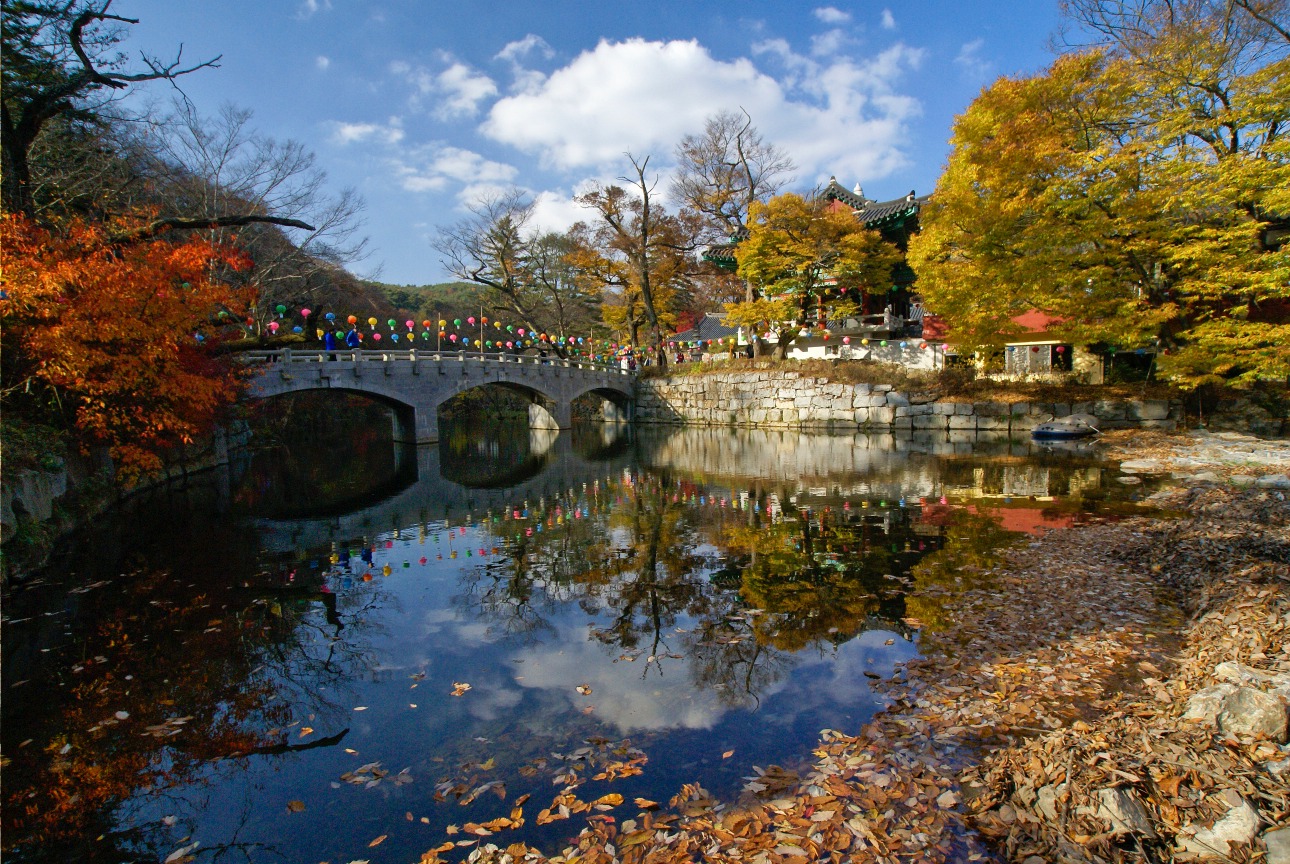
- A natural setting: the complex is surrounded by the forests of Mount Sobaeksan, particularly photogenic in autumn.
History of the temple and the Cheontae Order
The temple's location was not chosen by chance: it was validated after an interpretation of the Lotus Sutra by monk Sangwol Wongak, founder of the modern Cheontae order in Korea. Construction of the original building was completed in 1945, making Guinsa a recent temple on the scale of Korean Buddhism.
The initial building was devastated during the Korean War (1950-1953), then rehabilitated in 1966. The following year, in 1967, the Cheontae-jong order was officially registered with the Korean government and the Cheontae school was re-established at Guinsa. Since then, the complex has continued to expand and today hosts a community estimated at several thousand monks, making it one of the country's most populated temples.
What to see on site
The Ocheung Daebeopdang (Dharma Law Hall)
The centerpiece of the complex, the Ocheung Daebeopdang is a five-story building presented as the largest Buddhist structure in South Korea. It can accommodate up to 5,000 people during major ceremonies. The internal organization is clear:
- Floors 1 and 2: meditation spaces reserved for monks.
- Floors 3 and 4: prayer halls.
- 5th floor: golden altar of Buddha Sakyamuni, flanked by the Bodhisattvas of Compassion and Wisdom.
The Beobeobi monument
At the heart of the complex, the engraved stone Beobeobi brings together Buddhist precepts and excerpts from the teachings of the great founding monk. It remains an important place of devotion for pilgrims.
The Templestay program
Guinsa is part of the Templestay network, which allows foreign visitors to spend time in an active Buddhist temple. The program offered varies depending on the season, but generally includes meditation sessions, initiation into Buddhist rituals, readings of sacred texts, and a tea ceremony. Registration and detailed information are available at the main gate.
Practical information and rules of conduct
Guinsa is an active place of worship. A few rules apply to all visitors:
- Modest dress, shoulders covered.
- Phones on silent, soft voice, absolute silence in certain areas.
- Remove shoes before entering pagodas and prayer halls.
- Entry through side doors: the central door is reserved for monks and nuns.
- No physical contact with religious figures, nor with statues and sacred objects.
- Photography tolerated outside, but often restricted inside halls.
- No alcohol or tobacco within the grounds.
Allow half a day for a standard visit, more if you follow the Templestay program.
When to go
The site is accessible year-round, but the region's climate is marked: hot, humid summers, cold winters with heavy snowfall. The most pleasant period is between September and November, when the forests of Mount Sobaeksan display autumn colors. Spring (April-May) offers a second interesting window, milder and in bloom.
How to get there
By train from Seoul
Two types of trains connect Cheongnyangni Station (Seoul) to the Danyang region:
- Mugunghwa: journey of approximately 3 hours 15 minutes, several departures daily.
- Saemaeul (express): journey of approximately 2 hours 45 minutes, more limited frequency.
On arrival, a local bus goes directly to the temple.
By intercity bus
Guinsa is approximately 30 minutes from Danyang and 150 km from Seoul. Danyang's bus station, in the city center, offers regular departures to the temple. Direct connections also exist between Danyang and major cities across the country.
What to see in the surrounding area
The Danyang region lends itself well to a multi-day itinerary:
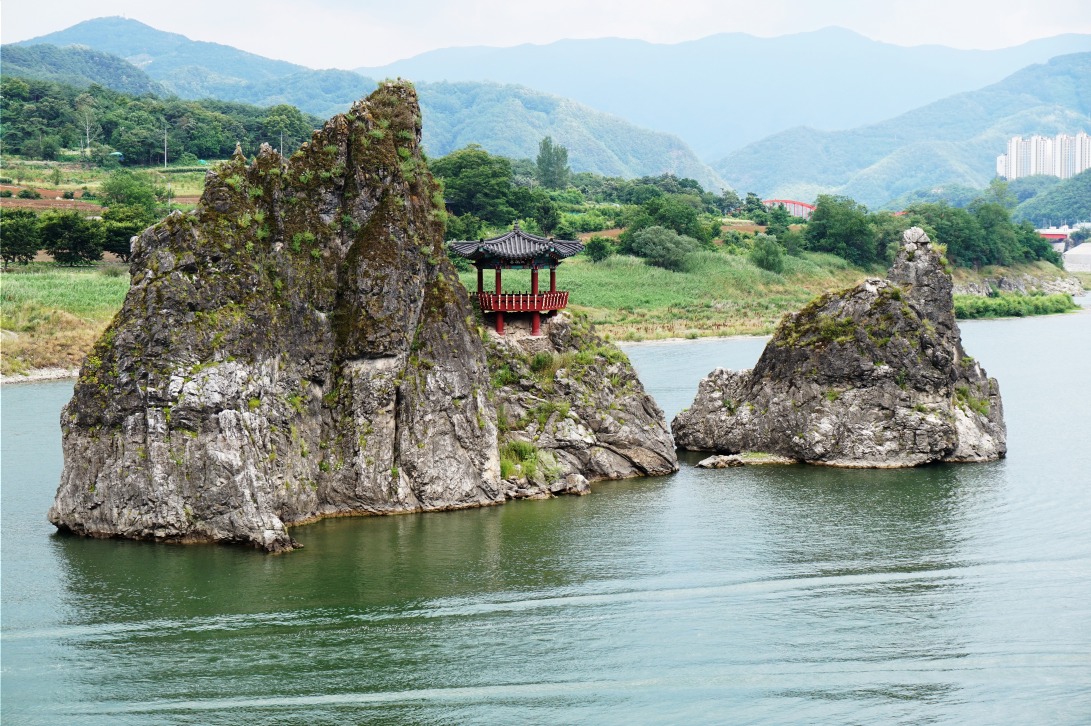
- Danyang and its karst landscapes along the Namhan River.
- Other major temples in the country such as Haeinsa Temple, which preserves the Tripitaka Koreana.
- The historic village of Hahoe, a UNESCO-listed site.
- The Hwaseong Fortress in Suwon, another major heritage stop.
Frequently asked questions
Frequently asked questions
Preparing your trip
Guinsa Temple fits naturally into an itinerary in central South Korea, between Seoul and mountainous regions. To build a complete circuit including temples, traditional villages, and nature, consult our trips to South Korea.
Interested in this visit?
We can include it in your personalised itinerary.