Sanbangsan Mountain
Sanbangsan Mountain
A lava dome rising nearly 400 meters in southwest Jeju, Sanbangsan is home to two Buddhist temples, a sanctuary cave, and protected rare flora.
In the southwest of Jeju island, Sanbangsan mountain rises its lava dome above a coastal plain. This volcanic formation, standing nearly 400 meters high, is home to two Buddhist temples, Sanbanggulsa and Bomunsa, as well as rare flora that has earned it the status of a natural monument.
Why visit Sanbangsan
The site boasts several features that merit a detour during a stay on Jeju. Its unique geological formation, bell-shaped, is the result of an ancient eruption and stands apart from the island's typical volcanic landscapes. A sanctuary cave perched halfway up the mountainside houses a Buddha statue and offers panoramic views of the coastline. Finally, the botanical diversity of the massif, with 255 recorded species including several rare orchids, makes it an ideal destination for nature enthusiasts.
History and legend
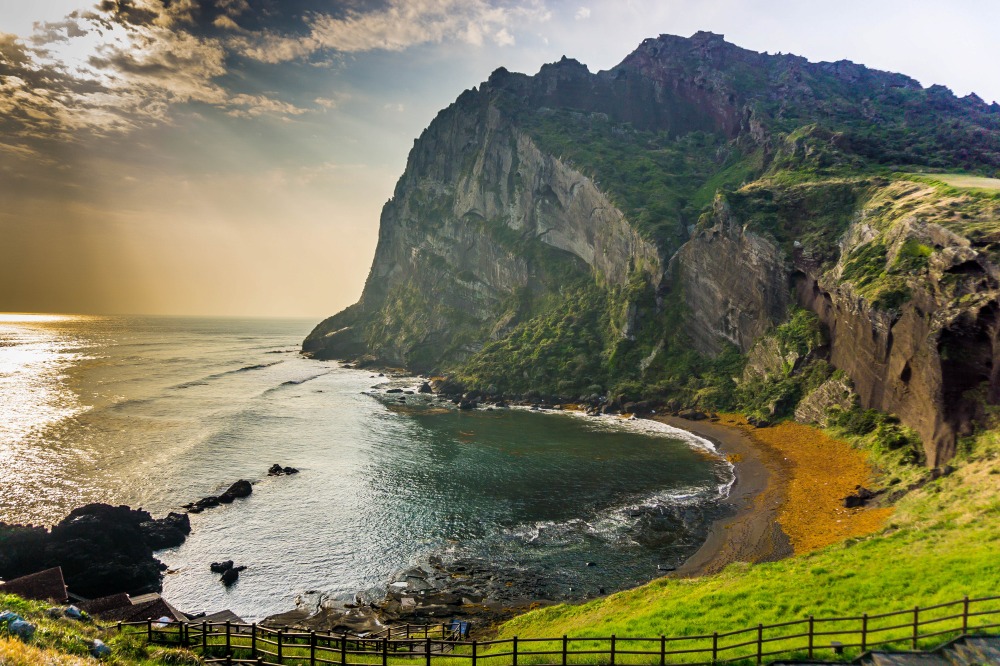
Sanbangsan was formed approximately 800,000 years ago during a volcanic eruption. As the lava solidified rapidly, it created this massive bell-shaped dome, without any apparent crater at its summit.
Local tradition offers an alternative origin: the mountain was originally the peak of Hallasan, the highest point on the island and in South Korea. An angry deity supposedly tore it away and hurled it to the southwest coast, explaining both the depression in Hallasan's crater and the presence of this isolated dome near the sea.
What to see on site
The volcanic dome and its cliffs
Sanbangsan reaches an altitude of 395.2 meters, approximately 345 meters above the surrounding terrain. Its proximity to the sea results in frequent cloud cover, and each slope develops its own microclimate. The cliffs on the southern flank feature gullies and rockfall slopes, some exceeding 200 meters in height, making it a geological curiosity studied by naturalists.
The Sanbanggulsa cave
This sanctuary cave is located on the south-facing slope, approximately 150 meters above sea level. Access is via a stone staircase. Inside, a large Buddha statue occupies the natural cavern. From the courtyard, views extend across the coastline and toward Dragon Head Rock (Yongmeori), at the foot of which stands a memorial dedicated to Dutch explorer Hendrik Hamel, who was shipwrecked on Jeju in the 17th century.
The Bomunsa temple
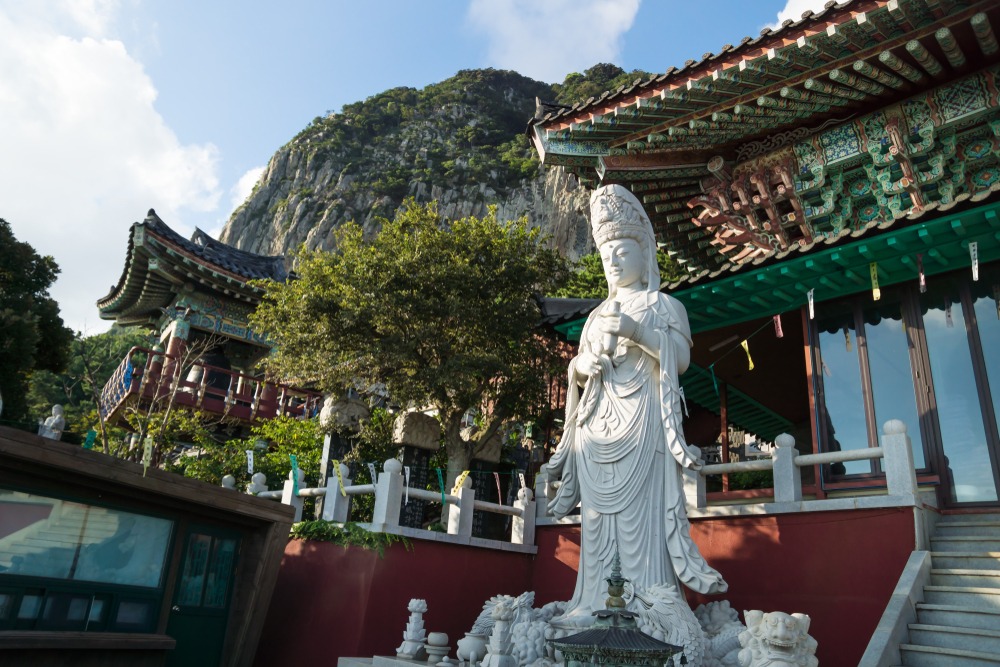
Located near the main entrance of the site, Bomunsa welcomes visitors in a courtyard adorned with several Buddha statues of varying forms. The sanctuary houses an imposing golden Buddha statue, the focal point of devotion at the site.
Protected flora
The summit is covered with dense forest of evergreen trees: silverleaf magnolia, yellowish-leaved sedum, Japanese cinnamon. Several rare species also grow here: Cleisostoma scolopendrifolium orchid, Korean glabrous boxwood, single-leaved cremastra, Goering's cymbidium, tailed clover, and Zanthoxylum coreanum. These plants are the reason for the mountain's designation as a natural monument.
When to visit
Sanbangsan can be visited year-round, though spring (April-May) remains the most pleasant season, with cherry blossoms in bloom and active vegetation. Autumn offers mild temperatures and excellent visibility. Summer brings humid heat and monsoon rains that make the climb more challenging, while in winter the summit is often shrouded in mist. It's best to plan a morning visit, before clouds envelop the dome.
Practical information
The site is open daily during daylight hours. Admission is charged but remains moderate, with discounts for children. Plan 1.5 to 2 hours for a combined visit to the temples and cave, accounting for the stone staircase climb. Wear sturdy shoes and bring water, especially in summer.
How to get there
From Jeju's intercity bus terminal, bus line 251 goes directly to Sanbangsan in approximately one hour. Taxis remain a convenient option for groups or time-pressed visitors. If driving a rental car, parking is available on site.
What to see nearby
Sanbangsan is located in an area that concentrates several remarkable sites in southwest Jeju:
- Dragon Head Rock (Yongmeori) and Yongmeori Beach, below the dome
- The Hendrik Hamel Memorial, in immediate proximity to the rock
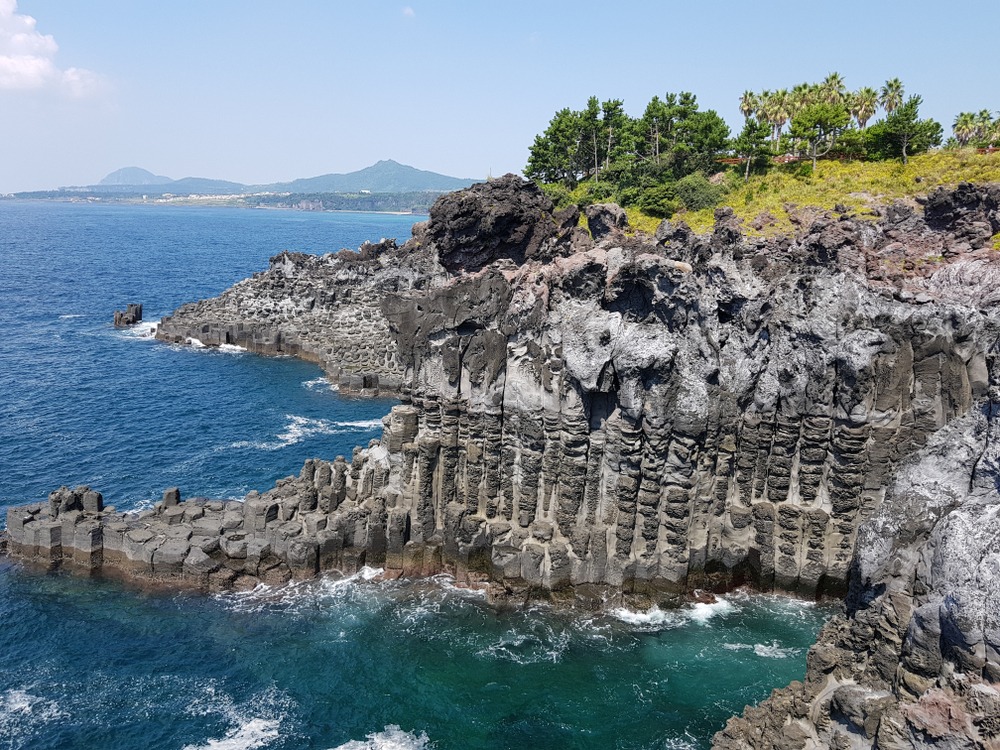
- Jusangjeolli Cliff, another spectacular volcanic formation on Jeju
- Beaches and fishing villages along the south coast
To further explore Korean Buddhist sites, Haeinsa Temple on the mainland is a must-visit.
Frequently asked questions
Frequently asked questions
Including Sanbangsan in your trip
Sanbangsan fits naturally into a circuit around Jeju island, combining volcanic cliffs, temples, and beaches. To plan a comprehensive itinerary linking Jeju and the mainland, consult our South Korea tours.
Nearby
Interested in this visit?
We can include it in your personalised itinerary.