5 Must-See Attractions on Jeju Island
Located in the southwest of South Korea, Jeju Island is the country's largest island. Between its volcanic landscapes, paradisiacal beaches with turquoise waters,
Located in the southwest of South Korea, Jeju Island is the country's largest island. Between its volcanic landscapes, its paradisiacal beaches with turquoise waters, its vertiginous cliffs, its numerous parks and botanical gardens and its waterfalls, Jeju Island is, for many, considered the Hawaiian Island of Korea. We bring you the 5 things you absolutely must do or see on this volcanic island. Discover the must-see attractions on Jeju Island.
1. Explore Hallasan Volcano
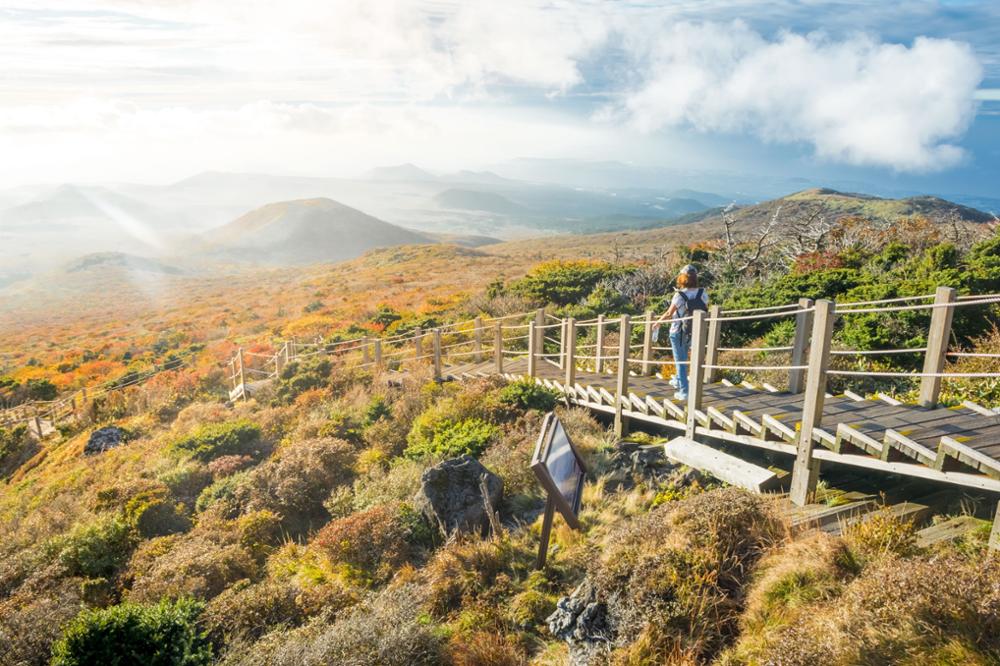
At a height of 1,950 meters above sea level, Hallasan volcano is the highest point in South Korea. And above all, it is the symbol of the island. Needless to say, you won't be able to escape it during your stay on Jeju Island! You'll find numerous well-marked hiking trails. The most adventurous can take on the challenge of reaching the volcano's summit and enjoy a 360° view of the island in return...
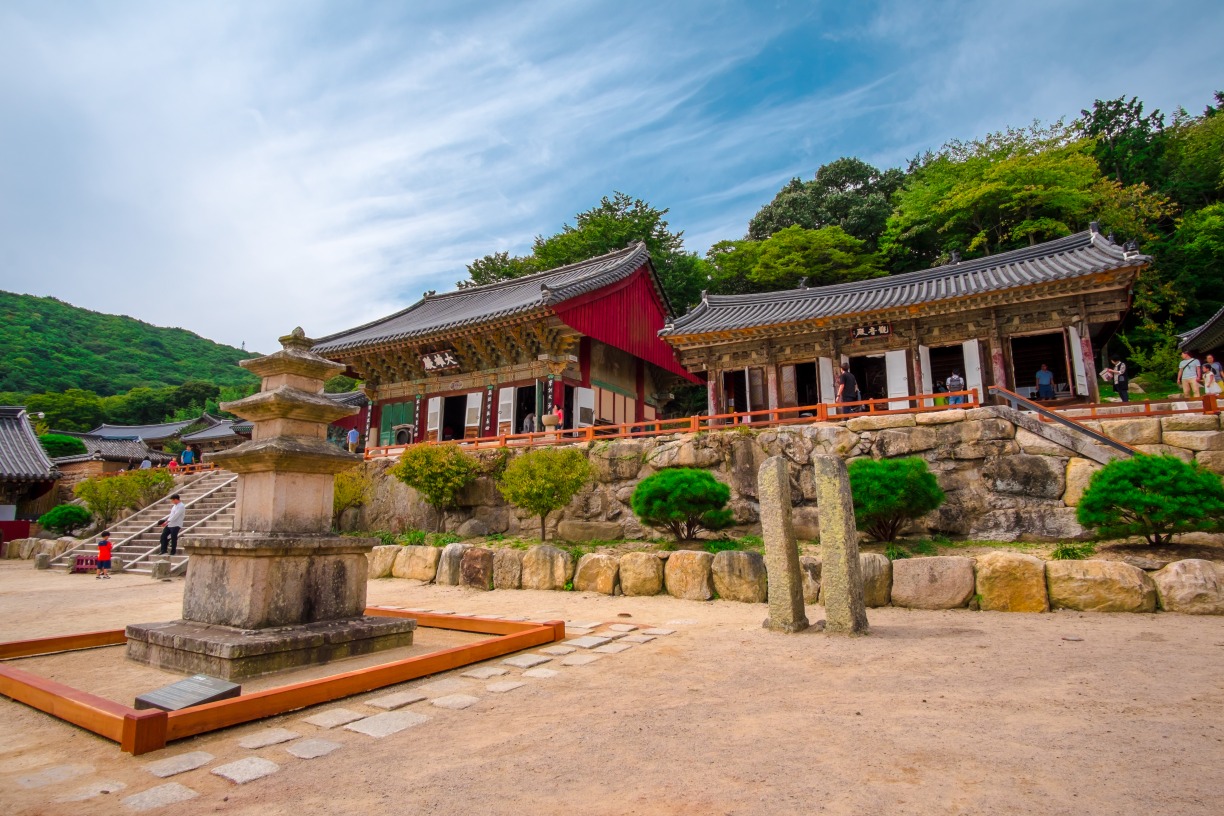
Good to know: at the trailhead, don't miss Gwaneumsa Temple. It's the oldest Buddhist temple on the island, founded during the Koryo dynasty!
2. Meet the Haenyo
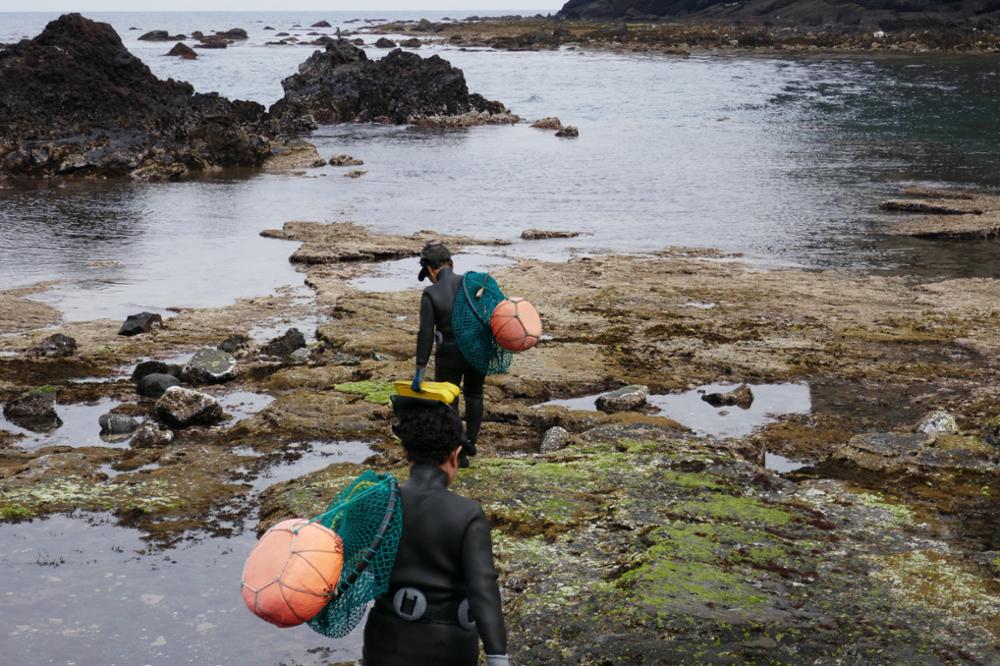
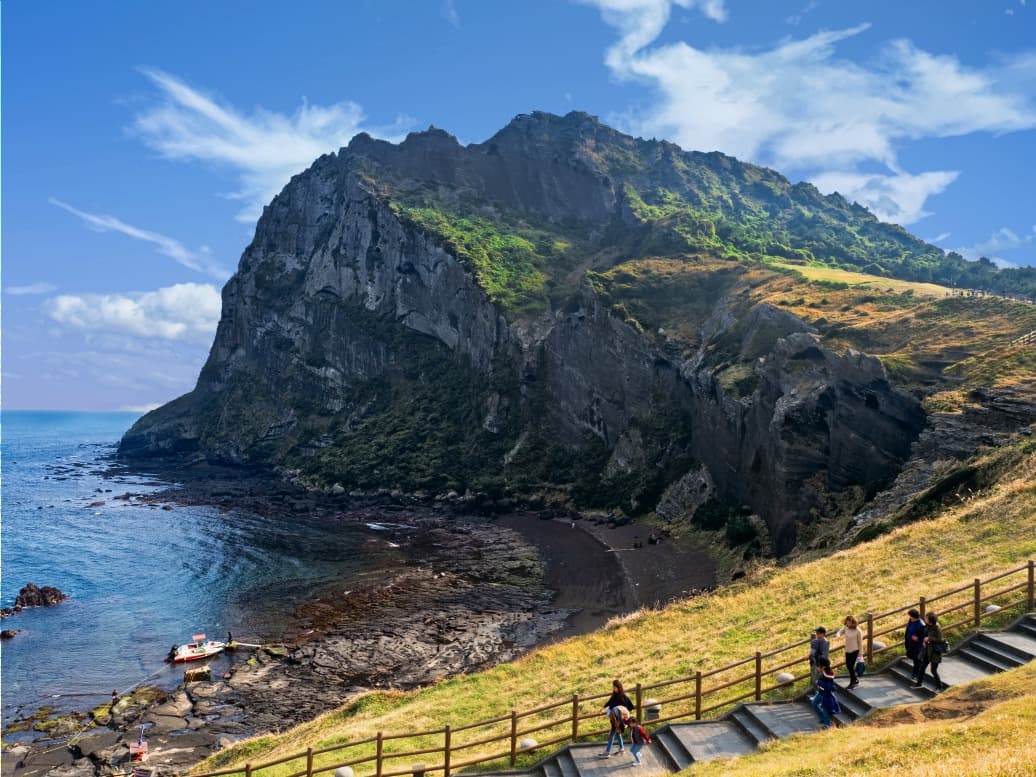
Other iconic figures of Jeju Island: the Haenyo. Meaning women of the sea, the Haenyo are women (mostly octogenarians) who free-dive in order to harvest shells and crustaceans. A truly spectacular tradition that has even been designated as a cultural practice inscribed on UNESCO's World Heritage List. To see them in action, you can visit the Seongsan Ilchulbong site where demonstrations take place every day. Otherwise, you might encounter these remarkable women in the village of Seongsan or spot them by chance at sea!
3. Visit Manjanggul Cave
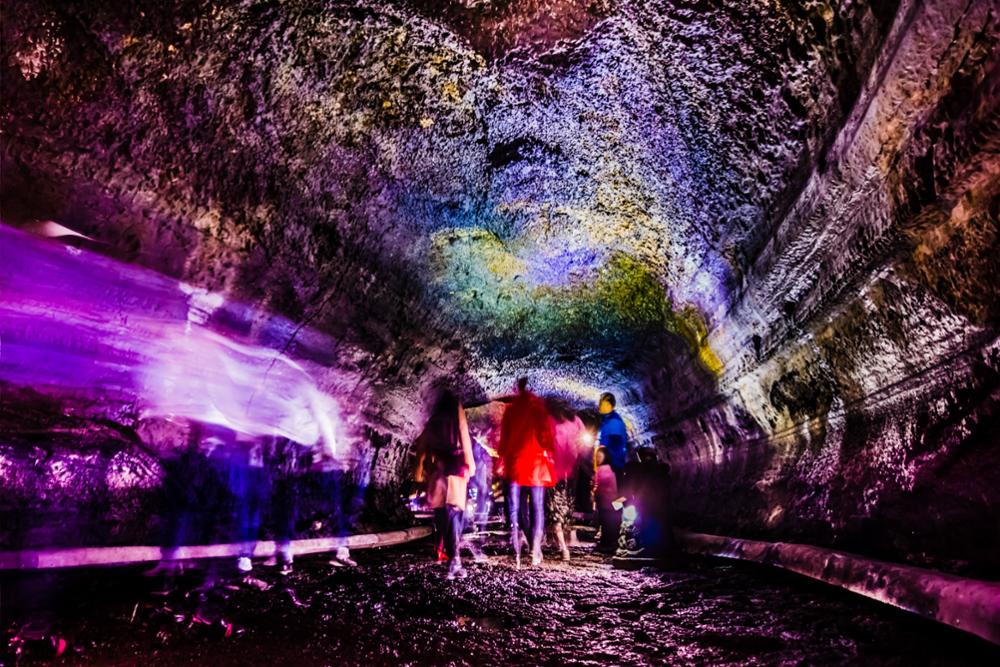
Located in the northeast of the island, Manjanggul Cave is actually a lava tunnel. And the most impressive thing about this creation by Mother Nature is that it was formed over 250,000 years ago! Be aware that this is not the only volcanic cave on Jeju (there are 4 other similar sites), but it's the only one that can be visited. Its total length is 13 kilometers and its width extends to 18 meters! As for its height, the tunnel reaches 20 meters tall. There's no doubt that this sublime underground palace of grand dimensions is among the things you absolutely must see on Jeju!
4. Refresh at the Waterfalls
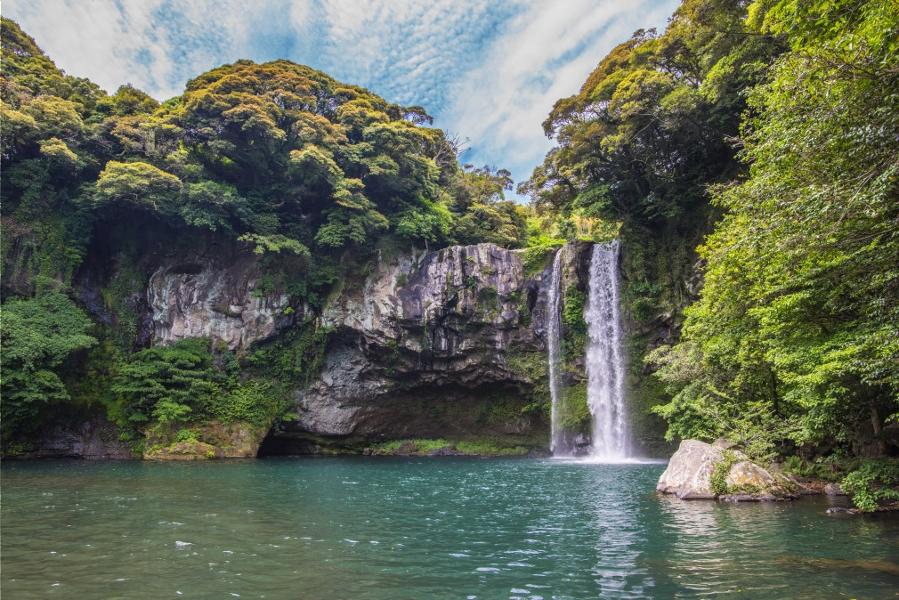
If you've chosen Jeju as a destination during your trip to South Korea, there's a good chance you're a nature lover. And you won't be disappointed! In addition to volcanic landscapes, the Hawaiian Island of Korea is also home to beautiful waterfalls. The most famous is Jeongbang. And what gives it its reputation is its particularly unique configuration! Indeed, it's the only waterfall in Asia that falls directly into the sea. Continue your waterfall hunt in the south of the island with the discovery of the Cheonjiyeon and Eongtto waterfalls. Don't forget to learn about the history of each one—you'll be surprised by the legends attached to them…
5. Relax on the Beaches
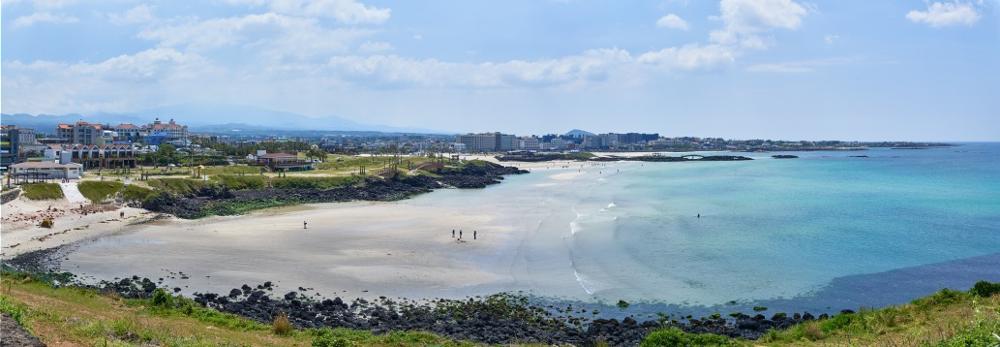
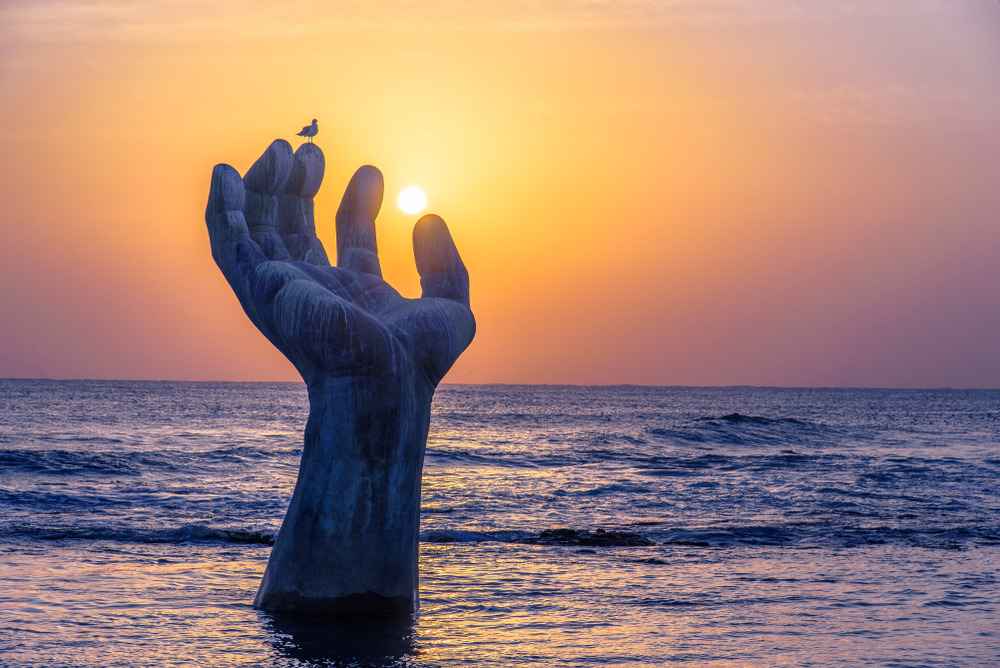
South Korea's premier beach destination, Jeju Island boasts several equally stunning beaches. But given its volcanic landscape, not all are easily accessible, and some are formed around vertiginous cliffs and rocky areas (to be discovered too during hikes or at sunrise/sunset).
If you wish to relax on a white sand beach, head to the sublime Hyeopjae Beach located on the western side of the island facing Biyang Island. Stretching 9 km, it is considered Jeju's most beautiful beach! Take the opportunity to visit Hallim Park and its botanical and water gardens! Another ideal beach for swimming on Jeju: Hamdeok Seoubon Beach. Located on the east side of Jeju, it is characterized by its turquoise waters and the pine forest that borders the coastline, offering sublime contrasts…
If Jeju Island appeals to you for your South Korea trip, travel with us on our Off-the-Beaten-Path South Korea circuit including Jeju Island.
Frequently asked questions
Jeju Island is pleasant to visit year-round, but the best seasons are spring (April-May) for cherry blossoms and autumn (October-November) for fall foliage on Hallasan volcano. Summer (July-August) is the beach season but also the busiest. In winter, snowfall on Hallasan creates exceptional landscapes, but some trails may be closed.
The fastest way is by plane: direct flights connect Seoul (Gimpo or Incheon airports) to Jeju International Airport in approximately 1 hour. Ferries also depart from Mokpo or Busan ports for a crossing of 3 to 12 hours depending on the departure point. The plane remains the most popular option for travelers.
A minimum of 3 to 4 days is recommended to discover the main attractions of Jeju Island: Hallasan volcano, Manjanggul Cave, beaches and waterfalls. For a more thorough exploration including villages, gastronomy and hiking, plan for 5 to 7 days instead.
Yes, Manjanggul Cave is accessible to the general public. Only 1 km out of the 13 km total is open to visitors. The route is relatively flat, but the interior can be damp and slippery. It's advisable to wear closed-toe shoes and bring a light sweater as the interior temperature is cool (around 11°C year-round).
Yes, it is possible to observe the Haenyo, these traditional divers inscribed on UNESCO's World Heritage List. The Seongsan Ilchulbong site offers daily demonstrations. You can also encounter them in Seongsan village or by the seaside in various locations on the island. Morning is the best time to see them at work.
Several Jeju beaches are ideal for swimming, notably Hyeopjae Beach (9 km of white sand on the west side of the island) and Hamdeok Seoubon Beach on the east, renowned for its turquoise waters and pine forest. However, some volcanic coastlines with rocky cliffs are not suitable for swimming but offer magnificent landscapes.