Omokdae and Imokdae
Omokdae and Imokdae
Two wooden pavilions perched above Jeonju's hanok village, bearing witness to the origins and end of the Joseon dynasty.
Perched on a wooded hillside above Jeonju's hanok village, two wooden pavilions mark the origins of the Joseon dynasty. Omokdae and Imokdae offer both a vantage point over the old town and a shortcut through five centuries of Korean history.
Why visit Omokdae and Imokdae
These twin pavilions are far more than simple viewpoints. They connect directly to Yi Seong-gye, founder of the Joseon dynasty, and to his ancestor Mokjo, who lived in Jeonju before exile to the north. Far from the bustle of the neighboring hanok village, they remain little-visited and allow you to gain perspective—both literally and historically—on the city.
The appeal is threefold: a sober and well-preserved heritage setting, an unobstructed view of the gray-tiled roofs of the traditional quarter, and a quick detour that integrates seamlessly into a broader Jeonju visit.
History of the two pavilions
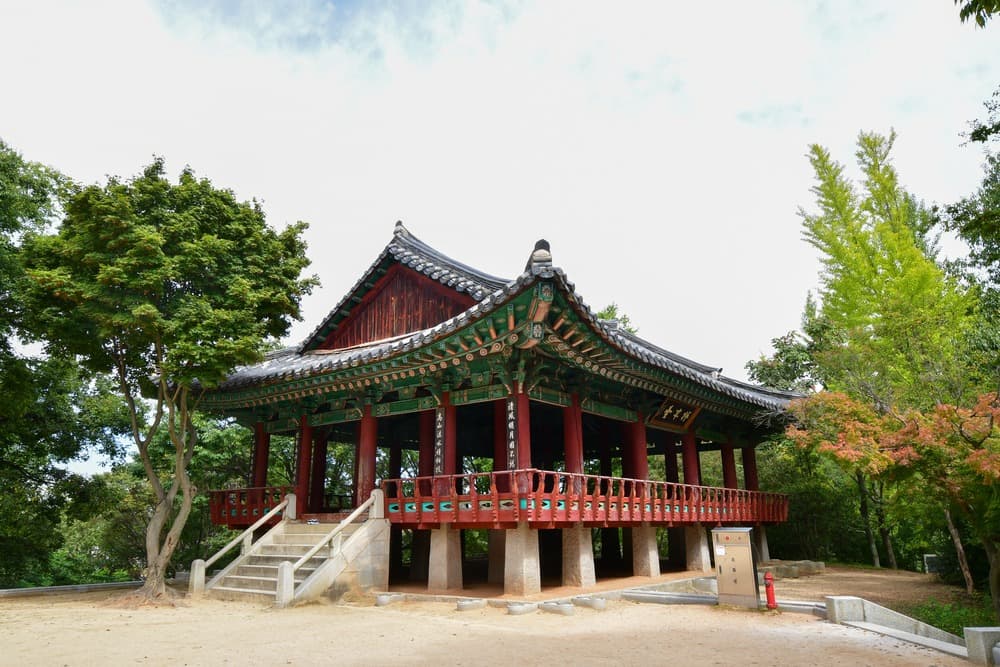
Omokdae is the place where Yi Seong-gye, future founder of the Joseon dynasty, stopped after his victory against Japanese forces at Mount Hwangsan, before continuing on to Gaegyeong. According to tradition, it was here he celebrated his military success and where the idea of founding a new dynasty took root. The site already held family significance: Mokjo, his great-great-grandfather, had lived here before leaving Jeonju for Hamgyeong-do province following a dispute with a local official.
Imokdae, the second pavilion, stands roughly a hundred meters from Omokdae. Legend has it that Mokjo, as a child, played war games with his companions here. Nearby stands a stone monument carved with an inscription by King Gojong, the last sovereign of the Joseon dynasty, at a moment when the kingdom wavered before foreign powers. The two pavilions thus symbolically frame the entire trajectory of the dynasty: its beginning and its twilight.
What to see on site
Omokdae
The main pavilion, built of dark wood with traditional tiling, occupies a clear platform at the hilltop. From its surroundings, the view sweeps over the hanok village through the trees: a landscape of curved roofs particularly striking in winter, when foliage thins out.
Imokdae
More modest in scale, Imokdae awaits at the end of a short trail extending from Omokdae. King Gojong's stone monument nearby deserves a pause for its historic inscription, a direct testament to the twilight of the Joseon dynasty.
The trail and hillside
The two pavilions are connected by a marked pathway. A wooden staircase eases the climb from the traditional quarter and offers the most direct access.
When to visit
Autumn, typically mid-October through early November, is the most photogenic season: maples and ginkgos color the hillside and contrast beautifully with the gray hanok roofs. Spring, more understated, offers tender foliage and pleasant temperatures. Summer remains viable but tends toward heat and humidity, while winter clears sightlines over the city.
As for timing, late afternoon offers dramatic light raking across the roofs—provided you descend before nightfall, as trail lighting remains limited.
Practical information
- Site access: free; no ticketing system in place to date.
- Duration: allow 30 minutes to 1 hour to walk through both pavilions and enjoy the viewpoint.
- Difficulty: a short but steep wooden staircase; comfortable shoes recommended.
- Services: no facilities on site; restrooms and dining options are available in the hanok village below.
How to get there
Omokdae and Imokdae border Jeonju's hanok village and are reachable on foot from most traditional lodgings in the quarter. The easiest landmark is Jeondong Cathedral, a short walk from the base of the hill.
To reach Jeonju from Seoul, the most convenient option is the KTX train to Jeonju Station, or an intercity bus from Seoul's express bus terminals. Once in Jeonju, taxis and local buses serve the hanok village; walking is then the best option to reach the pavilions.
What to combine nearby
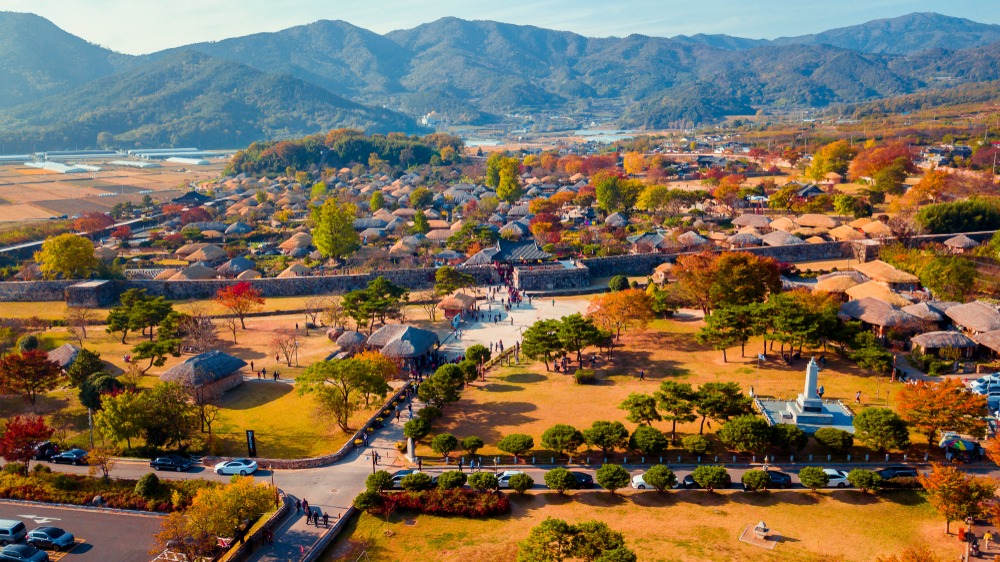
Your visit naturally extends into Jeonju's hanok village, with its traditional house alleyways, artisan workshops, and culinary scene (notably bibimbap, of which the city is the birthplace). Enthusiasts of traditional villages may compare it with Nagan, a village fortress further south. To broaden your South Korea itinerary, Haeinsa Temple and Magoksa Temple round out a fine cultural loop.
Frequently asked questions
Allow 30 minutes to 1 hour, including the climb. The visit pairs easily with a hanok village tour.
Access to both pavilions is free. No ticket office or ticketing system is in place at the site.
The ascent uses a fairly steep but short wooden staircase. It remains accessible for visitors in good condition, though it may be challenging for those with mobility restrictions.
Autumn offers the most photogenic colors on the hillside. Spring and winter provide clearer views of the hanok village roofs.
Planning your trip
Omokdae and Imokdae lend themselves well to a half-day cultural stop in Jeonju, to be woven into a broader circuit. To craft a custom itinerary blending Joseon heritage, traditional villages, and nature, explore our South Korea travel suggestions.
Interested in this visit?
We can include it in your personalised itinerary.