Changgyeonggung Palace
Changgyeonggung Palace
In Seoul, Changgyeonggung Palace houses Korea's oldest preserved throne hall and nine centuries of history, from Goryeo through modern restoration.
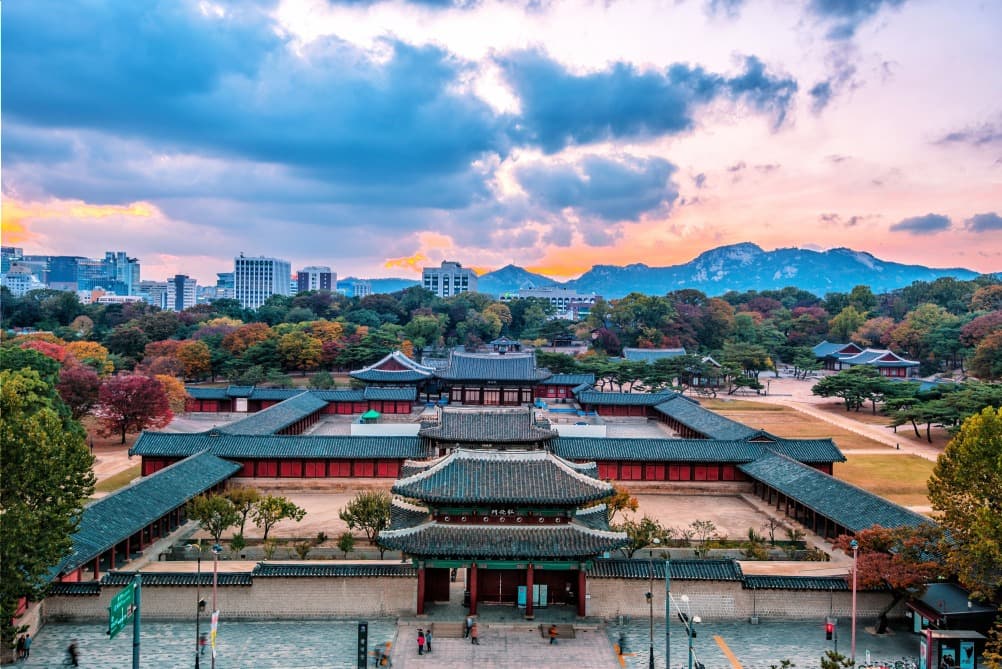
The Changgyeonggung Palace, located in the historic center of Seoul, stands among the five grand palaces of the Joseon dynasty. Less crowded than Gyeongbokgung but rich in layered history, it houses Korea's oldest preserved throne hall and retains successive traces of the Goryeo and Joseon dynasties, Japanese occupation, and contemporary restoration.
Why visit Changgyeonggung
- A Myeongjeongjeon throne hall from the 17th century, designated National Treasure No. 226, considered the oldest preserved in South Korea.
- An architectural ensemble spanning nearly nine centuries of history, from King Sukjong of Goryeo through restoration work in the 1980s.
- The Daeonsil, a botanical greenhouse built in 1909 and inspired by London's Crystal Palace, a rare example of iron and glass architecture in Korea.
- A park with pond, shrines, and a historic sundial, offering a more tranquil experience than Gyeongbokgung.
History of the palace
The site has been occupied by a first palace since 1104, under King Sukjong of the Goryeo dynasty. Notably, a Myeongjeong pavilion oriented to the east survives from this period—a striking feature, as southern orientation later became the standard under Joseon.
In 1392, King Taejo founded the Joseon dynasty and relocated the capital to Seoul two years later. His grandson King Sejong the Great (1418-1450) had the Sungang building constructed on the site to house his father, who had retired from the throne—the former sovereign could not reside in the same palace as his successor.
Expansion work in 1483, under King Seongjong (ninth Joseon ruler), gave the palace its present name, Changgyeonggung. It then served as a residence for royal consorts.
The site's history is marked by several destructions. The palace burned during the Japanese invasion of 1592 and was rebuilt in 1616. Another accidental fire in 1830 left only the Myeongjeongjeon intact; reconstruction was completed by 1834. During Japanese occupation, the site was converted into a museum, botanical garden, and zoo, and renamed Changgyeongwon ("Changgyeong Gardens") in April 1911. It took a restoration campaign conducted between December 1983 and 1986 to restore its palace status and relocate the zoo.
What to see on site
Honghwamun Gate
The main gate through which the palace is entered, flanked by a pair of bell pavilions called sipjagaks. Simpler than the gates of other palaces, this is where the king could receive ordinary citizens.
Myeongjeongjeon, the throne hall
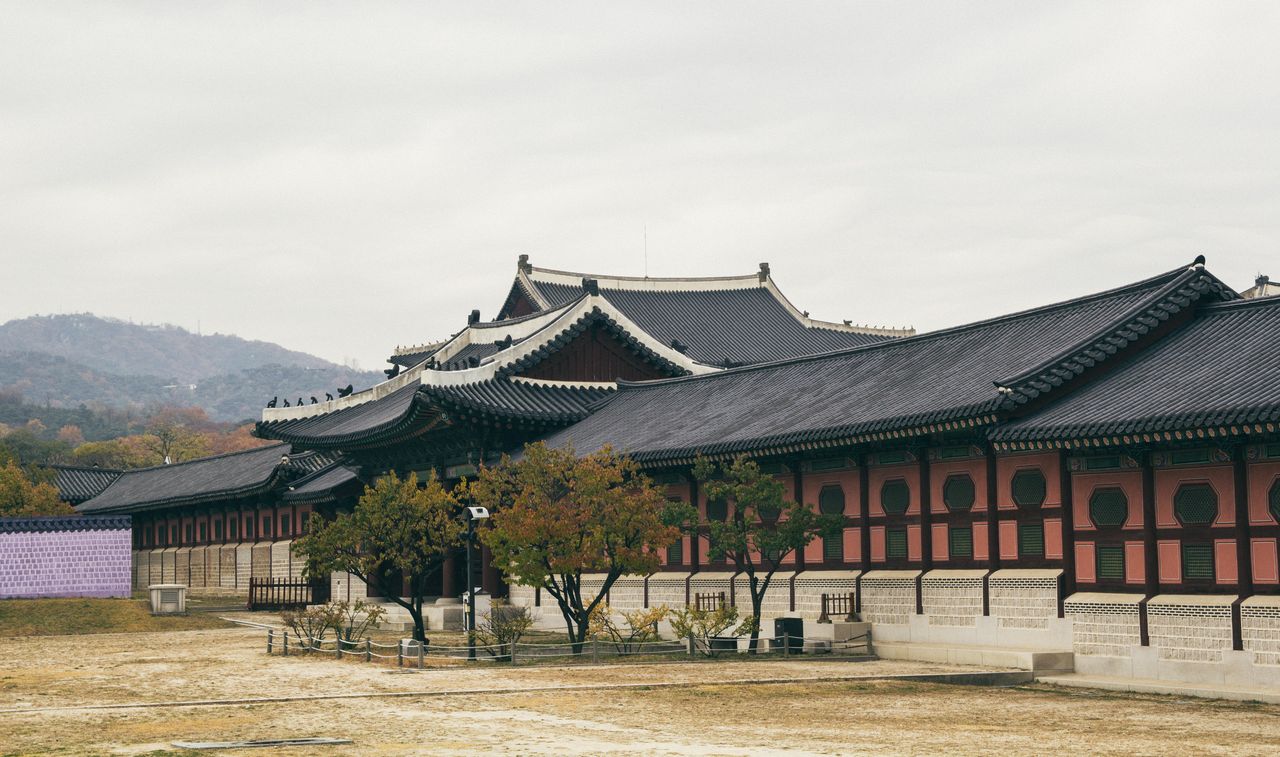
The only structure to survive the 1830 fire, Myeongjeongjeon dates from the 17th century. Designated National Treasure No. 226, it is widely recognized as Korea's oldest preserved throne hall. It rests on a double stone terrace called woldae, whose central pathway was reserved for the king. Stone posts aligned on either side served as markers for court dignitaries according to their rank.
Gyeongchunjeon Hall
The residence of King Seongjong's consort, this hall was also the birthplace of several Joseon dynasty sovereigns.
Hwangyeongjeon Hall
The building served as a residence for kings and princes accompanied by their consorts. Crown Prince Sohyeon died here in 1645, a pivotal episode in dynastic history.
Sungmungdang and Haminjeong
Sungmungdang hosted royal conferences, banquets, and discussions on state affairs. The Haminjeong pavilion received high-ranking civil and military officials during audiences or official banquets.
The Daeonsil
Built in 1909, this iron and glass botanical greenhouse draws direct inspiration from London's Crystal Palace, complete with its distinctive ogival arches and window frames. It represents a rare testament to industrial architecture of that era in Korea.
The Taesil Shrine
This stone monument, among the palace's most distinctive features, housed the placentas and umbilical cords of royal children, preserved according to a tradition unique to the Joseon court.
Chundangji Pond
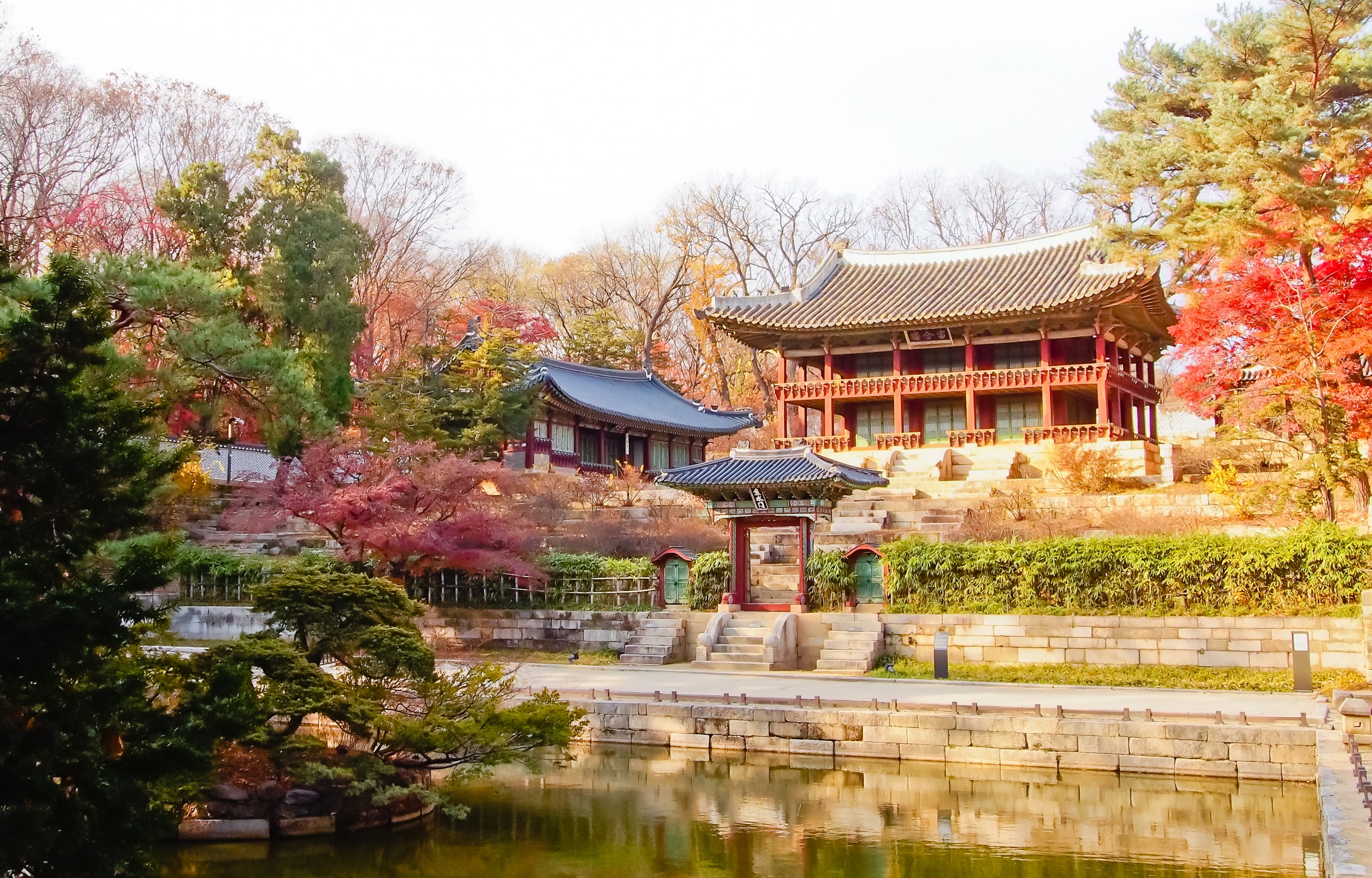
Located near the Daeonsil, the pond is divided into Daechundangji and the smaller Sochundangji. The site, framed by restored buildings, shifts in atmosphere throughout the seasons.
The Angbuilgu Sundial
Invented in 1434, during the sixteenth year of King Sejong's reign, this concave sundial ranks among the major scientific instruments of the Joseon court. It allowed users to read the time and the sun's position.
When to visit
The palace is open year-round. Spring (April-May) highlights cherry blossoms and magnolias around Chundangji, while autumn (October-November) showcases the golds and reds of maples, particularly striking near the pond. Winter brings a more austere atmosphere, with the pond sometimes frozen over. Night illuminations are organized several times a year, typically in spring and autumn; tickets for these sessions sell out quickly.
Practical information
- Duration of visit: allow 1.5 to 2.5 hours to explore the entire grounds.
- Admission: modest entrance fee; free for young children and visitors wearing traditional hanbok.
- Closed day: the palace is generally closed on Mondays.
- Guided tours: available in English, Chinese, and Japanese at set times; check the day's schedule at the entrance.
How to get there
From central Seoul, the subway is the simplest option. Hyehwa Station (Line 4) is about a 10-minute walk from the main entrance. Anguk Station (Line 3) and Jongno 3-ga Station (Lines 1, 3, 5) also provide convenient access, via Changdeokgung. Many bus lines serve the Wonseo-dong district.
Nearby attractions
- Changdeokgung: a neighboring palace, UNESCO-listed, renowned for its Secret Garden (Huwon). A combination ticket allows entry to both palaces.
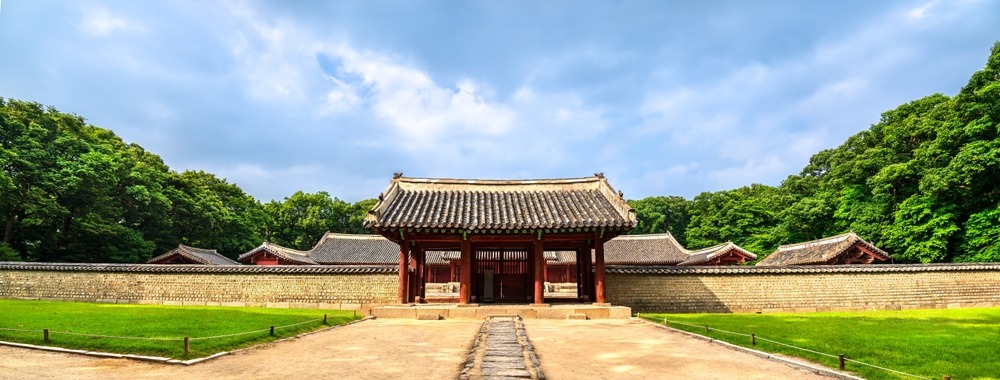
- Jongmyo Shrine: a Confucian royal shrine dedicated to the ancestors of Joseon kings, also UNESCO-listed, within easy walking distance.
- Bukchon Hanok Village: a traditional house district between Changdeokgung and Gyeongbokgung.
To extend your discovery of Korean heritage elsewhere in the country, Haeinsa Temple and Magoksa Temple are well worth the detour.
FAQ
Frequently asked questions
Allow 1.5 to 2.5 hours depending on your pace and interest in the botanical greenhouse and park. Combined with the adjacent Changdeokgung, budget a full half-day.
Yes. As at Seoul's other grand palaces, visitors in traditional hanbok receive free admission upon presentation at the entrance.
The two palaces are neighbors and were once connected. Changdeokgung, UNESCO-listed, is better known for its Secret Garden. Changgyeonggung, more understated, preserves Korea's oldest throne hall and its 1909 botanical greenhouse.
Spring (cherry blossoms) and autumn (maples) offer the most striking contrasts. Seasonal night illuminations also beautifully highlight the pond and Daeonsil.
Yes. Hyehwa Station (Line 4) is the closest, about ten minutes on foot. Anguk Station (Line 3) and Jongno 3-ga Station are also convenient options.
Prepare your journey
Changgyeonggung Palace fits naturally into a circuit through historic central Seoul, alongside Changdeokgung and Jongmyo. To build a comprehensive itinerary across the peninsula, explore our South Korea travel packages.
Nearby
Interested in this visit?
We can include it in your personalised itinerary.