Seoraksan National Park
Seoraksan National Park
An iconic mountain range in South Korea near Sokcho, Seoraksan offers hiking, Buddhist temples, and autumn foliage renowned throughout Asia.
Located in the eastern region of South Korea, Seoraksan is above all a colossal rocky massif that is a source of national pride. Surrounded by lush vegetation and breathtaking geological formations, it comes as no surprise that the site is a UNESCO World Heritage designation. The national park stands out for its wild fauna and flora untouched by outside interference. Timeless and otherworldly, among the Taebaek mountain ranges, it is their crowning summit. Also located near the city of Sokcho, this natural reserve remains protected from human exploitation. Perfect for nature lovers and those seeking ecological diversity, it is an ideal opportunity to embark on an immersive and captivating experience.
History
Shielded from the frenzy of major cities and their egregious pollution, Seoraksan presents a relatively calm and restorative face. At the park's entrance, you feel the weight and legacy of Buddhist beliefs and Shinto influences. Beyond the pristine and original appearance of the landscape, the park distinguishes itself through ancestral monuments and statues representing shared traditions and beliefs. In 1965, the South Korean Government provisionally declared the park a natural reserve to be protected. It was only a few years later that UNESCO made the decision to declare the park a global biosphere reserve in 1982. Invaluable resources lie hidden in the soil, like rare pearls and precious gemstones.
Seoraksan National Park Today
Always dear to travelers and nature enthusiasts, Seoraksan National Park continues to captivate visitors with its remarkable natural biodiversity. Ideal for hiking and climbing, Seoraksan National Park offers sensations that are virtually unique in their kind.
Upon arrival and passing through the entrance, a small village unfolds before you: restaurants, cafés, and souvenir shops are there to draw tourists in.
More than fifteen trails can be explored with routes of varying lengths and difficulty levels, ranging from a one-hour walk to a 14-hour hike with an overnight stay.
Regarding these mountain massifs, they are formed notably of volcanic granites formed 120 million years ago and Precambrian gneiss containing porphyroblast crystals. The highest peak, Daecheongbong, reaches an elevation of 1,708 meters.
As for flora and fauna, Seoraksan National Park offers breathtaking biodiversity. Hosting several endemic species within its bounds, more than 1,013 varieties of plants and animals are classified here. Following established studies, edelweiss has been recorded, along with vascular plants including dwarf pines, saussureias, juniper, yew, forsythia, and hawthorn. In the animal kingdom, the park is notably composed of Asian black bears, musk deer, otters, deer, kestrels, flying squirrels, and Horsfield's hawk-eagles.
Hiking in Seoraksan National Park?
A short stay in Seoraksan National Park is organized primarily to set out on hiking adventures along the park's trails. As mentioned earlier, there are roughly fifteen routes allowing you to discover various sites of interest, both natural and cultural.
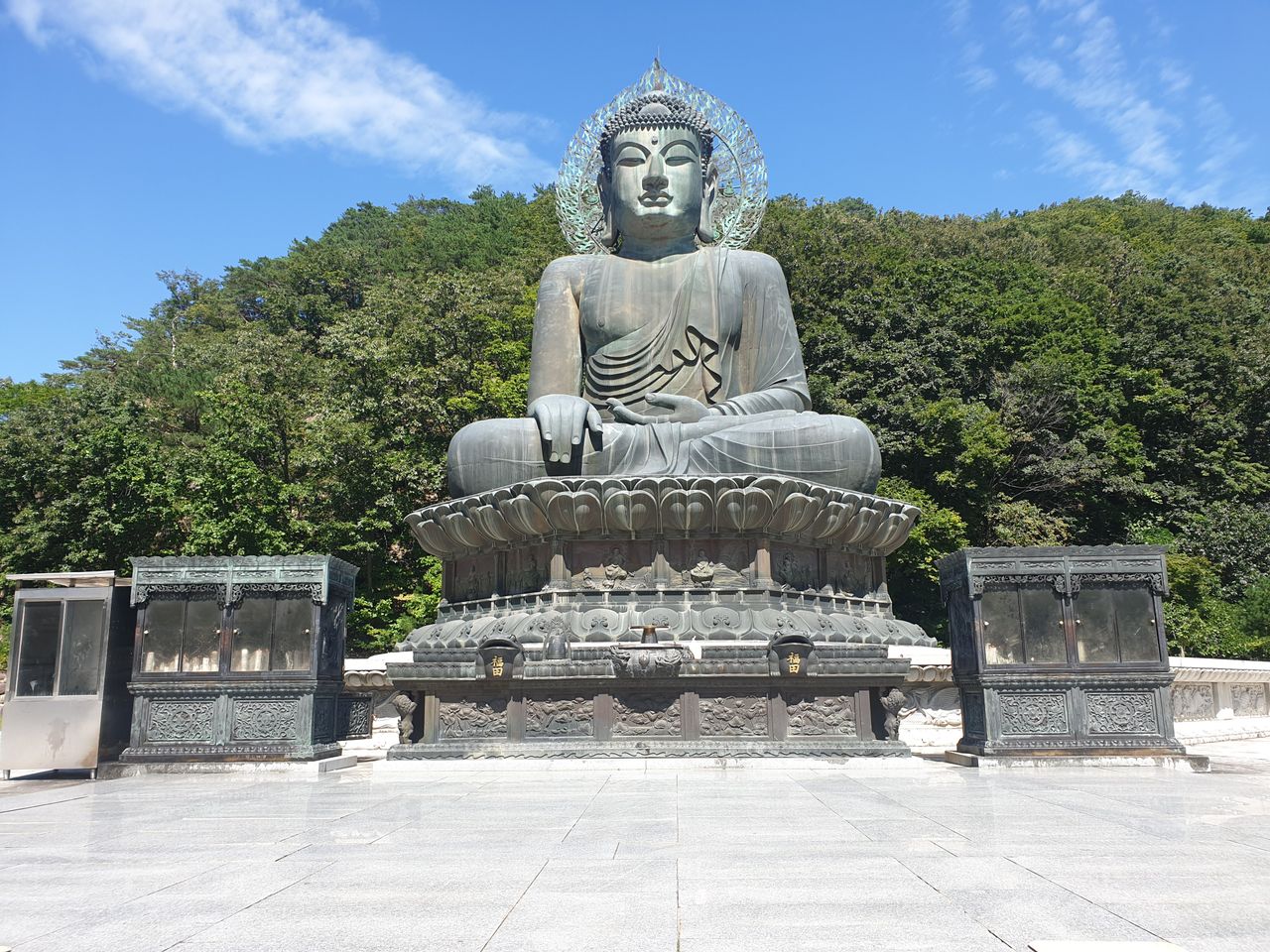
Several peaks are accessible, the most famous being Ulsanbawi, which offers a 360° panorama. Along the way, you can stop to discover notably a bronze statue of Buddha in the valley and visit several temples including Shinheungsa or the small Gyejo-am hidden in a cave that impresses with its stone Buddha and thousands of sculptures. Some hikes also lead to lovely waterfalls: Daeseung Falls, Towangseoung Falls, Yangpok, and Biryong Falls.
Certain passages are not always straightforward and require good physical fitness, but the splendid views of the surrounding mountains and natural landscape more than reward the effort expended.
For those less inclined to strenuous activity, a cable car allows you to ascend to Gwongeumseong Fortress.
Climate
As for the climate's nature, it is characterized by abundant precipitation averaging 1,000 mm inland and 1,300 mm on the coast. The determining factor in these rainfall levels is typhoons. This is a natural meteorological phenomenon marked by violent winds and torrential downpours. When winter arrives, the landscape is completely transformed. Cold spreads quickly and the atmosphere becomes extremely dry. Snow is commonplace during this period. Encompassing several mountain ranges, temperatures can drop as low as −30 °C.
Generally, to access this region, you must pass through Seoul. From there, the Intercity Bus Terminal will handle transport to your destination. The stop is made in the small city of Sokcho. Here you will find hotels, spas, and also a beach, often deserted but very pleasant.
Allow approximately 3 hours of driving from Seoul. From Sokcho, buses allow you to reach the park's entrance. Plan for approximately one hour of travel.
Want to discover this destination?
Our local advisors design your tailor-made trip.