Bukchon Hanok Village
Bukchon Hanok Village
A historic hanok quarter in central Seoul, Bukchon lines approximately 900 traditional houses between Gyeongbokgung and Changdeokgung palaces.
The hanok village of Bukchon sits on a hillside in historic central Seoul, nestled between Gyeongbokgung and Changdeokgung palaces. It is home to roughly 900 hanok-style houses, remnants of an aristocratic urban layout from the Joseon dynasty. Bukchon, meaning "northern village," encompasses several historic quarters: Wonseo-dong, Jae-dong, Gahoe-dong, Gye-dong, and Insa-dong.
Why visit Bukchon
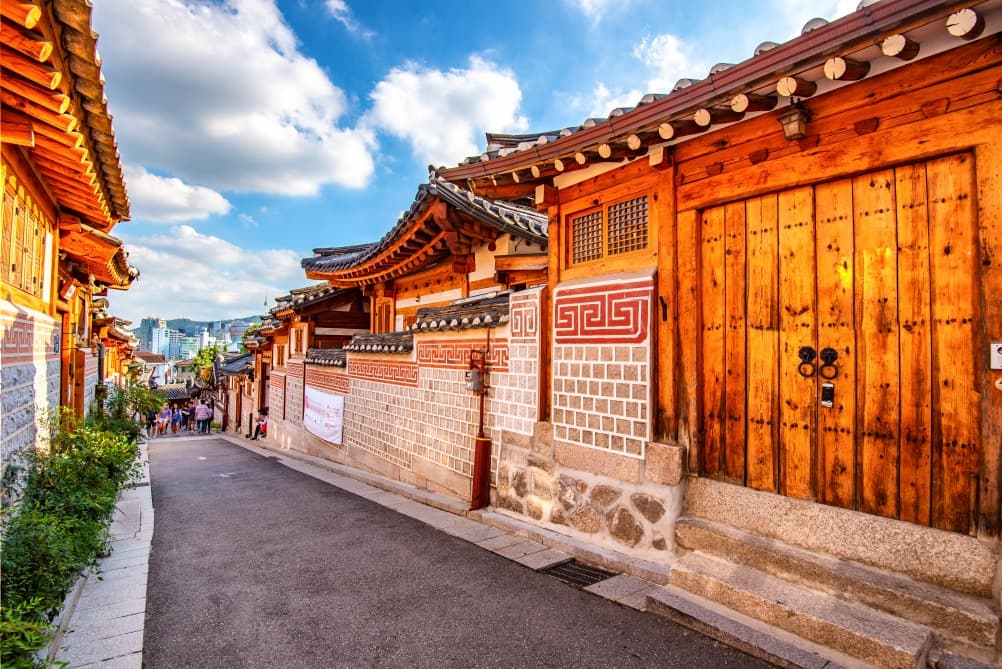
Bukchon is one of the few areas of Seoul that has preserved a pre-modern urban fabric. Narrow alleyways, stone walls, and curved roof tiles stand in stark contrast to the glass towers that dominate the rest of the capital. A Seoul Metropolitan Government survey conducted in November 2011 already ranked the quarter among the city's preferred attractions for foreign visitors, and its popularity has only grown since.
The quarter offers three layers of interpretation: architectural (hanok construction techniques), historical (Joseon social organization), and urban (a case study of living heritage under tourism pressure). Plan for 1.5 to 3 hours depending on your pace.
History of the Quarter
The area has been inhabited since the Joseon era (from the 14th century onward) due to its proximity to royal palaces. Under this dynasty, Bukchon was home to high society and senior government officials, drawn by the quarter's privileged position between the two principal imperial residences.
However, most of the hanoks visible today do not date from the Joseon period: they were built or rebuilt between 1900 and 1930, when modernization transformed Seoul. Following the wars and upheavals of the 20th century, the village gradually opened to more modest inhabitants, until heritage preservation policies stabilized its current appearance.
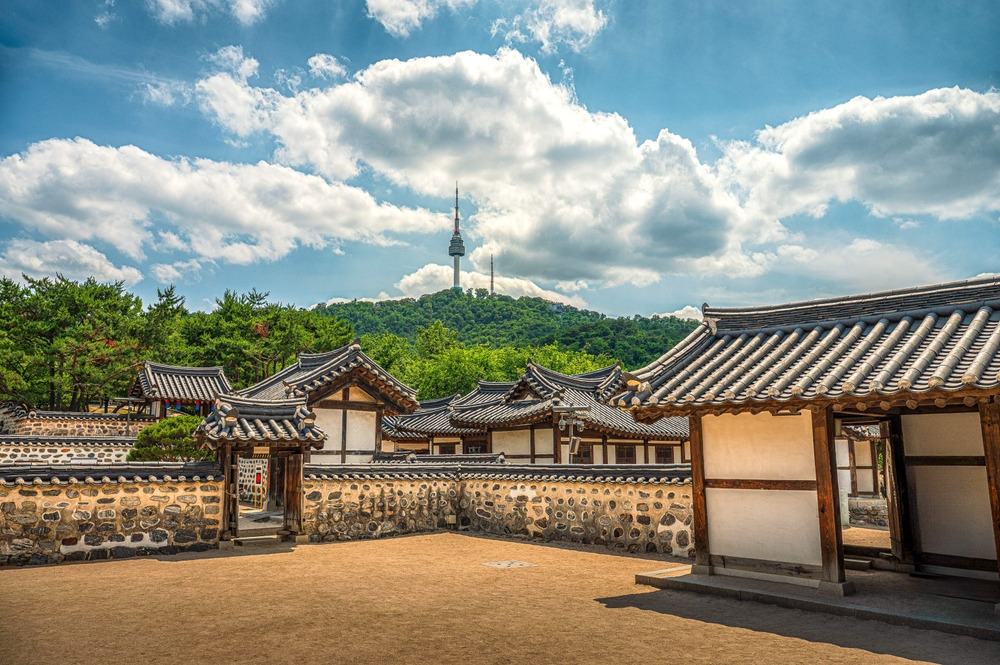
The houses rest on a combination of traditional materials: stone for foundations, wood for the structure, earth for walls, and rice paper for partitions and windows. The roofs are covered with characteristic tiles known as giwas.
What to See and Do
The Alleyways and Viewpoints
The network of narrow lanes is best explored on foot. Several marked observation points (often labeled as "Bukchon 8 views") offer perspectives on the arrangement of rooftops, with Seoul's modern skyline as backdrop. Gahoe-dong street concentrates the most photogenic vistas.
Bukchon Traditional Culture Center
The center offers guided tours in English led by volunteers. You'll learn about the history of the houses, traditional construction techniques, and domestic customs from the Joseon period.
Workshops and Museums
The quarter is home to several themed museums (embroidery, furniture, craftsmanship) and workshops open to the public. Notable are objects made from mulberry paper, including dolls and decorative shells — this paper was widely used during the Joseon dynasty for domestic craftsmanship.
Practical Information: Etiquette and Code of Conduct
Bukchon is an inhabited residential quarter, not an open-air museum. Tensions between residents and visitors are real: banners are visible in several streets, and volunteers regularly hold signs asking tourists to remain discreet. Certain areas of the quarter enforce quiet hours, generally during daytime Monday through Saturday, with tourism restrictions on Sundays in the most sensitive zones.
- Speak in low voices in residential alleyways.
- Do not photograph doorways and interiors of occupied homes.
- Do not touch walls, doors, or household items visible from the street.
- Respect quiet zone signs and the hours posted on site.
- Avoid large, noisy groups and wheeled luggage on cobblestone streets.
When to Visit
The quarter can be visited year-round. Spring (April–May) and autumn (October–November) offer the most pleasant conditions, with favorable light on the tile roofs. Weekday mornings remain the quietest; weekends, particularly sunny afternoons, are crowded. Winter can reveal the hanoks under snow, but the sloped streets become slippery.
How to Get There
The nearest subway station is Anguk (Line 3, Exit 2). From there, allow 5 to 10 minutes on foot to reach the first hanok alleyways. The quarter is also accessible from Gyeongbokgung station (Line 3) or Jongno 3-ga station (Lines 1, 3, 5). Wear flat shoes: the streets are cobblestoned and steeply inclined in places.
Nearby Attractions
Bukchon is flanked by several major sites within walking distance:
- Gyeongbokgung Palace, the largest imperial residence of the Joseon dynasty, to the west.
- Changdeokgung Palace and its secret garden, Huwon, to the east.
- Jongmyo Royal Shrine, a UNESCO World Heritage site, to the southeast.
- The Insa-dong quarter, the southern extension of the village, dedicated to craftsmanship and galleries.
To further explore traditional villages throughout South Korea, the Gamcheon Cultural Village in Busan and Bongeunsa Temple in Seoul offer two interesting counterpoints.
FAQ
Frequently asked questions
No, the quarter is a public urban space and strolling through the alleyways is free. Only certain private museums and workshops charge an admission fee, typically modest.
Allow 1.5 to 3 hours to walk the main alleyways, enjoy the viewpoints, and stop by a workshop or museum.
Most are private residences and remain closed to visitors. A few hanoks have been converted into museums, workshops, tea houses, or guesthouses: these are the only places where you can experience traditional interiors.
Early morning on a weekday, when tourist hours begin. The light is better and crowds are significantly lighter than in the afternoon or on weekends.
Anguk station (Line 3, Exit 2) is the closest and most convenient.
Include Bukchon in Your Journey
Bukchon Hanok Village fits naturally into a Seoul visit, complementing the royal palaces and Insa-dong quarter. To craft a custom itinerary that weaves together Joseon heritage, contemporary cities, and landscapes of the south, consult our suggestions for travel in South Korea.

Interested in this visit?
We can include it in your personalised itinerary.