Changdeokgung Palace
Changdeokgung Palace
UNESCO-listed Joseon Palace, Changdeokgung is renowned for its historic halls and the 32-hectare Huwon garden, in northern Seoul.
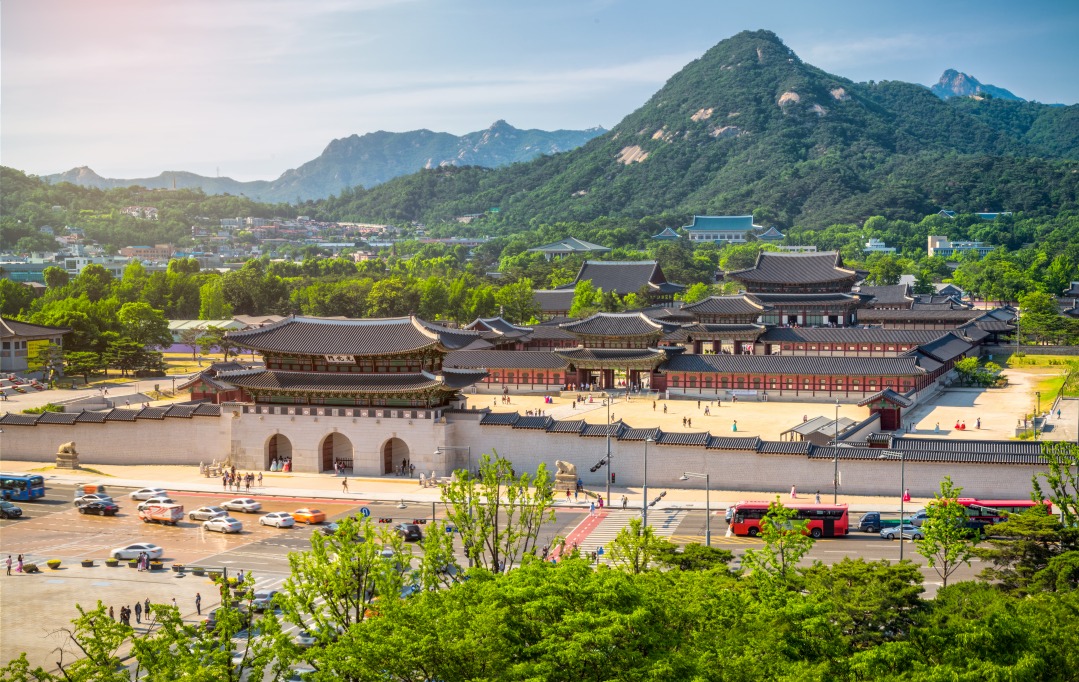
Changdeokgung Palace is one of five grand palaces built by the Joseon dynasty in Seoul. Inscribed on the UNESCO World Heritage List in 1997, it sits on the southern slope of Mount Bugaksan and stands out for its integration with the landscape and its vast rear garden, the Huwon, which was long reserved for the royal family.
Why visit Changdeokgung
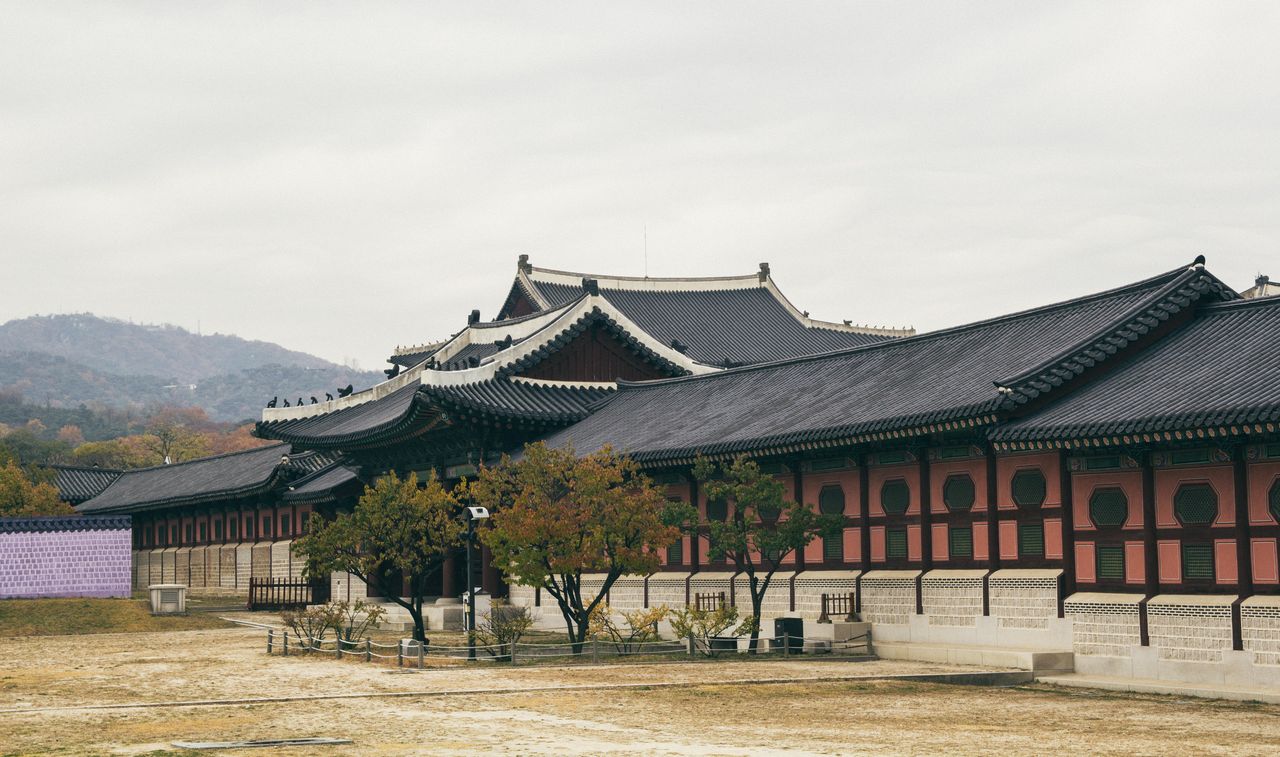
Among Seoul's Joseon palaces, Changdeokgung holds a unique place. Its layout does not follow the usual axial rigour of Korean palaces: pavilions and halls embrace the topography of Mount Bugaksan rather than flattening it. This architectural approach, praised by UNESCO, makes it the finest surviving example of Joseon palatial art.
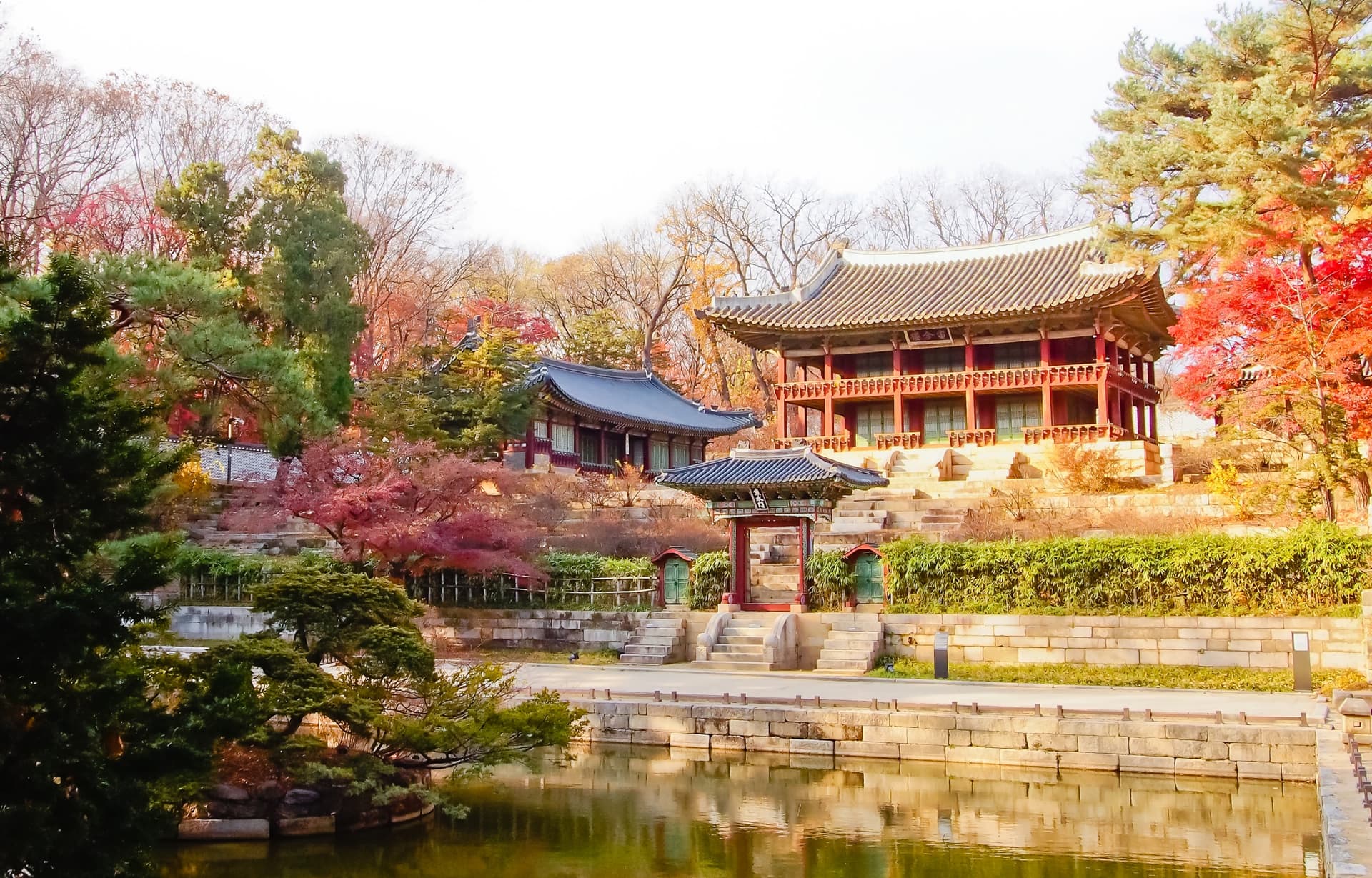
The other reason to come is the Huwon, the "secret garden" of 32 hectares stretching behind the official buildings: lotus ponds, secluded pavilions, century-old trees. A combined visit to the palace and Huwon takes half a day and offers a coherent glimpse of Joseon court life, from coronations to private quarters.
Palace history
Built in the early 15th century as a secondary palace, Changdeokgung was completely destroyed during the Japanese invasion of 1592. Its reconstruction took place in 1609 under the reigns of Sonjo and Gwanghaegun. In 1615, it became the official seat of the monarchy, superseding Gyeongbokgung, which remained in ruins.
The complex was set on fire again in 1623, during the revolt of future king Injo against Gwanghaegun, and was subsequently rebuilt. It then served as the main residence and seat of Joseon government until 1872. During the colonial period, certain halls underwent major modifications, notably Huijeongdang after the fire of 1917, rebuilt with Western-inspired elements rather than restored to its original form.
What to see on site
Donhwamun Gate and Geumcheongyo Bridge
The main entrance is through the Donhwamun Gate, a two-storey wooden pavilion structure dating from 1412 and restored in 1608 after the destruction of the late 16th century. A few metres further on, you cross the Geumcheongyo Bridge, built in 1411: it is Seoul's oldest surviving bridge.
Official and residential halls
- Injeongjeon (1405): the throne hall, used for coronations and receiving foreign envoys.
- Seonjeongjeon: the king's office and meeting room with senior officials.
- Huijeongdang: the former royal bedchamber converted into an office, rebuilt in 1917 with Western influences (parquet flooring, chandeliers) that break with the original style.
- Daejojeon: the queen's apartments, which was the residence of the last Joseon empress.
Auxiliary pavilions
The Juhamnu pavilion, located in the upper part of the garden, hosted state examinations. The Yeon-gyeongdang residence, built in 1827, was designed in the image of a scholar's house: its simplicity contrasts with the splendour of the official halls and gives an idea of Joseon aristocratic aesthetics.
The Huwon, secret garden
Developed during the reign of King Taejong, the garden has borne several successive names—Bukwon, Geumwon, then Biwon under King Kojong. Over 32 hectares, it alternates between lotus ponds, meditation pavilions, streams and century-old trees. Access is only by guided tour, at fixed times, to limit visitor numbers.
Practical information
- The palace is closed on Mondays.
- The standard entry ticket gives access to the main grounds; a combined ticket allows you to include the guided tour of the Huwon.
- English-language guided tours are offered several times a week (check the schedule on site or online before you visit).
- Animals are not permitted within the grounds. Pushchairs can be rented near Donhwamun Gate.
- Allow 1.5 to 2 hours for the palace alone, 3 to 4 hours with the Huwon.
When to visit
Changdeokgung can be visited year-round, but the site is at its finest in spring (cherry blossoms and magnolias in April) and especially in autumn (mid-October to mid-November), when the maples of the Huwon display their most vivid colours. This is the busiest period: book your guided garden tour several days in advance. Winter, quieter, highlights the architecture of the pavilions under snow. Summer is hot and humid, but the garden's shade remains pleasant.
How to get there
The palace is located in the Jongno district, in northern Seoul. The easiest way is to take metro line 3, Anguk station (exit 3), then walk about five minutes eastward. Several bus routes also serve Donhwamun Gate.
What to see nearby
The area concentrates several major sites accessible on foot:
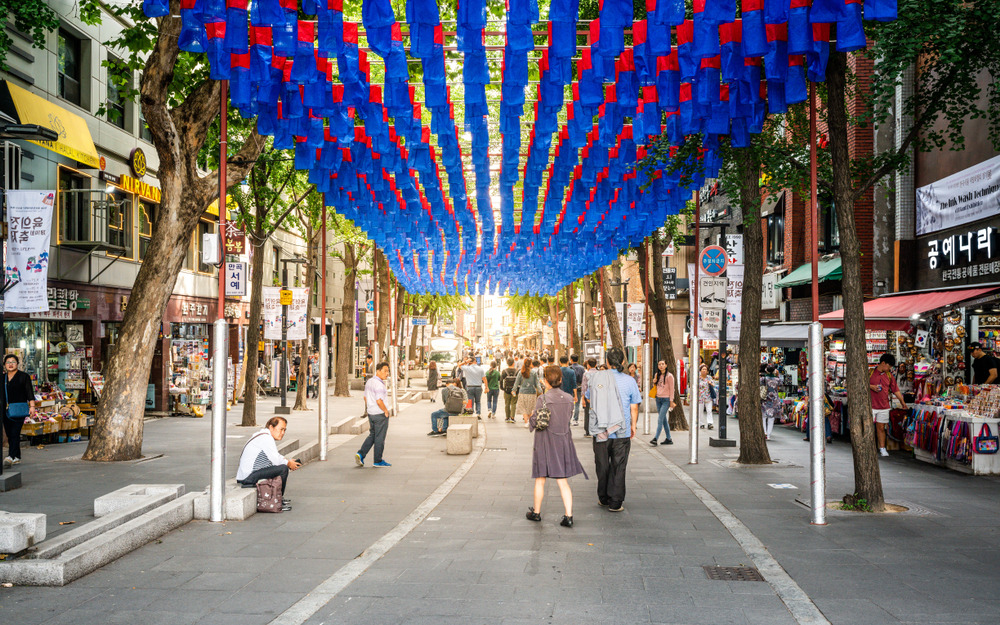
- Bukchon hanok village, just to the west, preserves a neighbourhood of traditional houses still inhabited.
- Gyeongbokgung Palace, the main Joseon palace, a 10-minute walk away.
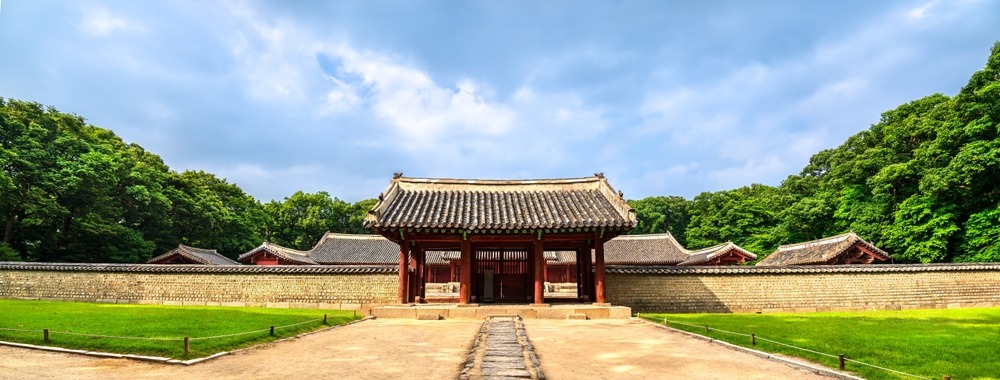
- Jongmyo Shrine, also UNESCO-listed, adjacent to the southern grounds of Changdeokgung.
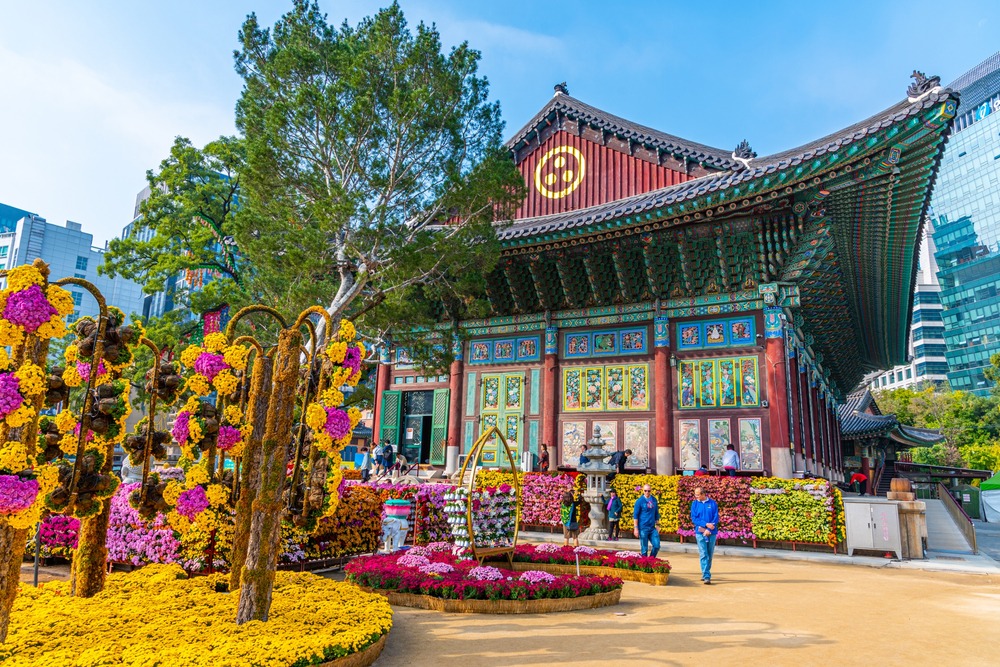
To extend beyond the capital, you can combine the visit with other major Buddhist sites such as Haeinsa Temple or Magoksa Temple.
Frequently asked questions
Frequently asked questions
Prepare your journey
Changdeokgung fits naturally into a cultural itinerary around Seoul and the great Joseon sites. To build a trip combining heritage, nature and modern cities, consult our tours in South Korea.
Nearby
Interested in this visit?
We can include it in your personalised itinerary.