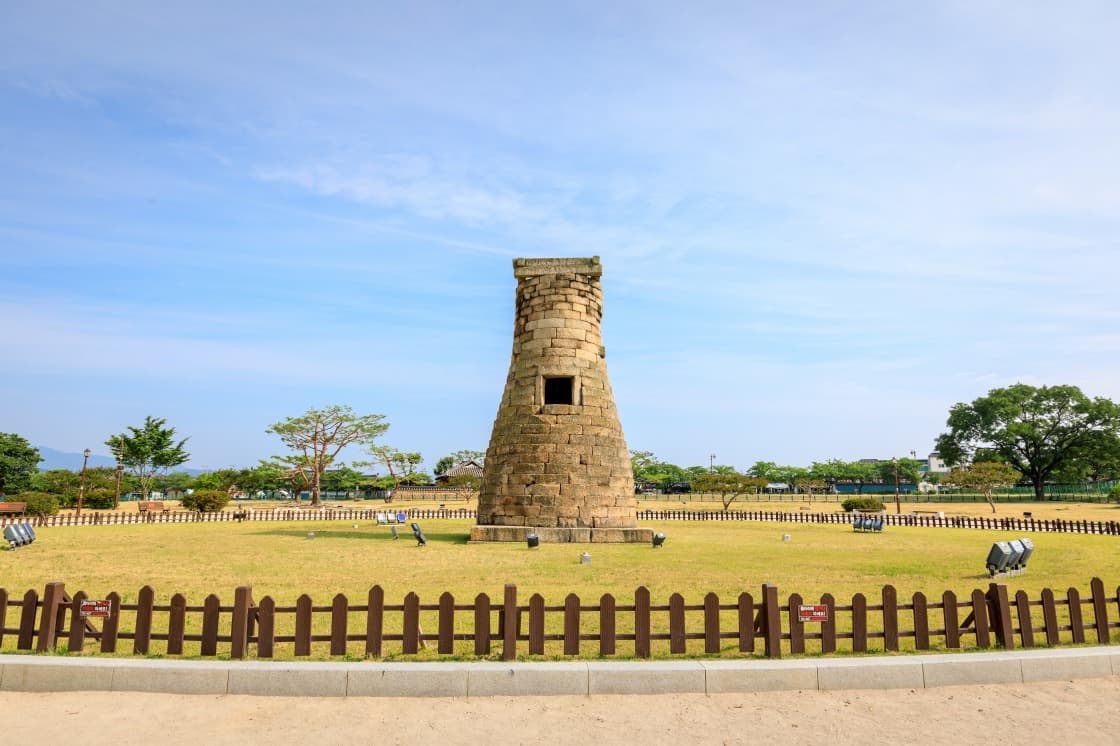
Cheomseongdae Observatory
Cheomseongdae Observatory
In Gyeongju, the Cheomseongdae Observatory is the oldest astronomical observatory in East Asia, erected in the 7th century under the Silla Kingdom.
The Cheomseongdae observatory, whose name literally means "the tower where one observes the stars," stands in Wolseong Park in Gyeongju, the former capital of the Silla Kingdom. Built in the 7th century, it is regarded as the oldest astronomical observatory in East Asia and ranks among the world's oldest scientific structures still visible today.
Why visit Cheomseongdae
Cheomseongdae holds appeal for three main reasons. First, it is a direct witness to medieval East Asian astronomy, in a region rich with vestiges of the Silla Kingdom. Second, it is a compact yet highly codified structure, where every dimension carries symbolic meaning: the number of stones, levels, and orientation. Finally, it serves as a convenient geographical landmark, located at the heart of Gyeongju's archaeological zone, just a few minutes' walk from the principal historical sites.
The visit is brief—the observatory cannot be entered from the inside—yet it fits logically into a multi-hour exploration of Wolseong Park and the surrounding area.
History and symbolism
Mentioned in the Samguk Yusa records, Cheomseongdae was built in the 7th century under the reign of Queen Seondeok, during the Silla Kingdom. The structure measures approximately 9 meters in height with a base diameter close to 5 meters. It comprises three distinct elements: a square stylobate, a cylindrical bottle-shaped body, and a quadrangular top.
The arrangement of granite blocks follows precise numerical logic. The 27 layers of circular stones are generally interpreted as a reference to Queen Seondeok, the 27th sovereign of Silla. Other counts—the total number of stones, the number of levels above and below the central window—have been linked to the lunar calendar and seasonal divisions of the year.
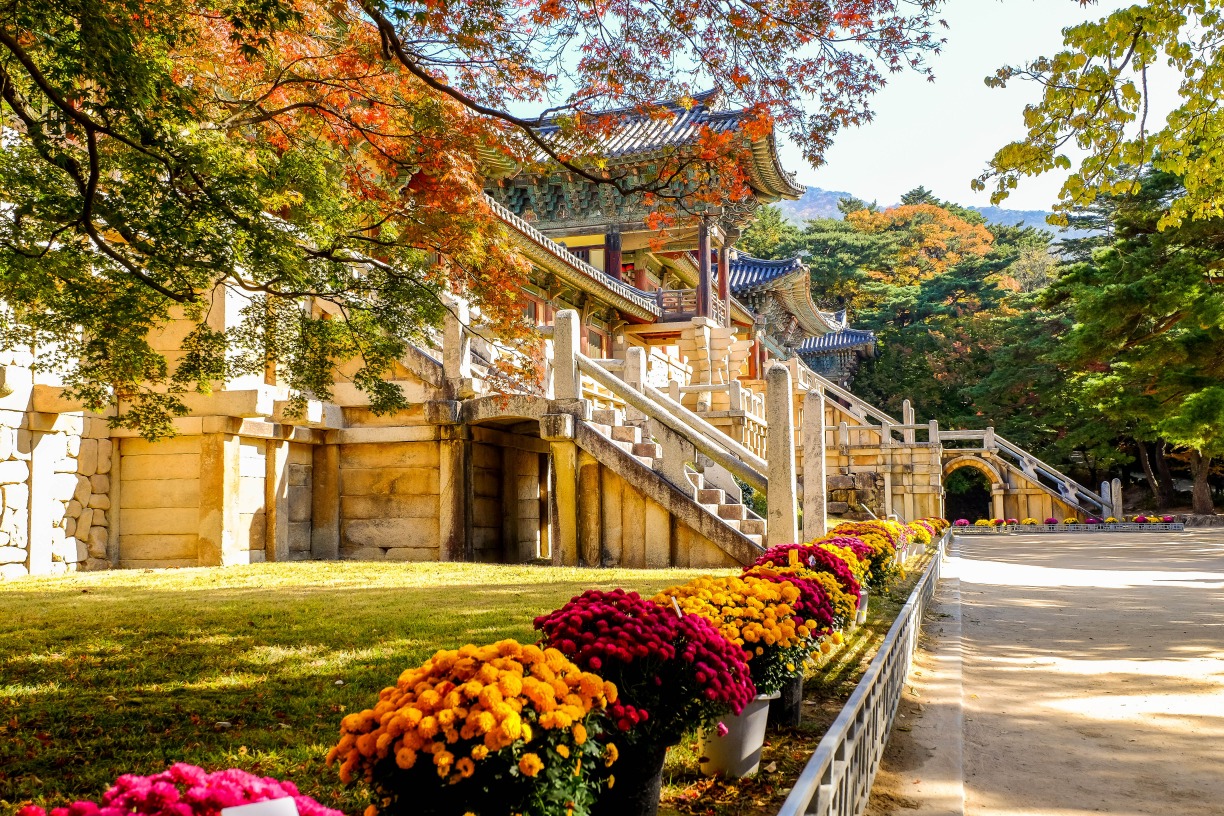
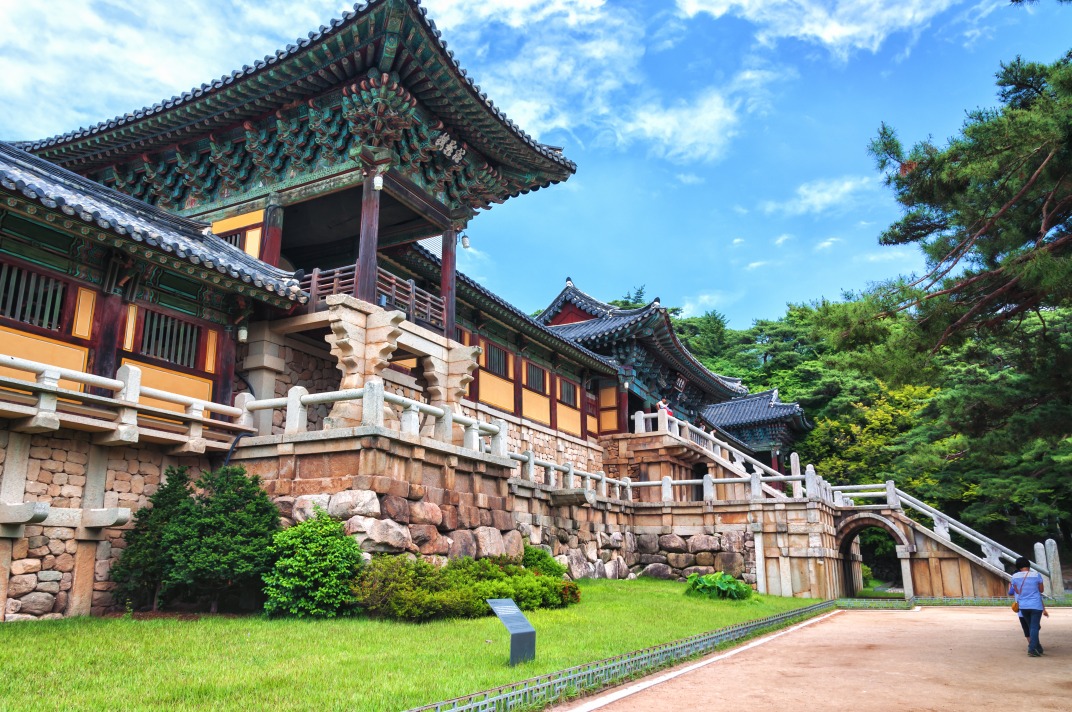
The construction style bears affinities with that of the Bunhwangsa Temple, also in Gyeongju, which confirms dating consistent with Silla's artistic peak.
What to see on site
The observatory is viewed entirely from the outside. Several details merit attention:
- The stacking of granite blocks, cut and fitted without mortar, holding steady for over thirteen centuries.
- The central square window, through which one originally accessed the summit by ladder.
- The quadrangular top, oriented to the cardinal directions, which served as an observation platform.
- The slight inclination of the tower, perceptible to the eye and linked to stone displacement.
Due to cracks and this gradual inclination, the monument has undergone rigorous systematic monitoring since 1981. A reinforced surveillance and preservation system was implemented in 2007 to stabilize its condition.
Cheomseongdae was designated South Korea's 31st National Treasure on December 20, 1962. The site also gained prominence through the Korean drama Queen Seondeok, which features it in its storyline.
Practical information
- Location: Wolseong Park, historic center of Gyeongju.
- Access: on foot from downtown (15-20 min), by bike (rental available around the park) or local bus. Parking nearby.
- Visit duration: allow 15 to 30 minutes on site, longer if you combine it with nearby attractions.
- Admission: free access to the outdoor site. Check locally for current conditions, which may change.
- Hours: the site is accessible during the day and remains lit in early evening. Ask locally for exact hours depending on season.
When to visit
The visit is possible year-round. Spring (April–May) and autumn (October–November) offer the most pleasant conditions, with mild temperatures and the park surrounded by lush greenery or autumn colors. Summer is warmer and more humid, while winter is drier but cold.
Cheomseongdae can also be visited at night: the tower is illuminated in the evening, which dramatically changes the park's atmosphere and offers a different photographic perspective. Many visitors combine a daytime visit to appreciate the architectural details with an evening visit for the lighting.
Nearby attractions to combine
Cheomseongdae sits at the heart of a dense archaeological zone. Several sites can be visited on foot within the same half-day:
- Daerungwon Royal Tombs (Silla tumuli), just a few minutes' walk away.
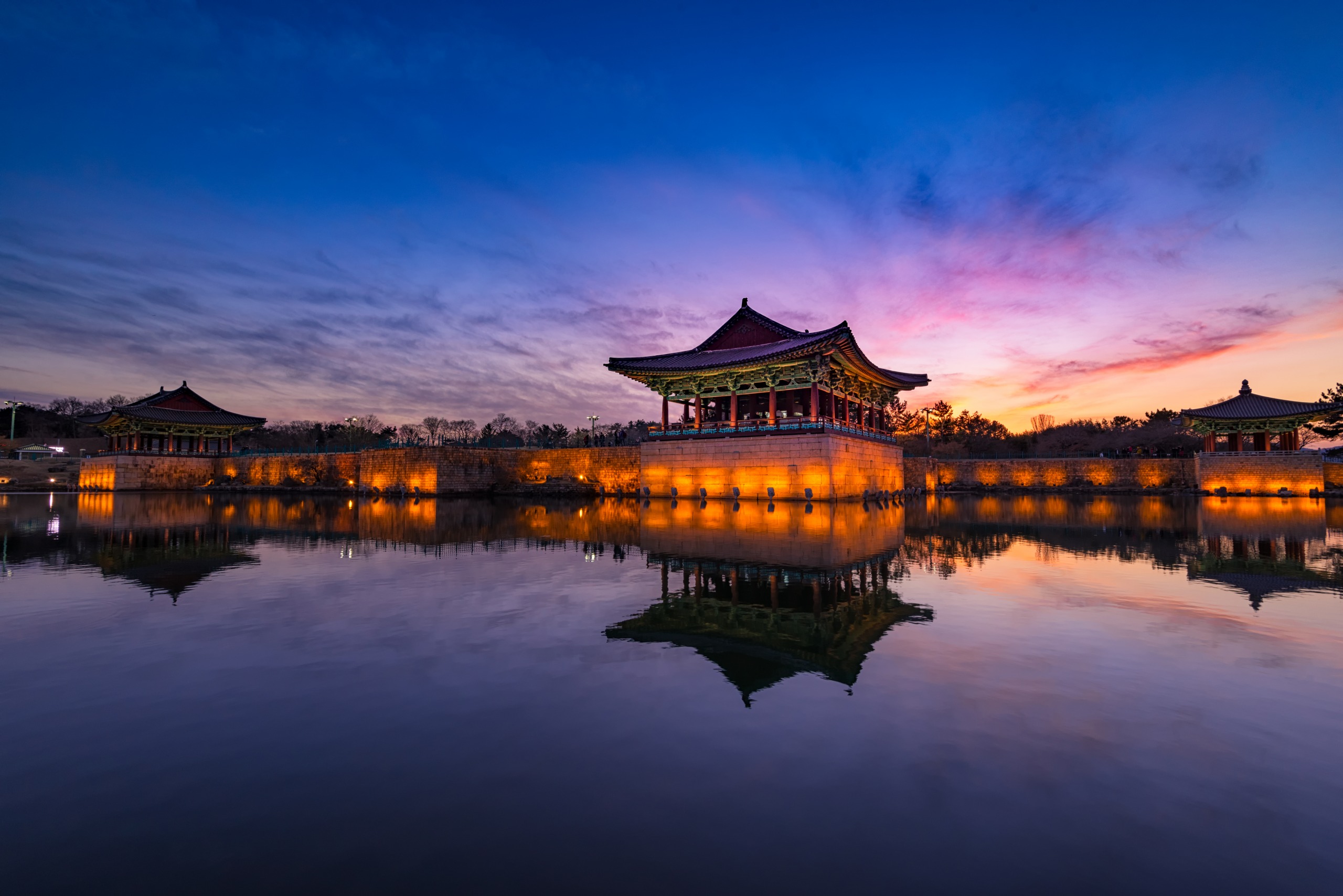
- Anapji Pond (Donggung and Wolji), particularly photogenic in the late afternoon.
- Bunhwangsa Temple, whose architectural style echoes that of the observatory.
To extend your South Korea itinerary, you can also plan a stop at Haeinsa Temple, the traditional village of Nagan, or Magoksa Temple.
Frequently asked questions
Frequently asked questions
No. Visits are conducted only from the outside, at a safe distance, to preserve the structure.
About fifteen minutes is sufficient for the site itself. If you incorporate it into a tour of Wolseong Park with Daerungwon and Anapji, plan for half a day.
Both have merit. During the day, you can appreciate the architectural details and the symbolism of the stones. At night, the lighting highlights the tower's silhouette in the park.
It is considered so by historians, based on the Samguk Yusa records that date it to the 7th century.
The surrounding park is flat and largely accessible. The observatory itself can be viewed from the perimeter, with no stairs to climb.
Plan your trip
Cheomseongdae fits naturally into an itinerary exploring Silla's heritage, combined with other historical sites in Gyeongju and the country's broader cultural destinations. To build your customized journey, explore our South Korea travel ideas.
Nearby
Interested in this visit?
We can include it in your personalised itinerary.