Gwangalli Beach
Gwangalli Beach
Urban beach stretching 1.6 km in Busan, facing the illuminated Gwangan Bridge. Summer swimming, water sports and lively waterfront dining until evening.
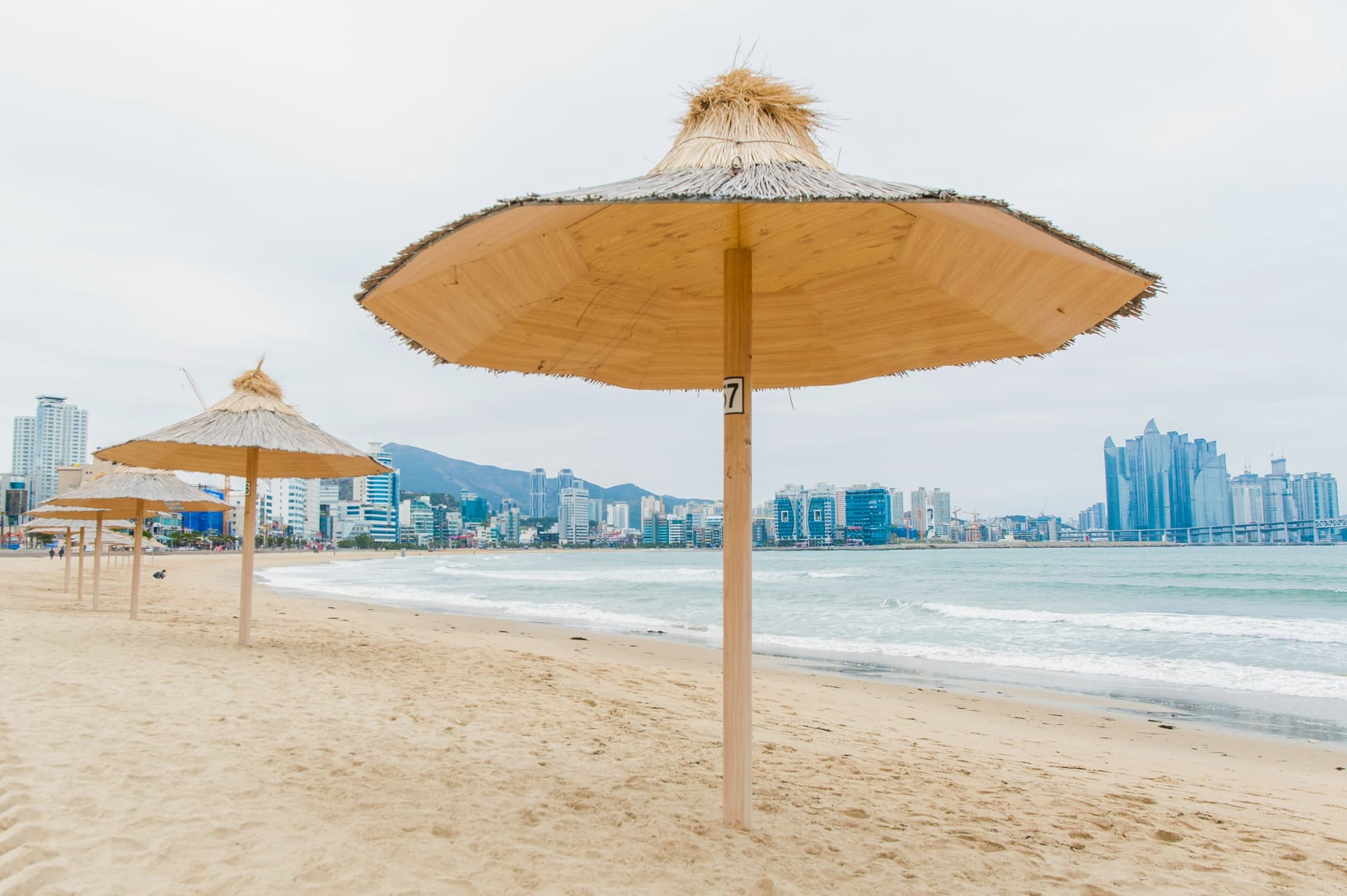
Gwangalli Beach stretches for 1.6 km southeast of Busan, facing the silhouette of the Gwangan Bridge that closes the bay. More urban and festive than its neighboring Haeundae, it combines summer swimming, seafood restaurants along the waterfront and the spectacular night illuminations of the two-tiered bridge that dominates the horizon.
Why visit Gwangalli Beach
Gwangalli is more than just a stretch of sand. It is one of Busan's liveliest waterfront promenades, with an atmosphere that transforms radically between the afternoon beach scene and the evening illuminated by the Gwangandaegyo Bridge. The beach suits both a short stop (bridge views, seaside meal) and a half-day combining swimming, water sports and dinner.
- Direct view of Gwangan Bridge, particularly photogenic at sunset and night
- Continuous waterfront lined with raw fish (hoe) restaurants, bars and cafés with terraces
- Water activities accessible without heavy advance booking
- Setting for Busan's International Fireworks Festival each autumn
History and highlights
The beach has ancient roots, but its current character owes much to the construction of the Gwangan Bridge, nicknamed the Diamond Bridge (Gwangandaegyo). Construction began in December 1994 and was completed in June 2002, with official opening to traffic in January 2003. This two-tiered bridge links Haeundae-gu district to Suyeong-gu and spans just over 7 km, making it one of the country's longest maritime bridges.
Its night illumination, built around several thousand programmable LEDs, transformed Gwangalli into an urban balcony overlooking the sea. The beach itself has been progressively redeveloped: wider pedestrian promenade, sports facilities, children's play areas and bilingual signage.
What to see and do
The beach and promenade
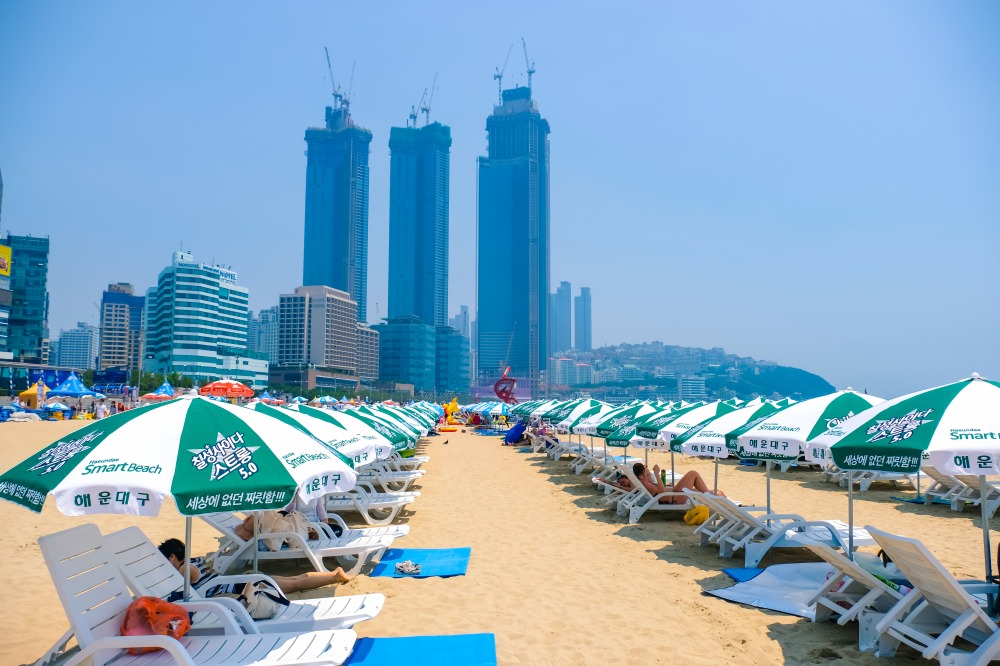
The sand, rather golden, slopes gently. Swimming is supervised during the summer season (roughly early July through late August, with dates set annually by the municipality). Off-season, the beach remains open for strolling. Onshore, the boulevard concentrates cafés, breweries, seafood restaurants and vendors selling raw fish to take away.
Gwangan Bridge at night
This is the main visual attraction after sunset. The bridge is lit by several thousand LEDs that change color according to the day and season. The best viewpoints are found on the eastern half of the beach and from the rooftops of waterfront cafés.
Water sports
Several operators stationed on the beach offer paddleboarding, windsurfing, jet skis, towed inflatables ("banana boats") and short motorized boat tours. The offering is seasonal, concentrated between late spring and early autumn.
Waterfront gastronomy
Gwangalli is one of Busan's most reliable spots to taste hoe (Korean-style raw fish), often accompanied by soju. Multi-level restaurants offer views of the bridge. You'll also find Korean barbecue, specialty coffee chains and craft beer bars.
Practical information
- Free beach access, 24/7
- Swimming supervised only during summer season; paid showers and changing rooms nearby
- Public restrooms and water points along the promenade
- Dining options of all standards available continuously along the waterfront
- Public Wi-Fi available on part of the promenade
When to go
May to June brings mild temperatures and moderate crowds: an ideal window to enjoy the promenade without the masses. July and August mark peak Korean tourist season, with very crowded beaches and festive atmosphere late into the night. September and October offer an excellent balance: water still swimmable, soft light, and in October, the International Fireworks Festival, which makes Gwangalli its main stage. In winter, the beach remains pleasant for strolling and the bridge's illumination is just as spectacular.
How to get there
- Metro: Line 2, Gwangan station (exits 3 or 5) or Geumnyeosan station (exits 1 or 3), then 5 to 10 minutes' walk to the waterfront.
- Bus: from Busan Station, line 1003 goes directly to Gwangan station.
- Car: from Gimhae International Airport, allow approximately 30 to 45 minutes depending on traffic, via expressways connecting the airport to central Busan. Surface parking is limited; prioritize underground parking at hotels and shopping centers in the area.
Nearby
The beach is part of a cluster of easily combinable attractions for a Busan stay or broader tour of southern Korea.
- Haeundae Beach, Busan's iconic beach, a few metro stops away
- Haeinsa Temple, major Buddhist monastery housing the Tripitaka Koreana
- Hahoe Village, UNESCO-listed traditional village
- Hwaseong Fortress in Suwon, a remarkable example of 18th-century military architecture
Frequently asked questions
Frequently asked questions
Planning your trip
Gwangalli naturally fits into an itinerary combining Busan, the southern coast and the country's cultural highlights. To build a custom trip, consult our South Korea travel ideas.
Nearby
Interested in this visit?
We can include it in your personalised itinerary.