Gwanghwamun
Gwanghwamun
In the heart of Seoul, Gwanghwamun Square brings together the gate of Gyeongbokgung Palace and the statues of King Sejong and Admiral Yi Sun Shin.
Gwanghwamun Square stretches across the heart of Seoul, in the Jongno-gu district, along Sejong-daero avenue. Bordered by the royal gate of Gyeongbokgung Palace and dominated by the statues of King Sejong and Admiral Yi Sun Shin, it concentrates within a few hundred meters the essence of Korean dynastic memory. Inaugurated in August 2009 and enlarged following works in 2020-2022, the square now serves simultaneously as a civic space, a gathering place, and a natural entry point to the historic center.
Why visit Gwanghwamun
Three reasons make this square particularly compelling for a first encounter with Seoul. First, it brings together in one place the founding figures of modern Korean identity: Sejong, creator of the hangeul alphabet, and Yi Sun Shin, a sixteenth-century military hero. Second, it marks the symbolic axis that connects Gyeongbokgung Palace to City Hall, making it a practical urban landmark for orientation. Finally, it illustrates the pedestrian reclamation policy pursued by the municipality, in keeping with projects like the Cheonggyecheon promenade and Seoul Plaza.
A square steeped in history
Also known as Gwanghwamun Plaza or Gwanghwamun Square, the plaza opened to the public on August 1, 2009. It is part of Seoul's ecological renovation project, alongside Cheonggye Stream and Seoul Plaza, which aimed to reclaim automotive space for pedestrians. The esplanade has hosted several major events in South Korean political life, notably in 2016 and 2017.
In November 2020, expansion works began to double the square's size and add new cultural and historical amenities. The redesign was inaugurated during the summer of 2022, and the square now features a vast green carpet on the western side, commemorative basins, and widened pedestrian access.
What to see on the square
The statue of King Sejong the Great
At the center of the esplanade, the statue of King Sejong serves as the focal point of the square. Unveiled on October 9, 2009, the day of the hangeul festival, it is cast in bronze and stands 9.5 meters tall. Sejong, a ruler of the Joseon period, is credited as the creator of the Korean alphabet. Before the pedestal, four objects recall his scientific and cultural contributions: the hangeul script, a sundial, a rain gauge, and a celestial globe. An underground exhibition space, accessible from the square, complements the visit with details on the king's reign.
The statue of Admiral Yi Sun Shin
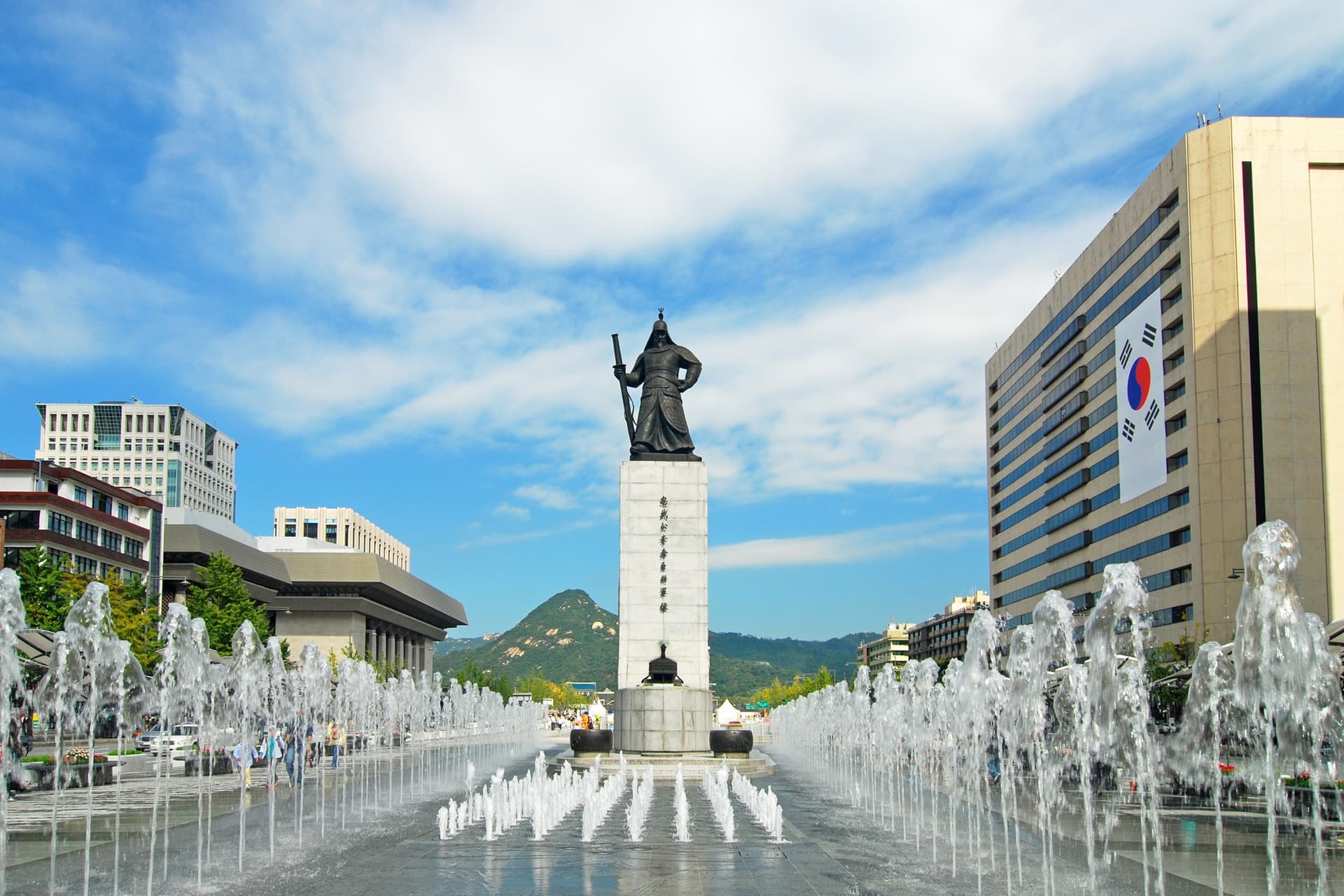
A few steps to the south stands the statue of Admiral Yi Sun Shin, erected in April 1968. At 17 meters tall, it surpasses that of Sejong and is recognized by the sword held in his right hand. The admiral is celebrated for repelling Japanese invasions from 1592-1598, notably through his geobukseon, armored turtle ships. A miniature version of this vessel, accompanied by the two drums that marked maneuvers, has been installed at the foot of the statue. In 2012, the 12.23 fountain was created facing the monument: the 12 refers to the ships engaged at the Battle of Myeongnyang, the 23 to the number of naval battles won by the admiral.
Gwanghwamun Gate and the Haechi
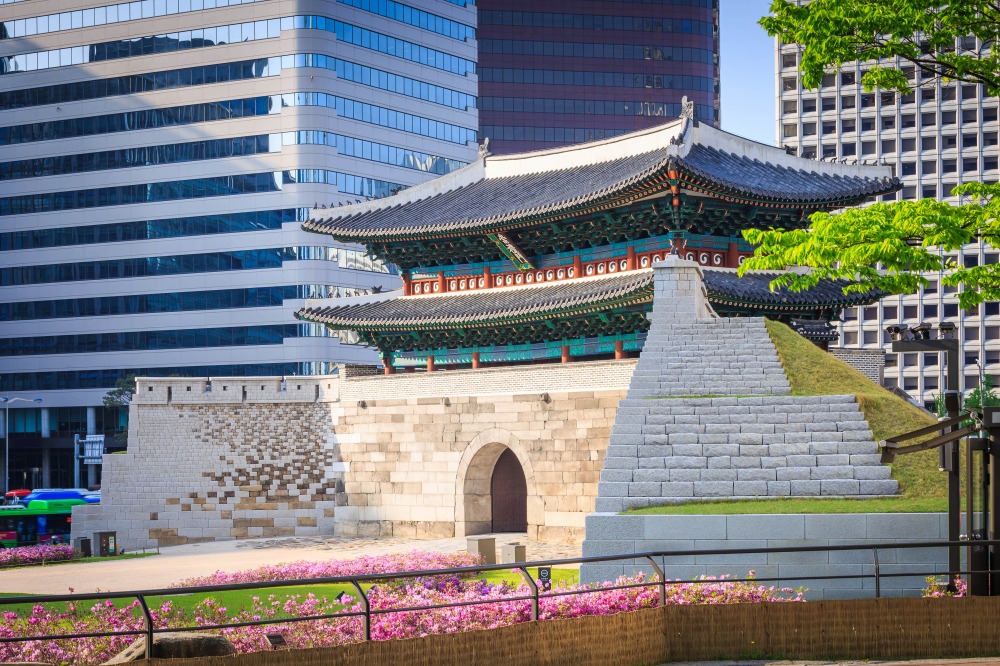
To the north of the square stands Gwanghwamun Gate, the main entrance to Gyeongbokgung Palace. Built in 1395 under King Taejo, it has been demolished and rebuilt several times before returning to its original form in 2010. Its double roof and three curved gates make it one of the country's most photographed royal thresholds. The changing of the guard is held there in principle twice daily, except Tuesdays, and lasts about thirty minutes; exact times should be verified on-site as they may vary by season.
Beside the gate stands the sculpture of the Haechi (or Haetae), guardian of the palace. This scale-maned lion, a symbol of Seoul, was considered in Korean mythology to be a protector against fire.
Practical information
The square is free and always open to the public. Plan for 1 to 2 hours to tour the site including the statues, fountain, and gate. The surroundings are entirely pedestrian and accessible to strollers and people with reduced mobility. Tourist information desks near the gate provide maps in English and other languages.
When to visit
Seoul experiences long, hot, humid summers and short, cold, dry winters. The best seasons to enjoy the square are spring (March-April), for blooms and mild weather, and autumn (September-October), for golden light on the palace roofs. In the evening, the lighting of Gwanghwamun Gate and the basins creates a different atmosphere, particularly pleasant in summer.
How to get there
The subway is the most convenient way to reach the square:
- Gwanghwamun Station (Line 5), exits 1 or 8, direct access to the square
- Gyeongbokgung Station (Line 3), exits 6 or 7, at the northern edge
- City Hall Station (Line 1), exit 3, at the southern edge via Sejong-daero
Many bus lines also serve Sejong-daero; taxis are abundant in the area.
Nearby
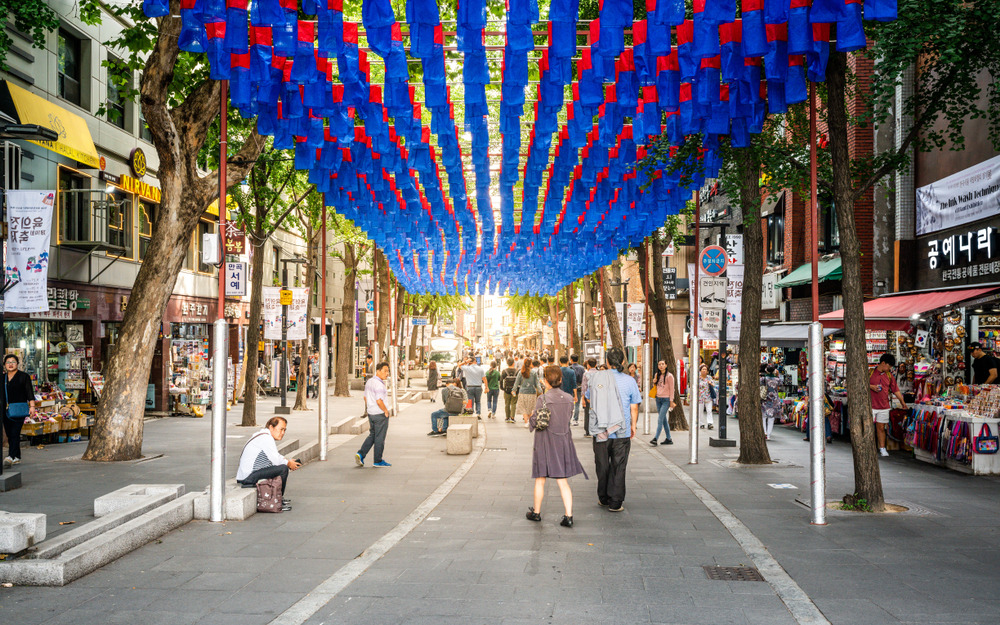
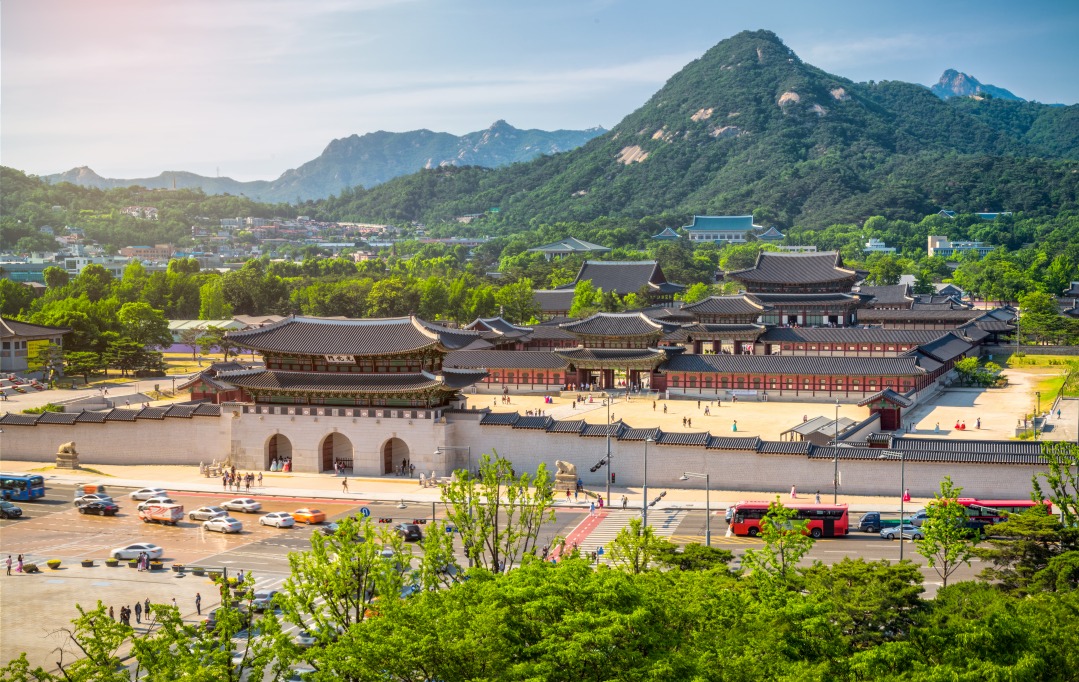
The square fits naturally into a day visiting the historic center. To the north, Gyeongbokgung Palace and the Bukchon Hanok neighborhood extend the journey through the Joseon dynasty. To the south, the redesigned Cheonggyecheon stream offers a green corridor down to Gwangjang Market. To the east, Insadong concentrates galleries, tea salons, and craft shops. For exploring further in Corée du Sud, you can expand your itinerary toward Hwaseong Fortress in Suwon, the historic village of Hahoe, or the Gyeonggijeon shrine in Jeonju.
Frequently asked questions
Frequently asked questions
Yes. The square is a public space that is always open and free to visit. Only certain guided tours or exhibitions related to King Sejong's statue may charge a modest entrance fee.
Plan for 1 to 2 hours to tour the esplanade, observe the statues, the 12.23 fountain, and Gwanghwamun Gate. If you continue with a visit to Gyeongbokgung Palace, allow a full half-day.
The ceremony takes place at Gwanghwamun Gate several times daily, except Tuesdays, and lasts about thirty minutes. Exact times vary by season and weather: check the official schedule before visiting.
Gwanghwamun Station (Line 5), exits 1 or 8, opens directly onto the square. Gyeongbokgung Station (Line 3) and City Hall Station (Line 1) are at its two extremes.
The 12 refers to the 12 ships commanded by Admiral Yi Sun Shin, and the 23 to the number of naval battles he won against the Japanese fleet in the late sixteenth century.
Planning the rest of your journey
Gwanghwamun Square is an excellent entry point to understanding Seoul, but it represents only one stage of a trip to Corée du Sud. To build a complete itinerary, from Seoul's palaces to Jeolla villages and Busan, consult our travel ideas for Corée du Sud.
Nearby
Interested in this visit?
We can include it in your personalised itinerary.