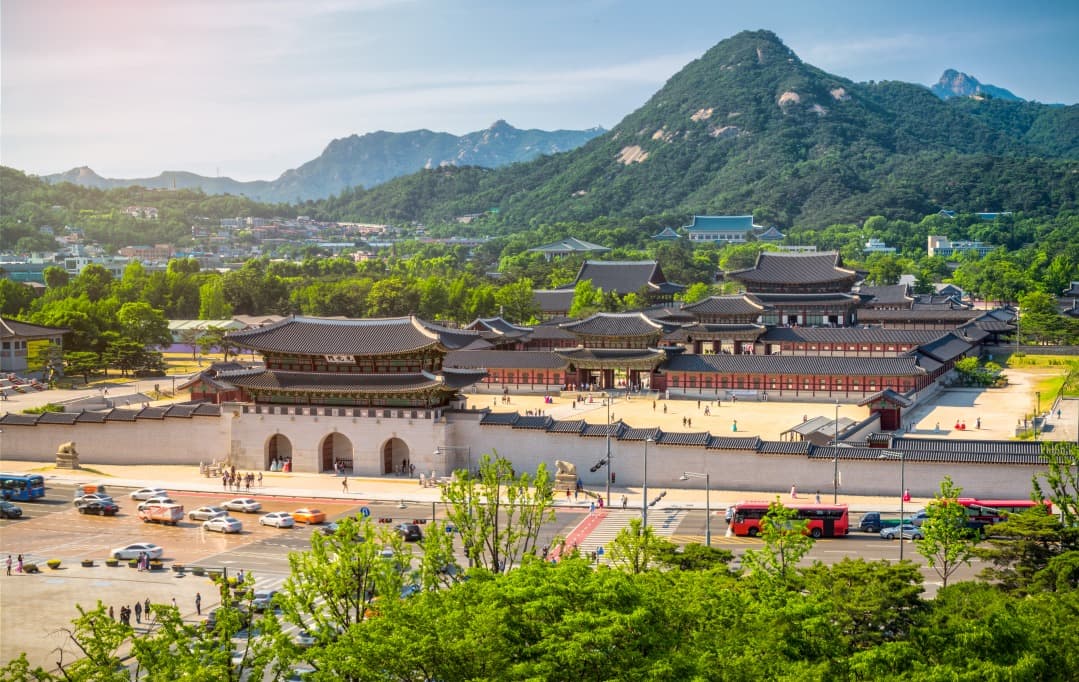
Gyeongbokgung Palace
Gyeongbokgung Palace
The largest royal palace of the Joseon dynasty, Gyeongbokgung stands with its restored pavilions in the heart of Seoul. History, sites to see and practical advice.
Gyeongbokgung Palace, whose name means "the palace of radiant happiness," stands north of the historic center of Seoul. Often nicknamed the "northern palace" because of its position, it was the largest of the five great royal palaces built under the Joseon dynasty. Burned, abandoned, rebuilt and then dismantled during Japanese occupation, the complex has been undergoing an extensive restoration campaign for several decades, work that continues today.
Why Visit Gyeongbokgung Palace
Gyeongbokgung is essential viewing for understanding the history of the Joseon dynasty (1392-1897) and Korean palatial architecture. The visit combines several highlights: the monumental succession of the Geunjeongjeon throne hall, the discreet gardens of the royal quarters, the Gyeonghoeru pavilion set on its artificial lake, and the changing of the guard ceremony reenacted several times daily at the Gwanghwamun gate. The site also offers a striking contrast between curved roofs and the soaring silhouettes of skyscrapers in the Gwanghwamun district, which perfectly encapsulates Seoul's dual identity.
Palace History
The palace was built in 1394 during the reign of King Taejo, founder of the Joseon dynasty. Its name was given by aristocrat Jeong Dojeon, then government minister. Once construction was completed, it became the primary residence of Joseon sovereigns. The complex was enlarged under Taejong and later under Sejong the Great, who commissioned several major buildings there.
During the Imjin War in 1592, the palace was burned during the Japanese invasion. It lay abandoned for nearly two centuries, with Changdeokgung Palace becoming the seat of power in the meantime. Reconstruction only began in 1865, at the initiative of Heungseon Daewongun, regent and father of King Gojong. The project, completed in 1872, restored more than 500 buildings across approximately 40 hectares, in a style blending Chinese influences and Joseon tradition.
The palace's recent history is marked by the tragedy of 1895: Queen Myeongseong was assassinated there by Japanese agents operating from the Russian legation. King Gojong then left the premises and never returned. During Japanese occupation (1910-1945), ownership of the site was transferred to the governor general. An administrative building was deliberately placed between the throne hall and the Gwanghwamun gate—a highly symbolic choice designed to sever the palace's ritual axis. The Gwanghwamun gate itself, originally positioned to the south, was relocated by the Japanese to the eastern wall. Destroyed multiple times (in 1592 and again during the Korean War), it has since been restored to its original location.
What to See in the Palace
Geunjeongjeon, the Throne Hall
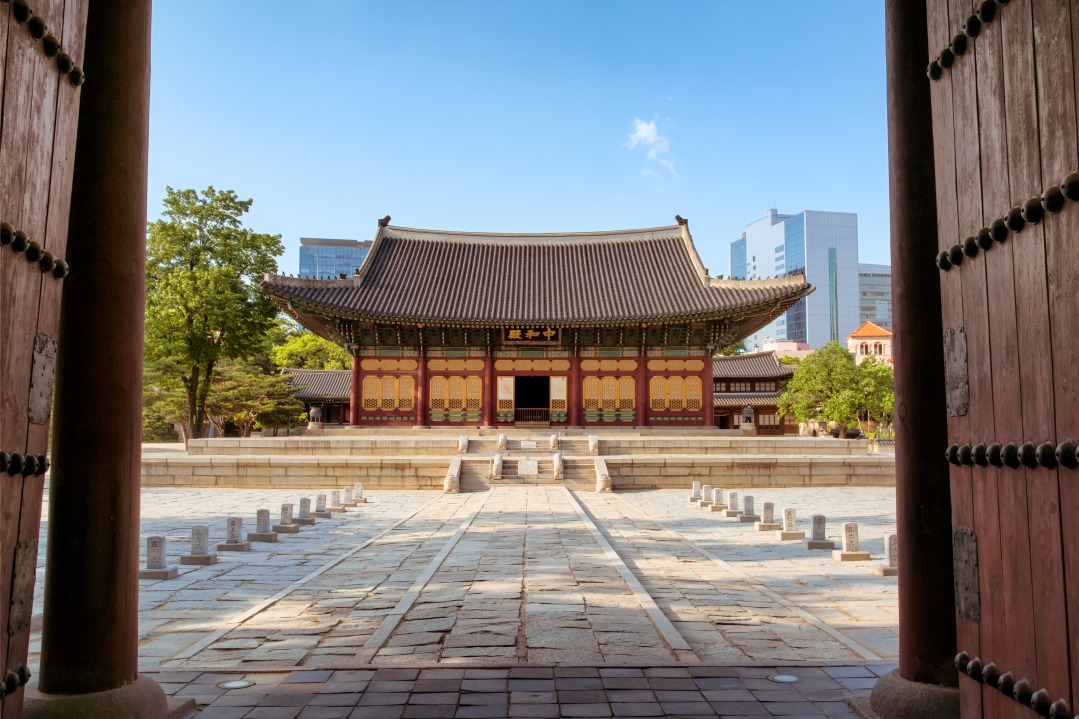
This is the iconic image of the palace. Built as early as 1395 under Taejo, the structure houses the hall where the king received his officials and foreign envoys. It rests on a two-tiered stone platform, bordered by balustrades carved with legendary creatures, and stands at the center of a vast rectangular paved courtyard. Geunjeongjeon has been designated National Treasure No. 223 since January 1985.
Gangnyeongjeon, the King's Apartments
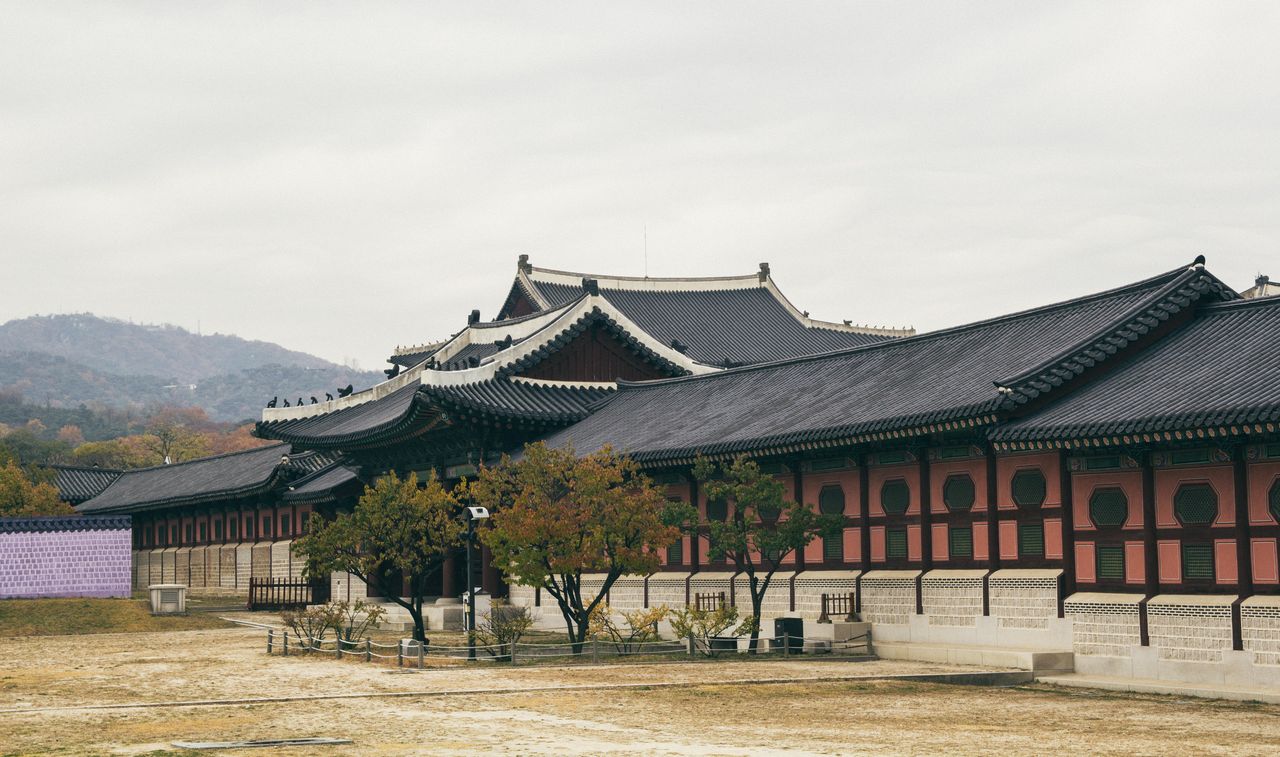
This building is distinguished by the absence of yongmaru, the white ridgeline traditionally found on Korean roofs. It contains fourteen rectangular rooms arranged in a seven-by-two grid, with the central chamber reserved for the sovereign and the surrounding rooms for court servants.
Gyotaejon and Amisan Garden
Located behind the Gangnyeongjeon, the queen's residence dates from the 15th century, during the reign of Sejong the Great. Like the king's apartments, it lacks a yongmaru. Behind the building, the Amisan Garden has been laid out on an artificial mound decorated with ornamental tiles and orange brick chimneys adorned with floral motifs.
Gyeonghoeru, the Banquet Pavilion
Set on an island in the middle of an artificial lake, this pavilion hosted major royal banquets and diplomatic receptions. The original structure was erected in 1412 under Taejong, burned in 1592, then rebuilt in 1867 under Gojong. Designated National Treasure No. 224, it appeared on 10,000 won banknotes from the 1983-2002 series.
Hyangwonjeong
Smaller than the Gyeonghoeru but two stories tall, this pavilion was commissioned by King Gojong in 1873. It sits on an artificial island in Hyangwonji Lake and is connected to the shore by the Chwihyanggyo Bridge.
Practical Information
- Visit Duration: Allow 2 to 3 hours to see the main highlights, longer if you combine it with the National Museum of Korean Folklore, located within the grounds.
- Tickets: Admission is moderately priced. A combined "palace" ticket provides access to the four major palaces in Seoul plus Jongmyo Shrine, offering good value if you plan multiple visits.
- Free Entry in Hanbok: Visitors wearing traditional Korean dress enter free of charge. Many rental shops are located in the nearby Bukchon district.
- Changing of the Guard: Reenactment in period costumes at the Gwanghwamun gate, several times daily except Tuesdays.
- Closed Day: The palace is closed on Tuesdays.
When to Visit
The palace is open year-round, but two seasons are particularly popular. In spring (April-May), cherry blossoms and magnolias frame the pavilions. In autumn (October-November), maples and ginkgos color the gardens with striking contrast against the gray roofs. Winter, quieter and more serene, offers striking photographs when snow covers the courtyards, though temperatures can be harsh. Summer is hot and humid, with frequent showers in July-August.
How to Get There
The simplest way is by subway: Gyeongbokgung station on Line 3, exit 5, which opens directly near the eastern gate. Gwanghwamun station (Line 5) is also nearby, about ten minutes' walk via Sejongno avenue. Several bus lines serve Gwanghwamun avenue.
What to See Nearby
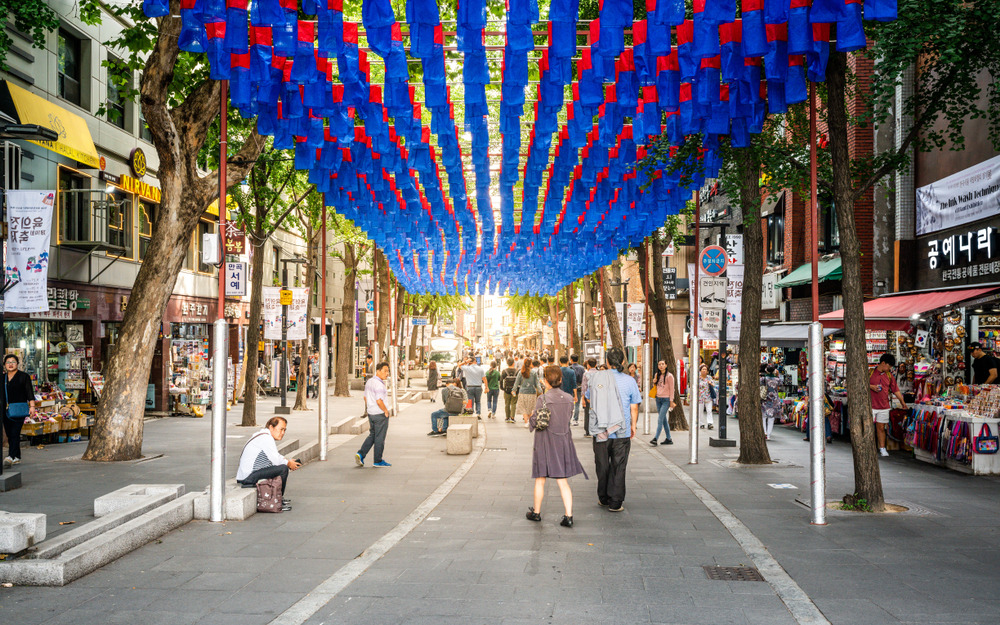
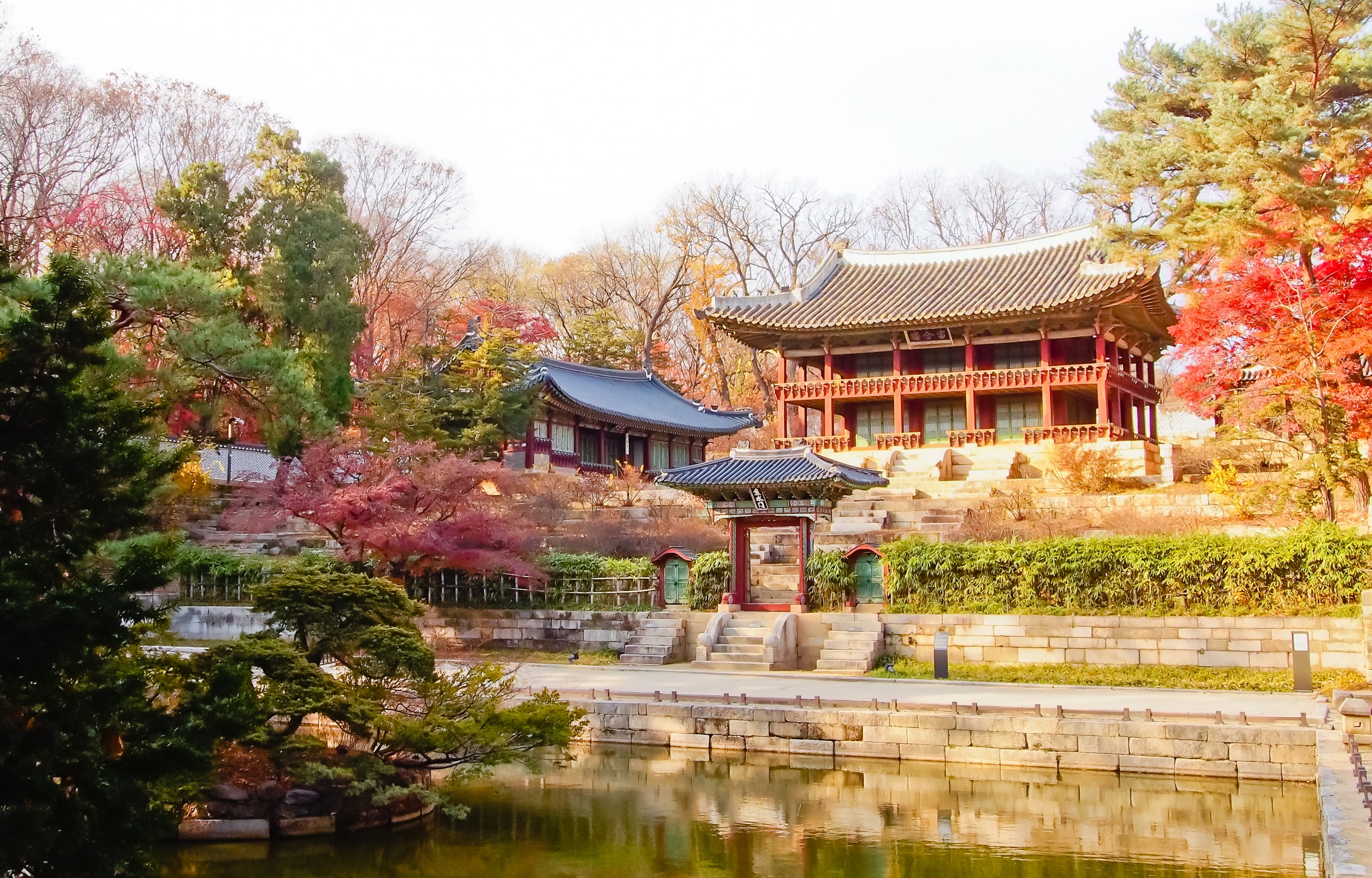
The palace sits in a densely historic district. To the northeast, Bukchon Hanok village lines steep alleys with traditional houses. To the southeast, Insadong street concentrates galleries, tearooms and craft shops. The landscaped Cheonggyecheon stream, ten minutes' walk away, offers a refreshing stroll through the city center. To continue exploring Joseon palaces, Changdeokgung and its Secret Garden are about twenty minutes' walk to the east. For a broader journey, other Korean heritage sites are worth a visit, such as Haeinsa Temple, which houses the Tripitaka Koreana, or Magoksa Temple.
Frequently Asked Questions
Frequently asked questions
Allow 2 to 3 hours to see the main pavilions. If you include the National Museum of Korean Folklore and the changing of the guard ceremony, plan for a half day.
Yes. Anyone wearing traditional Korean dress enters free, regardless of nationality. Many rental shops are located around the palace and in the Bukchon district.
The ceremony is reenacted several times daily at the Gwanghwamun gate, except Tuesdays (closure day). Exact times are posted at the entrance and on the palace's official website.
Spring (cherry blossoms, mid-April) and autumn (foliage, late October to mid-November) are the most photogenic seasons. Snowy winters offer rare atmospheres but require warm clothing.
If you plan to visit multiple palaces (Changdeokgung, Deoksugung, Changgyeonggung) and Jongmyo Shrine, the combined ticket is significantly more economical than separate entries.
Planning Your Trip
Gyeongbokgung is one of the highlights of a Seoul visit and fits easily into a broader itinerary. To build your custom-made journey, consult our tours in South Korea.
Nearby
Interested in this visit?
We can include it in your personalised itinerary.