Myeong-dong
Myeong-dong
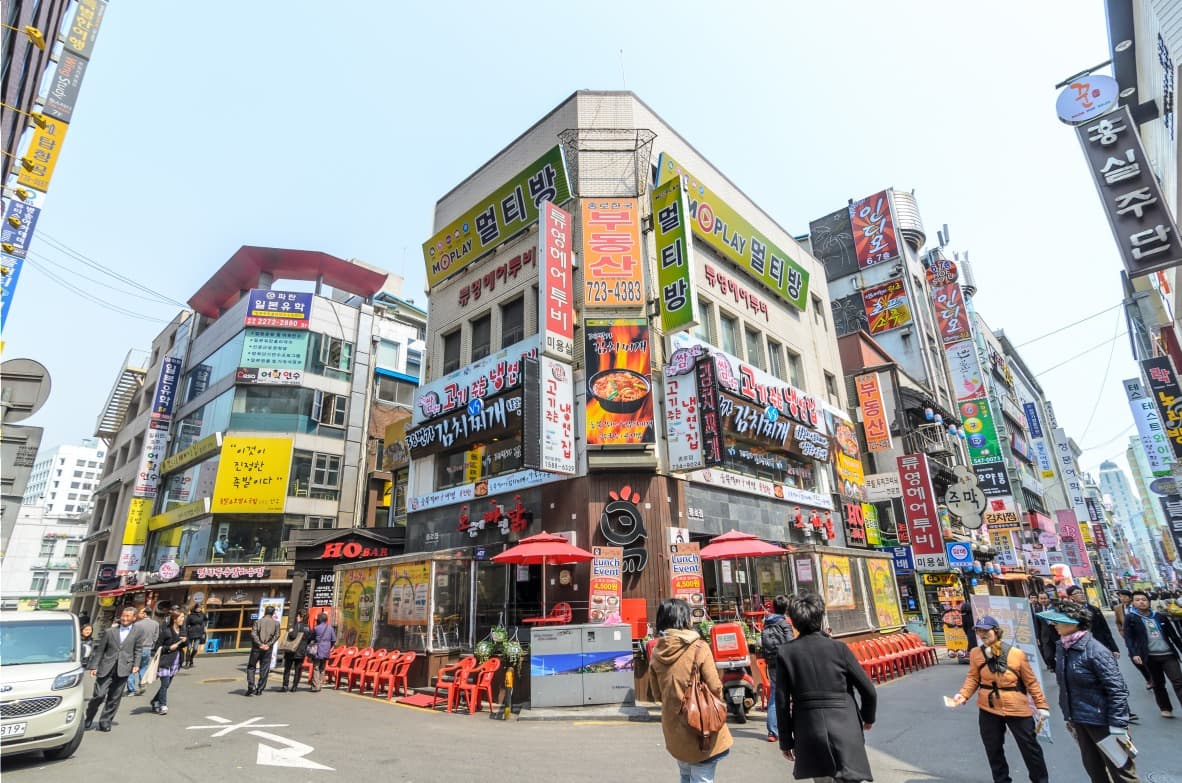
Myeong-dong, a pedestrian district in Seoul, combines street food, Korean cosmetics, major department stores and Korea's first Catholic cathedral.
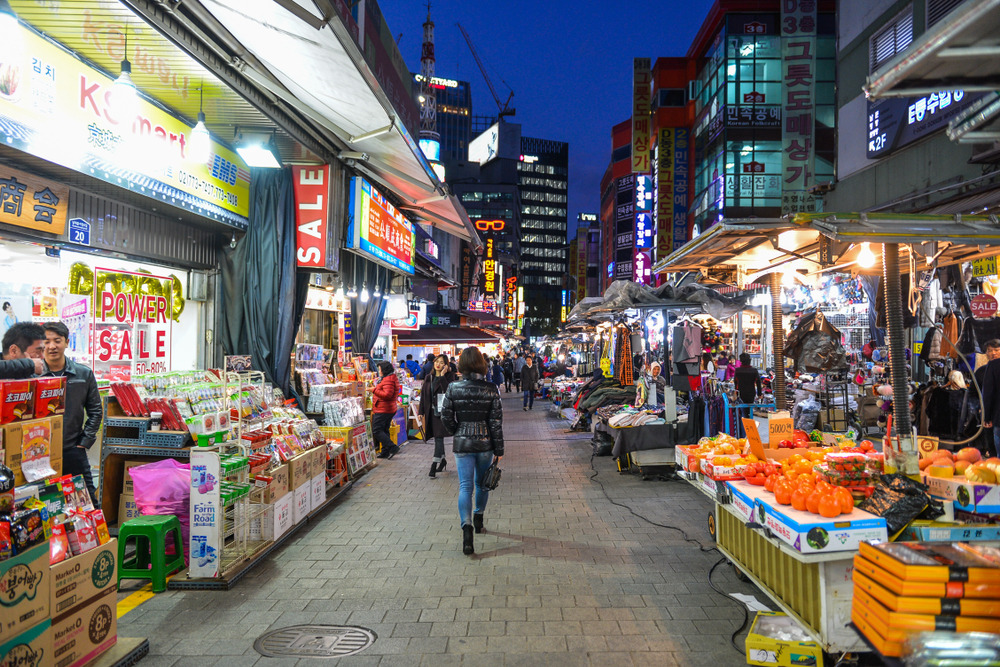
Myeong-dong is one of the most visited districts in Seoul, welcoming around 2 million visitors daily on less than 1 km². A hub of commerce, finance and culture, it is home to Korea's first Catholic cathedral, themed museums and one of the capital's most vibrant street food scenes.
Why visit Myeong-dong
Myeong-dong captures several facets of Seoul within a few pedestrian streets. On the commercial side, the district ranked 9th among the world's most expensive shopping streets in 2011, 2012 and 2013, and was designated a tourism promotion zone in 2012. On the financial side, it forms the capital's financial center alongside Yeouido and houses, among others, the headquarters of the Bank of Korea. On the heritage side, its gothic brick cathedral remains a major historical and political landmark.
The district will particularly appeal to travelers seeking to combine Korean shopping (cosmetics, ready-to-wear), street cuisine and a historic religious site within a compact, entirely walkable area.
The district's history
Under the Joseon dynasty, Myeong-dong was first a residential neighborhood. Its commercial transformation began during the Japanese colonial period, under the direct influence of the neighboring commercial district of Chungmuro. It officially acquired district status in 1946.
After the Korean War, the growth of nearby Namdaemun-ro and Euljiro corridors, urban renewal and the construction of skyscrapers accelerated its development. In the 1970s, department stores, restaurants and luxury boutiques made it a popular hub for an emerging urban youth culture.
In the 1980s and 1990s, Myeong-dong also became a political stage: the cathedral, in particular, served as a rallying point for pro-democracy demonstrations, a symbolic role it continues to hold today.
What to see and do in Myeong-dong
Myeong-dong Cathedral
Korea's first Catholic church, Myeong-dong Cathedral is a neogothic brick structure. The site is linked to the origins of Korean Catholicism, which date back to 1784, although the current cathedral was built in the late 19th century. Beyond its religious significance, it remains an important political and memorial landmark, notably for its role as a sanctuary during the pro-democracy demonstrations of the 1980s and 1990s.
Seoul street food
The alleys of Myeong-dong concentrate a wide variety of street food stalls. You can taste everything from kalguksu, a noodle soup cut with a knife, to kimchi, the lacto-fermented vegetables emblematic of the Korean table, not to mention skewers, tteokbokki and sweet snacks. The district also hosts numerous traditional and contemporary restaurants.
Shopping: Korean fashion and cosmetics
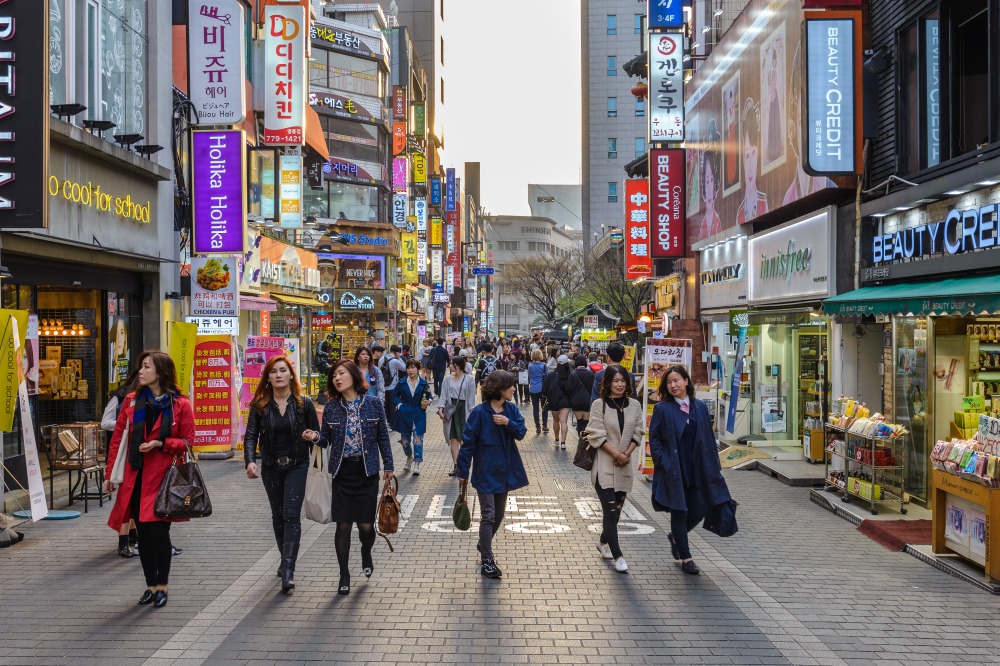
Myeong-dong is one of Seoul's main shopping hubs. The Shinsegae and Lotte Department Store as well as the Noon Square complex cover international and Korean mid-range to luxury brands. On the cosmetics side, Korean brands are particularly well represented, including Stylenanda 3CE Pink Hotel, A-land and Aritaum. Several K-pop merchandise shops complete the offering, with a wide selection of items centered around the market's leading groups.
Nanta Theater
Regularly performed in Myeong-dong, the Nanta musical takes place in a kitchen. The actors transform pots, wooden spoons and knives into rhythmic instruments. As the show is essentially non-verbal, it remains accessible to non-Korean-speaking audiences.
Three themed museums
- Bank of Korea Money Museum: Korean and foreign currencies, some pieces dating back to antiquity.
- 3D Black Art Museum: interactive paintings playing with optical illusions.
- Korea Postage Stamp Museum: history of Korean stamps and thematic collections.
Practical information
Plan for half a day to explore the district at leisure, and a full day if you want to add the cathedral, a museum and the Nanta theater show. The main street and most alleys are pedestrian: vehicles only circulate early in the morning or late in the evening.
Crowds are heavy year-round, but peak in late afternoon and evening when street food stalls set up. Weekends and Asian school holiday periods are particularly busy. For a quieter visit, choose weekday mornings.
How to get there
- By subway, south section: Line 4, Myeong-dong station.
- By subway, north section: Line 2, Euljiro 1-ga station.
- From Incheon Airport: bus 6015, which goes directly to the district.
Once there, everything is on foot: distances between the cathedral, department stores and museums rarely exceed a few hundred meters.
Nearby attractions
Myeong-dong lends itself well to a combined itinerary with other iconic Seoul districts:
- Gwanghwamun and its royal palaces, a few metro stations to the north.
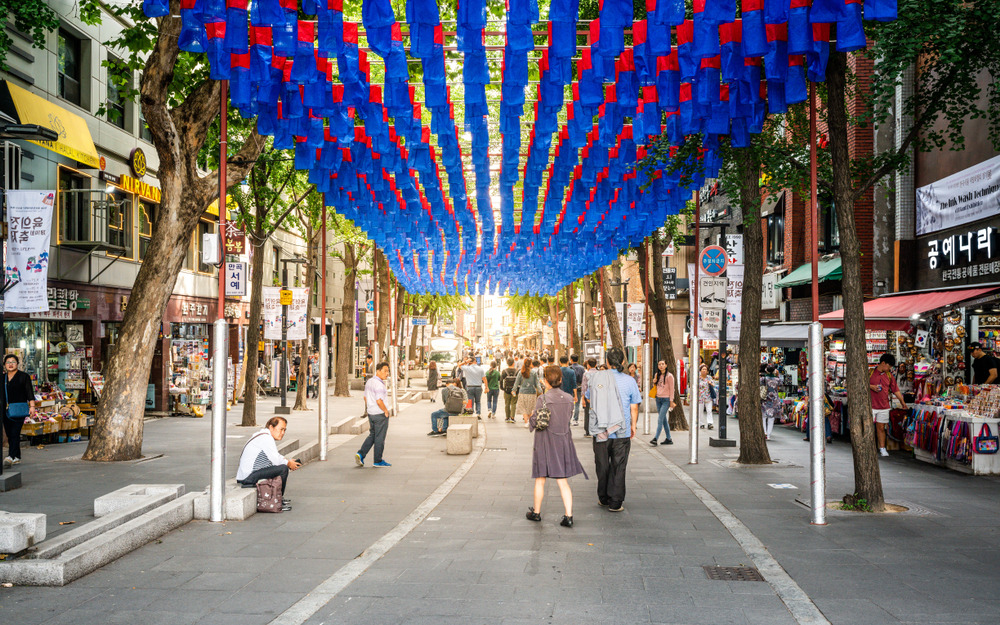
- Insa-dong, a district of art galleries, craftspeople and traditional tea houses.
- Itaewon, Seoul's international hub known for its nightlife and world cuisine.
FAQ
Frequently asked questions
Include Myeong-dong in your trip
Myeong-dong fits easily into a Seoul stay, complementing royal palaces and traditional districts. To build a custom itinerary, explore our Corée du Sud trips.
Nearby
Interested in this visit?
We can include it in your personalised itinerary.