Naksansa Temple
Naksansa Temple
A Jogye order Buddhist sanctuary founded in 671 on Mount Naksan, near Yangyang: monumental statue, hexagonal pavilion and views over the East Sea.
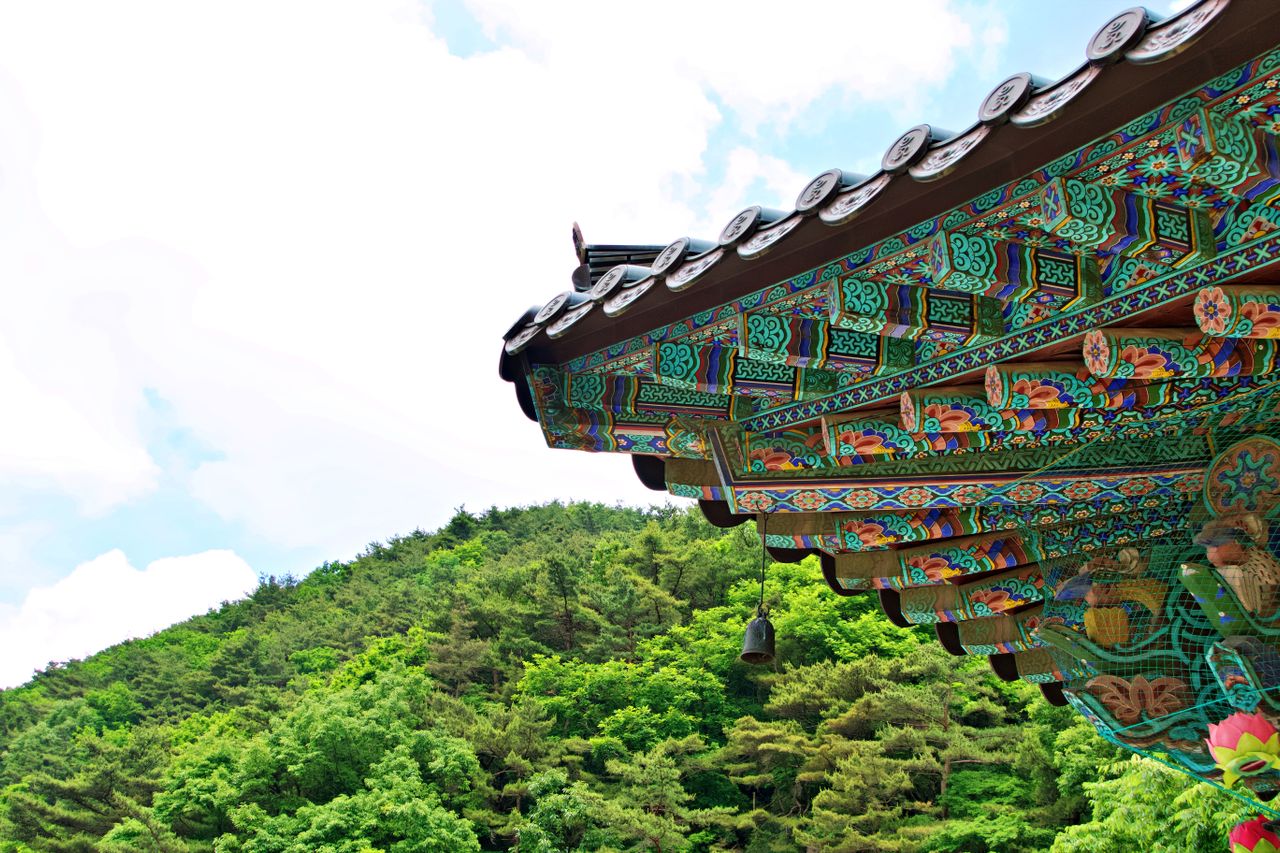
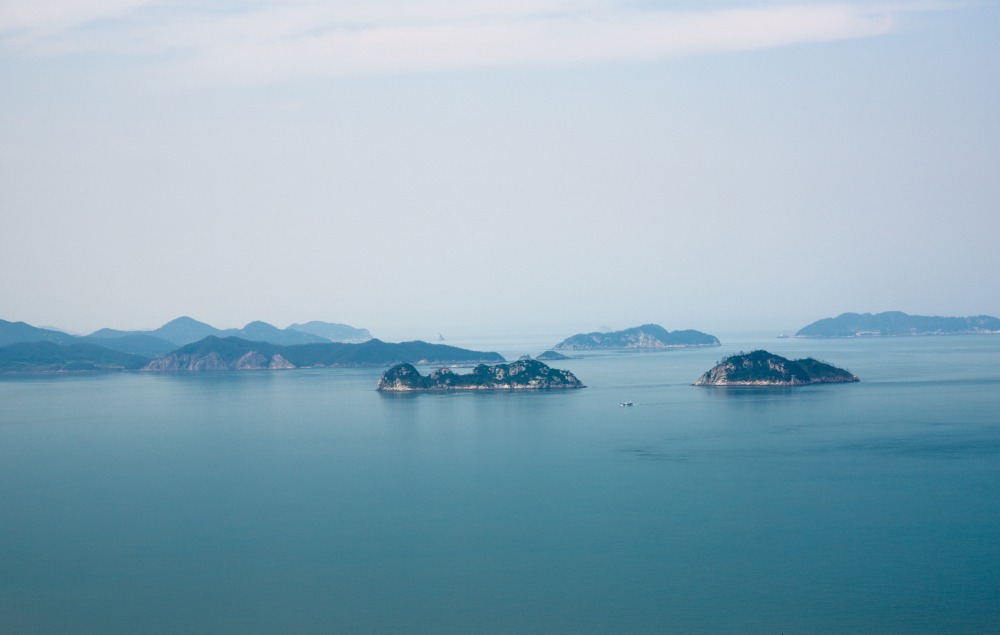
Naksansa Temple is a Jogye order sanctuary perched on the slopes of Mount Naksan, between Sokcho and Yangyang, on the east coast of South Korea. The mountain's name refers to Mount Potalaka, the residence of Bodhisattva Avalokitesvara in Buddhist tradition. Founded in the 7th century, the site combines religious heritage, architecture rebuilt after the 2005 fire, and panoramic views of the East Sea.
Why Visit Naksansa Temple
Naksansa offers multiple reasons to visit. First, it is an active temple over thirteen centuries old, designated as Historic Site No. 495 in 2009. Second, it is one of the rare large Korean temples located on the coast, making it a site associated with the worship of Avalokitesvara, the bodhisattva linked to compassion and water. Finally, its monumental white granite statue and hexagonal meditation pavilion overlooking the coastline create a striking visual ensemble, particularly photographed at sunrise.
History of the Temple
The temple was founded in 671 by the monk Uisang Daesa upon his return from China. According to tradition, its construction was inspired by a vision of Bodhisattva Avalokitesvara (Gwaneumbosal), to whom the sanctuary is dedicated.
The complex was rebuilt and enlarged in 858 under the reign of King Heonan of Silla, then remodeled again under King Sejo (1455–1468), a sovereign particularly devoted to this place. In April 2005, a forest fire devastated most of the halls and pavilions, sparing the monumental statue. The reconstruction, carried out identically for the main buildings, took several years. The site was officially designated as National Historic Site No. 495 in 2009.
What to See on the Site
The Haesugwaneumsang Statue
The most visible element of the temple is the Haesugwaneumsang statue, a representation of the Bodhisattva of Mercy facing the sea. Created in 1977 by sculptor Gwon Jeong-hwan, it stands 15 meters high and rests on a 2.8-meter pedestal, the whole carved from white granite. It is often cited as one of the tallest Buddhist monuments of this type in East Asia. The figure is portrayed in a meditation posture, with closed eyes and hands.
The Uisangdae Pavilion
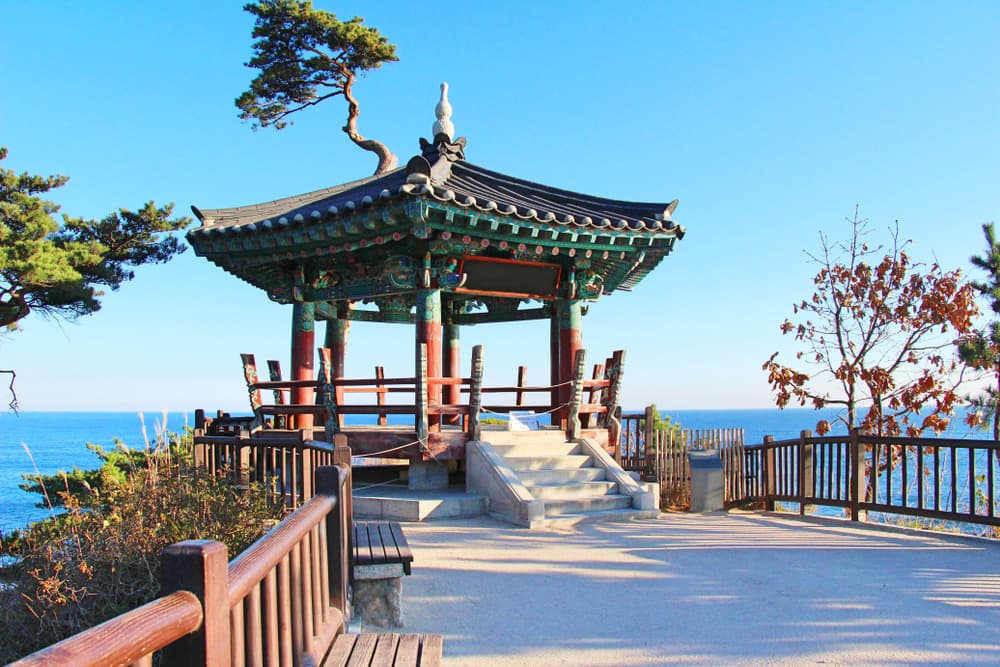
The Uisangdae pavilion is a hexagonal wooden structure erected at the spot where monk Uisang is believed to have practiced meditation. Positioned above the coastal cliffs, it offers an open view of the East Sea. The site was frequented by Korean poets during the Joseon era; it remains today one of the temple's most prized photo spots, particularly at sunrise.
The Dongjong Bell
The current bronze bell is a recast made after the 2005 fire. The original piece had been created in 1469 on the order of King Yejong, in tribute to his father King Sejo and his ties to the temple. It measures 158 cm in height by 98 cm in width, and its decoration combines dragons, lotus petals, and traditional motifs.
The Wontongjeon Hall
The main hall of the complex, Wontongjeon houses a Goryeo-style statue of Avalokitesvara, executed during the Joseon period. It is accessed by following a succession of pavilions from the Dongjong bell. This is the heart of the worship conducted here.
The Botajeon Hall
The Botajeon hall is preceded by a lotus pond in the center of which a flat stone emerges. By custom, visitors toss a coin there before climbing the steps to the hall, where several Buddhist statues are gathered.
Practical Information
The temple is open to the public year-round, generally from sunrise to sunset. Exact hours and the modest entrance fee may change: it is advisable to verify this information on the official website or through the Yangyang tourism office before your visit. Plan 1.5 to 2 hours to explore the entire complex at a leisurely pace. Dress should remain appropriate (shoulders and knees covered) in the worship halls, and silence is requested during ceremonies.
When to Visit
The site can be visited year-round. Spring (April–May) and autumn (October–November) offer the most pleasant conditions, with mild temperatures and, in autumn, the colors of the maples on Mount Naksan. In summer, it is preferable to arrive early in the morning to avoid heat and crowds. Winter, quieter, gives the site a stark atmosphere but exposes you to sea breezes.
How to Get There
Yangyang is located approximately 180 km east of Seoul. From Yangyang-gun bus terminal, local buses 9 and 9-1 serve the temple in about fifteen minutes. From Sokcho, intercity buses reach Yangyang in about thirty minutes. The nearby Yangyang International Airport offers some domestic and regional connections.
Nearby Attractions
The Yangyang and Sokcho region concentrates several complementary sites:
- Naksan Beach, a long stretch of sand just below the temple.
- Seoraksan National Park, about twenty kilometers away, one of the country's most renowned mountain ranges.
- The historic center of Sokcho and its fishing harbor.
To extend your Buddhist tour, you can pair Naksansa with other major Korean temples such as Haeinsa Temple, which houses the Tripitaka Koreana, or Magoksa Temple in Chungcheong Province. In Seoul, Jongmyo Shrine complements an exploration of Korean religious and royal heritage. For a nature detour, Maisan Mountain is worth the visit.
Frequently Asked Questions
Frequently asked questions
Plan about 1.5 to 2 hours to explore the main pavilions, the Haesugwaneumsang statue, and the Uisangdae pavilion at a leisurely pace.
Entrance is subject to a modest fee. As amounts change regularly, it is recommended to check the official website or the tourism office before your visit.
Yes, the two sites are about twenty kilometers apart. A well-organized day allows you to combine a temple visit in the morning and a hike at Seoraksan in the afternoon, or vice versa.
No traditional attire is required, but shoulders and knees must be covered in the worship halls. Silence is requested during ceremonies.
Yes, the temple participates in the Templestay program, which allows you to spend one to two nights on site and participate in monastic practices. Reservations should be made in advance through the dedicated website.
Planning Your Trip
Naksansa fits naturally into an itinerary combining Seoul, the east coast, and Seoraksan Park. To build a customized trip including this temple and other Buddhist sites, explore our South Korea travel suggestions.
Interested in this visit?
We can include it in your personalised itinerary.