Royal Tombs of Daereungwon
Royal Tombs of Daereungwon
23 tumuli from the Silla kingdom, a UNESCO World Heritage site in the heart of Gyeongju. Cheonmachong, the only accessible tomb, reveals a gold crown and a painting of the Korean pegasus.
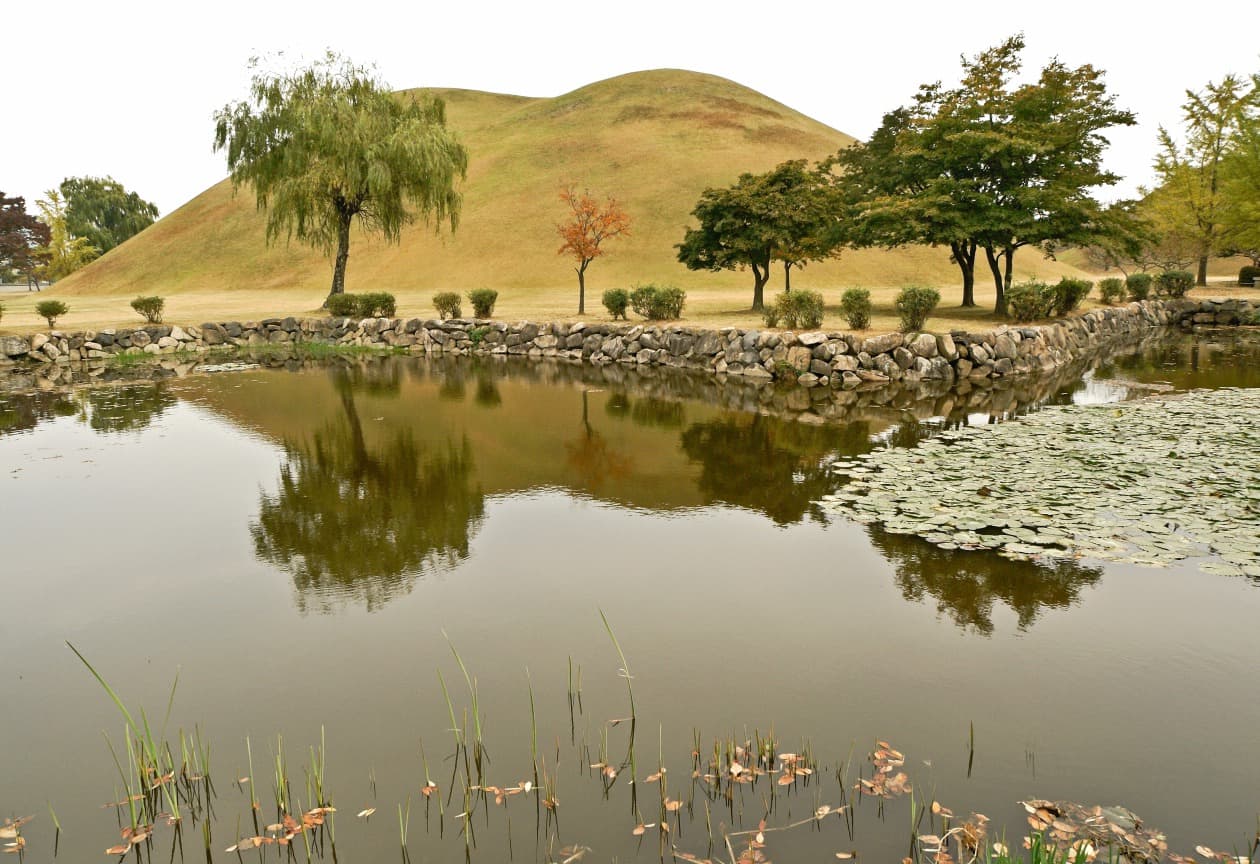
On the outskirts of central Gyeongju, Daereungwon Park brings together 23 burial grounds in the form of immense verdant mounds. These tumuli house the remains of kings, queens, and aristocrats of the Silla kingdom, one of the dominant powers on the Korean peninsula during the Three Kingdoms period. The site, inscribed in the UNESCO World Heritage, is one of the principal funerary complexes in East Asia.
Why visit the Royal Tombs of Daereungwon
Daereungwon offers direct access to Silla civilization, which reigned over the southern half of the peninsula from the 1st century BCE to the 10th century. Visitors find both a landscape park suited to walking, a major archaeological site, and a tomb open for interior exploration. The historical density of the place, its UNESCO inscription, and the quality of its development make it a central stop on any visit to Gyeongju, the ancient capital of the kingdom.
Site History
The tumuli of Daereungwon date from the Three Kingdoms period, an era when Korea was divided among Goguryeo to the north, Baekje to the southwest, and Silla to the southeast. Gyeongju, then called Seorabeol, served as the capital of the Silla kingdom. Sovereigns and the elite were buried in vast funerary chambers covered with stone heaps and then earth, forming these characteristic artificial hills.
Of the 23 tumuli in the park, 13 vaults have been explored by archaeologists. Excavations, conducted in stages during the 20th century, yielded tens of thousands of objects—gold crowns, belts, weapons, ceramics—now essential to understanding Silla culture. Most artifacts have been transferred to the National Museum of Gyeongju, located nearby.
What to See on the Site
The Tomb of Cheonmachong
Dating from the 5th century and probably intended for King Michu, Cheonmachong is the only tomb open to the public at Daereungwon. Excavated in 1973, it measures 47 meters in diameter, 157 meters in circumference, and 12 meters in height. Inside, an underground chamber in stone houses a lacquered wooden coffin surrounded by funerary objects.
Its name—literally "tomb of the heavenly horse"—stems from a painting of cheonma, the Korean pegasus, discovered on a saddle flap made of birch bark. Excavations also unearthed a gold crown and several thousand artifacts, illustrating the material wealth of the Silla aristocracy and its exchanges with Central Asia.
The Tomb of Hwangnamdaechong
Hwangnamdaechong is the largest and oldest vestige of the Silla era. Composed of two adjacent tumuli, it houses the burials of a king and a queen. Excavations yielded over 30,000 artifacts, with a significant portion of gold objects. A notable detail: the queen's tomb proved richer in luxury accessories than the king's, shedding light on the elevated status of women in the Silla elite.
The Tumulus of Geumgwanchong
Close to the park, in the Noseo-dong district, the Geumgwanchong tumulus belongs to the same Silla funerary complex. Its name means "tomb of the gold crown," referring to the major piece of metalwork discovered there. It logically complements a visit to Daereungwon.
Practical Information
- Visiting duration: allow 1 to 2 hours to walk through the park and enter Cheonmachong.
- Admission: paid entry at a modest rate, free for young children.
- Accessibility: flat, well-maintained trails, suitable for all walking levels.
- What to bring: hat and water in summer, as the park offers little shade in central areas.
When to Visit
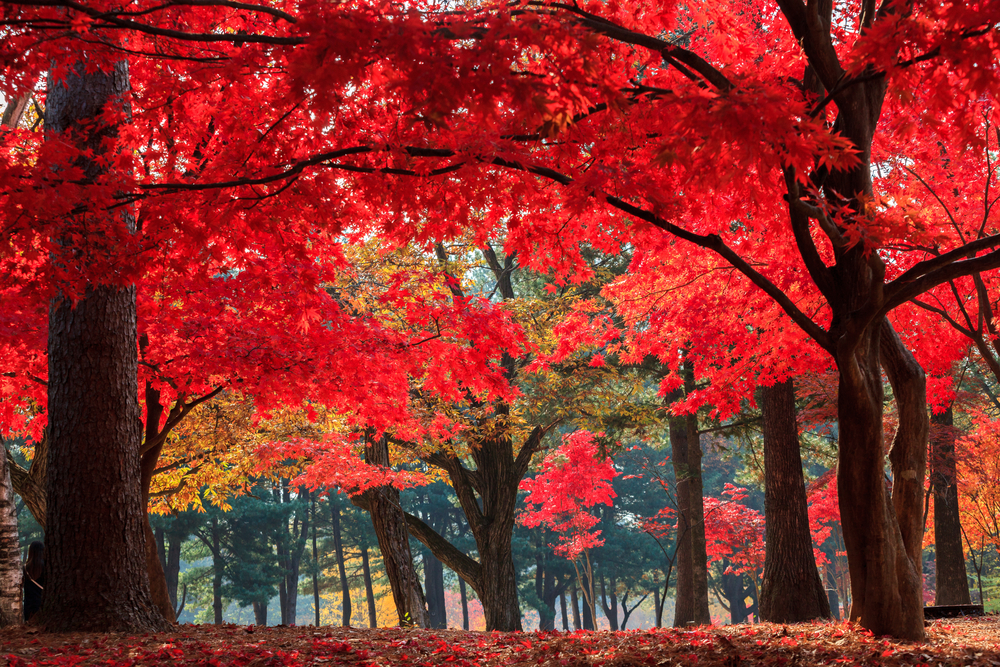
Daereungwon can be visited year-round, but the park reveals very different atmospheres depending on the season. Spring (April–May) highlights the cherry blossoms around the tumuli, while autumn (October–November) offers blazing colors across the lawns and surrounding trees. Summer remains hot and humid; winter, quieter, gives the site a mineral character. Visits in late afternoon are particularly appreciated for the raking light across the mounds.
How to Get There
The park is located in Gyeongju's historic center, a short distance from the station. From Gyeongju Station, take bus lines 60, 61, or 700 to downtown: the site entrance is then just a few minutes' walk away. The park lends itself well to a walking visit combined with other monuments in the district.
What to See Nearby
- Cheomseongdae Observatory — the oldest astronomical observatory in East Asia, just steps from the park.
- Haeinsa Temple — a major Buddhist site housing the Tripitaka Koreana.
- Magoksa Temple — a monastic complex set in a forest setting.
Frequently Asked Questions
Frequently asked questions
Plan Your Trip
Daereungwon naturally fits into an itinerary devoted to the history of the Three Kingdoms and Silla culture. To build a complete itinerary including Gyeongju, Seoul, and the Buddhist sites of the south, explore our trips to South Korea and have our destination specialists guide you in creating your perfect journey.
Interested in this visit?
We can include it in your personalised itinerary.