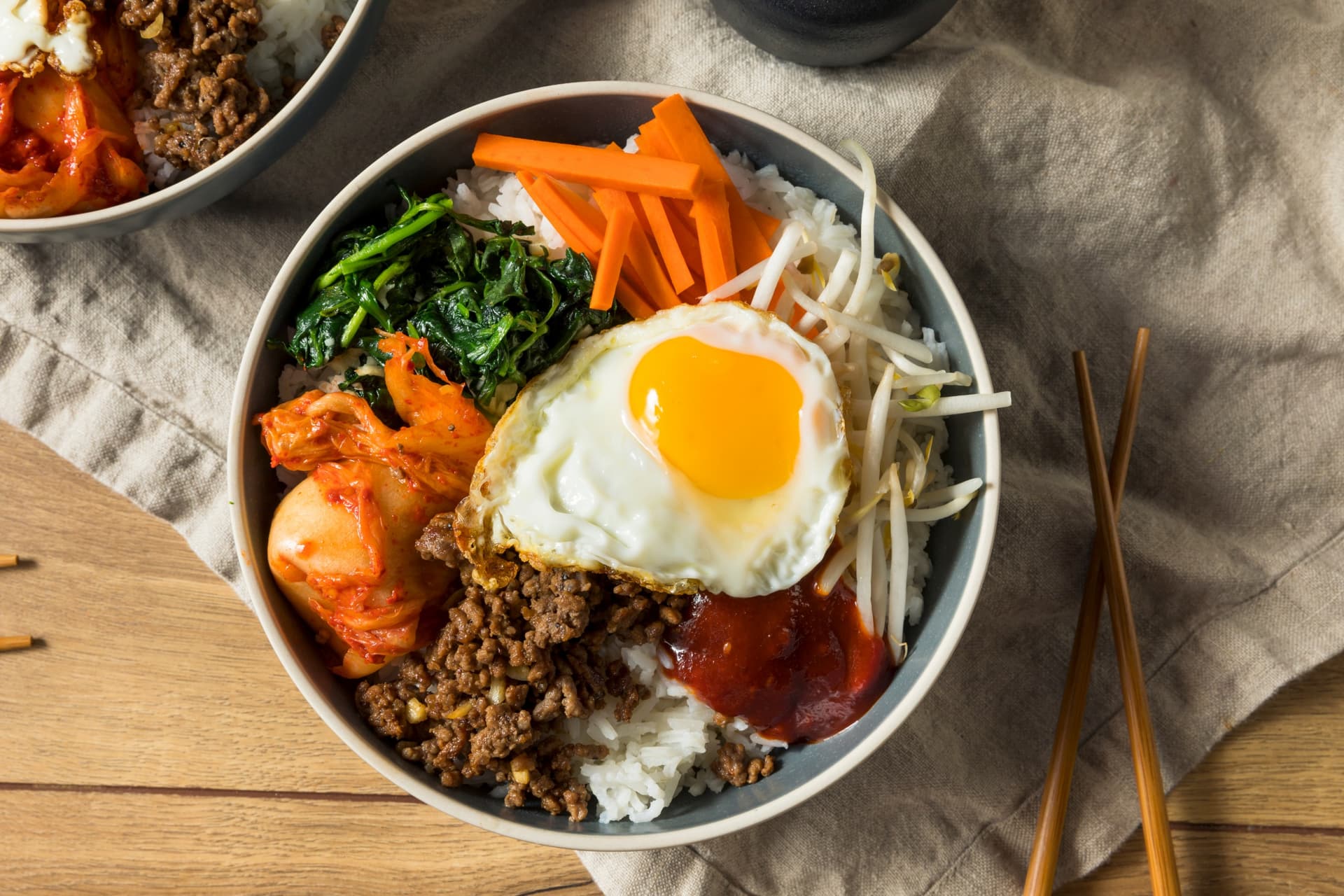
The Recipe for Korean Bibimbap
In Korean, Bibim means 'to mix' and bap means 'cooked rice'. Behind this quirky name lies a recipe bursting with color and flavor.
In Korean, Bibim means 'to mix' and bap means 'cooked rice'. Behind this quirky name lies a recipe bursting with color and flavor. Composed of rice, numerous vegetables cooked separately, marinated beef and a savory sauce, this iconic dish from South Korea is traditionally enjoyed in a dolsot, a hot stone bowl. Discover the recipe for the unmissable Korean Bibimbap!
Ingredients for 4 servings:
- 400 g of rice (ideally Japanese short-grain rice)
- 300 g of beef (can be replaced with chicken, pork or tofu for vegetarians)
- 200 g of shiitake mushrooms
- 200 g of mung beans (more commonly known as bean sprouts)
- 20 g of fresh ginger
- 4 eggs
- 2 carrots
- 2 zucchini (can be replaced with Chinese cabbage, cucumber or other green vegetables depending on the season)
- 1 bunch of spinach
- 2 onions
- 3 garlic cloves
- Sesame seeds
- 2 tbsp of gochujang red chili paste
- 1 tbsp of liquid honey
- Sesame oil
- Soy sauce
- Rice vinegar
- Salt, pepper.
Preparation time: 35 minutes
Cooking time: 10 minutes
Bibimbap Preparation:
1. Start by marinating the beef. Cut it into thin strips. In a bowl, mix 5 tbsp of sesame oil, 5 tbsp of soy sauce, 3 tbsp of rice vinegar, 1 tbsp of honey, the chili, sesame seeds, 1 garlic clove and the ginger, previously minced. Mix, cover and refrigerate for at least 30 minutes.
2. Meanwhile, rinse the rice and cook it covered over low heat according to package directions. Keep warm.
3. Prepare a vinaigrette sauce for serving by mixing in a bowl, 4 tbsp of sesame oil, 2 tbsp of soy sauce, a touch of honey and chili (to taste), salt and pepper. Mix and set aside.
4. Meanwhile, wash the spinach and cook gently for a few minutes. Drain and cover to keep warm. Repeat with the bean sprouts. Arrange each preparation in a bowl with some minced garlic, sesame oil, sesame seeds and salt.
5. Wash and cut the carrots, zucchini and cucumber into thin strips. Peel and slice the onions and the remaining 2 garlic cloves, then cut the mushrooms into thin slices. Sauté the vegetables (carrots, zucchini and mushrooms) for a few minutes in turn in a pan with a little sesame oil, salt and pepper. The vegetables should just be seared and remain crisp. Arrange them in separate bowls. Add some garlic, sesame oil, a pinch of salt, and a few sesame seeds to each bowl and set aside.
6. In the same pan, sauté the marinated beef strips while adding a little soy sauce. In parallel and in another pan, cook the eggs sunny-side up.
7. All that's left is to assemble everything in 4 large bowls. Start by placing the rice in the center at the bottom and arrange the vegetables and meat around it in a rosette pattern. Gently place the fried eggs on each bowl. Sprinkle with sesame seeds, season with the prepared sauce and serve immediately.
Enjoy!
Frequently asked questions
Bibimbap is a traditional Korean dish whose name literally means 'mixed rice'. It consists of rice, a variety of vegetables cooked separately, marinated beef and an egg, all seasoned with a spicy sauce based on gochujang. It is traditionally served in a hot stone bowl called dolsot.
You can prepare the vegetables and meat marinade the day before and keep them refrigerated. However, the rice and eggs are best prepared at serving time to preserve the optimal texture of the dish. Bibimbap is best enjoyed hot, just after assembly.
Gochujang is a Korean fermented red chili paste available in Asian grocery stores. If you can't find it, you can replace it with a mixture of miso paste (for the fermented umami flavor) and sriracha sauce (for the spice), adjusting the proportions according to your heat tolerance.
Absolutely! Simply replace the beef with firm tofu cut into cubes and previously marinated in the same sauce (soy sauce, sesame oil, garlic, ginger). The tofu is sautéed in the pan until golden. The result is flavorful and nutritious.
Ideally, use Japanese short-grain rice (or sushi rice) which is slightly sticky when cooked, making it easier to mix with the other ingredients. If unavailable, regular short-grain rice works well. Avoid Thai or basmati rice, whose texture is too dry and whose grains don't hold together well enough for this dish.