Pajeon Recipe: Korean Savory Pancake
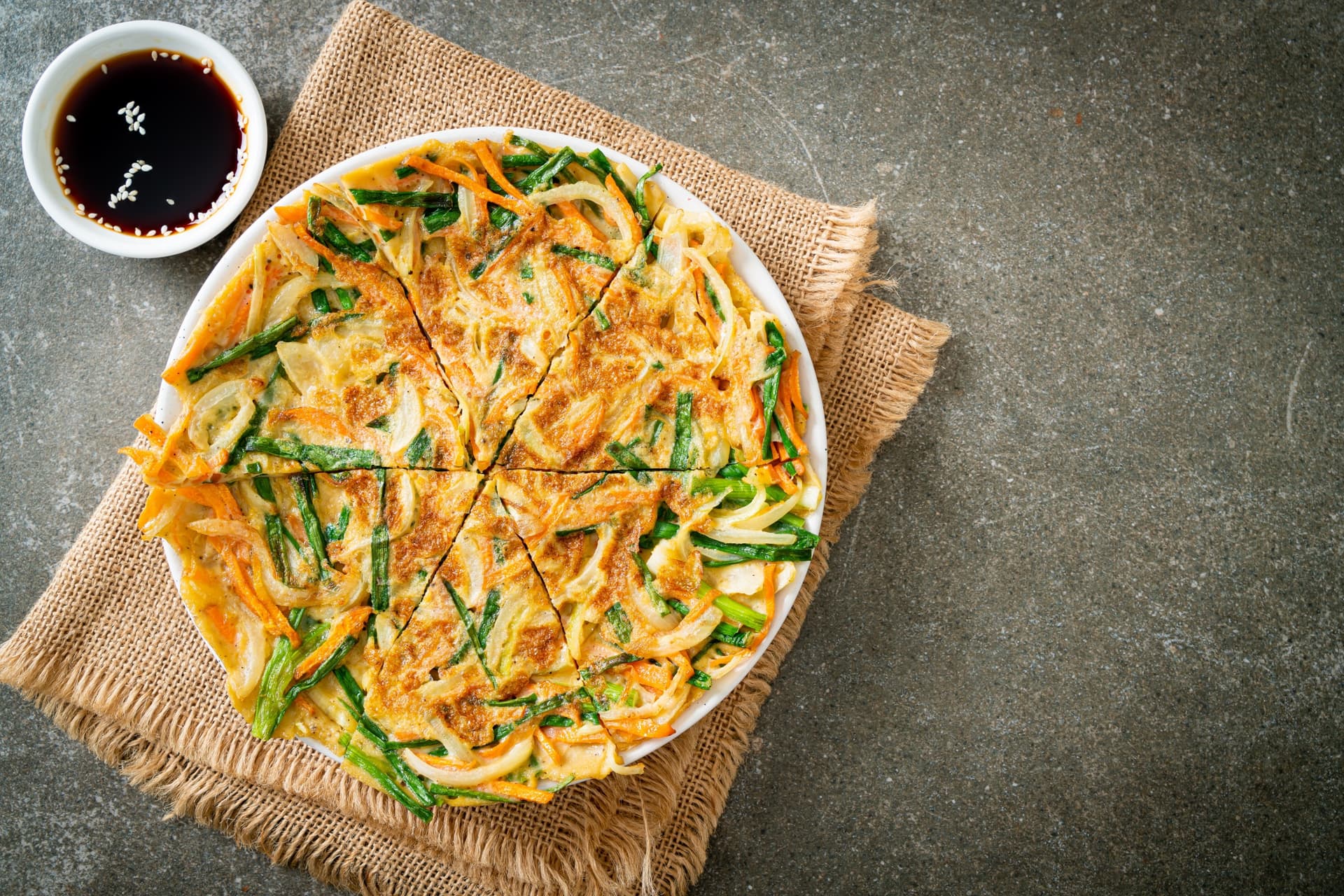
Positioned somewhere between a crêpe and an omelet, Pajeon is a South Korean specialty often compared to a savory pancake.
Positioned somewhere between a crêpe and an omelet, Pajeon is a South Korean specialty often compared to a savory pancake. As its name suggests ("Jeon" meaning "pancake" and "pa" meaning "scallions"), Pajeon is prepared primarily with green onions. Of course, the recipe has many variations. Discover the traditional Pajeon recipe and everything you need to know about this specialty of Korean cuisine.
The Traditional Pajeon Recipe
Ingredients for 2 pancakes:
Ingredients for the pancakes:
12 scallions (or green onions),
120 g flour,
20 g cornstarch,
250 ml cold water,
1 egg,
1/2 teaspoon garlic powder,
1/2 teaspoon onion powder,
Vegetable oil,
A pinch of salt,
A pinch of sugar.
Tips to remember:
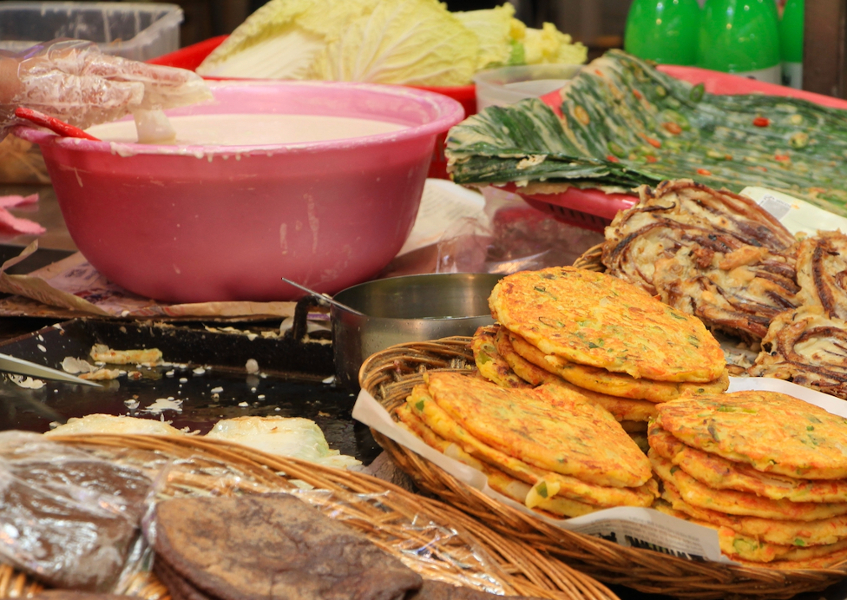
If you don't want to make your pancake batter yourself, there is a ready-to-use Korean pancake mix called buchimgaru. To achieve a crispy exterior, you can also add 1/2 teaspoon of baking soda to your Korean pancake batter.
As a reminder, pajeons should be crispy on the outside and tender on the inside.
Ingredients for the sauce:
2 tablespoons soy sauce,
1 tablespoon rice vinegar,
1 teaspoon sugar (or honey),
1 teaspoon toasted sesame seeds,
1/2 teaspoon Gochugaru (Korean red chili powder).
Korean Pajeon Preparation Steps:
Prep time: 10 minutes
Cooking time: 15 minutes (approximately 7-8 minutes per pancake)
Step 1: Begin by preparing the sauce. Pour all ingredients into a bowl. Mix and set aside.
Step 2: Cut the scallions, keeping only the green parts, and cut them into julienne strips of equal length.
Step 3: In a large bowl, mix the flour, cornstarch, salt, sugar, garlic powder, onion powder, and baking soda (optional). Make a well in the center of the bowl.
Step 4: In a smaller bowl, lightly beat the egg. Add it to the well along with the cold water. Mix gently to achieve a smooth batter (without lumps).
Step 5: Heat a skillet over high heat with 2 tablespoons of vegetable oil. When the oil is hot, reduce heat to medium and arrange the scallions to form a bed. Pour the pancake batter over the scallions, spreading it across the entire surface of the skillet. Fry for 4 to 5 minutes.
Be sure to use only half of the scallions and batter so you can make a second pancake afterward!
Step 6: When the bottom of the pancake is golden, remove it to add more oil. You can use a spatula to help remove it from the skillet without breaking it. Flip the pancake and fry the other side for 3 to 4 minutes.
Step 7: Repeat the process to make the second pancake.
Step 8: Cut the pancakes into square pieces (to create bite-sized portions) and serve with the sauce.
Pajeon Variations:
The Korean scallion pancake can be cooked with other ingredients. In fact, there are many variations of Pajeon:
Haemul Pajeon: with seafood and shellfish (oysters, mussels, squid, shrimp...),
Kimchi Pajeon: with Kimchi (fermented cabbage, one of the iconic culinary specialties of South Korea),
Yachae Jeon: with vegetables (carrots, zucchini...),
Soegogi-jeon: with beef...
If you want to add other fillings to your Korean pancake, simply mince them, add them over the scallions before pouring the pancake batter.
How to Enjoy Pajeon Like Koreans Do
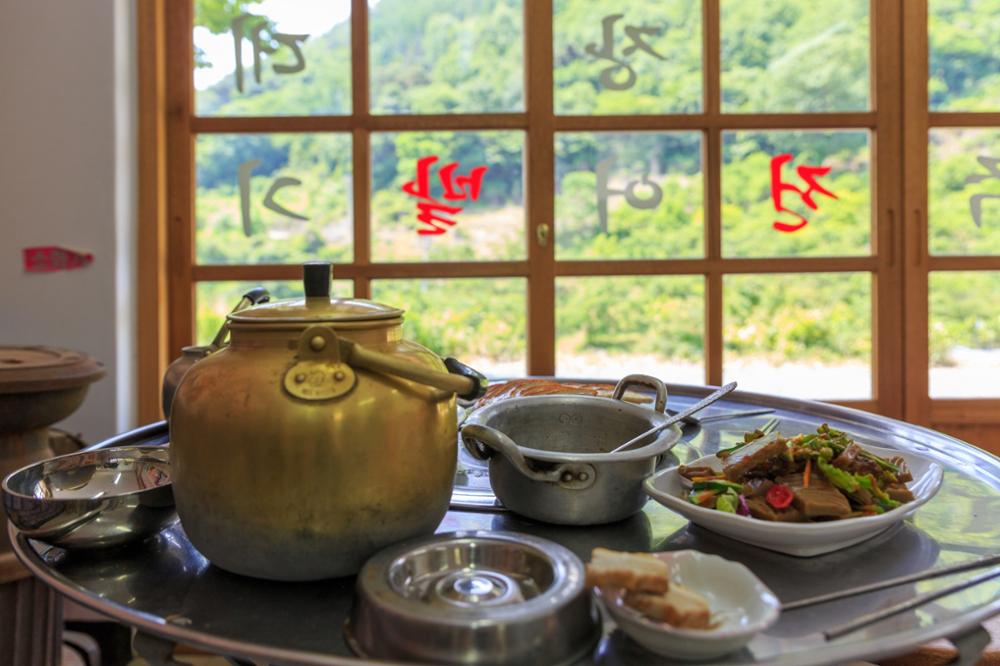
In South Korea, scallion pancakes are cut into small equal-sized squares so they can be shared. Served in the center of the table as an accompaniment to other dishes, Koreans enjoy them by dipping them in sauce and drinking Makgeolli, Korean rice wine (not to be confused with Sojuconsidered the national spirit of South Korea).
In tradition, pajeons are enjoyed on rainy days. Why? Because the sound of the pancake cooking evokes the sound of rain. Of course, pajeons can be enjoyed at any time of year and you can find them among the stalls of Korean street food.
Did you know?
Pajeon is one of the most popular culinary specialties during the celebration of Chuseok, the Harvest Festival. This festive day in Korea takes place on the 14th day of the 8th lunar month. During this period, families gather and pay tribute to their ancestors.
Frequently asked questions
Pajeon is a South Korean culinary specialty, somewhere between a crêpe and an omelet. Its name comes from the Korean words 'pa' (scallions) and 'jeon' (pancake). It is crispy on the outside and tender on the inside, and is served cut into small squares with a spicy soy sauce.
Classic Pajeon is a Korean pancake made with scallions. Haemul Pajeon is a variation that adds seafood and shellfish such as oysters, mussels, squid, or shrimp, making it more generous and flavorful.
In South Korea, Pajeon is traditionally enjoyed by dipping it in a sauce made with soy sauce, rice vinegar, and Gochugaru, accompanied by a glass of Makgeolli, Korean rice wine. It can also be served alongside other dishes during a shared meal.
According to Korean tradition, the sound of the batter frying in the pan evokes the sound of rain falling on the ground. This is why Koreans have taken to cooking and enjoying pajeons on rainy days, a warm and comforting custom.
Yes, there is a ready-to-use mix called 'buchimgaru', available in Asian grocery stores. It allows you to prepare pajeons quickly without having to separately measure flour, cornstarch, and spices.