Donggung Palace and Wolji Pond
Donggung Palace and Wolji Pond
Remains of the Silla royal palace in Gyeongju: oval artificial pond, Imhaejeon hall and the sacred bell of King Seongdeok, to visit by day or in the evening.
Donggung Palace and Wolji Pond form a palatial complex from the unified Silla kingdom, located at the edge of the historic center of Gyeongju. The site encompasses the remains of a secondary royal residence, an oval artificial pond renovated in the 1980s, and several national treasures preserved nearby, including the sacred bell of King Seongdeok.
Why visit Donggung Palace and Wolji Pond
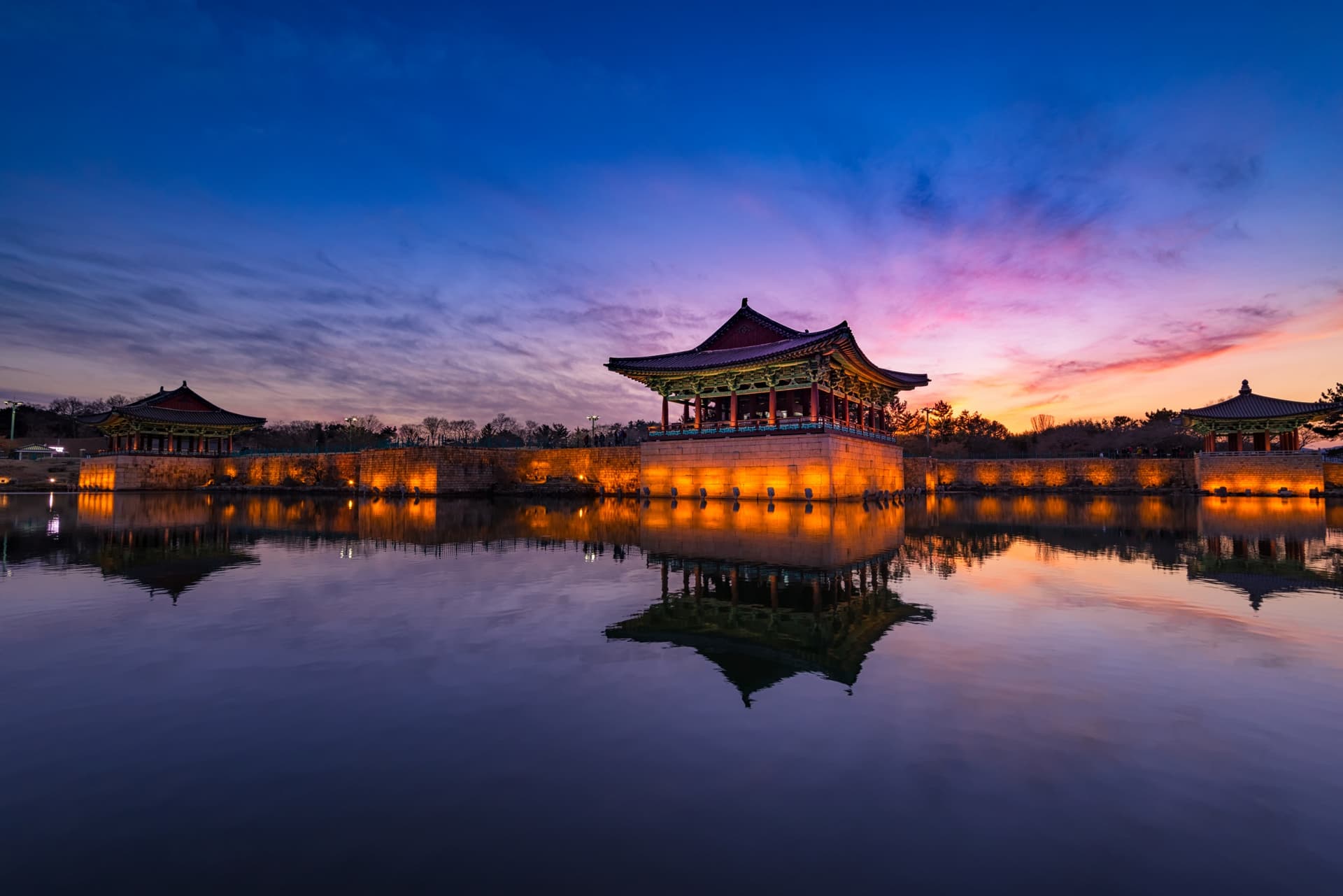
The site condenses over thirteen centuries of Korean history within a compact area. You will encounter both the foundations of the Imhaejeon royal reception hall, the Wolji pond bordered by reconstructed pavilions, and one of the country's most celebrated monumental bells. The visit appeals to both architecture enthusiasts and lovers of ancient craftsmanship, set within a peaceful landscape that transforms dramatically between day and evening, when the pavilions are illuminated and reflected in the water.
History of the site
Donggung Palace was built in 679, three years after the unification of the peninsula by Silla in 676. It served as a secondary residence for the royal family and hosted distinguished guests, banquets, and official festivals. According to the Samguk Sagi (Annals of the Three Kingdoms), King Munmu had ordered the excavation of a large artificial pond as early as 674 within its walls, organized around three islets and twelve landscaped hills.
Following Silla's fall, the complex gradually fell into ruin. During the Goryeo and Joseon periods, the pond was known as Anapji, meaning "pond of wild geese and ducks." In the 1980s, the discovery of a pottery fragment bearing the inscription wolji ("pond that reflects the moon") made it possible to recover the original name and rename the site. The artifacts unearthed during excavations are now preserved at the National Museum of Gyeongju. A restoration campaign conducted between 1975 and 1986 restored the contours and several pavilions to their original state.
What to see on site
Imhaejeon Hall
Located on the western side of the pond, Imhaejeon Hall was the main building of the palace. This is where meetings and festive gatherings were held under Silla rule. Its reconstructed structure and the artifacts displayed on-site provide a concrete understanding of the place's ceremonial function.
The sacred bell of King Seongdeok
Designated National Treasure No. 29 of South Korea, the sacred bell of King Seongdeok is also known as the Bongdeoksa bell, the Emilé bell, or the bell of Emile. Cast in the 8th century in memory of King Seongdeok, it weighs 18.9 tons, making it one of the country's largest bronze bells. Its surface is engraved with arabesque motifs and thousands of Chinese characters, a testament to the metallurgical expertise of the Great Silla period.
Wolji Pond
Wolji Pond is oval in shape and measures approximately 200 meters east to west and 180 meters north to south. Its southern and western borders are rectilinear, while the northern and eastern sides follow sinuous curves: it is impossible to grasp the entire body of water from a single viewpoint, which was intentional in the original design. Three reconstructed structures stand on its banks. In July and August, pink lotus blossoms cover part of the surface.
Practical information
- Allow 1.5 to 2 hours to tour the entire site and observe the bell.
- The site is open during the day and in the evening, with night lighting being particularly appreciated. Last entry approximately 30 minutes before closing. Check seasonal hours before your visit.
- Moderate entrance fee.
- Flat and accessible pathways; wear comfortable shoes.
When to visit
In Gyeongju, winters are cold and dry, summers hot and humid. The most pleasant period extends from April to November. Spring offers cherry blossoms around the site, summer reveals the lotus flowers in the pond, and autumn colors the surroundings. A visit in the evening, when the pavilions are illuminated, has become one of the most sought-after moments at the site.
How to get there
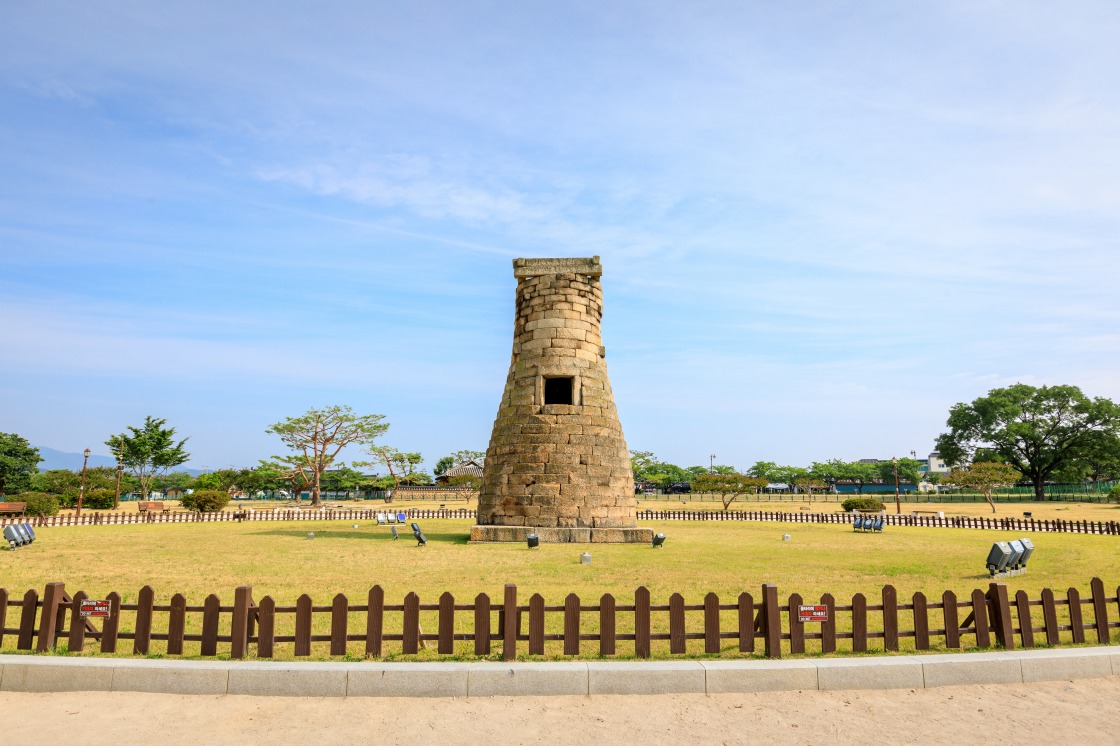
The main entrance is on the southern side of the palace. Several bus lines serve the nearby stop, notably routes 10, 11, 67, 153, 600 to 605, 609, and 700. From Cheomseongdae Observatory, count approximately 10 minutes on foot through the historic park.
What to see nearby
Donggung Palace is part of Gyeongju Historic Park, which groups together several major sites accessible on foot or by bus:
- Gyeongju, the former capital of Silla and the natural gateway to the site.
- The traditional village of Hahoe, approximately two hours' drive away, to extend your immersion in Korean historical architecture.
- Haeinsa Temple, another major spiritual and cultural site in the country.
- Hwaseong Fortress, in Suwon, to compare two periods of Korean military and palatial architecture.
Frequently asked questions
Frequently asked questions
Donggung refers to the eastern palace, a secondary residence of the Silla royal family, while Wolji is the name of the artificial pond located within its walls. The full name "Donggung Palace and Wolji Pond" was adopted following the discovery, in the 1980s, of a pottery fragment bearing the word wolji.
Many visitors choose late afternoon to enjoy the site in natural light and then experience the evening illumination of the pavilions reflected in the pond.
Allow 1.5 to 2 hours to walk around the pond, observe Imhaejeon Hall, and examine King Seongdeok's bell. More time if you visit in the evening to experience the lighting.
Yes. Cheomseongdae Observatory is approximately 10 minutes' walk away, and Gyeongju Historic Park allows you to visit several sites on foot.
Artifacts unearthed during excavations of Wolji Pond are preserved there: bronze objects, ceramics, architectural fragments, and pieces of Silla royal furniture.
Prepare your trip
Donggung Palace and Wolji Pond fit naturally into a circuit around the former capital of Silla. To build a complete itinerary, consult our trips to South Korea and our suggestions around Gyeongju.
Nearby
Interested in this visit?
We can include it in your personalised itinerary.