Sanbanggulsa Temple
Sanbanggulsa Temple
A Buddhist cave sanctuary nestled in a volcanic dome on the southwestern coast of Jeju, with views over Marado island and Dragon Head Rock.
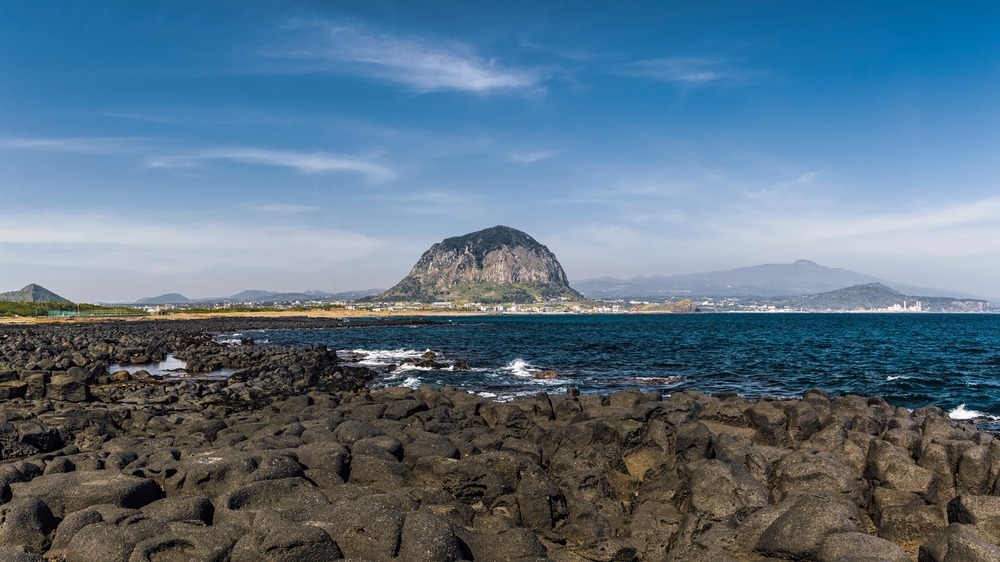
Sanbanggulsa Temple is a Buddhist cave sanctuary carved into the cliffside of Sanbangsan mountain, on the southwestern coast of Jeju island. The site combines spiritual significance, geological intrigue, and maritime panoramas over the East China Sea.
Why Visit Sanbanggulsa
The sanctuary occupies a natural cave five meters high, carved into a volcanic dome approximately 800,000 years old. Its appeal lies as much in its spiritual dimension as in its location: from the forecourt, views sweep across Marado island and Dragon Head Rock, two emblematic landmarks of southern Jeju. A visit fits naturally into a circuit around Sanbangsan mountain, which clusters several sites within a compact radius.
History and Legend
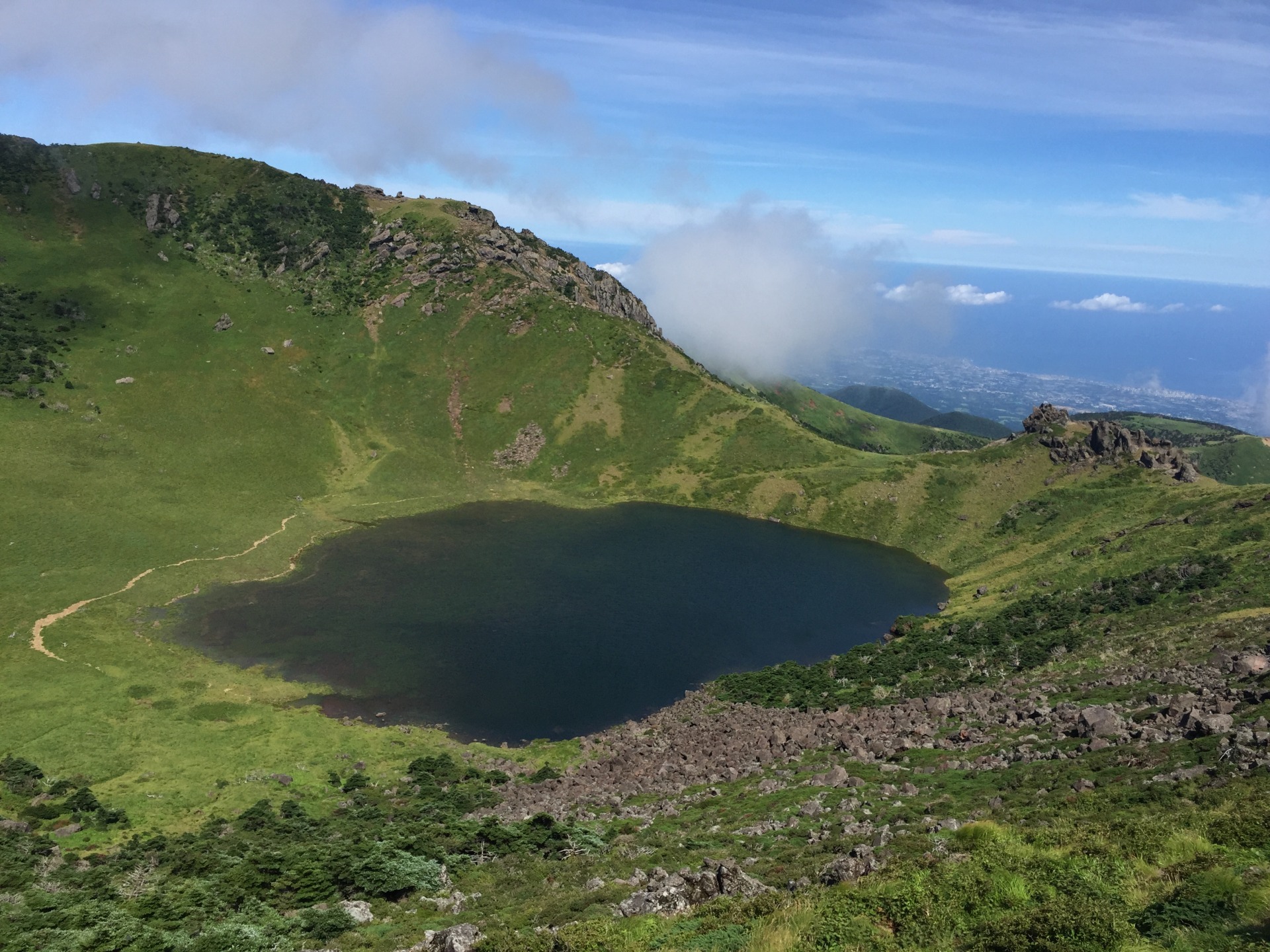
Tradition holds that Sanbangsan mountain is actually the former summit of Mount Hallasan, recognized as South Korea's highest peak. According to legend, an angry deity tore it off and hurled it to this location, explaining the dome's distinctive silhouette.
Geology tells a complementary story: the mountain formed approximately 800,000 years ago as a result of intense volcanic activity. The highly viscous lava solidified rapidly in place, creating this bell-shaped dome, particularly recognizable from the coast.
The cave on the southwestern slope is said to have been inhabited by the monk Hye-Il (964–1053) during the Goryeo dynasty (918–1392). This ancient presence established the site as a Buddhist pilgrimage destination, still active today.
What to See
Access to the sanctuary is via a stairway built into the hillside. The climb takes around twenty minutes: the route is steep but well-maintained, lined with small buildings and a few shops selling souvenirs and bottled water.
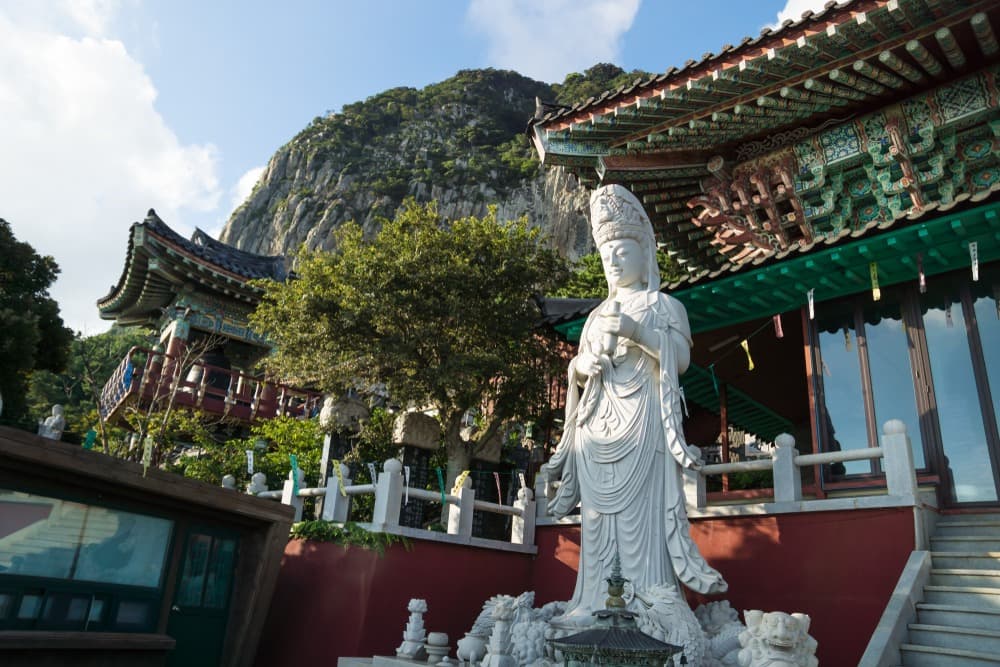
Inside the cave, you'll find a large Buddha statue and small natural pools formed by water continuously dripping from the ceiling. A monk is usually present. As the cave remains an active place of worship, discretion is appropriate.
Several points of interest complement your visit:
- Bomunsa Temple, located near the main entrance, houses an extensive collection of Buddha statues displaying a variety of mudras (ritual gestures), along with an impressive gilded statue.
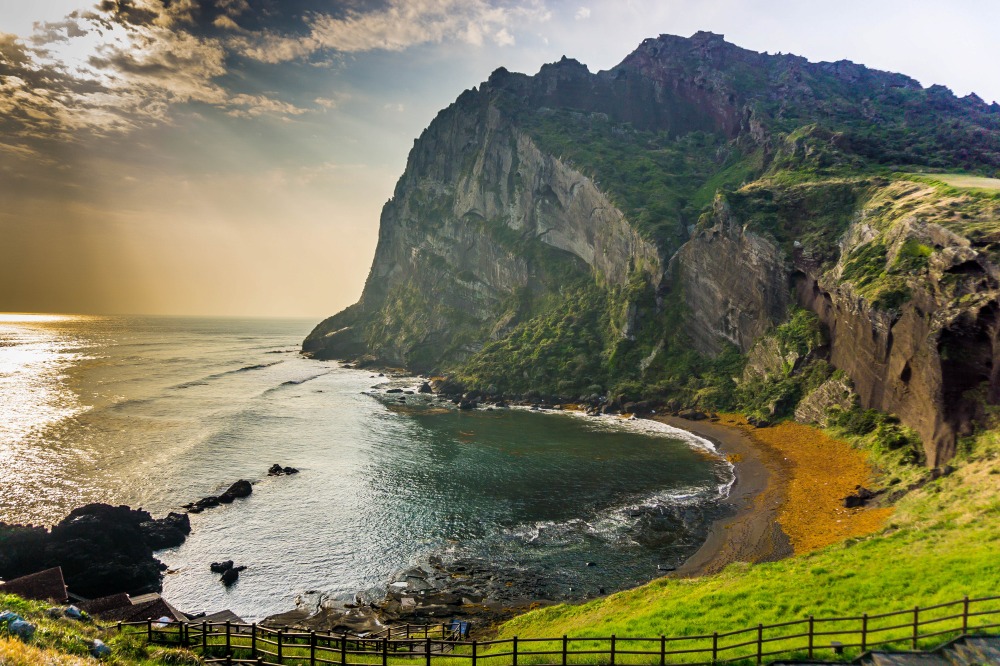
- The panorama from the forecourt overlooks Marado island and Dragon Head Rock (Yongmeori).
- The Hendrick Hamel Memorial, erected by the Dutch embassy, commemorates the 1653 shipwreck of this Dutch explorer on Jeju's shores and honors ties between the two nations.
Practical Information
The site is open to the public year-round, typically during daylight hours. Admission remains moderately priced and usually covers combined access to the temple, the Hamel Memorial, and Dragon Head Rock, making it a worthwhile bundled visit.
Allow approximately 1.5 to 2 hours on-site for a round trip to the cave and visits to the surrounding attractions. Wear sturdy shoes for the stairway, and bring sun protection or a windbreaker depending on the season—the entire route is outdoors.
When to Visit
Spring (April–May) and autumn (October–November) are the most pleasant seasons to visit Sanbanggulsa: mild temperatures, often clear skies, and better visibility of Marado from the forecourt. Summer is hot and humid, with frequent showers linked to the monsoon, which can make stairs slippery. Winter is manageable but windy on this exposed coastline.
To make the most of the panorama, choose a clear day, preferably late morning or late afternoon for softer light over the sea.
How to Get There
By Bus
From Jeju's intercity bus terminal, take a line heading to Sanbangsan mountain. The journey takes approximately one hour. Stops are announced in English, Japanese, and Chinese, making navigation easier for foreign travelers.
By Taxi
From Jeju International Airport, a taxi ride takes around 30 minutes. This is the most direct option if you're traveling in a group or with luggage.
By Car
The site has a parking lot. Car rental is widely available on Jeju and a good way to string together multiple southwestern coast sites in a single day.
Nearby
South Korea is home to other major Buddhist sanctuaries that extend the exploration begun on Jeju:
- The Haeinsa Temple, which preserves the Tripitaka Koreana, an exceptional collection of wooden Buddhist tablets.
- The Naksansa Temple, perched on the eastern coast overlooking the Sea of Japan.
- The Magoksa Temple, designated as a UNESCO World Heritage site.
- The Maisan Mountain, famous for its twin peaks and stone pagodas.
Frequently Asked Questions
Frequently asked questions
Allow 1.5 to 2 hours for the climb, cave visit, and Bomunsa Temple tour. Including Dragon Head Rock and the Hamel Memorial (both covered by the ticket), plan for a half-day.
The ascent takes about 20 minutes via a steep but well-constructed stairway. It remains accessible for walkers in normal condition, though it may be challenging in intense heat or for those with mobility restrictions.
Yes, admission typically provides combined access to Sanbanggulsa Temple, the Hendrick Hamel Memorial, and Dragon Head Rock, all located in immediate proximity.
The cave remains an active place of worship where a monk is often present. Visitors are welcomed in respect of silence and ongoing practices, though there are no scheduled public ceremonies for tourists.
Continue Your Exploration
Sanbanggulsa fits into a broader itinerary combining Jeju, its volcanoes, and the Buddhist heritage of the peninsula. To plan your stay, consult our suggestions for journeys through South Korea.
Nearby
Interested in this visit?
We can include it in your personalised itinerary.