Seokguram
Seokguram
An 8th-century rock-carved Buddhist sanctuary and UNESCO World Heritage site, Seokguram shelters a white granite Buddha and 41 relief sculptures on the heights of Gyeongju.
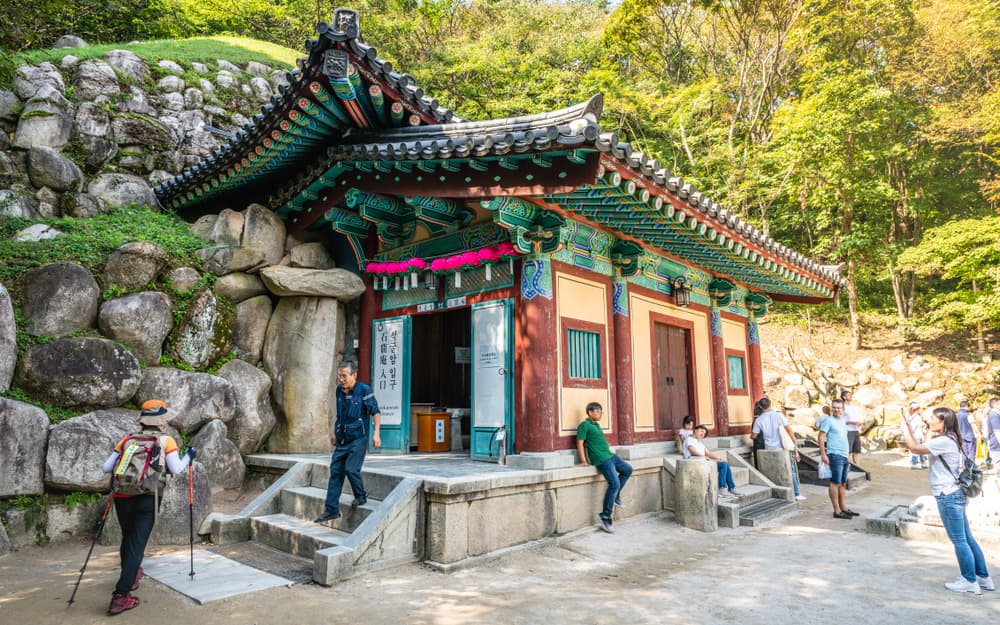
Seokguram is a rock-carved Buddhist sanctuary nestled on the slopes of Mount Tohamsan, east of Gyeongju, the ancient capital of the Silla kingdom. Its circular chamber houses a monumental statue of Buddha Sakyamuni carved from white granite, surrounded by 41 relief sculptures considered a pinnacle of East Asian Buddhist art. Inscribed as a UNESCO World Heritage site in 1995, the sanctuary is typically visited in conjunction with the Bulguksa Temple, located below.
Why Visit Seokguram
Seokguram brings together three rarely combined points of interest. Architecturally, it stands as one of very few Korean rock-carved temples, conceived in the manner of Indian cave sanctuaries (Ellora, Ajanta) and Chinese ones (Yungang, Longmen), yet entirely constructed from granite blocks covered with earth. Iconographically, the sculptural ensemble—central Buddha, bodhisattvas, devas, ten disciples, guardians—forms a coherent 8th-century Buddhist program executed in particularly hard granite. Symbolically, the rectangular antechamber represents earth and the circular chamber the sky, reflecting a Buddhist cosmology adopted throughout East Asia.
The site is equally renowned for sunrise over the Sea of Japan, visible from the forecourt: the Buddha itself faces eastward.
History of the Sanctuary
Construction of Seokguram began in the 8th century under King Gim Gyeongdeok, either in 742 or 751 depending on the source. The work was completed in 774, after the patron's death. According to tradition, the Buddhist monk Hyecho was tasked with finding a suitable site and identified a natural cave on Mount Toham near the capital Gyeongju.
Originally conceived as a meditation chamber, the sanctuary rapidly became a major pilgrimage center of the Silla kingdom. During the 15th-century Joseon dynasty, which favored Confucianism over Buddhism, the site was gradually abandoned. Damaged by moisture, seepage, and several pillage attempts, it underwent major restoration in the early 20th century, followed by successive campaigns throughout the century.
Seokguram was designated National Treasure of Korea No. 24 in 1962, then jointly inscribed with Bulguksa Temple as a UNESCO World Heritage site in 1995.
What to See
The Cave Architecture
Unlike Indian rock-cut temples carved directly into stone, Seokguram was constructed: exterior walls are assembled from granite blocks quarried from Tohamsan, then covered with a thick layer of earth forming a mound. This silhouette recalls Korean burial tumuli from the early centuries of our era.
Visitors pass successively through:
- an access gallery,
- a rectangular antechamber symbolizing earth,
- a short vestibule flanked by two octagonal columns,
- the main circular chamber, symbolizing sky.
The Buddha Sakyamuni Statue
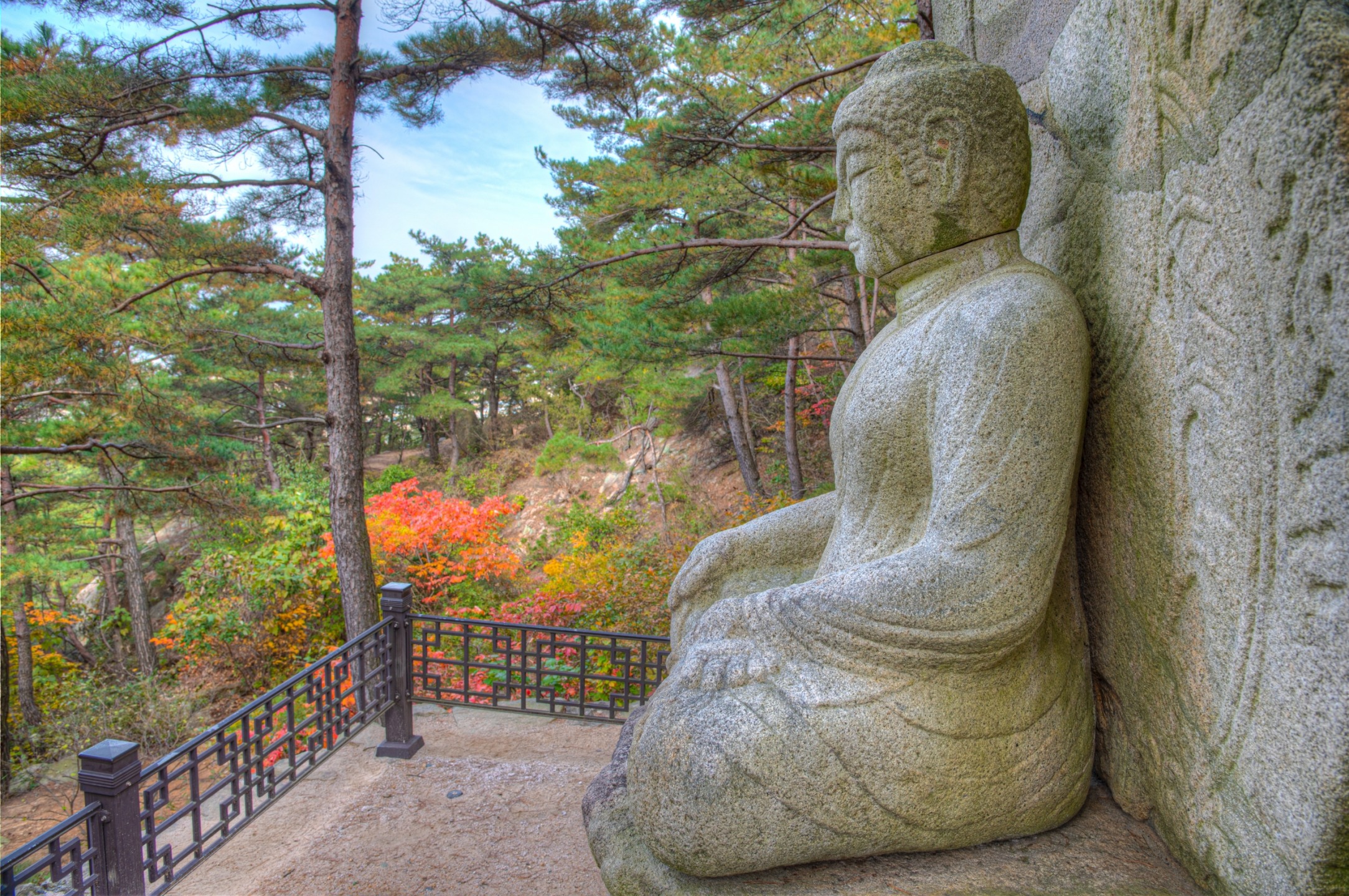
At the center of the circular chamber sits a white granite statue of Buddha Sakyamuni standing 3.45 meters tall, mounted on a 1.6-meter pedestal. The Buddha is seated in lotus position and oriented due east, an orientation interpreted as symbolic protection against Japanese pirates, frequent raiders on these coasts at the time.
The hands adopt the dhyana mudra and bhumisparsa mudra postures: left hand resting on the left thigh, right hand on the right knee, fingers extended toward the ground to call earth to witness. Traces of the original red pigment remain visible on the granite surface.
The 41 Relief Sculptures
The walls bear a total of 41 figures in relief:
- in the vestibule, four guardians frame the passage;
- in the antechamber, eight representations of Parivara and two of Vajrapani;
- in the main chamber, behind the Buddha's head, a lotus halo; on the walls, the bodhisattvas Manjusri, Samantabhadra and Ekadasamukha, the devas Brahma and Sakra-devendra, as well as the Buddha's ten principal disciples;
- ten niches carved at height originally housed additional sculptures, some of which have been lost.
For conservation reasons, the main chamber is no longer accessible: it can be observed through a glass panel installed in the vestibule.
Practical Information
- Visit duration: allow 30 to 45 minutes on site, longer if combining with Bulguksa.
- Admission fees: paid entrance at a reasonable rate, with discounts for teenagers and children. Rates are revised regularly, so check before your visit.
- Hours: daytime opening, generally morning to late afternoon, with earlier opening on weekends for sunrise.
- Photography: forbidden inside the main chamber.
- Final access: a trail of approximately 10 minutes connects the parking area to the sanctuary.
When to Visit
Seokguram welcomes visitors year-round. Spring (April–May) and autumn (October–November) offer the most pleasant conditions, with temperate weather and, in fall, beautiful maple colors on Tohamsan. Summer is hot and humid; winter can be windy at altitude, but often clears the horizon toward the sea.
Early visitors primarily come for sunrise over the Sea of Japan, particularly spectacular from the east-facing forecourt. To experience this, arrange private transportation, as public buses do not run before dawn.
How to Get There
Seokguram is located approximately twenty kilometers east of central Gyeongju, on the heights of Mount Tohamsan.
- By bus: from Gyeongju Station or the intercity bus terminal, take bus 10 or 11 to Bulguksa Temple, then bus 12 climbing to Seokguram.
- By taxi: direct journey from Gyeongju in 30 to 40 minutes, convenient for sunrise.
- On foot: a hiking trail connects Bulguksa to Seokguram in 1 to 1.5 hours of uphill walking through Tohamsan forest.
Nearby Attractions
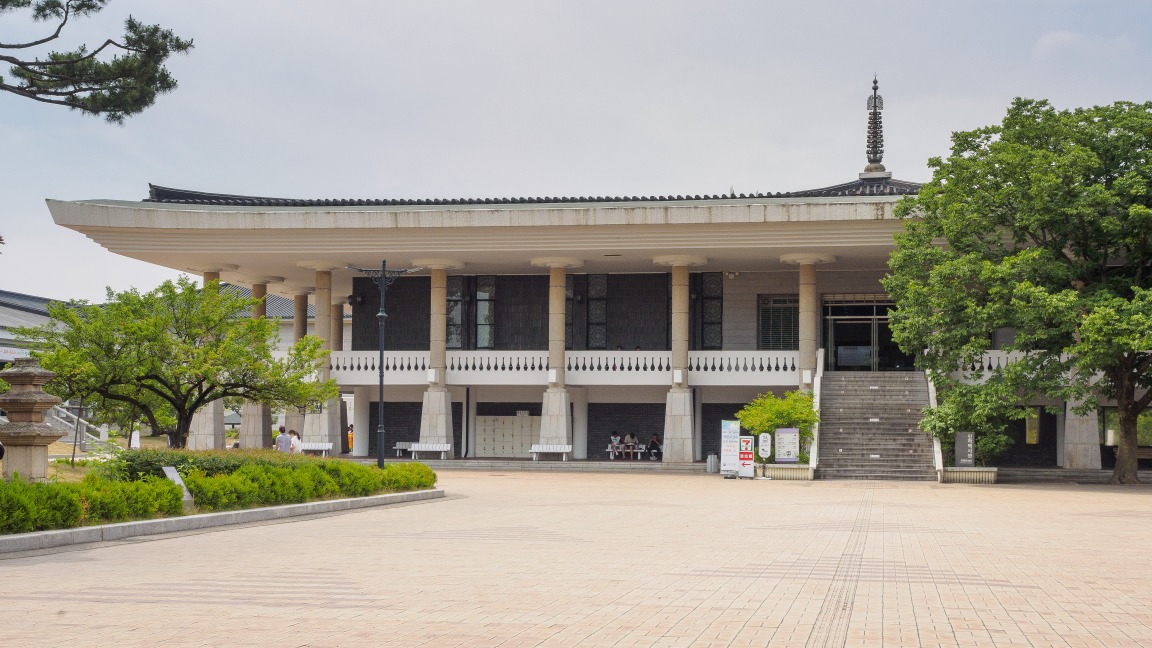
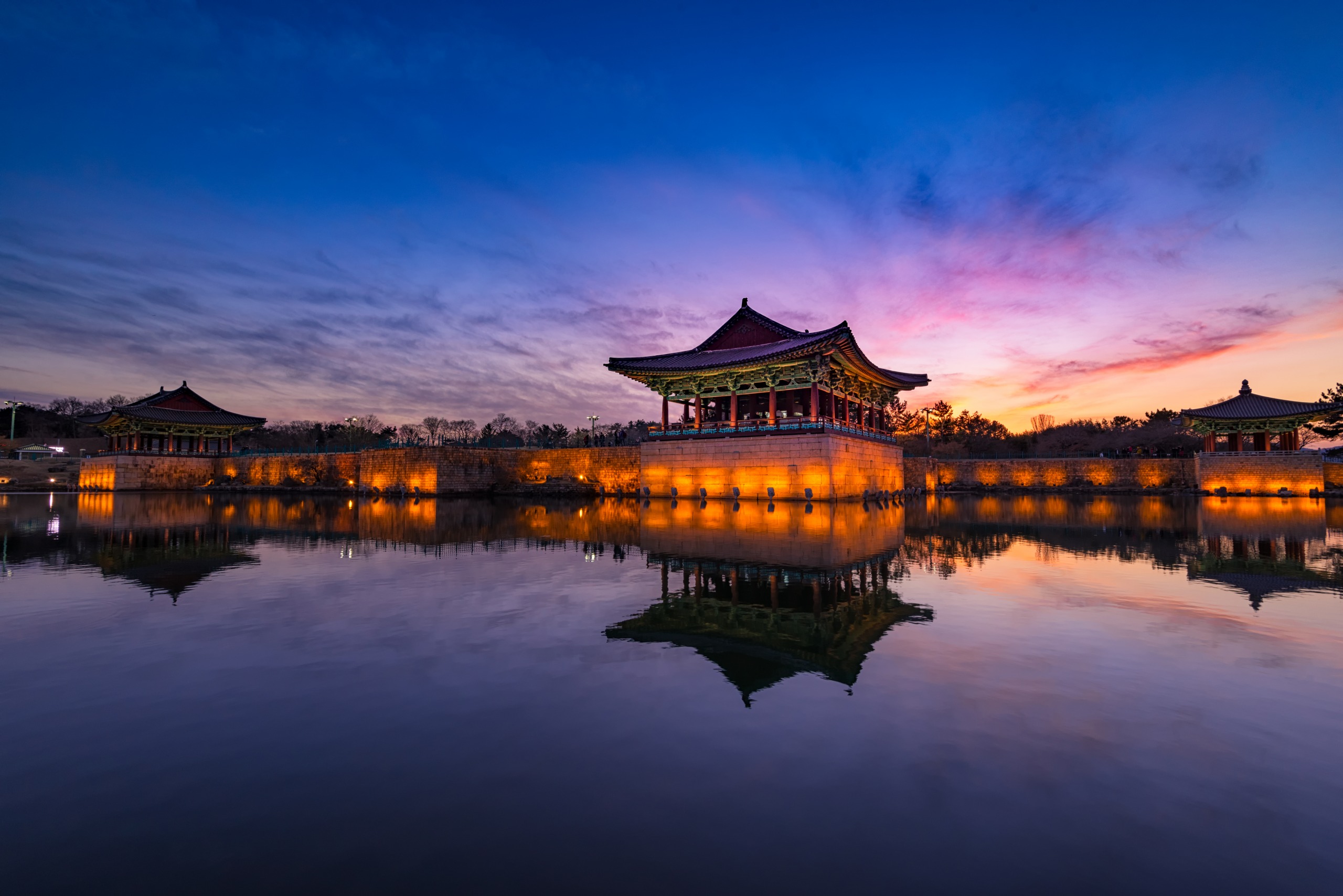
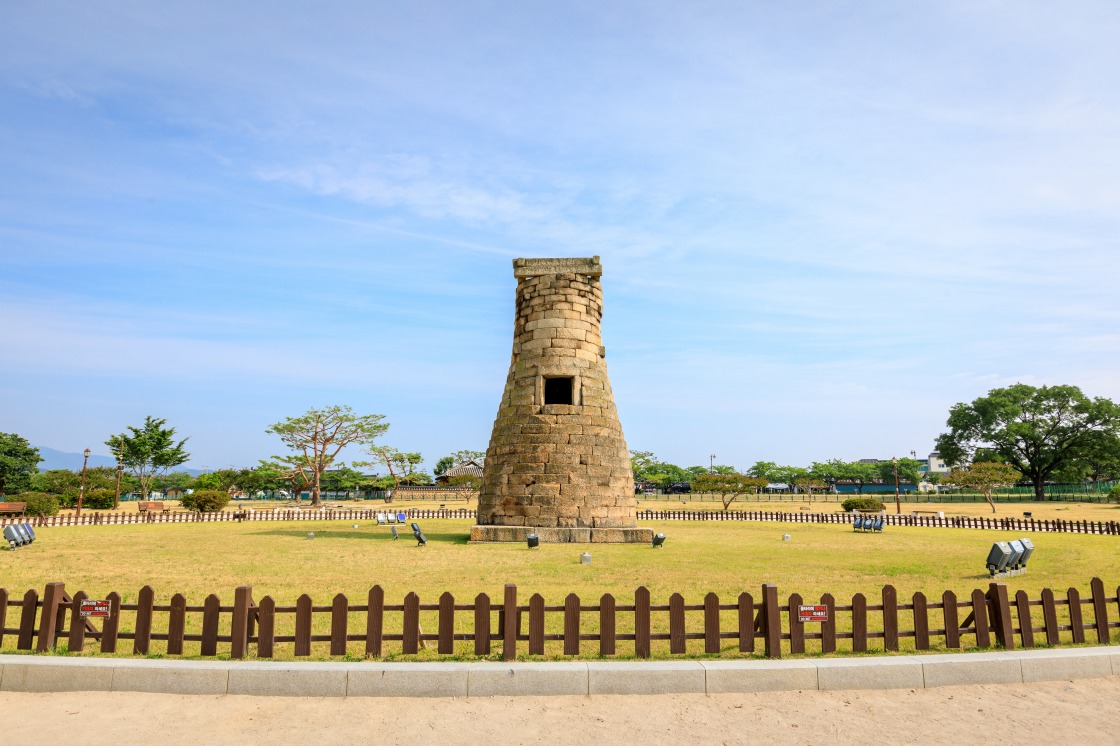
A visit to Seokguram naturally pairs with Bulguksa Temple, located on the same side of Tohamsan and jointly inscribed as a UNESCO site. In Gyeongju itself, the royal tumuli of Tumuli Park, the Cheomseongdae Observatory, and the Gyeongju National Museum complete a journey through the Silla kingdom. Further along the coast, you can reach sites such as Haeundae Beach in Busan or traditional villages like Hahoe and Nagan.
Frequently Asked Questions
Frequently asked questions
No. To preserve the sculptures from moisture and pollution, the main chamber is closed to the public. It can be viewed through a glass panel installed in the vestibule, which provides a clear view of the Buddha and the relief carvings.
This is the most common practice: both sites are connected by bus 12 and jointly inscribed as World Heritage sites. Budget half a day to a full day for both.
The site is traditionally renowned for this moment, with the Buddha oriented toward the east. The view depends on weather and requires private transportation, as public buses do not run so early.
Indian temples at Ellora or Ajanta are carved directly into the cliff face. Seokguram, by contrast, is constructed from assembled granite blocks then covered with earth: it is an artificial cave inspired by Indian and Chinese models, but adapted to the Korean tumulus tradition.
Photos inside the main chamber are prohibited. The trail, forecourt, and views of the sea, however, remain freely photographable.
Including Seokguram in a South Korea Trip
Seokguram fits easily into an itinerary combining Seoul, Gyeongju, and the southeastern coast. To plan your stay, explore our custom trips to South Korea.
Nearby
Interested in this visit?
We can include it in your personalised itinerary.