The Most Beautiful Hiking Trails in South Korea
It's said that 70% of South Korea's territory is covered in mountains. Mountains that South Koreans revere and with which they've maintained spiritual connections for generations.
It's said that 70% of South Korea's territory is covered in mountains. Mountains that South Koreans revere and with which they've maintained spiritual connections for generations. No wonder then that hiking is their favorite activity! Well-equipped as never before, South Koreans flock every weekend to the 20 national parks to breathe in fresh mountain air. So what are you waiting for to discover South Korea's most stunning landscapes through its hiking trails?
1. Seoraksan National Park
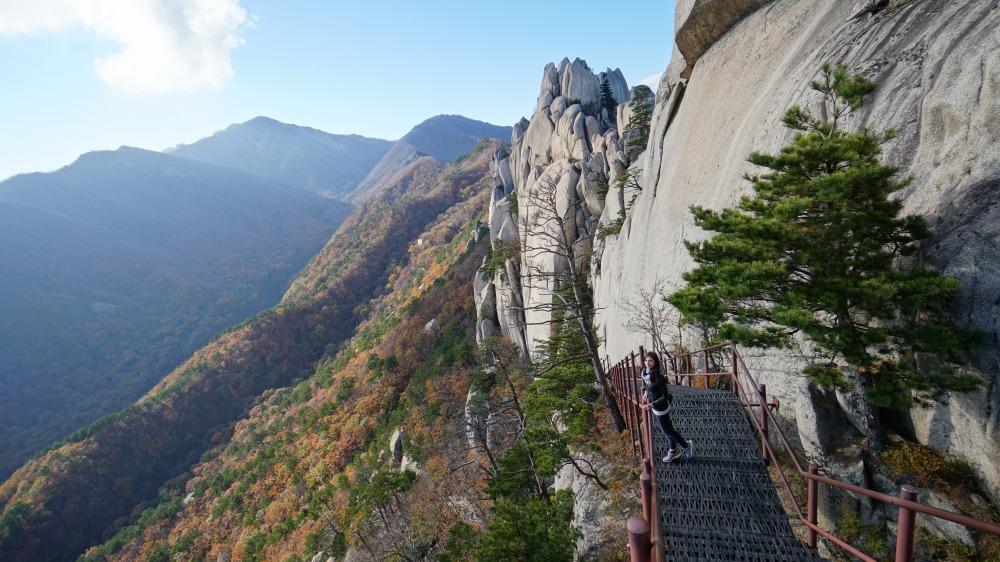
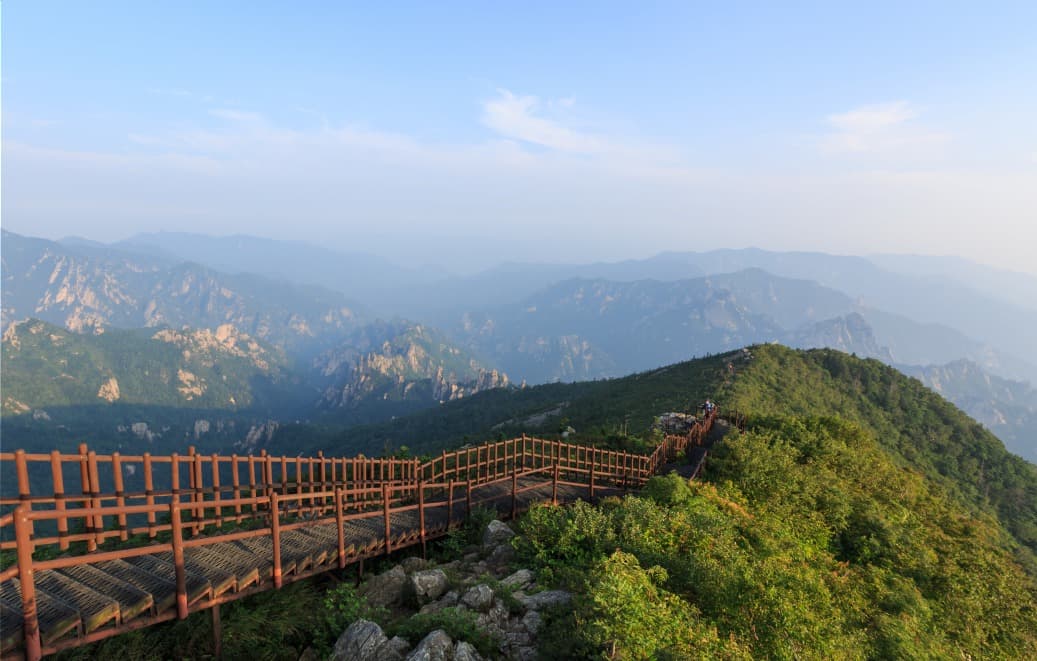
Located in Gangwon Province, just 3 hours from Seoul, Seoraksan National Park is one of the country's most stunning parks. It has even been designated by UNESCO as a biosphere reserve. And for good reason—this 400 km² territory boasts no shortage of picturesque landscapes. The hiking trails cross bamboo groves, waterfalls, temples and sanctuaries dating back to the Silla era, hermitages, pine forests, and beyond. On the wildlife front, visitors may encounter Asian black bears, deer, otters, and numerous bird species.
Seoraksan National Park offers a wide range of hiking trails for all levels. From a simple one-hour stroll to multi-day expeditions!
2. Hallasan Volcano
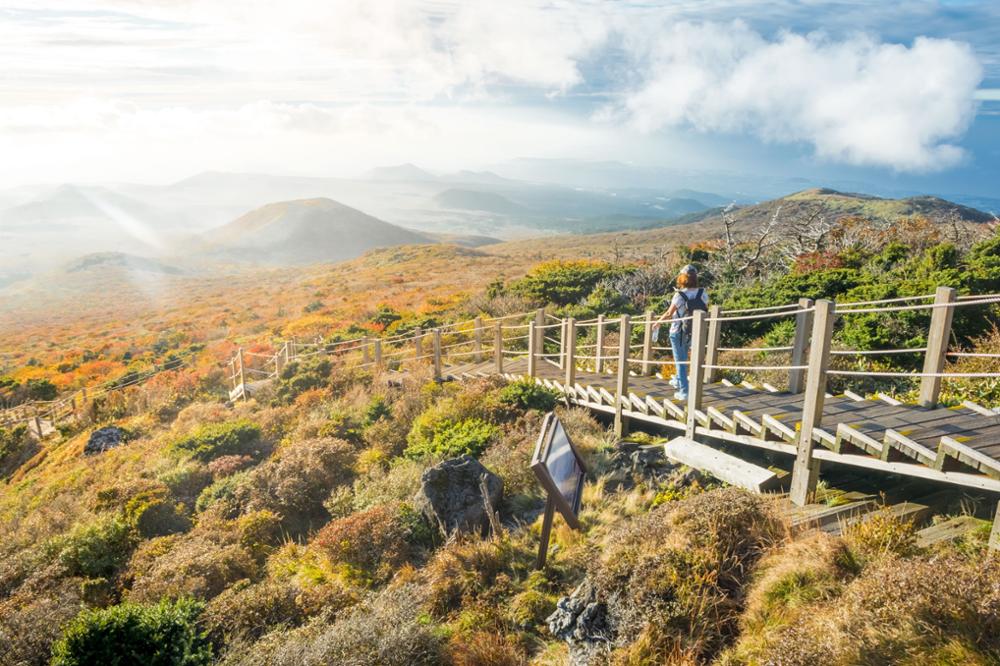
Calling all high-altitude hiking enthusiasts—head to South Korea's highest point: Hallasan Volcano. Located on Jeju Island, this dormant giant offers an ascent to 1,950 meters. From the crater's edge, hikers are rewarded with a spectacular view of the beach and the island's coastline. Plan for a full day of hiking to reach the summit.
If you need more adventure, the Olle Trails should satisfy your cravings. These are a network of paths that circle the entire island. The routes traverse forests, hug coastlines, or wind through the island's hills. Along the way, you'll encounter mandarin orange groves, volcanic rock reefs, and charming villages…
3. Jirisan National Park
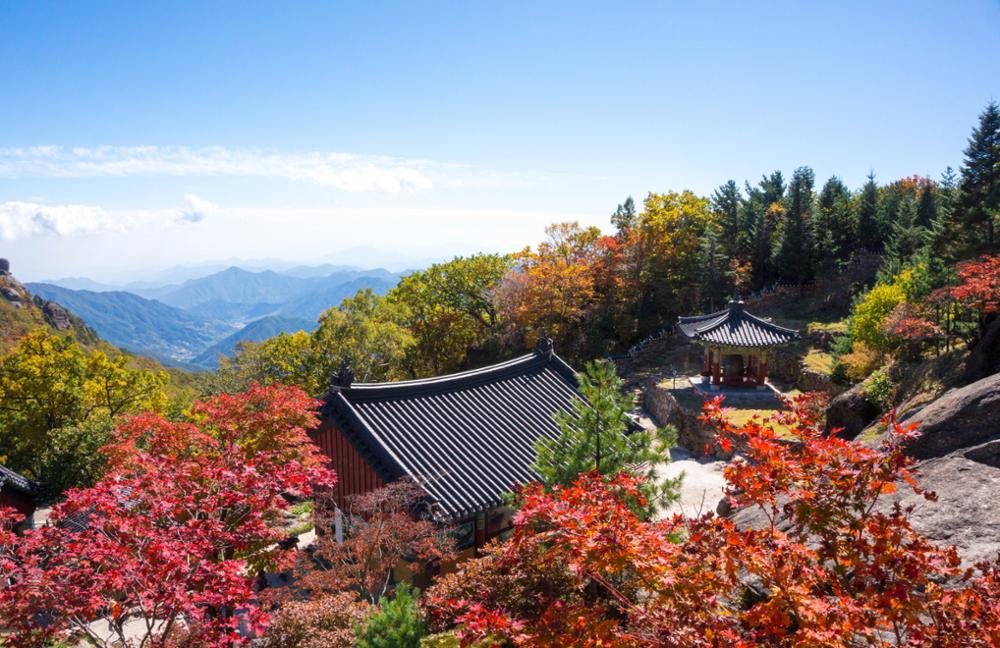
Jirisan National Park is renowned for its 300 km of forest trails winding around Mount Jirisan. In total, the park comprises 12 peaks rising above 1,000 meters. Naturally, there are numerous hiking trails allowing you to enjoy nature while passing through numerous charming South Korean villages.
Our tip: make the most of your getaway to Jirisan to experience something truly special—spending a night in a Buddhist temple! Hwaeomsa Temple, one of the jewels of the Jogye order and school of traditional Korean Buddhism located within the park, is actually the birthplace of the Templestay program. The experience includes: prayers and meditation with the monks, visits to the temple and sacred natural sites, tea ceremonies… A genuine spiritual retreat awaits you!
4. Bukhansan National Park
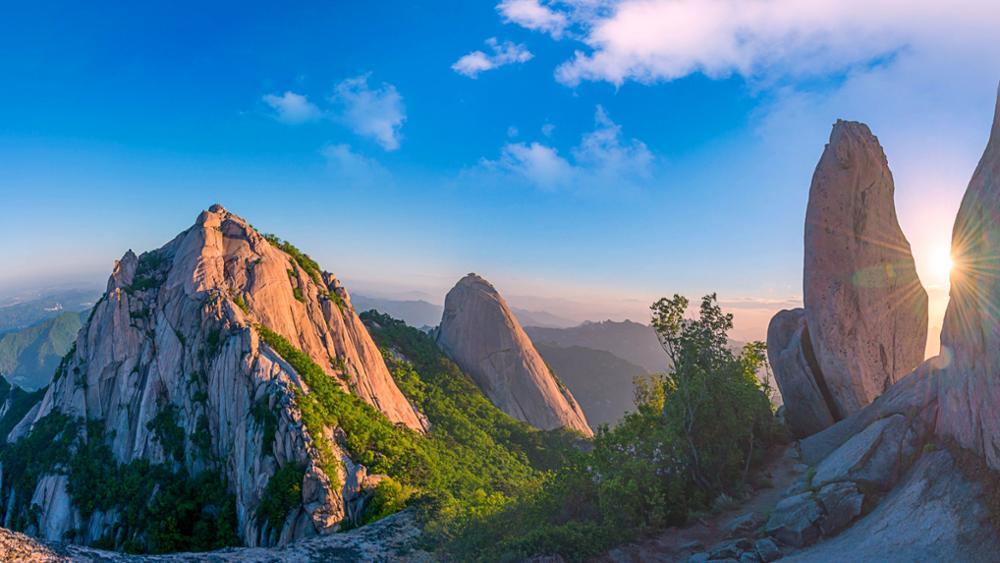
Located north of the capital (less than an hour's drive away), Bukhansan National Park spans 6 districts. Its vast expanse offers endless options! The park is renowned for its rich wildlife and flora as well as its exuberant topography. Indeed, it features remarkable granite formations with the highest peak reaching 830 meters! Beyond hiking paths, you can also enjoy rock climbing on Insubong granite boulders, one of South Korea's most popular climbing sites!
Beyond its natural beauty, Bukhansan National Park is also celebrated for its historical heritage. In addition to Buddhist temples, you'll find Bukhansanseong Fortress, built over 1,900 years ago. Spanning roughly 8 km, an impressive wall crosses the mountain, lending the site a mystical atmosphere…
Frequently asked questions
Autumn (October-November) is ideal for enjoying the vibrant foliage colors in parks like Seoraksan and Jirisan. Spring (April-May) is also magnificent with cherry blossoms in bloom. Summer can be hot and humid, and winter makes some trails snowy and slippery.
Seoraksan National Park is located approximately 3 hours from Seoul. You can get there by express bus from the Dong Seoul Terminal or by KTX to Gangneung, then by local bus to Sokcho, the park's gateway town.
Most South Korean national parks charge a modest entrance fee, typically between 1,000 and 3,500 Korean won (approximately €1 to €3). Some parks like Bukhansan are free following the removal of entrance fees in 2007.
Templestay is an official program that allows visitors to stay in a Korean Buddhist temple and share daily life with monks. Activities include meditation, prayers, tea ceremonies, and discovery of spiritual heritage. Hwaeomsa Temple in Jirisan Park is one of the pioneers of this program.
Hallasan's summit reaches 1,950 meters and represents a full day of hiking. The difficulty level ranges from moderate to challenging depending on the chosen route. The Seongpanak and Gwaneumsa trails are the only ones reaching the crater. It's advisable to start early in the morning and be well-equipped.
Yes, Bukhansan National Park is renowned for climbing, particularly on the Insubong granite boulders, one of the country's most popular climbing spots. It's accessible from Seoul in under an hour and offers routes for all skill levels.