What is Soju, Korea's National Spirit?
Soju is considered the national spirit of South Korea. Popular among all Koreans, Soju has developed into a genuine drinking culture.
Soju is considered the national spirit of South Korea. Popular among all Koreans, Soju has developed into a genuine drinking culture. We'll tell you more about its history, composition, and varieties, and share all the customs you need to know to enjoy it properly...
What is Soju?
A spirit made from rice, but not only...
Soju is the most popular alcoholic beverage in South Korea. This spirit is traditionally made through the fermentation of rice.
However, due to restrictions and shortages in 1965 (which led the Korean government to ban rice for alcohol production at the time), the original recipe underwent some modifications. Rice was replaced with other starch sources (such as potatoes, wheat, barley, sweet potatoes, or tapioca) to continue Soju production. Since then, producers have returned to the traditional recipe and continue to offer its variants.
A bit of history...
Contrary to popular belief, Soju did not originate in South Korea. This spirit first appeared in Mongolia in the 13th century. It was notably the Yuan Mongols who first crafted this beverage, inspired by Persian arak distillation techniques, before introducing it to South Korea during the Mongol invasions from 1231 to 1259.
Flavored varieties of Soju
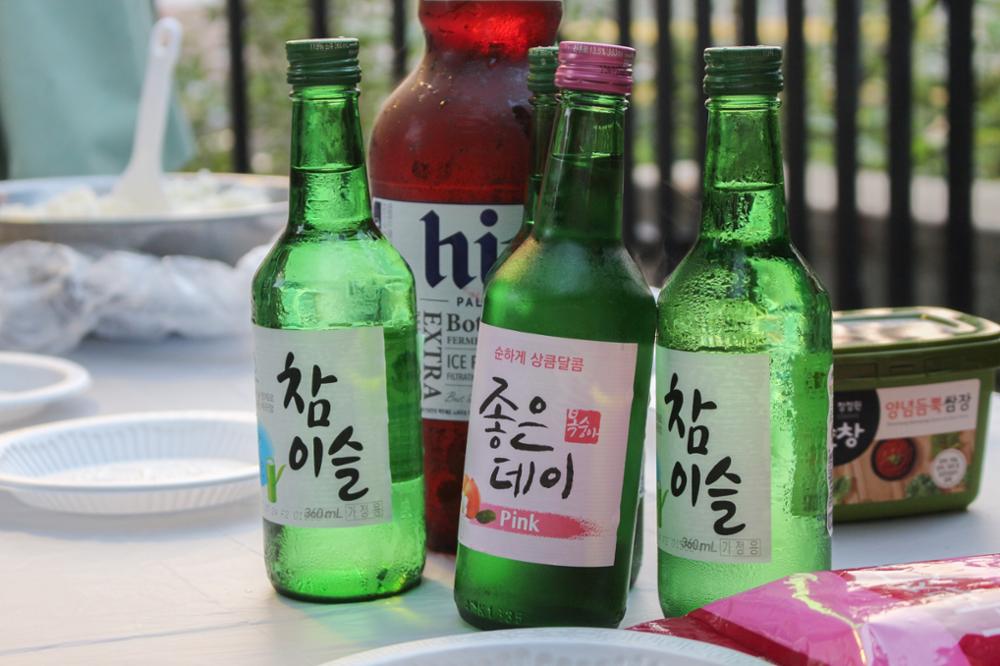
With a very clear color, Soju is often compared to vodka, though it is slightly sweeter. Beyond its classic pure version, flavored Soju varieties have emerged in recent years. Among the most popular flavors are apple, lychee, grapefruit, peach, blueberry, strawberry, and grape Soju.
With lower alcohol content, these can be consumed as is without needing to mix them with anything else to soften the taste. These versions have helped Soju attract new enthusiasts, particularly those who prefer fruity-flavored drinks with less alcohol content.
Leading Soju brands

There are several Soju brands in Korea. Among the most well-known producers, you'll find Jinro and Chamisul. It's worth noting that certain regions have their own distilleries. In Busan, for example, the local Soju brand is Siwon soju.
Regardless of the brand, Soju is always bottled in a distinctive green 360ml bottle. Bottles are sold between 1,100 and 4,000 Won, less than 3 euros.
Soju's alcohol content
The alcohol content of Soju ranges from 20 to 45% depending on the brand and version (pure or flavored).
Did you know?
Koreans consume Soju in astronomical quantities, to the extent that it is the world's best-selling spirit. It is estimated that 5.8 bottles of Soju are consumed per person every month in South Korea.
How is Soju enjoyed in South Korea?
Korean rituals for savoring Soju
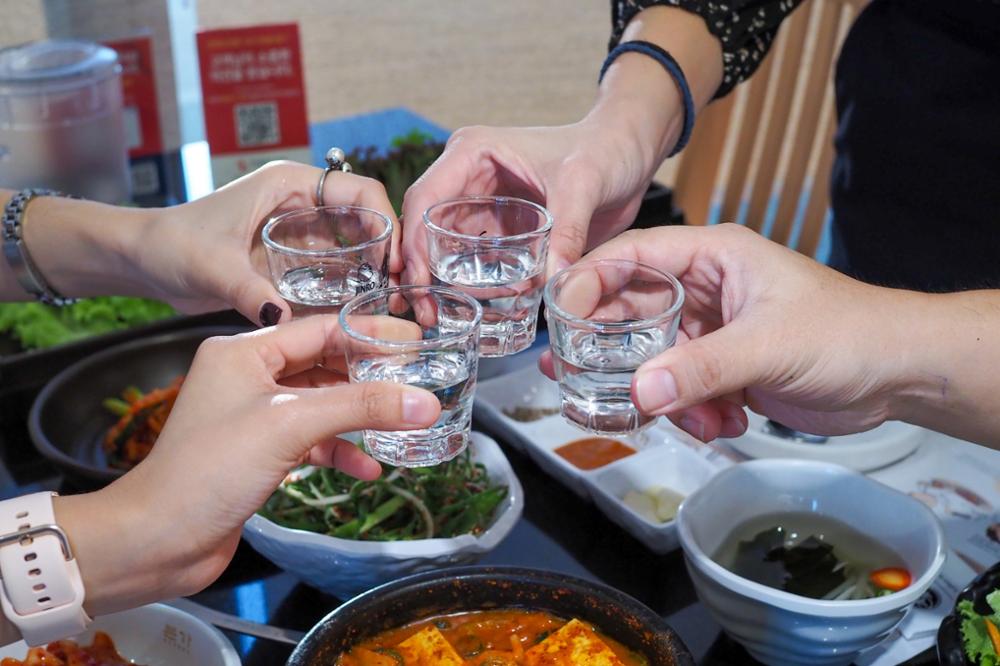
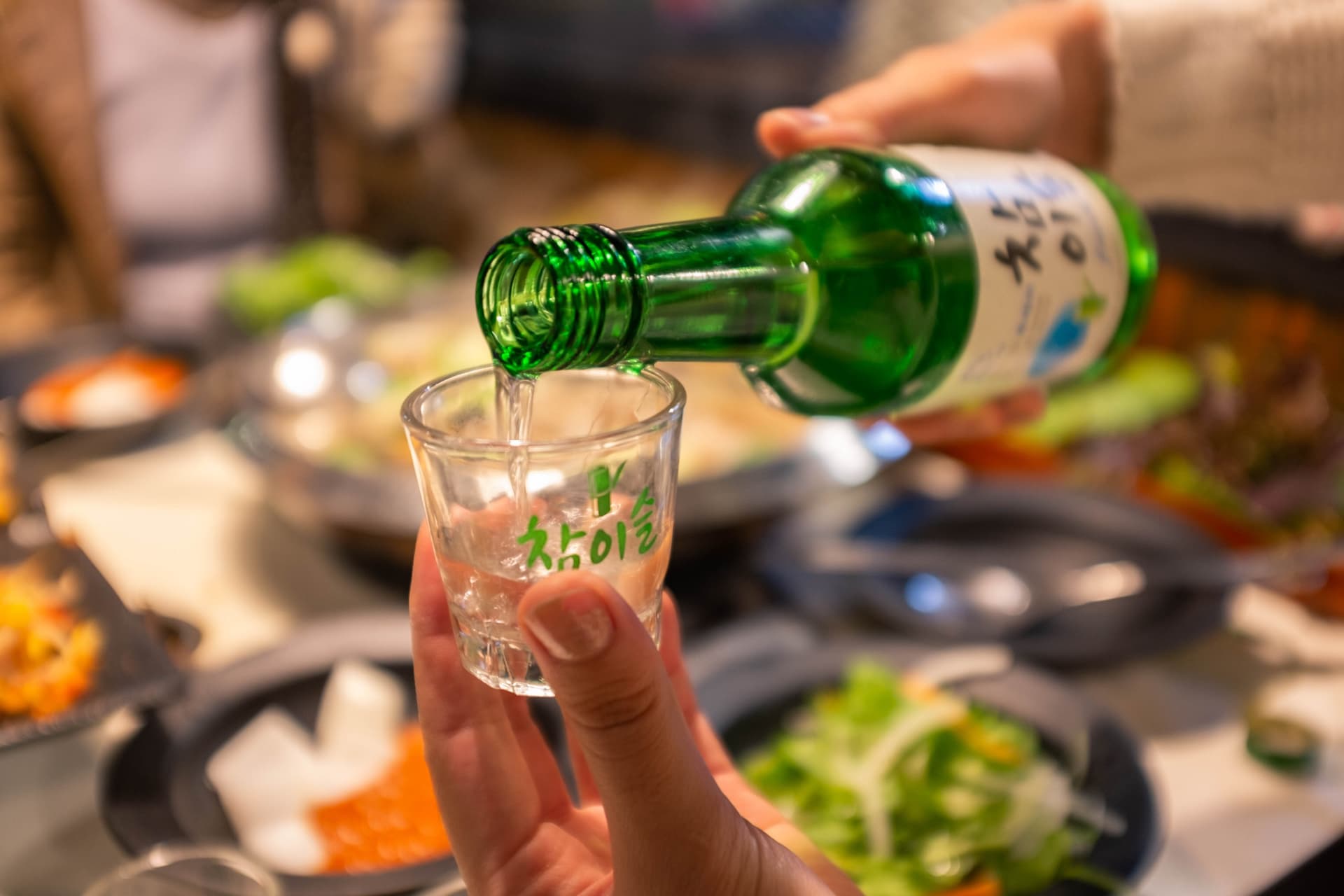
In South Korea, Soju is traditionally enjoyed chilled (but never with ice). It is typically drunk neat in shot glasses. The Soju bottle is often shaken beforehand, and tapped at the bottom before opening. This is said to help soften the flavors.
Enjoying Soju requires respecting certain customs, namely:
It is impolite to refuse a glass of Soju offered by a Korean (unless you are allergic or do not consume alcohol);
You should hold your glass with both hands when receiving Soju (in Korean culture, it is customary to use both hands when offering and receiving something, as a mark of respect);
It is customary to be served by the host or server rather than serving yourself;
Never refill your glass before it is completely empty;
Empty glasses are automatically refilled, and it is common for Koreans to challenge each other to drink their glass in one shot (Koreans say "geonbae" to refer to bottoms-up);
It is customary to turn slightly away when drinking Soju in the presence of elders or individuals of higher social status.
Note:
In South Korea, everyone drinks Soju. Considered a communal drink enjoyed among friends and colleagues, it brings together all social classes, from the poorest to the elite.
Soju in cocktails
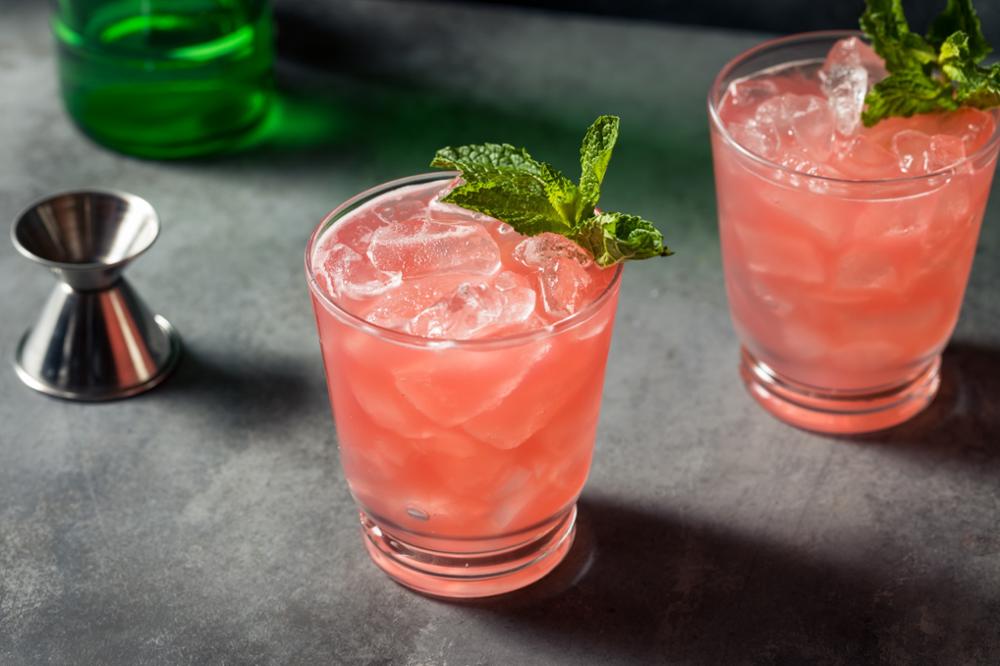
While enjoyed neat, Soju can also be mixed with other beverages to create cocktails. Young Koreans particularly enjoy mixing it with beer (approximately 30% Soju and 70% beer). This cocktail is called "Somaek." It frequently appears in Korean K-dramas or is promoted by K-pop stars.
Soju in Korean cuisine
Soju is not only enjoyed as a beverage; it is also prized in Korean cuisine. It is notably used in numerous marinades to enhance flavors. For example, Koreans sometimes use it to marinate the meat for bulgogi, one of the signature dishes of South Korea.
Frequently asked questions
Soju has a neutral, slightly sweet taste, often compared to vodka but smoother. Flavored versions (apple, peach, lychee, strawberry...) are sweeter and fruitier, ideal for those who do not enjoy strong spirits.
The alcohol content of Soju ranges from 20 to 45% depending on the brand and version. Flavored Soju varieties are generally lighter in alcohol content than classic Soju.
In English-speaking countries, Soju can be found primarily in Asian and Korean grocery stores in major cities, as well as in some specialty wine shops or online on alcohol import sales websites.
In Korea, Soju is enjoyed chilled, neat in small shot glasses, without ice. There are several rituals to respect: holding your glass with both hands, not pouring for yourself, and turning slightly when drinking in the presence of elders.
Somaek is a very popular Korean cocktail, especially among young people, made with Soju (approximately 30%) and beer (approximately 70%). It is frequently featured in K-dramas and promoted by K-pop stars.
Yes, Soju is considered the world's best-selling spirit. South Koreans consume an average of 5.8 bottles per person per month, which explains these exceptional volumes.