Bulguksa Temple
Bulguksa Temple
On the slopes of Tohamsan near Gyeongju, the UNESCO-listed Bulguksa Temple houses two 8th-century pagodas and several national treasures.
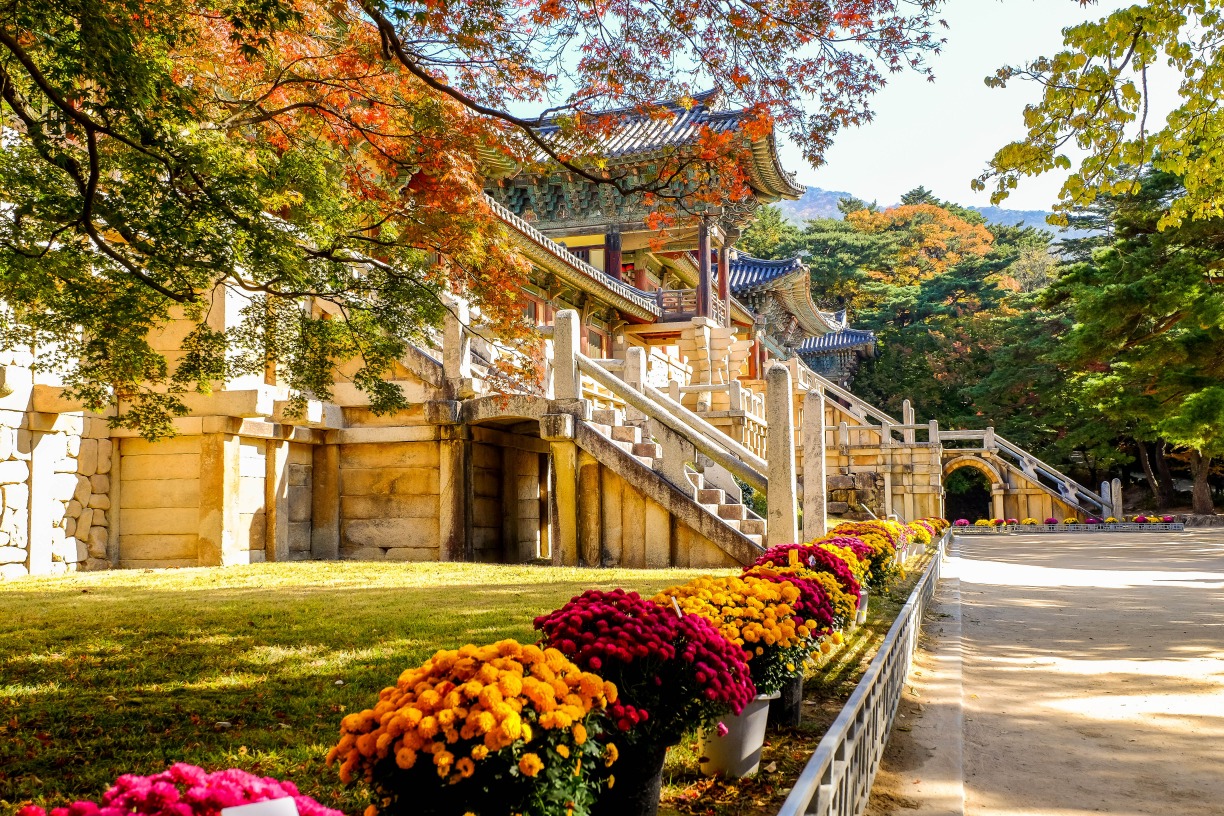
On the forested slopes of Mount Tohamsan, in North Gyeongsang Province, Bulguksa Temple overlooks the plains of Gyeongju, the former capital of the Silla kingdom. Inscribed as a UNESCO World Heritage Site in 1995 and designated Korea's premier historic and scenic site by the South Korean government, this Buddhist complex exemplifies the pinnacle of Korean religious art in the 8th century.
Why Visit Bulguksa Temple
Bulguksa, whose name means "the temple of Buddha's lands," brings together in one location wooden architecture rebuilt during the Joseon dynasty, two original stone pagodas from the 8th century considered masterpieces, and Buddhist iconography designated as national treasures. The visit naturally extends to the Seokguram Grotto, located 4 km away at higher elevation, which forms with the temple an indissociable UNESCO ensemble.
History of the Temple
According to the Samguk Yusa, a collection of narratives about the three Korean kingdoms, an earlier Buddhist sanctuary was erected on this site in 528 during the reign of King Beopheung of Silla (514–540). The present temple was commissioned in 751 by minister Kim Daeseong, in service to King Gyeongdeok of Silla (742–765). Construction was completed in 774, after the king's death.
Renovations were undertaken during the Koryo and Joseon dynasties. The complex was set ablaze by Japanese forces during the Imjin War at the end of the 16th century, destroying all wooden structures. Reconstruction began around 1604, and renovation campaigns continued until 1805. During Japanese occupation (1910–1945), a restoration attempt failed due to the absence of original plans. It was not until 1966 that the first partial restoration took place, followed by major works between 1969 and 1973 under President Park Chung Hee. The temple visible today is largely the result of this campaign; only stone elements still date from the Silla era.
What to See on Site
The complex is designed as a representation of Buddha's land and is organized into three main zones:
- Daeungjon: the main hall, which houses Shakyamuni Buddha.
- Birojeon (Vairocana Buddha Hall): a sanctuary designated National Treasure No. 26.
- Geungnakjeon: the hall of supreme bliss, which preserves a bronze Buddha designated National Treasure No. 27.
At the heart of the courtyard stand two stone pagodas, original remnants from the Unified Silla period. They symbolize the complementary principles of yang and yin.
The Seokgatap (Yang)
Built around 751 in honor of Buddha Shakyamuni, this three-tiered pagoda stands approximately 8 meters tall. Its façade is intentionally devoid of carvings, its base is square, and its stories follow a proportional ratio of 4:3:2, with delicately upturned roof edges. The granite finial crowning it is a copy of that from Silsangsa Pagoda, the original having disappeared before the 16th century. The reliquary of Seokgatap yielded the Mugujeonggwang Daedaranigyeong, considered one of the oldest known xylographic printed texts.
The Dabotap (Yin)
Its name means "pagoda of abundant treasures." Standing approximately 10 meters high, it faces the Seokgatap and was erected in honor of Buddha Prabhutaratna (Dabo). Its square base is framed by four staircases leading to a columned pavilion that supports an octagonal structure, a rare feature in Korean stone architecture. Designated a national treasure since 1962, it appears on the reverse of the 10 won coin.
Practical Information
- Visit duration: allow 1.5 to 2 hours for the temple alone, a half-day if you continue to Seokguram.
- Admission fee: modest entrance fee, payable on site.
- Dress code: the site remains an active place of worship. Modest clothing is recommended, as well as comfortable shoes (sloped terrain, stairs).
- Photography: permitted outside; possible restrictions inside the halls.
When to Visit
The temple welcomes visitors year-round, but two periods are particularly suited to exploration. In spring (April–May), cherry blossoms and azaleas bloom on Tohamsan around the complex. In autumn (mid-October to early November), maples set the wooded slopes ablaze and offer a remarkable photographic setting. Summer remains hot and humid, and winter can bring snow at higher elevations. An early morning visit helps avoid crowds from school groups and organized buses.
How to Get There
Bulguksa is located approximately 15 kilometers southeast of central Gyeongju. From Gyeongju's bus or train station, city buses No. 10 and 11 serve the temple entrance directly in 30 to 40 minutes. Taxis are also available. To reach Seokguram Grotto from Bulguksa, a seasonal shuttle serves the summit of Tohamsan; a hiking trail of approximately 2 to 3 km also connects the two sites.
Nearby Attractions
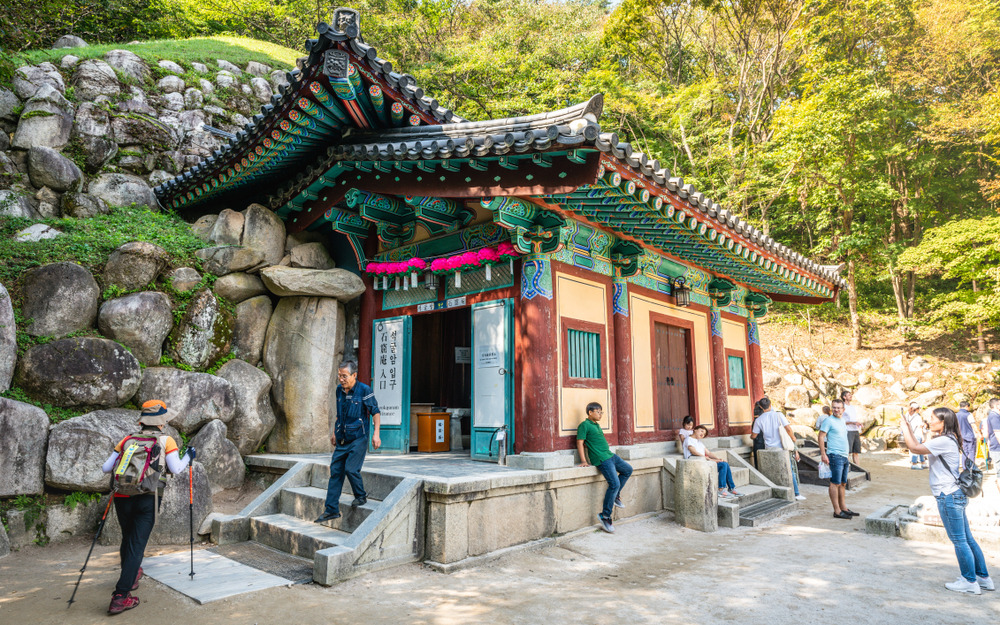
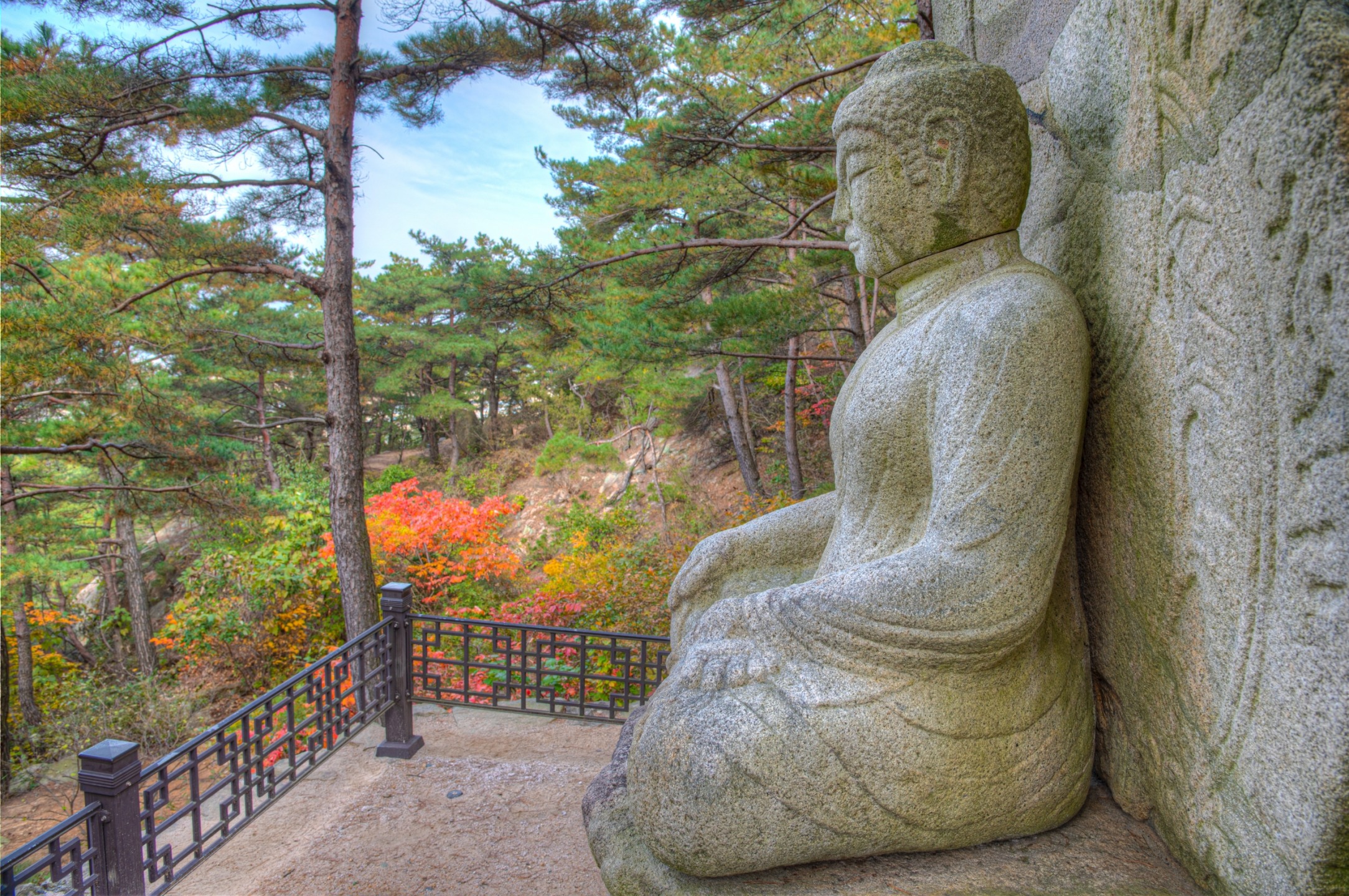
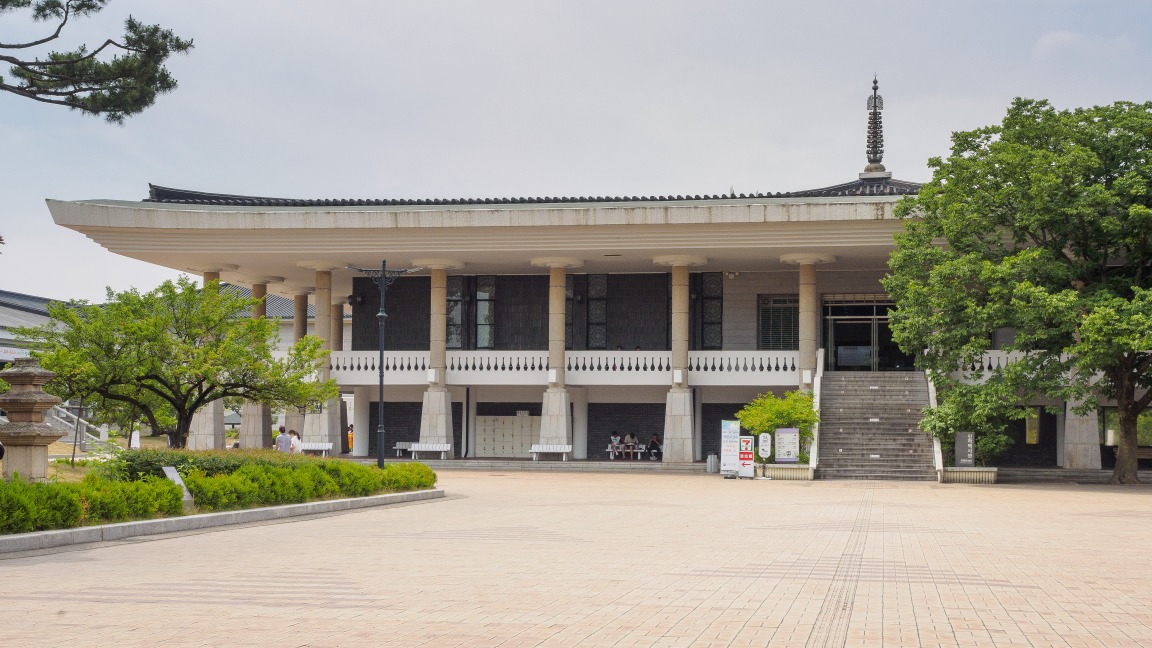
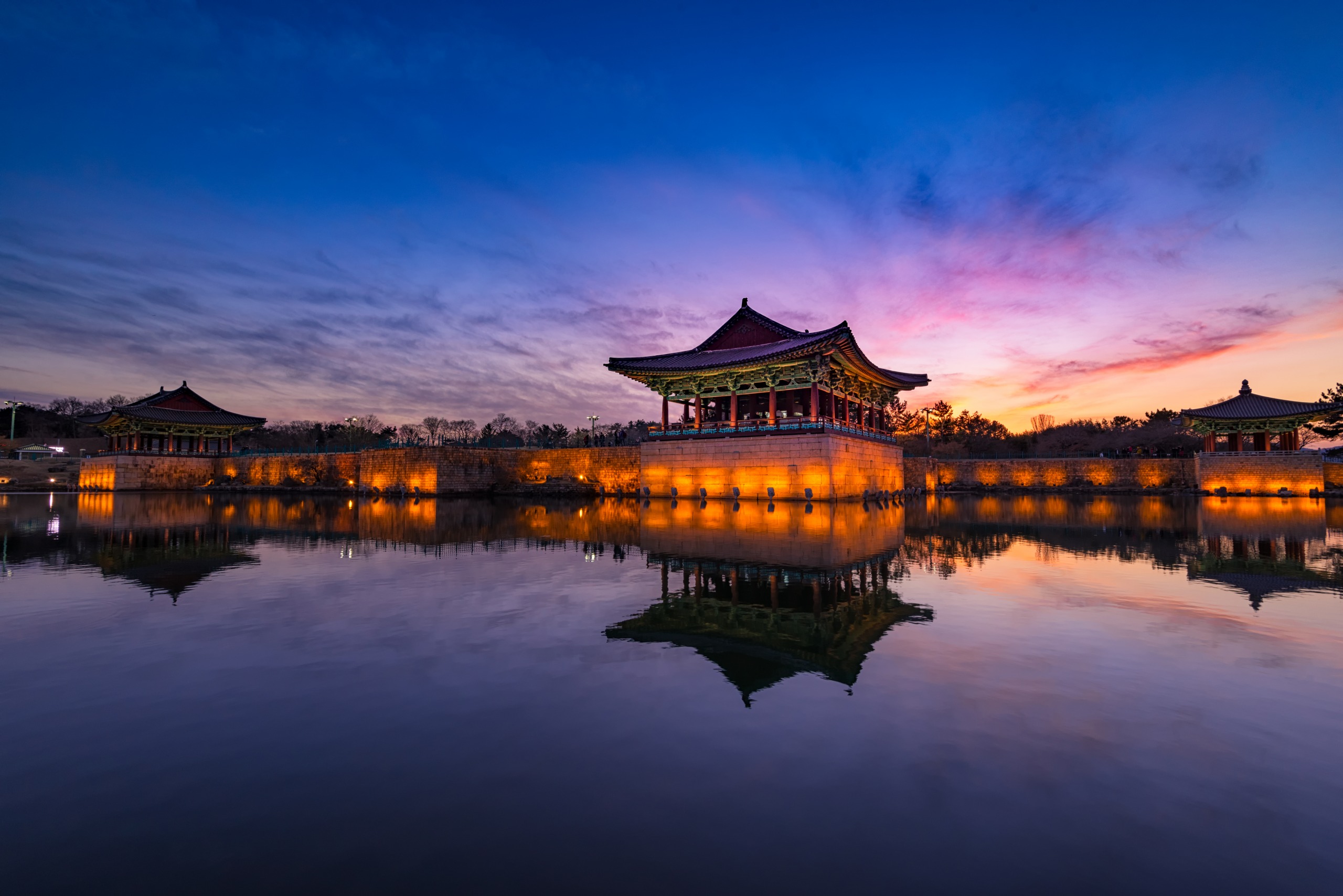
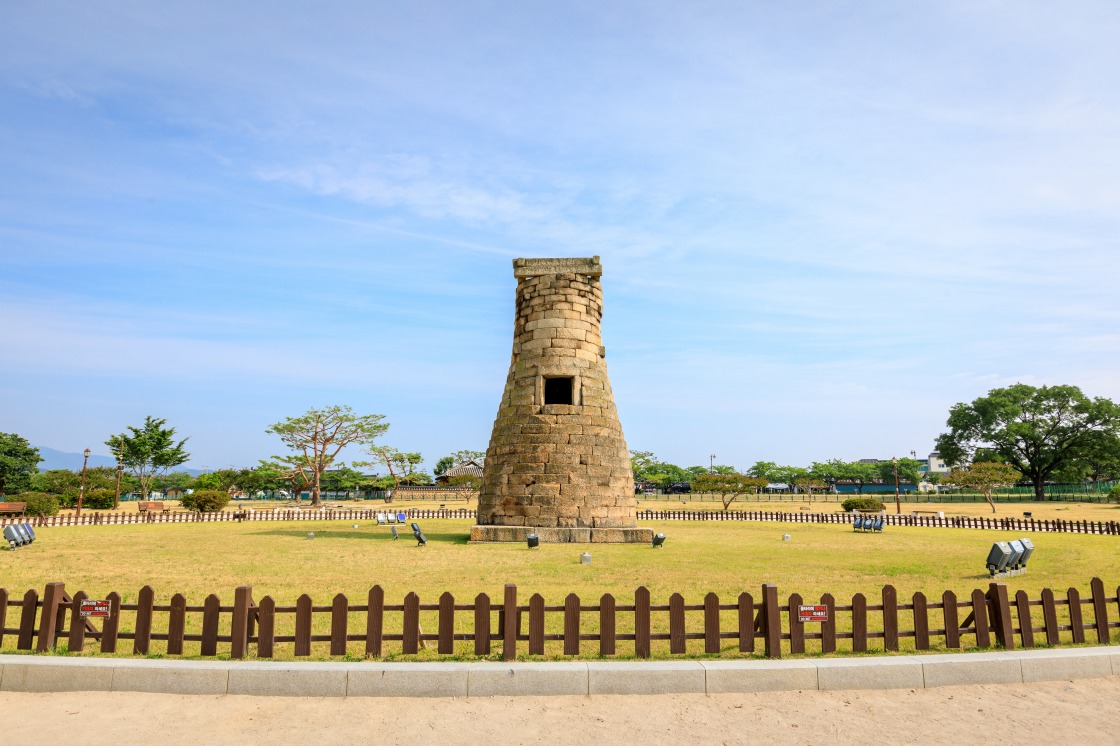
The Seokguram Grotto, about 4 km away at 750 meters elevation on Mount Tohamsan, is the natural extension of your visit. An hermitage site attributed to Kim Daeseong, it houses a monumental granite Buddha statue. Designated a national treasure since 1962 and inscribed by UNESCO in 1995, it forms a coherent ensemble with Bulguksa. The city of Gyeongju itself merits several days to explore its royal burial mounds, the Cheomseongdae observatory, and the national museum. The traditional villages of Hahoe and Nagan pleasantly extend a cultural itinerary in the country's south.
Frequently Asked Questions
Frequently asked questions
Allow 1.5 to 2 hours for the temple alone. If you include Seokguram Grotto and climbing Tohamsan, plan for a full half-day.
It is possible but tight. The KTX connects Seoul to Singyeongju in approximately 2 hours, followed by 30 to 40 minutes by bus to the temple. An overnight stay in Gyeongju is more comfortable and allows you to visit Seokguram and the historic city as well.
Spring (April–May) for blooms and autumn (mid-October to early November) for maple colors are the two most appreciated periods.
Both pagodas date to the 8th century. The Seokgatap, austere and geometric, symbolizes yang and Shakyamuni Buddha. The Dabotap, with its ornate octagonal structure, symbolizes yin and Buddha Prabhutaratna; it appears on the 10 won coin.
Prepare Your Journey
Bulguksa and Seokguram constitute a major stop on any cultural itinerary through South Korea. To integrate Gyeongju and the south into a custom-made tour, consult our travels in Corée du Sud.
Nearby
Interested in this visit?
We can include it in your personalised itinerary.