Gyeonggijeon Shrine
Gyeonggijeon Shrine
Joseon shrine founded in 1410 in Jeonju, Gyeonggijeon houses the portrait of King Taejo and dynastic annals inscribed on the UNESCO Memory of the World Register.
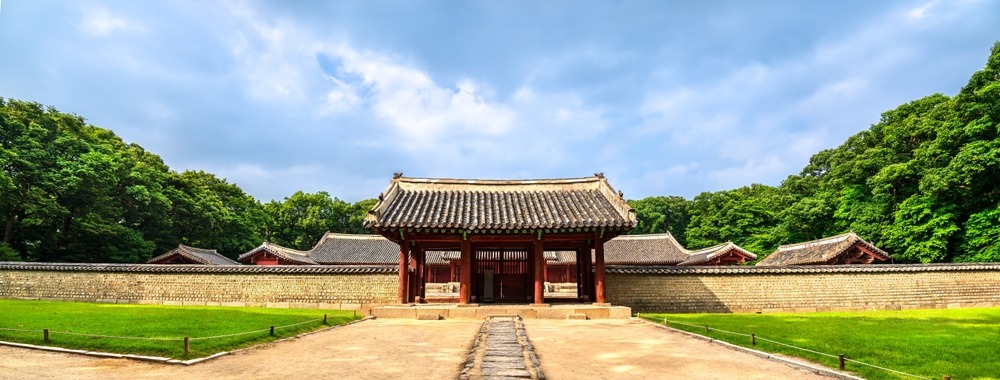
The Gyeonggijeon Shrine stands at the heart of the Jeonju hanok village, in southwestern South Korea. Designated Historic Site No. 339, it houses the official portrait of King Taejo, founder of the Joseon dynasty (1392–1897), as well as a museum dedicated to royal portraits and an archival building inscribed on the UNESCO Memory of the World Register. It is one of the most iconic places for understanding Korean dynastic memory.
Why visit Gyeonggijeon
The shrine combines three complementary interests: a well-preserved Joseon architectural ensemble, an exceptional heritage collection (royal portrait designated National Treasure No. 317, annals inscribed on the UNESCO Memory of the World Register) and a landscape setting integrated into the hanok village. The visit unfolds on foot, in a tree-lined setting, in less than two hours for the essentials. The site has also served as a filming location for several K-dramas, including Moonlight Drawn by Clouds, which boosted visitor numbers from 2016 onwards.
History of the shrine
Gyeonggijeon was founded in 1410 to house the portrait of King Taejo (Lee Seong-gye), founder of the Joseon dynasty in 1392. The shrine was initially named Eoyongjeon (Sanctuary of the Royal Visage) or Taejojinjeon (Sanctuary of the True Face of King Taejo). It was renamed Gyeonggijeon, "Sanctuary of the Blessed Foundation," in 1442, in the 24th year of King Sejong's reign.
Part of the structure was destroyed by fire in 1597, during the Imjin War (1592–1598), the second Japanese invasion of the peninsula. The building was rehabilitated in 1614. Major repairs took place in 1872, in the 9th year of King Gojong's reign. That same year, eight painters created a new portrait of King Taejo to replace the original, which had deteriorated with time. This portrait was designated National Treasure No. 317.
What to see on site
The entrance gates and codes of the sacred space
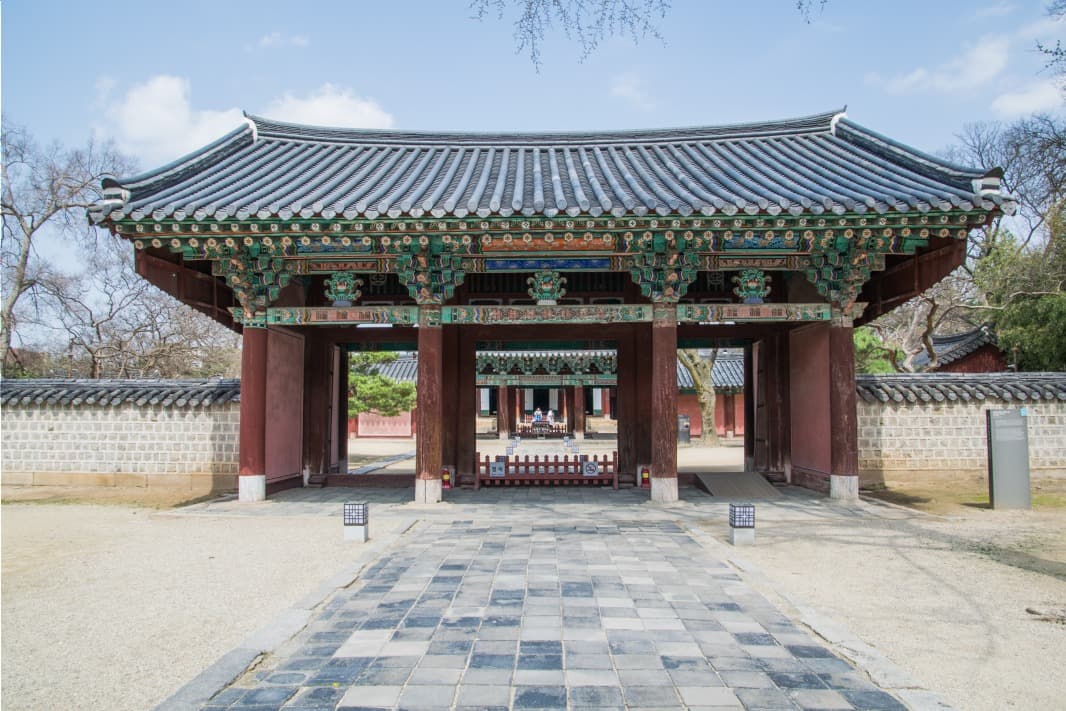
The main entrance is located to the south, along Taejo-ro street. Near the first gate, the Hamabi, an inscribed stone plaque, historically required all visitors, regardless of social class, to dismount from their horses before entering the precinct. The Hongsalmun gate then marks the entrance to the sacred domain.
On the ground, a central paved pathway, the Sindo (God's Road), is reserved for spirits: the central gate that extends it remains closed. According to Korean convention, visitors enter from the right—the side of the rising sun—and exit from the left, the side of the setting sun.
The portrait of King Taejo
In the main hall stands the portrait of the founder of the Joseon dynasty. The king is depicted seated on a throne, dressed in a blue royal robe adorned with dragons, wearing the royal crown. This official representation served dynastic cult purposes and constituted an object of veneration in its own right, moved with great ceremony during rituals.
The Jeonjusago and the Joseon annals
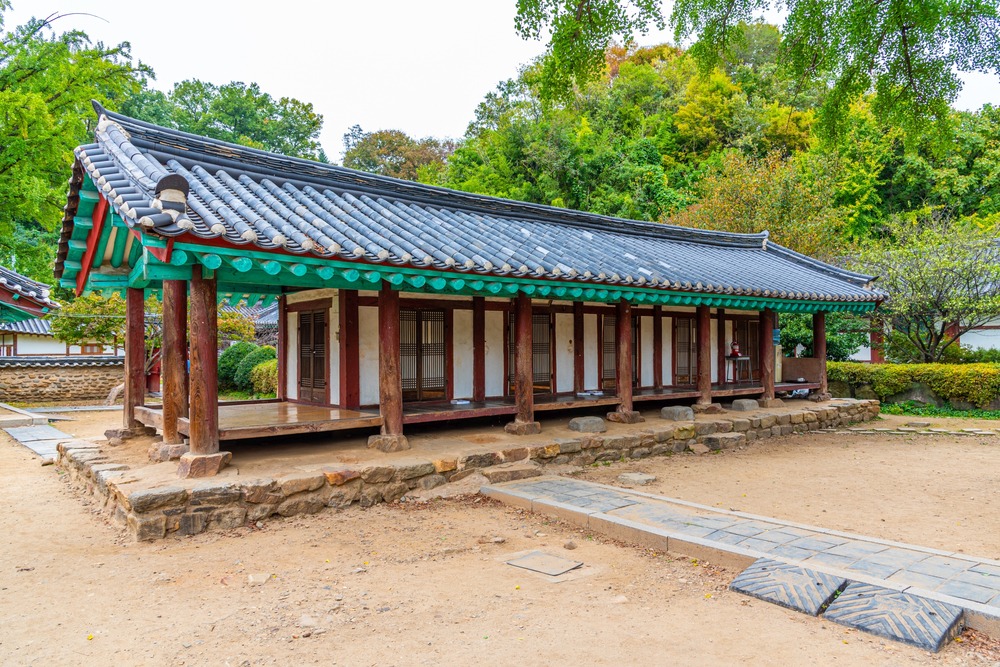
Recognizable by its turquoise façade and red pillars, the Jeonjusago preserved the annals of the Joseon dynasty. Compiled in 1,893 volumes, they cover several centuries of dynastic history and constitute National Treasure No. 151. They were inscribed on the UNESCO Memory of the World Register in 1997.
The Royal Portrait Museum
Opened in 2010, this two-level museum displays six other portraits of King Taejo and presents the material culture of the Joseon court. One room is devoted to the history of the shrine, and several relics are preserved here. The palanquin room evokes the grand procession that carried the royal portrait from Seoul to Jeonju, the cradle of the royal lineage.
The Jogyeongmyo
Built in 1771 under King Yeongjo and restored in 1854, the Jogyeongmyo houses the mortuary tablets of Lee Han, founder of the Jeonju family and ancestor of the royal line, as well as those of his wife. The building closes the ceremonial complex of the shrine.
Practical information
- Duration of visit: allow 1 to 2 hours for the shrine, the Jeonjusago and the Royal Portrait Museum.
- Admission fee: paid entry at a moderate rate (discounts for children and seniors).
- Opening hours: daytime opening, with extended hours in summer compared to winter. Check current hours before your visit.
- Dress code: hanbok (traditional costume) rental is very common in the village and often grants free entry to several historic sites.
When to visit
The shrine is open year-round. The most pleasant period runs from May to October, with a rainy spell in July–August due to summer monsoons. January is the coldest month: bring warm clothing. Autumn (October–November) particularly enhances the rooflines and trees of the grounds.
How to get there
From Jeonju Station, take bus No. 79 or 119 and get off at Jeondong Cathedral (Hanok Village) stop. The shrine is located immediately nearby, within the pedestrian perimeter of the village. Jeonju is connected to Seoul by KTX in approximately 1 hour 30 minutes from Yongsan Station.
What to see nearby
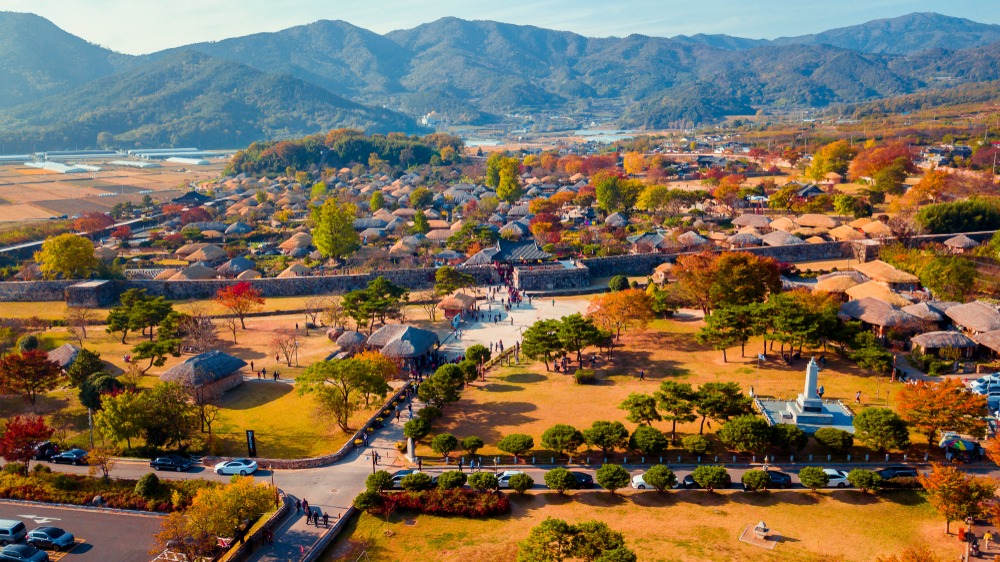
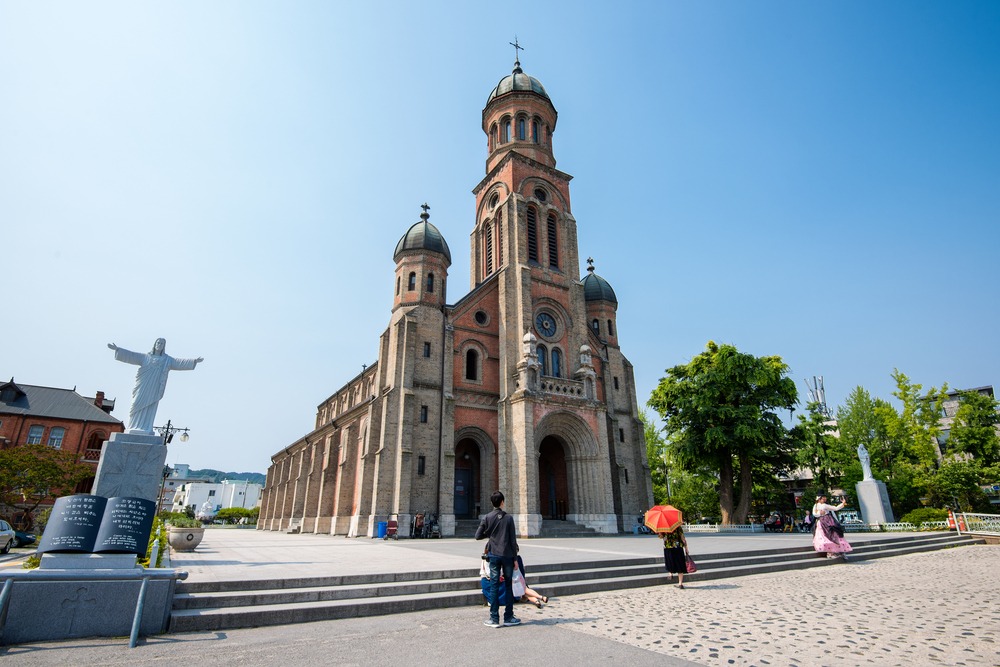
Gyeonggijeon is part of a stroll through the Jeonju hanok village, which brings together over 700 traditional houses, craft workshops and the Jeondong Cathedral, situated just across from the shrine. The neighborhood is also renowned for bibimbap, the city's signature dish. To further explore Confucian heritage and traditional villages in South Korea, the historic Hahoe village and the Hwaseong Fortress in Suwon make coherent complements. Buddhism enthusiasts will favor Haeinsa Temple, guardian of the Tripitaka Koreana.
Frequently asked questions
Frequently asked questions
One to two hours are sufficient to tour the main hall, the Jeonjusago, the Royal Portrait Museum and the Jogyeongmyo at a leisurely pace.
Yes, the shrine charges a moderate admission fee, with standard discounts for children, students and seniors. Wearing a hanbok often grants free entry.
Photography is generally permitted without flash in the main hall and museum. Access rules for the Sindo pathway remain strict: it is reserved for spirits and closed to visitors.
Yes, the shrine hosted several productions, including the series Moonlight Drawn by Clouds (2016), which contributes to its popularity among international visitors.
The fastest way is the KTX from Yongsan Station to Jeonju (approximately 1 hour 30 minutes), then bus No. 79 or 119 to the Jeondong Cathedral stop.
Prepare your trip
Gyeonggijeon is a natural step in an itinerary combining Seoul, Jeonju and the southern peninsula. To build a journey that blends Joseon heritage, traditional villages and major cities, explore our customized South Korea trips.
Nearby
Interested in this visit?
We can include it in your personalised itinerary.